Full Body MRI in China: Our Companion for Whole-Body Imaging
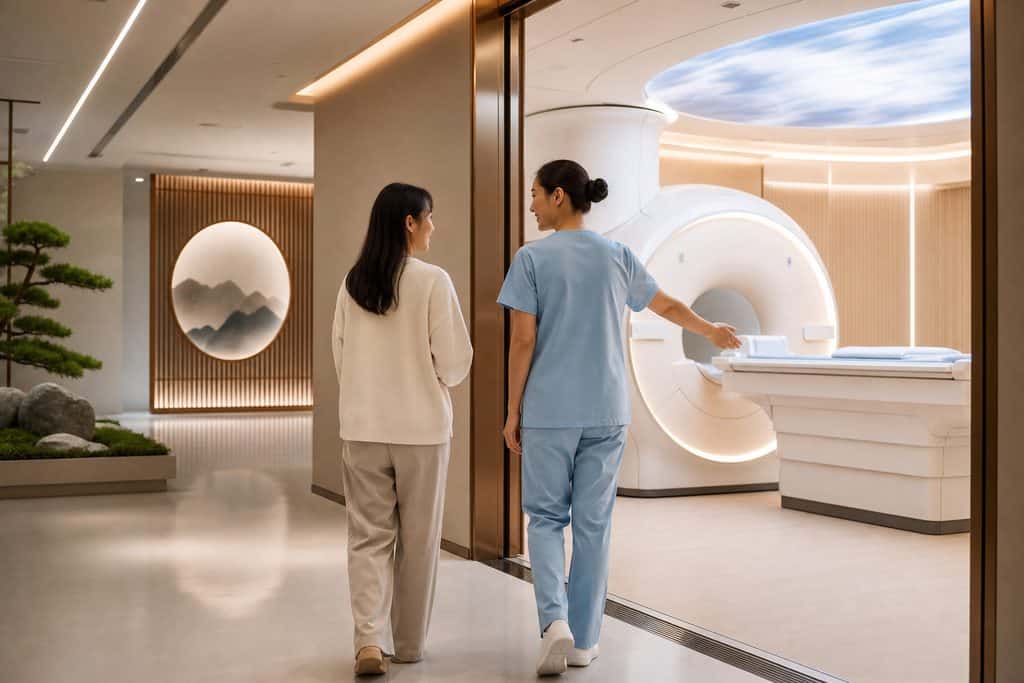
Full Body MRI in China: Our Companion for Whole-Body Imaging
You’ve probably heard that cutting-edge preventive imaging means flying to a private clinic in Los Angeles or London and paying five figures for the privilege. The reality has shifted. A comprehensive full body MRI cost China typically runs between $800 and $2,500 depending on the hospital tier and protocol depth — often one-third to one-fifth of what Western private centers charge for comparable magnet strength and sequence coverage. That’s the headline. But the real question isn’t just price. It’s whether the scan is done well, read correctly, and worth the trip.
Our team at China Medical Services has walked dozens of international patients through this exact process. We’ve seen what works, what confuses people, and where the genuine pitfalls sit. This guide lays out the honest picture — costs, safety, timing, hospital selection, and the documentation you’ll need.
Full Body MRI in China: The Short Answer
A whole-body MRI in China is a legitimate, cost-effective option for patients who want a comprehensive baseline scan without the markup of Western private imaging centers. You can book a package at top-tier public hospital international departments or private international hospitals in Beijing, Shanghai, Guangzhou, and Chengdu. The scan itself takes 60 to 90 minutes on a 3.0 Tesla machine at most reputable centers.
But there’s a catch worth naming upfront. “Full body” doesn’t mean identical at every hospital. Some protocols cover brain to pelvis. Others add cardiac sequences or dedicated spine views. And the quality of the radiologist’s read matters as much as the magnet. A cheap scan with a rushed report isn’t a bargain.
Who This Is Right For — and Who It Isn’t
Whole-body MRI suits a specific profile. It’s not for everyone, and pretending otherwise would be irresponsible.
Typically a good candidate:
- You’re 40+ with a family history of cancer or cardiovascular disease and want a baseline without radiation exposure.
- You have unexplained symptoms — fatigue, weight loss, persistent pain — and want a broad anatomical survey before narrowing down.
- You’re a busy executive or frequent traveler who wants a single comprehensive scan in one visit, not multiple appointments spread over weeks.
- You already planned to travel to China for business or family reasons and want to add imaging while you’re here.
Who should not pursue this:
- You have metal implants, a pacemaker, or certain aneurysm clips — MRI may be contraindicated. You need clearance from the imaging center first.
- You’re pregnant, particularly in the first trimester. Most centers will decline.
- You have severe claustrophobia and cannot tolerate sedation logistics overseas.
- You’re looking for a definitive cancer diagnosis. Whole-body MRI can raise suspicion, but it cannot replace targeted biopsy or PET-CT for confirmation.
If you fall into that last group, a targeted diagnostic workup is the better path. A broad scan might find incidental findings that trigger more tests without answering your real question.
The Options, Compared
Where you get scanned matters more than the machine brand. China’s imaging landscape splits into three tiers, each with different tradeoffs.
| Option | Typical Cost (USD) | Wait Time | English Support | Best For |
|---|---|---|---|---|
| Public hospital international department (e.g., Peking Union, Zhongshan, Ruijin) | $800–$1,500 | 3–10 days | Yes, dedicated staff | Patients wanting top-tier radiologists at moderate cost |
| Private international hospital (e.g., United Family, Jiahui, Parkway) | $1,500–$2,500 | 1–3 days | Full English, Western-style service | Patients prioritizing convenience, speed, and comfort |
| Standard public hospital outpatient imaging | $400–$800 | 1–2 weeks | Limited to none | Mandarin-speaking patients or those with a bilingual companion |
The private international tier wins on speed and language. The public international departments win on radiologist seniority and cost. The standard outpatient route is cheapest but genuinely difficult without Chinese language ability — queues are long, signage is dense, and the report will arrive in Chinese unless you arrange translation separately.
What a Whole Body MRI Scan Shanghai Price Actually Includes
If you’re searching for a whole body MRI scan Shanghai price, you’ll see packages advertised from around ¥6,000 to ¥18,000 RMB. Converted, that’s roughly $850 to $2,500. But the sticker price rarely tells the full story. Here’s what typically sits inside a legitimate package at a Shanghai public hospital international department:
- The scan itself on a 3.0T machine, covering brain, neck, chest, abdomen, and pelvis.
- Standard sequences: T1, T2, diffusion-weighted imaging (DWI) for the torso.
- A written report in English, usually within 3 to 5 working days.
- A CD or USB with the DICOM images — essential if you want a second read back home.
What’s usually not included: contrast agent (if needed, add $150–$300), cardiac MRI sequences, dedicated breast or prostate protocols, and any follow-up consultation with a specialist to explain findings. Some centers bundle a 30-minute physician review. Others don’t. Ask before you book, not after.
Shanghai pricing is broadly comparable to Beijing. If you’re comparing a best full body MRI clinic Beijing search against Shanghai options, know that both cities host excellent centers. Beijing has Peking Union Medical College Hospital and its international medical services. Shanghai has Zhongshan Hospital and Huashan Hospital, both with strong radiology departments and English-speaking international wings.
Is Full Body MRI Safe in China?
The short answer: yes, with the same caveats that apply anywhere. Is full body MRI safe in China depends on the facility’s protocols, the machine’s maintenance schedule, and whether the referring team screens you properly for contraindications. MRI uses no ionizing radiation. That’s its core advantage over CT. The risks are not radiation-related — they’re about metal in the body, kidney function if contrast is used, and the quality of the interpretation.
Safety screening matters more than the magnet. Any reputable center will ask about implants, surgical history, tattoos (certain inks heat up), and renal function before scanning. If a clinic skips these questions or waves you through in five minutes, walk away.
China’s top-tier hospitals maintain their 3.0T machines to international standards. Many hold JCI accreditation or operate international departments that serve foreign patients routinely. The equipment is the same Siemens, GE, and Philips hardware you’d find in Frankfurt or Singapore. The variable is human — the technologist’s care and the radiologist’s attention. That’s why hospital selection matters more than country selection.
One honest note: incidental findings are common. Studies suggest that 30% to 40% of whole-body MRI scans in asymptomatic adults reveal something — most of it benign. The psychological cost of chasing a shadow on your adrenal gland can outweigh the scan’s benefit. Go in with clear expectations.
How Long Does a Whole Body MRI Take Abroad?
At $800 to $1,500 at public international departments, you’re typically getting the scan, standard sequences, an English report, and the images on media. Contrast, cardiac sequences, and specialist consultations are extras. At private international hospitals, $1,500 to $2,500 usually includes faster turnaround and more hand-holding. Always request a written breakdown before committing.
This happens in roughly one-third of scans, and most findings are benign — cysts, small hemangiomas, minor disc bulges. The radiologist’s report will flag anything needing follow-up. You then take that report to a specialist, either in China while you’re there or back home. A whole-body MRI is a screening tool, not a diagnosis. It narrows the field. It doesn’t close the case.
Yes, and this is often the smartest use of the journey. Many international departments offer executive health screening packages that bundle whole-body MRI with ultrasound, cardiac assessment, and comprehensive blood work in a single morning. The incremental cost is modest compared to booking each test separately. If you’re flying across the world for imaging, make the trip earn its keep.
Your Next Step
A whole-body MRI in China is a real option — safe, well-priced, and logistically feasible if you know which hospital to choose and what the process demands. The scan itself is the easy part. The coordination around it is where people stumble.
We’re China Medical Services, a medical concierge team that connects international patients with China’s top-tier hospitals. We’re not a hospital, and we don’t diagnose anything. What we do is handle the scheduling, the language barrier, the documentation, and the on-the-ground details so your imaging trip runs without friction. If you’d like to explore what a whole-body MRI package would look like for your specific situation, start with a conversation at our patient services page. No pressure, no obligation — just a clear-eyed look at your options.
Frequently Asked Questions
Yes. The hospitals used for international patients are JCI-accredited and follow the same international safety standards as top hospitals in the US and Europe. Surgical teams perform high volumes of procedures — often more than their Western counterparts — which studies show leads to better outcomes.
Costs vary by procedure and hospital, but international patients typically save 40-80% compared to US prices — even when factoring in travel and accommodation. A consultation with our team will give you an exact, all-inclusive quote with no hidden fees.
Send us your existing medical reports to get started. We handle everything from hospital selection and appointment scheduling to visa assistance and post-operative recovery planning. Your medical records are reviewed by the specialist before you even book a flight.
For more medical information and treatment options in China, visit chinamedservices.com (China Medical Services).
