Gastroscopy in China: How the Procedure Works, Costs, and What to Expect
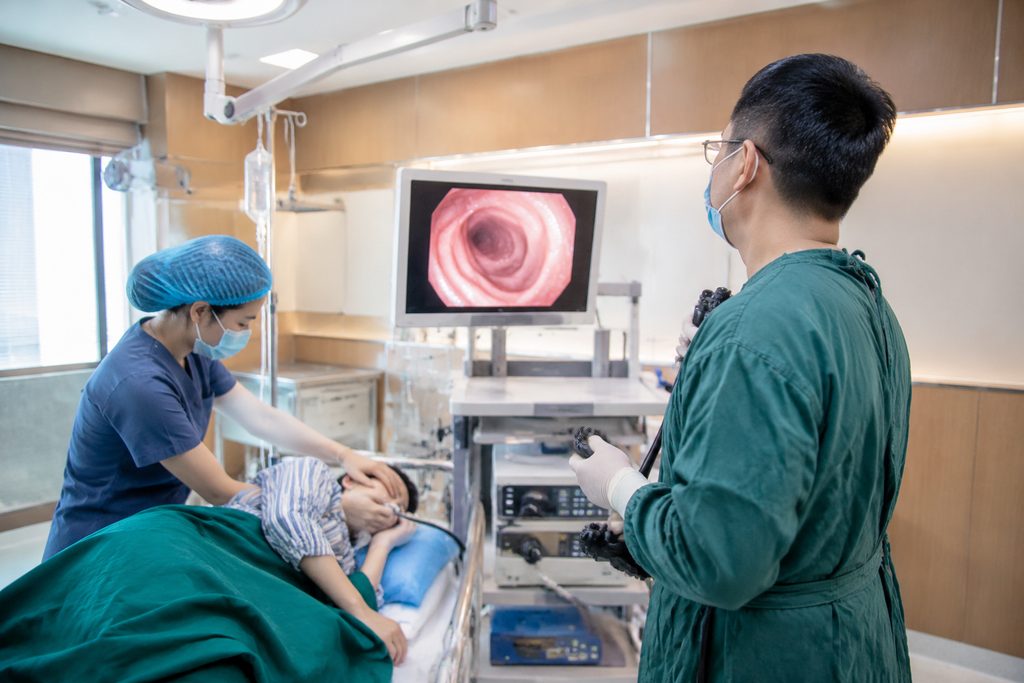
According to data from China’s National Health Commission, over 28 million digestive endoscopy procedures were performed in Chinese hospitals in 2023 alone. That volume is not accidental. It is the product of a hospital system built to move large numbers of patients through diagnostic procedures efficiently. For an international patient considering a gastroscopy in China, that scale translates into something concrete: short wait times, experienced operators, and a gastroscopy cost China that typically runs between $150 and $500 at a top-tier public hospital — compared to $1,500 to $4,000 out-of-pocket in the United States.
But the real question most patients have is not just about price. It is about how the procedure actually unfolds when you are a foreigner walking into a Chinese hospital. What happens at registration? Will anyone speak English? Do you need sedation? How long before you get results? This guide answers those questions directly, based on how the process works at the hospitals we coordinate with across China’s top-ranked medical institutions.
How This Actually Works, Step by Step
The sequence for a foreign patient is more structured than most people assume. Here is what actually happens from first contact to walking out with a report.
First, you do not need to fly to China just to schedule the procedure. A remote consultation comes first. You send your existing medical records, any prior endoscopy reports, medication list, and a brief description of your symptoms. Our team translates these documents into Chinese and submits them to the gastroenterology department at your chosen hospital. A specialist reviews the file and confirms whether a gastroscopy is indicated, and if so, what type — standard, narrow-band imaging, or with biopsy.
Second, the hospital confirms a date. This is where China differs sharply from many Western systems. Public hospital endoscopy centers in major cities like Shanghai and Beijing often have availability within 3 to 7 days for international patients routed through the hospital’s international department. Private international hospitals can sometimes schedule within 24 to 48 hours.
Third, you arrive. On the day of the procedure, you check in at the international patient desk. A bilingual coordinator — either from the hospital or from our team — walks you through registration, payment, and the pre-procedure intake. You sign consent forms. The forms will be in Chinese, but the coordinator translates each section before you sign.
Fourth, the procedure itself. Standard gastroscopy without sedation takes 5 to 10 minutes. With sedation — which most international patients choose — the procedure takes 10 to 15 minutes, and you spend another 30 to 60 minutes in recovery. The scope is inserted through the mouth, passes down the esophagus, into the stomach, and the first portion of the duodenum. If the doctor sees anything suspicious, a biopsy is taken immediately. Biopsy results come back in 3 to 7 days depending on the hospital’s pathology lab.
Fifth, the report. You receive a written endoscopy report — usually with color images — immediately after the procedure. If biopsies were taken, a supplementary pathology report follows. Both are provided in Chinese, and our team arranges certified English translation for your records at home.
What a Gastroscopy in China Actually Costs
The gastroscopy cost China varies significantly depending on the tier of hospital and whether you need sedation, biopsy, or specialized imaging. The table below reflects current ranges based on the hospitals in our network, as of 2026.
| Hospital Type | Standard Gastroscopy (no sedation) | With Sedation | With Biopsy & Pathology |
|---|---|---|---|
| Top-Tier Public Hospital (International Department) | $120 – $250 | $250 – $450 | $350 – $600 |
| Private International Hospital (e.g., United Family, Jiahui) | $300 – $600 | $500 – $900 | $700 – $1,200 |
| Standard Public Hospital (Local Pricing) | $50 – $120 | $100 – $200 | $150 – $300 |
These figures are the procedure fees only. They do not include the consultation fee before the procedure, which ranges from $30 to $150 depending on the seniority of the specialist. For comparison, the same procedure in the United States averages $2,750 before insurance, and in the UK privately it runs £1,200 to £2,000. The endoscopy price Shanghai patients pay at top public hospitals sits at the lower end of the ranges above, while Beijing tends to run slightly higher due to demand.
What drives the difference between the tiers? The private international hospitals charge more because they offer English-speaking physicians directly, JCI accreditation, and direct insurance billing. The public hospital international departments offer access to the same senior specialists who treat local patients, but with English coordination layered on top. That is where the value sits for most international patients.
Is Gastroscopy Safe in China? What the Data Shows
Safety is the question every patient asks, and it deserves a straight answer. Gastroscopy is a low-risk procedure wherever it is performed. The serious complication rate — perforation or significant bleeding — is approximately 1 in 10,000 procedures globally. Chinese tertiary hospitals report rates consistent with that figure.
What matters more is operator experience. A gastroenterologist at a high-volume Chinese tertiary hospital may perform 1,500 to 3,000 gastroscopies per year. That repetition builds competence that is hard to match in lower-volume settings. The hospitals we work with are drawn from the top-ranked gastroenterology departments in the country — institutions whose endoscopy centers perform tens of thousands of procedures annually.
Infection control is another consideration. Chinese tertiary hospitals follow national disinfection protocols for endoscope reprocessing. The top-tier institutions use automated endoscope reprocessors and single-use accessories where applicable. If you have specific concerns, ask about the hospital’s reprocessing protocol before booking. Any reputable international department will answer that question directly.
One honest caveat: the experience at a standard public hospital without international coordination is different. You will encounter language barriers, crowded waiting areas, and a faster clinical pace. The procedure itself is still safe — the doctors are the same ones who staff the international departments — but the experience will feel more transactional. That is not a safety risk. It is a comfort and communication issue.
A Realistic Timeline
Planning around a gastroscopy in China involves more than the procedure day itself. Here is what a realistic schedule looks like for an international patient, from first inquiry to walking out with results.
| Stage | What Happens | Duration |
|---|---|---|
| Day 1 – 3 | Initial inquiry, document collection, medical history review | 1 – 3 days |
| Day 3 – 7 | Document translation, submission to hospital gastroenterology department | 2 – 4 days |
| Day 7 – 14 | Specialist review, procedure approval, date confirmation | 3 – 7 days |
| Day 14 – 30 | S2 visa application (if not already in China) | 5 – 15 days depending on embassy |
| Arrival Day | Hospital check-in, pre-procedure consultation, consent signing | Half day |
| Procedure Day | Fasting from midnight, gastroscopy, recovery | 2 – 4 hours total |
| Day +1 to +7 | Biopsy pathology results (if applicable), translated report delivery | 3 – 7 days |
The steps people forget are document translation and visa processing. Translation adds 2 to 4 days at the front end. The S2 visa — the correct category for medical treatment and private affairs in China — takes 5 to 15 days depending on your home country’s Chinese embassy or consulate. Do not book flights until the hospital has confirmed your procedure date in writing.
If you are already in China on another visa category, the timeline compresses considerably. You can often go from initial inquiry to completed procedure within 7 to 10 days.
What Can Go Wrong — and What Happens Then
No honest guide skips this section. Here are the real failure modes and what recourse exists for each.
The most common issue: the hospital reschedules. Public hospital endoscopy centers run at high capacity, and emergency cases can push scheduled procedures. If your procedure is moved, the international department will typically offer a new slot within 1 to 3 days. If that does not work with your travel window, we work with the hospital to find an alternative date or transfer the booking to a partner hospital.
Another possibility: the specialist reviewing your records decides a gastroscopy is not the right test. Maybe your symptoms point to a colonoscopy instead, or a CT scan, or a motility study. This is not a failure — it is the system working. The remote review exists precisely to catch this before you spend money on travel. If the recommendation changes, we relay the specialist’s reasoning and the revised plan.
Biopsy results can come back inconclusive. It happens in roughly 5 to 10 percent of cases. If the pathology is unclear, the hospital will recommend either a repeat endoscopy in 3 to 6 months or additional testing. You are under no obligation to do the repeat in China — the report and slides can be sent to a pathologist in your home country for a second read.
Payment disputes are rare but possible. Public hospital international departments require pre-payment for the procedure. If a scheduled procedure is cancelled by the hospital, the fee is refunded or applied to the new date. If you cancel, refund policies vary — some hospitals refund 80 to 100 percent with 48 hours notice, others apply a cancellation fee. We clarify the specific policy before you commit.
Choosing Where to Have Your Gastroscopy: Public vs. Private vs. Package
There are three realistic options for an international patient, and the right choice depends on your priorities.
The public hospital international department is the best value. You get access to the same senior gastroenterologists who handle complex cases daily, at 30 to 50 percent of the private hospital price. The trade-off is a less polished experience. The waiting areas are functional, not luxurious. The pace is efficient, not leisurely. But if your goal is a competent procedure at a fair price, this is the strongest option.
The private international hospital is the comfort choice. English-speaking physicians, Western-style facilities, direct insurance billing, and a more relaxed pace. The endoscopy price Shanghai private hospitals charge is 2 to 3 times the public international department rate, but for some patients — particularly those with anxiety about the procedure or complex insurance arrangements — the premium is worth it.
Then there is the package route. Some hospitals and facilitators offer a combined package: consultation, gastroscopy with sedation, biopsy if needed, pathology, report translation, and bilingual coordination in one price. If you want to book gastroscopy China package style, expect to pay $600 to $1,200 at a public international department, or $1,200 to $2,500 at a private hospital. Packages simplify budgeting but always confirm exactly what is included. Some exclude biopsy pathology, others exclude the pre-procedure consultation.
For patients asking specifically about the best gastroenterology hospital China for endoscopy, the honest answer is that the top-ranked departments are concentrated in Beijing, Shanghai, and Guangzhou. The gastroenterology specialty rankings on our site list the top 10 departments nationally, and most are in those three cities. If you are flexible on location, Shanghai and Beijing offer the deepest bench of senior endoscopists.
Practical Considerations: Records, Visa, Payment, and Follow-Up
What you need before you travel is straightforward but specific.
Records: bring any prior endoscopy reports, pathology slides if available, current medication list, and a summary of your symptoms and their duration. If you have had a previous gastroscopy, bring those images — the new endoscopist will want to compare. All documents should be in English or Chinese. If they are in another language, translation will add time to the front end.
Visa: the S2 visa is the correct category for short-term medical treatment in China. You will need an invitation letter or supporting documentation from the hospital. The hospital’s international department issues this after your procedure is confirmed. Apply at the Chinese embassy or consulate in your home country. Processing takes 5 to 15 business days. Do not apply for an M visa — that is for commercial and trade activities, and it is not appropriate for medical travel.
Payment: public hospitals require pre-payment, typically in Chinese yuan or by international credit card at the international department. Private international hospitals accept major credit cards and often bill insurance directly. If you plan to claim reimbursement from your insurer, request itemized receipts and the English-translated report before you leave the hospital.
Language: the procedure itself requires minimal communication — you are sedated for most of it. The language barrier matters more before and after: during intake, consent, and results discussion. A bilingual coordinator handles those touchpoints. If you are going through a public hospital international department, confirm that English coordination is included in your quoted price.
Follow-up at home: the report you receive will include images and a written description of findings. If biopsies were taken, the pathology report follows. Both should be translated into English for your home physician. If treatment is recommended — for example, H. pylori eradication therapy or surveillance endoscopy — the recommendation will be written in the report, and you can execute it with your local doctor.
Frequently Asked Questions
The scope itself is in for 5 to 10 minutes without sedation, 10 to 15 with sedation. Total time at the hospital — check-in, intake, procedure, recovery — is typically 2 to 4 hours. You should not eat or drink for 6 to 8 hours before the procedure.
Sedation is optional at most hospitals and is what most international patients choose. It is intravenous conscious sedation, not general anesthesia. You are drowsy but breathing on your own. If you prefer no sedation, that is also available — the procedure is uncomfortable but brief.
Yes, through the hospital’s international department or a coordination service. The hospital reviews your records remotely, confirms the procedure is indicated, and assigns a date. You then travel for the confirmed appointment. This is different from the standard public pathway, where you would need to attend an outpatient clinic first and queue for a procedure slot.
The procedure carries the same low risk in China as anywhere else — serious complications occur in roughly 1 in 10,000 cases. The key variable is operator experience, and high-volume Chinese tertiary hospitals have endoscopists performing thousands of procedures annually. Infection control protocols at top-tier hospitals follow national standards for endoscope reprocessing.
At a top-tier public hospital international department, expect $250 to $450 with sedation, or $350 to $600 if biopsies and pathology are included. At a private international hospital, the range is $500 to $1,200. These are out-of-pocket prices, significantly below what the same procedure costs in the US or UK privately.
Your Next Step
A gastroscopy in China is a straightforward, safe, and cost-effective diagnostic procedure — provided you route it through the right channel. The key is confirming the procedure is appropriate before you travel, choosing a hospital tier that matches your priorities, and having bilingual coordination on the ground.
Our team at China Medical Services helps international patients navigate exactly this process. We do not perform procedures or give medical advice. What we do is handle the logistics: record translation, hospital coordination, appointment confirmation, and on-the-ground bilingual support. If you are considering a gastroscopy in China, start with a conversation about your situation and we will tell you honestly whether it makes sense. Request a free consultation through our patient services page, and we will map out the specific path for your case.
For more medical information and treatment options in China, visit chinamedservices.com (China Medical Services).
