Glaucoma Surgery in China: How We Coordinate Your Eye Pressure Treatment
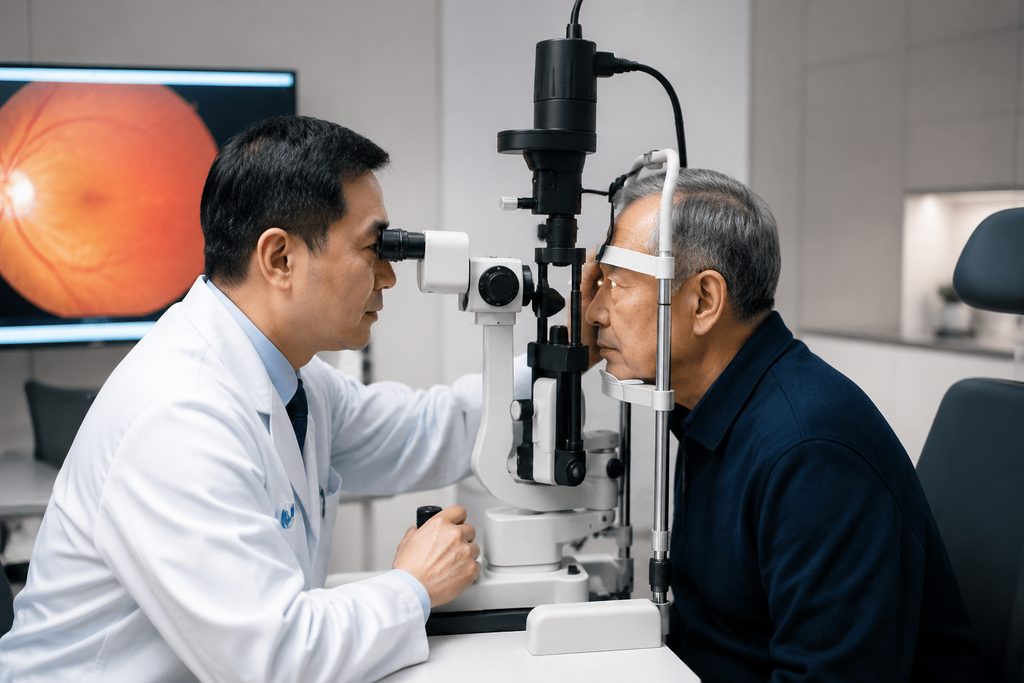
According to the World Health Organization, glaucoma is the second leading cause of blindness worldwide, affecting approximately 80 million people. In the United States alone, the Glaucoma Research Foundation reports that over 3 million Americans live with the condition, yet nearly half remain undiagnosed. When eye drops and laser therapy stop controlling intraocular pressure, surgery becomes the next step. For many patients, the glaucoma surgery cost China offers — often one-fifth to one-tenth of Western prices — transforms a financially impossible procedure into a realistic option.
We coordinate treatment at hospitals drawn from a database of 340+ top-ranked hospitals across 37 cities. That means access to ophthalmology departments ranked among China’s top 10 by the Fudan University specialty reputation list, without navigating the system alone.
How This Actually Works, Step by Step
You are sitting at home with a diagnosis of open-angle or angle-closure glaucoma. Your ophthalmologist has mentioned trabeculectomy, tube shunt surgery, or perhaps minimally invasive glaucoma surgery (MIGS). The pressure in your eye is not responding to medication. Now what?
Here is the sequence we walk patients through:
- Step 1 — Send your records. You upload your visual field tests, OCT scans of the optic nerve, IOP history, medication list, and any prior surgical notes. We translate these into Chinese for the reviewing ophthalmology team.
- Step 2 — Written second opinion. A glaucoma specialist at a top-tier hospital reviews your case and provides a written analysis: whether surgery is indicated, which procedure fits your glaucoma type, and what outcomes are realistic. This costs $300–500 and is for reference only, not a prescription.
- Step 3 — Video consultation. You speak directly with the specialist online. You explain your symptoms, your goals, your concerns about recovery. The doctor walks through the proposed surgical plan. This ranges from $100–300 for a standard international department consult to $500–800 for a top-specialist video session.
- Step 4 — Decide on travel. If you choose to proceed, we coordinate your S2 visa application with supporting hospital documents, schedule your in-person consultation, and arrange a bilingual medical companion to accompany you through registration, pre-operative testing, and the surgery day itself.
Nothing is promised. What we do is remove the friction that makes overseas surgery feel impossible.
What Glaucoma Surgery in China Actually Costs
The glaucoma surgery cost China patients encounter varies by hospital tier and procedure type. A standard trabeculectomy at a top public hospital’s international department typically runs $2,000–5,000. The same procedure in the United States averages $7,000–11,000 per eye for the surgeon and facility fees alone, before anesthesia and follow-up care. Tube shunt surgery follows a similar ratio.
Why the gap? Labor costs, facility overhead, and the structure of China’s public hospital system. A senior glaucoma specialist at a Fudan-ranked ophthalmology center performs hundreds of these procedures annually — volume that drives both efficiency and expertise.
But the surgical fee is only one line item. Here is what a full treatment journey looks like:
| Cost Item | China (USD) | United States (USD) |
|---|---|---|
| Trabeculectomy (one eye) | $2,000–5,000 | $7,000–11,000 |
| Tube shunt surgery | $3,000–6,000 | $10,000–15,000 |
| Pre-operative testing (OCT, visual field, IOP) | $150–400 | $800–1,500 |
| Video consultation with specialist | $100–800 | $250–500 (often not covered) |
| Bilingual medical companion | from $300/day | N/A |
| Airport transfer (round-trip) | $200 | N/A |
Prices vary by hospital and case complexity. A complex revision surgery after a failed trabeculectomy will cost more than a first-time MIGS procedure. That is why we always recommend a written second opinion before committing to travel.
Is Glaucoma Surgery Safe in China?
The question patients ask most directly: is glaucoma surgery safe in China? The honest answer requires separating the hospital tier from the country average. China has over 35,000 hospitals. The top 5% — the ones in our database — operate at a standard comparable to leading Western centers.
Fudan University’s hospital ranking system evaluates ophthalmology departments on clinical reputation, research output, and patient outcomes. Hospitals like Zhongshan Ophthalmic Center at Sun Yat-sen University in Guangzhou and the Eye and ENT Hospital of Fudan University in Shanghai perform glaucoma surgeries in volumes that few Western centers match. A surgeon who performs 300 trabeculectomies annually has seen complications a surgeon performing 30 has only read about.
That said, risks are real. Trabeculectomy carries a risk of hypotony (dangerously low pressure), infection, bleb failure, and cataract formation. These risks exist in every country. What changes in China is the importance of selecting the right hospital. A random county-level hospital is not the same as a Fudan-ranked specialty center. We only work with the latter.
A Realistic Timeline
Medical travel is not fast. Anyone who promises otherwise is selling something. Here is what the process actually looks like, with the waiting periods people forget:
| Stage | What Happens | Duration |
|---|---|---|
| Week 1 | You gather and upload medical records; we translate them | 3–7 days |
| Week 2–3 | Written second opinion from glaucoma specialist | 7–14 days |
| Week 3–4 | Video consultation with the specialist | 3–7 days after opinion |
| Week 4–6 | Decision + S2 visa application with hospital invitation letter | 1–3 weeks (varies by consulate) |
| Week 6–8 | Travel to China; in-person consultation and pre-op testing | 2–3 days |
| Week 8 | Surgery | 1 day (outpatient or 1-night stay) |
| Week 9–12 | Post-operative follow-ups in China before flying home | 2–4 weeks |
| Month 3–6 | Recovery and IOP monitoring with your home ophthalmologist | Ongoing |
Notice the gap between “decision” and “travel.” Visa processing is the step patients consistently underestimate. S2 visas for medical treatment require a hospital-issued invitation or treatment confirmation letter, and consulate processing times range from one to three weeks depending on your home country. We prepare the documentation package, but we do not control the consulate.
What Can Go Wrong — and What Happens Then
Let’s be direct about the failure modes. They exist, and pretending otherwise helps no one.
The specialist reviews your records and says surgery is not indicated. This happens more often than patients expect. Your glaucoma may be controlled with medication adjustments, or the risk-benefit ratio may not justify surgery. You have spent $300–500 on a written opinion. What you gained is certainty — and avoidance of an unnecessary operation. That money is not wasted.
You arrive in China and the in-person exam reveals something the records missed. OCT scans and visual fields are only as good as the machine that produced them. A different angle on gonioscopy, a different IOP reading at a different time of day — these can change the surgical plan. The specialist may recommend a different procedure than initially discussed. You are not obligated to proceed. You can return home having only paid for consultations and travel.
Surgery succeeds but recovery is complicated. Bleb leaks, elevated pressure, or scarring can require additional interventions. This is why we recommend staying in China for at least two to four weeks after surgery, not flying home three days later. Your surgeon needs to see the bleb form and the pressure stabilize. Flying home too early means your local ophthalmologist manages a post-operative course they did not design.
You cannot get a visa in time. Consulates do not expedite for medical urgency unless it is life-threatening. Glaucoma, while serious, rarely qualifies. If your visa is delayed, we reschedule the hospital consultation. Nothing is lost except time.
Choosing the Right Hospital: What the Numbers Mean
Patients searching for the best eye hospital for glaucoma Shanghai often assume there is one answer. There is not. The right hospital depends on your glaucoma type, your surgical history, and your tolerance for a non-English-speaking environment.
Shanghai’s Eye and ENT Hospital of Fudan University consistently ranks among China’s top ophthalmology departments. It performs high volumes of trabeculectomy and tube shunt procedures, and its international department offers English-speaking coordination. But it is a public hospital. That means crowded hallways, limited hand-holding, and a pace that Western patients sometimes find overwhelming.
Private international hospitals like Jiahui and United Family offer a calmer experience with direct insurance billing and Western-trained staff. The trade-off: fewer glaucoma surgeries performed annually, and higher fees. A trabeculectomy price abroad at a private Shanghai facility may run $6,000–8,000 — still below US rates, but double the public international department.
What matters more than the hospital’s overall ranking is the individual surgeon’s trabeculectomy volume and complication rate. Ask for these numbers in your video consultation. A good specialist will share them. A defensive one will not.
Practical Considerations: Records, Visa, Payment, and Follow-Up
Before you book a flight, several practicalities deserve attention.
Medical records. You need at least six months of IOP readings, two or more visual field tests, an OCT of the retinal nerve fiber layer, and a complete medication history. Missing records mean a less accurate second opinion. Gather everything before contacting us.
Visa. You will apply for an S2 visa, which covers short-term private affairs including medical treatment. Your accompanying family member applies for the same category. The hospital provides an invitation letter confirming your scheduled consultation. We guide the application, but approval rests with the consulate.
Payment. Public hospitals in China require pre-payment for surgery. International insurance plans typically reimburse after the fact, not before. Private international hospitals may bill your insurer directly. Confirm your plan’s overseas surgical coverage before committing.
Language. Even at top hospitals, the operating theater staff and ward nurses may speak limited English. Your bilingual companion handles registration, prescription pickup, and post-operative instructions. Without that support, a public hospital experience becomes genuinely difficult.
Follow-up at home. Glaucoma surgery is not a one-time fix. You need IOP checks at week 1, month 1, month 3, and month 6 after surgery, minimum. Your home ophthalmologist must agree to manage this follow-up before you travel. If they refuse, reconsider whether overseas surgery is wise for your situation.
Frequently Asked Questions
A trabeculectomy at a top Chinese public hospital’s international department typically costs $2,000–5,000 per eye, compared to $7,000–11,000 in the United States. Tube shunt surgery runs $3,000–6,000 in China versus $10,000–15,000 in the US. Total savings, including travel and accommodation, often reach 50–70%.
Most patients need two to four weeks in China for initial post-operative monitoring. Vision may be blurry for the first one to two weeks as the eye heals. Full stabilization of intraocular pressure takes three to six months. You will need ongoing IOP checks with your home ophthalmologist after returning.
You can book a consultation package — records translation, written second opinion, video consultation, and in-person appointment coordination — before traveling. Surgery itself cannot be scheduled without an in-person examination. This is a universal rule at Chinese public hospitals, not a limitation of our service. We coordinate the consultation package and, if surgery is indicated, the subsequent admission process.
That is valuable information. You receive a written explanation of the disagreement and the reasoning behind the alternative recommendation. You are under no obligation to proceed with surgery in China. Many patients use the second opinion to have a more informed conversation with their home ophthalmologist.
No. Chinese glaucoma specialists offer the full range: trabeculectomy, tube shunt implants (Ahmed, Baerveldt), minimally invasive glaucoma surgery (MIGS) including iStent and gonioscopy-assisted transluminal trabeculotomy (GATT), and laser procedures like selective laser trabeculoplasty (SLT). The recommended option depends on your glaucoma type, severity, and prior surgical history.
Your Next Step
Glaucoma surgery is a serious decision, and doing it 7,000 miles from home adds complexity. Our role is to reduce that complexity — to connect you with ophthalmology departments ranked among China’s best, translate your records, arrange consultations, and stand beside you in the hospital. We do not perform surgery, and we do not promise outcomes. We coordinate the journey.
If you are weighing your options, start with a written second opinion. Send your records through our consultation page, and a glaucoma specialist will review your case. You will know within two weeks whether traveling to China makes sense for your eyes. That clarity is worth the cost, whatever you decide.
For more medical information and treatment options in China, visit chinamedservices.com (China Medical Services).
