Guangzhou Respiratory Health Institute: A Guide for International Patients
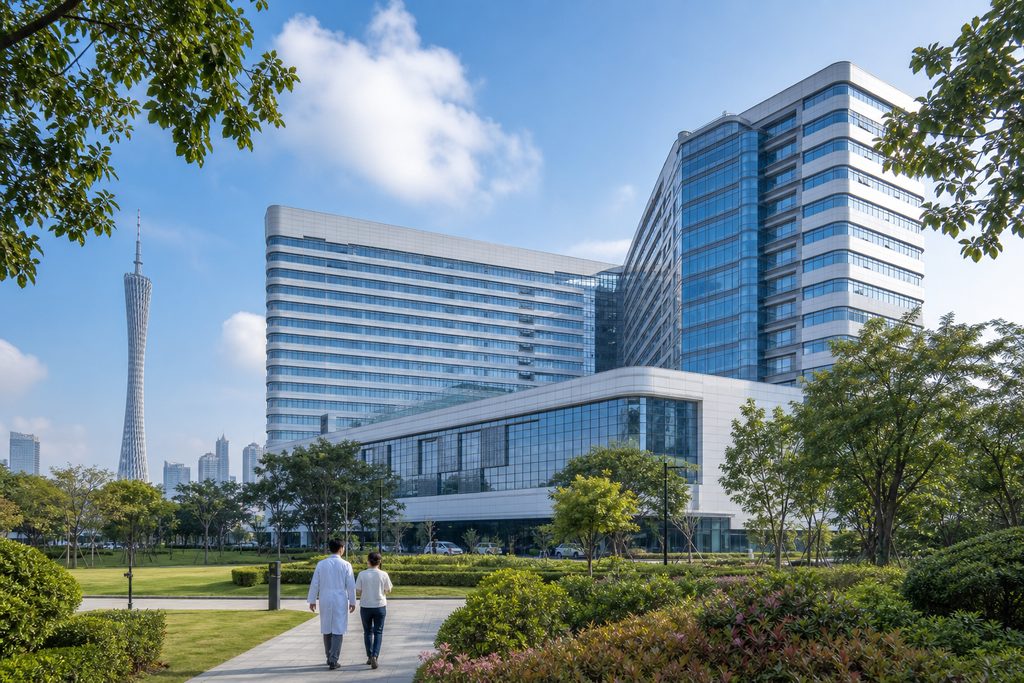
When 54-year-old Daniel from Portland was told his persistent cough and worsening breathlessness pointed to interstitial lung disease, his first instinct was to search for options outside the U.S. A specialist visit near his home was booked out four months. The quote for a full diagnostic workup ran past $9,000 before any treatment. A colleague mentioned Guangzhou. Daniel had never heard of the city’s respiratory hospitals. He did not know what the guangzhou respiratory health institute cost would look like, whether he could get an appointment, or if the care would be safe. That confusion is common. This guide answers those questions directly.
What “Guangzhou Respiratory Health Institute” Actually Refers To
There is no single government entity called the Guangzhou Respiratory Health Institute. The name is what international patients often use when searching for the respiratory medicine departments at Guangzhou’s top-tier hospitals — most notably the First Affiliated Hospital of Guangzhou Medical University, which houses the Guangzhou Institute of Respiratory Health. That institute is one of China’s leading centers for respiratory research and clinical care, with a national reputation in conditions like COPD, asthma, lung infections, interstitial lung disease, and lung cancer diagnostics.
So when you search for the Guangzhou Respiratory Health Institute, you are really looking for the respiratory specialty teams at Guangzhou’s major public hospitals. Guangzhou ranks third in China for Fudan Top 100 hospitals, with 10 institutions on that list. That matters. It means the city has depth, not just one flagship.
Is Treatment at Guangzhou Respiratory Health Institute Safe?
For most international patients, the honest answer is: yes, if you choose the right hospital tier and understand the system. China’s top public hospitals are accredited, heavily regulated, and perform enormous surgical and diagnostic volumes. The Guangzhou Institute of Respiratory Health is affiliated with a major teaching hospital and publishes in international journals.
But safety is not just about the institution. It is about access. A foreign patient who cannot communicate symptoms clearly, who does not understand the queuing system, or who books into a department that does not match their condition will have a worse experience. Language and navigation are the real risks here — not the medicine.
Private international hospitals in Guangzhou, such as those with JCI accreditation, offer English-speaking staff and Western-style care. They cost more. They are also easier for a first-time visitor to navigate.
Who This Is Right For — and Who It Isn’t
Respiratory care in Guangzhou makes sense for some patients and not others. Being clear about that saves everyone time.
Typically a good fit:
- Patients with a confirmed or suspected chronic respiratory condition seeking a second opinion or advanced diagnostics
- People facing a long wait or high cost at home for tests like high-resolution CT, bronchoscopy, or lung function studies
- Patients whose condition is stable enough to travel and who can spend 7–14 days in China for evaluation
- Anyone wanting a written second opinion from a high-volume respiratory center before committing to surgery
Probably not a good fit:
- Anyone in acute respiratory failure or needing emergency stabilization — travel is not appropriate
- Patients with active, highly infectious conditions requiring isolation, where local care is safer and faster
- People expecting a guaranteed appointment with a named professor on a specific date
- Those who cannot arrange 10–14 days abroad or who need immediate treatment within days
The Options, Compared
International patients generally choose between three paths. Each has a different cost, speed, and comfort level.
| Option | Typical Cost (USD) | Wait Time | Language Support | Best For |
|---|---|---|---|---|
| Public hospital, standard channel | $150–$400 per specialist visit | Same-day queue, no advance booking | Limited; interpreter needed | Budget-conscious, flexible patients |
| Public hospital, international/VIP channel | 1.5–2× standard rates | Days to 2 weeks | English coordinators | Patients wanting senior specialists |
| Private international hospital | $400–$900+ per visit | Often within days | Full English service | First-time visitors, insurance holders |
| Remote written second opinion | $300–$500 | 3–7 days | Translated report | Deciding whether to travel at all |
Which column suits you depends on urgency and budget. A patient with a stable condition and time to plan often gets the best value from the international channel at a public hospital. Someone who needs answers fast and values comfort may prefer a private hospital. And anyone unsure whether China is the right move should start with a remote second opinion — it costs far less than a flight.
How to Book an Appointment at Guangzhou Respiratory Health Institute
This is where most foreign patients hit a wall. Standard outpatient clinics at Chinese public hospitals do not accept advance bookings from overseas. You register in person, on the day, in a queue. Surgery and inpatient admission require an in-person consultation first — that is the rule at nearly every public hospital.
So the practical path looks like this:
- Gather your existing records — imaging, pathology, prior reports — and have them translated
- Send them for a remote review so the right department is identified before you fly
- Use the hospital’s international or VIP channel if you want to lock in a senior specialist
- Travel with your documents and register through that channel on arrival
- Attend the consultation, complete diagnostics, and receive a treatment plan
Skip step two and you risk booking the wrong department. That is a common and expensive mistake.
What It Costs: Lung Treatment in China Price Ranges
Costs vary widely by hospital and case complexity, so treat every figure as a starting range, not a quote. That said, the gap with Western pricing is real.
| Service | China (Top Public Hospital) | United States |
|---|---|---|
| Specialist consultation | $150–$400 | $300–$600 |
| High-resolution chest CT | $150–$400 | $1,000–$3,000 |
| Bronchoscopy | $500–$1,500 | $3,000–$8,000 |
| Lung cancer surgery (lobectomy) | $12,000–$25,000 | $60,000–$150,000+ |
| Full diagnostic workup package | $800–$2,500 | $5,000–$15,000 |
These are illustrative ranges. Final pricing depends on the hospital, the complexity of your case, and whether you use a standard or international channel. Public hospitals require prepayment; insurance reimbursement happens afterward. Private international hospitals often bill insurance directly.
For a broader picture of what different procedures cost across China, our specialty and department guide breaks down top-ranked hospitals by condition.
Practical Considerations for Respiratory Care in Guangzhou
Records and documentation. Bring original imaging on disc, pathology slides if relevant, and translated summaries. Chinese specialists work fast but need complete inputs.
Visa. Medical travel to China uses the S2 visa, with a notation for medical treatment purposes. Stays beyond 180 days require the S1. Accompanying family members also apply for S2. Note that the M visa is for commercial and trade activity — it is not a medical visa. Always confirm current requirements with the nearest Chinese embassy or consulate, and prepare supporting hospital documents.
Payment. Public hospitals require upfront payment. International cards are accepted at international channels and private hospitals; smaller public counters may not accept foreign cards, so plan accordingly.
Language. This is the single biggest practical barrier. Large Chinese hospitals handle tens of thousands of outpatient visits daily. Signage, registration, and pharmacy steps are in Chinese. A bilingual companion who handles queuing, registration, payment, and translation changes the experience entirely.
Follow-up after returning home. Ask for your imaging, reports, and treatment summary in English before you leave. Your home physician will need them.
Frequently Asked Questions
Not through the standard public channel — those clinics register patients in person, on the day. Advance coordination is possible through a hospital’s international or VIP department, or with assistance. Expect to send your records first so the correct department is identified.
China’s top public hospitals are regulated and high-volume, and the Guangzhou Institute of Respiratory Health is a recognized center. The main risks for foreigners are communication and navigation, not the clinical care itself. Using an English-capable channel or a bilingual companion reduces those risks substantially.
Diagnostics and procedures typically run 60–80% less than U.S. prices. A specialist visit might cost $150–$400; a chest CT $150–$400; lung surgery $12,000–$25,000. These are ranges — final costs vary by hospital and case complexity.
Foreign patients typically use the S2 visa for short-stay medical treatment, with S1 for stays over 180 days. Family members also apply for S2. The M visa is for business and does not cover medical treatment. Confirm details with your nearest Chinese embassy, as requirements can change.
You are never obligated to proceed. A remote second opinion or in-person consultation gives you information; the decision to treat remains yours. Getting a written plan before committing to travel or surgery is the most reliable way to avoid surprises.
Your Next Step
Respiratory care in Guangzhou can offer real advantages — deep specialist expertise, faster diagnostics, and costs far below Western pricing. But the system rewards preparation. Patients who send records ahead, choose the right channel, and arrange language support consistently have smoother experiences than those who arrive and improvise.
We are China Medical Services, a coordination service — not a hospital, and we do not provide diagnoses. We help international patients match with appropriate hospitals, arrange remote reviews, and navigate the logistics of care in China. If you are weighing options, you can start with a free consultation and decide from there. No pressure, no obligation. Just clarity before you commit.
For more medical information and treatment options in China, visit chinamedservices.com (China Medical Services).
