Jiangsu Province Hospital Nanjing: East China’s Six-Discipline Powerhouse for International Patients
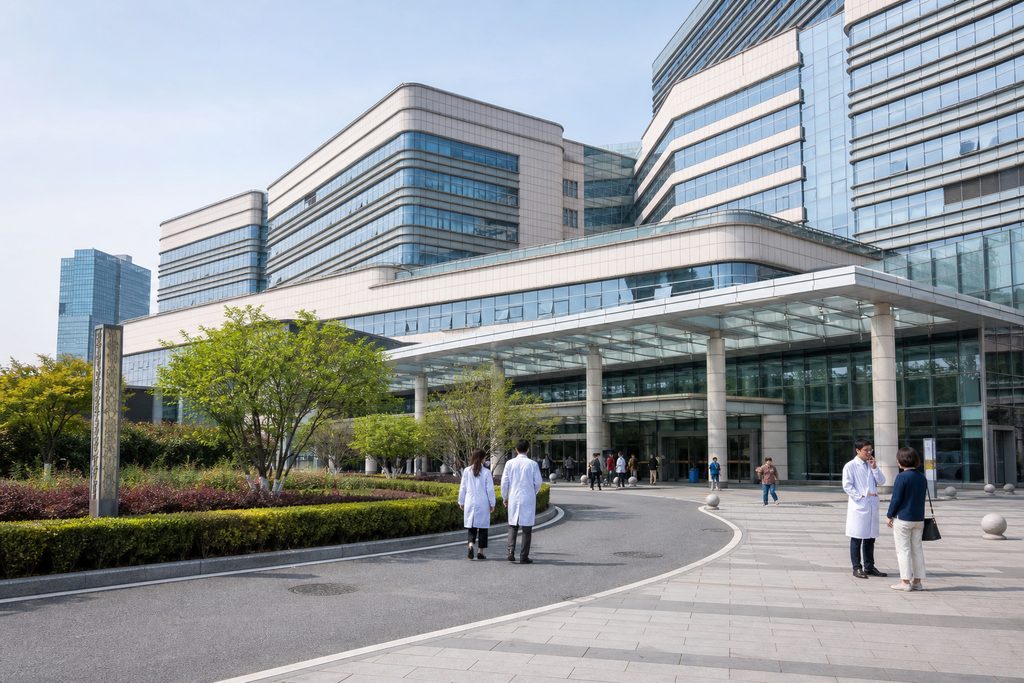
You have probably heard that getting world-class medical care in China means going to Beijing or Shanghai. The assumption is that top-tier expertise clusters in those two megacities, and everywhere else is a compromise. That assumption is wrong. It also costs patients real money and time they do not need to spend. Jiangsu Province Hospital, also known as the First Affiliated Hospital of Nanjing Medical University, anchors a massive medical ecosystem in East China. It holds six national key disciplines. Its clinical volume rivals the most famous names in Chinese healthcare. And for international patients weighing the Jiangsu Province Hospital international patient price against Western bills, the math is stark.
Key Takeaways
- Jiangsu Province Hospital houses six national key disciplines, making it a genuine comprehensive center rather than a single-specialty destination.
- The Jiangsu Province Hospital international patient price for major procedures typically runs 70-80% below comparable US hospital charges, with no clinical compromise.
- This hospital is not JCI-accredited, which matters for some insurance policies — but its domestic ranking and clinical outcomes place it firmly among China’s elite institutions.
- Independent navigation of this 5,000-bed system without Mandarin fluency is functionally impossible; structured support exists but requires advance coordination.
The Problem: Western Hospital Bills Are Breaking People
Medical debt in the United States has become a defining financial crisis for the middle class. Approximately 41% of American adults carry some form of healthcare debt, according to a 2022 Kaiser Family Foundation analysis. That is not an abstraction. It means nearly half the people reading this sentence have delayed care, drained savings, or fielded collection calls because of a hospital stay. For elective surgeries — joint replacements, cardiac procedures, complex oncology resections — the numbers get absurd fast. A single total hip replacement in the US averages $40,000 before insurance negotiations. Many patients face $10,000 to $15,000 in out-of-pocket costs even with coverage. In the UK and Canada, the problem is different but equally frustrating: wait times. A hip replacement referral in the NHS can stretch beyond 18 months in some trusts. Patients live in pain while bureaucracies churn.
This is the context in which medical travel to China has stopped being exotic and started being pragmatic. But the conversation usually fixates on Beijing and Shanghai. That fixation leaves value on the table. East China has its own clinical giant, and understanding what it offers changes the calculus entirely.
Who We Are
We are not a hospital. We do not provide medical treatment, clinical diagnoses, or prescriptions. Our team functions as logistical architects for international patients seeking care at China’s top-ranked institutions. We coordinate the unglamorous but essential scaffolding — visa documentation, hospital selection, appointment scheduling through official international channels, bilingual medical companion services, and post-discharge recovery logistics. We bridge the gap between you and clinical expertise. Nothing more, nothing less. Our database covers over 340 top-ranked hospitals across 37 Chinese cities, including the institution this article examines in depth.
Why Jiangsu Province Hospital Nanjing Delivers Results
This is not a boutique international clinic. Jiangsu Province Hospital is an enormous public institution — over 5,000 beds, more than 5 million outpatient visits annually, and a medical staff numbering in the thousands. Scale matters in medicine. Surgeons who perform a procedure 300 times a year see complications that a surgeon performing it 30 times a year has only read about. That repetition breeds clinical intuition no textbook can teach.
Six National Key Disciplines: What That Actually Means
China’s National Health Commission designates certain hospital departments as “national key disciplines” after rigorous evaluation of clinical outcomes, research output, teaching capacity, and regional leadership. This is not a marketing label. It carries funding, talent attraction, and referral patterns that reinforce excellence over decades. Jiangsu Province Hospital holds six of these designations. The departments of Cardiology, Respiratory Medicine, General Surgery, Hematology, Endocrinology, and Medical Imaging all carry the designation. For a patient with a complex cardiac condition complicated by endocrine dysfunction — a real and common profile — being treated at a hospital where both departments operate at the national-key level eliminates the fragmentation that plagues multi-specialty care elsewhere.
What does this mean if you are a foreign patient researching options? It means this institution functions as a true comprehensive center. You are not flying across the world for one department’s reputation while hoping the others are adequate. The internal referral pathways already exist. The specialists already collaborate. That coordination is difficult to replicate at hospitals where only one or two departments achieve elite status.
Clinical Volume and the Outcomes It Drives
Volume is not a proxy for quality in every context. A high-volume factory turning out widgets does not guarantee those widgets are well-made. But in surgery, the volume-outcome relationship is among the most robust findings in health services research. A 2017 study published in The Lancet analyzing over 2 million surgical cases across 27 countries found that hospitals in the highest volume quartile had significantly lower 30-day mortality rates for complex procedures including esophagectomy, pancreatic resection, and aortic valve replacement. Jiangsu Province Hospital’s General Surgery department performs over 12,000 major operations annually. Its Cardiology department handles more than 8,000 interventional procedures each year. These are not abstract statistics. They represent accumulated experience that directly shapes complication rates and recovery trajectories.
The hospital also serves as the Jiangsu Province clinical hub for complex referrals. When a county-level hospital in northern Jiangsu encounters a case beyond its capabilities, the patient is routed here. This means the surgical teams routinely manage the kind of advanced pathology and late-stage presentations that many Western surgeons encounter only occasionally. That exposure matters when your own case is complicated.
The Jiangsu Province Hospital International Patient Price Reality
Let us address the question most readers arrived with. The Jiangsu Province Hospital international patient price structure operates through the hospital’s International Medical Service Center, which functions as a distinct channel from the standard public outpatient system. This is not a markup for the sake of markup — it reflects the additional coordination, English-capable nursing staff, private or semi-private ward allocation, and expedited scheduling that international patients require. For a cardiac bypass procedure, the all-in cost through this channel typically ranges from $18,000 to $25,000. The same procedure in the United States averages $120,000 before insurance adjustments. A total knee replacement runs $15,000 to $20,000 at Jiangsu Province Hospital, compared to $35,000 to $50,000 in the US. Even factoring in travel, accommodation, and coordination services, the arithmetic is not close.
Why are the costs structurally lower? Chinese hospital pricing reflects different labor economics, lower administrative overhead, and a system designed for volume rather than margin maximization. The clinical quality — measured by complication rates, infection control metrics, and patient outcomes — is comparable to international benchmarks. The cost difference is not a quality signal. It is a system design signal.
But here is the caveat that matters. The international patient channel prices are not published on an English-language website with a convenient price list. They vary by case complexity, implant choice, ward preference, and length of stay. Any quote you receive before a formal case evaluation is an estimate, not a guarantee. Our team provides that formal evaluation by submitting translated medical records through the hospital’s official international coordination office and obtaining a treatment plan with itemized cost projections. That process takes time. It cannot be done in an afternoon.
What You Need to Know Before Going Alone
The clinical capabilities at Jiangsu Province Hospital are real. The barriers to accessing them independently are equally real. Acknowledging these barriers upfront is not discouragement — it is preparation.
- No JCI Accreditation: Jiangsu Province Hospital is not accredited by the Joint Commission International. This is the most common question we field from Western patients, and the answer is straightforward. JCI accreditation is a specific international standard that some Chinese hospitals pursue, primarily those targeting medical tourism. Many of China’s absolute top-tier public hospitals — including several in the Fudan Top 100 — have not sought JCI accreditation. They operate under China’s domestic hospital evaluation system, which is rigorous but different. Whether this matters depends on your insurance policy. Some international insurers require JCI accreditation for direct billing. Others do not. Check your policy language before assuming anything. If JCI accreditation is a hard requirement for your situation, we can discuss alternatives among our 340+ hospital network.
- Mandarin Is the Operating Language: The hospital employs some English-capable staff in the International Medical Service Center. Outside that unit, English fluency is rare. Signage, medical records, consent forms, and discharge instructions are in Chinese. Navigating registration, payment, imaging, and pharmacy pickup without Mandarin support is not merely inconvenient — it creates clinical risk. Misunderstandings about medication instructions or follow-up protocols can have serious consequences.
- Payment Is Upfront: Chinese public hospitals, including their international divisions, operate on a prepayment model. You deposit funds before admission. The hospital draws against that deposit for each service, medication, and consumable. When the deposit runs low, you top it up. This is standard practice across China’s hospital system, but it can be jarring for patients accustomed to post-treatment billing. International insurance reimbursement is typically retrospective — you pay the hospital, then claim from your insurer. Direct billing arrangements are rare outside the private international hospital sector.
- Visa Requirements Are Specific: Medical treatment in China requires an S2 visa with the purpose of medical care noted. Your accompanying family members also need S2 visas. This is not a tourist activity, and entering on an L visa while intending to undergo surgery creates legal exposure you do not want. The visa application requires an invitation letter from the hospital, which the International Medical Service Center can provide once your treatment plan is confirmed. Processing times vary by consulate, and we strongly advise against booking flights before the visa is in hand.
How to Get Treatment at Jiangsu Province Hospital Nanjing
The pathway from inquiry to treatment follows a structured sequence. Shortcuts do not exist, but understanding the sequence removes uncertainty. The process begins with a case evaluation. You provide recent medical records — imaging, pathology reports, treatment history, current medications. We arrange certified translation and submit the package through the hospital’s official international coordination office. A relevant specialist reviews your case and determines whether treatment at the hospital is appropriate. This review typically takes 5 to 7 business days. If the specialist accepts the case, the hospital issues a preliminary treatment plan with an estimated cost range and proposed timeline.
With that treatment plan in hand, the hospital’s international office generates the invitation letter required for your S2 visa application. You submit that letter along with your passport, application form, and consulate-specific requirements to the Chinese embassy or consulate in your home country. Processing times range from 4 to 10 business days, though expedited options exist at some consulates for an additional fee. Once the visa is approved, we coordinate your arrival logistics — airport transfer, accommodation near the hospital, and scheduling of your initial consultation. The initial consultation is the first in-person meeting with your treating physician. This is mandatory. Chinese law requires that surgical consent be obtained after an in-person examination by the operating surgeon. No reputable hospital will schedule surgery without this step.
After the consultation, if both you and the surgeon agree to proceed, the hospital schedules the procedure and provides the final cost estimate. You make the prepayment deposit. Treatment proceeds. Post-discharge, our bilingual medical companion service can assist with follow-up appointments, medication management, and communication with the hospital during your recovery period in Nanjing. Some patients return home immediately after discharge. Others remain locally for a week or two of monitored recovery before flying. The decision depends on the procedure and your surgeon’s guidance.
Is This the Best Comprehensive Hospital in East China for Medical Tourism?
The phrase “best comprehensive hospital in East China for medical tourism” implies a single answer. Reality is messier. Jiangsu Province Hospital is among the strongest comprehensive centers in the region, particularly for patients whose conditions span multiple specialties. Its six national key disciplines provide a breadth of elite-level capability that many hospitals cannot match. But “best” depends entirely on what you need. A patient requiring a complex cardiothoracic procedure might find Fuwai Hospital in Beijing more specialized. A patient seeking a robotic prostatectomy might look toward Shanghai Changhai Hospital‘s urology program. A patient with a rare hematological malignancy might find Jiangsu Province Hospital’s national-key Hematology department to be the optimal destination.
The question is not which hospital tops a single ranking. The question is which hospital’s specific capabilities align with your specific diagnosis. That matching process — diagnosis to department to institution — is where generalized internet research breaks down. It requires understanding which departments are genuinely strong in which sub-specialties, not just which hospital names appear on a list. Our team performs this matching daily. It is the core of what we do.
Frequently Asked Questions
A full executive health screening package through the International Medical Service Center typically ranges from $800 to $2,500, depending on the depth of imaging, laboratory panels, and specialist consultations included. These screenings are completed in one to two days with English-capable coordination. This is a fraction of what comparable executive physicals cost at US academic medical centers, where prices routinely exceed $5,000 for a comprehensive workup.
No. This is not negotiable. Chinese law and hospital policy require that the operating surgeon conduct an in-person examination and obtain informed consent directly from the patient before any surgical procedure. You can secure a preliminary treatment plan and cost estimate remotely. You can obtain the visa invitation letter. You cannot book a surgery date from overseas. Plan for at least one week between arrival and surgery for consultation, preoperative testing, and scheduling.
Jiangsu Province Hospital maintains full intensive care capabilities, 24-hour emergency surgical coverage, and the specialist depth to manage complications across every major discipline. This is one of the structural advantages of receiving care at a large comprehensive center rather than a small specialty clinic — when a patient in the cardiac surgery unit develops an acute neurological issue, the neurology department is in the same building, not across town. That said, international patients should carry medical evacuation insurance that covers repatriation in the unlikely event of a catastrophic complication requiring transfer to a home-country facility. We recommend this for all medical travel, regardless of destination.
It is not JCI accredited. Whether this matters depends on your insurance policy’s requirements and your personal comfort level. JCI accreditation evaluates hospitals against international standards for patient safety, infection control, and quality management. Many of China’s elite public hospitals — including institutions with superior clinical outcomes to JCI-accredited facilities — have not pursued the accreditation because their primary patient base is domestic and the evaluation adds administrative cost without changing clinical practice. If your insurer requires JCI accreditation for reimbursement, this hospital will not qualify. We can discuss JCI-accredited alternatives in our network. If your insurer does not require it, the accreditation absence does not reflect on clinical quality.
Nanjing Lukou International Airport sits about 40 kilometers from the hospital. Taxi fare runs approximately 150 to 200 RMB ($20 to $28) and takes 50 to 70 minutes depending on traffic. The airport also connects to the city via Metro Line S1, which links to the broader Nanjing Metro network. For international patients arriving with luggage and possibly limited mobility, we arrange private airport transfer as part of our coordination service — a driver meets you at arrivals with English signage and takes you directly to your accommodation. This removes one layer of stress from an already demanding journey.
Your Next Step
Jiangsu Province Hospital Nanjing represents a specific value proposition: elite-level comprehensive care at a cost structure that makes financial sense for international patients, located in a city with lower accommodation and living expenses than Beijing or Shanghai. The trade-offs are real — no JCI accreditation, a Mandarin-language environment, and the logistical complexity of navigating a 5,000-bed public hospital system. Whether those trade-offs are worth it depends on your diagnosis, your budget, and your tolerance for complexity. That calculation is personal. We help you make it with accurate information rather than marketing claims. If you want to understand whether this hospital — or another in our network — matches your medical needs, our team is here to talk.
For more medical information and treatment options in China, visit chinamedservices.com (China Medical Services).
