First Affiliated Hospital of Guizhou Medical University Cardiology: A Practical Guide for International Patients
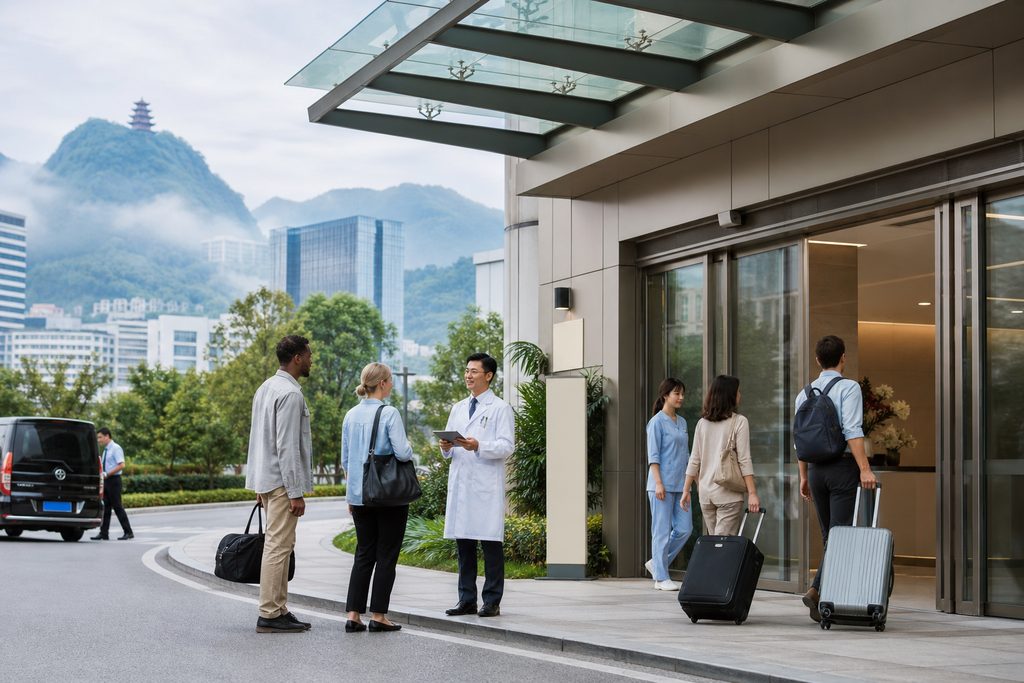
You’ve probably heard that getting cardiac care in China means either settling for unknown facilities or paying Western-level prices at private expat clinics. The reality is more nuanced. The First Affiliated Hospital of Guizhou Medical University sits in a tier of Chinese public hospitals that handles enormous cardiac caseloads at prices far below what patients from the US, UK, or Australia expect to pay. But it is not Fuwai Hospital. It is not Zhongshan. And for a foreign patient weighing a heart procedure, that distinction matters more than most websites will tell you.
This article gives you the straight picture: what this hospital actually offers for cardiology, what it costs, how the process works for someone without Chinese language skills, and whether it makes sense for your specific situation. No glossy brochure language. Just the facts our team has learned coordinating care for international patients across China’s hospital system.
Cardiology Hospital Guizhou Medical University Price: The Short Answer
The cardiology hospital Guizhou Medical University price for common procedures runs roughly one-fifth to one-tenth of what the same care costs in the United States. A diagnostic coronary angiogram at the First Affiliated Hospital typically falls between $800 and $1,500. Percutaneous coronary intervention with one drug-eluting stent ranges from $4,000 to $7,000. Coronary artery bypass grafting, depending on complexity, lands between $12,000 and $18,000.
Those numbers assume you access care through the hospital’s international or VIP coordination pathway, not the standard public queue. The standard public route is cheaper still but effectively impossible to arrange from abroad without local help. That caveat changes everything about how a foreign patient approaches this hospital.
Who This Is Right For — and Who It Isn’t
Guizhou Medical University’s First Affiliated Hospital makes sense for a specific profile of international cardiac patient.
Good candidates typically include:
– Patients with stable coronary artery disease who have time to travel and recover without emergency intervention
– Those seeking a second opinion on angiography results or stent placement recommendations
– Patients who need elective PCI or CABG and want substantial cost savings without sacrificing procedural volume
– Families already living in or near Guiyang, or with relatives in Guizhou province
– Patients whose home cardiologist has cleared them for travel and provided complete medical records in English
Who should not pursue care here:
– Anyone with acute coronary syndrome, unstable angina, or recent myocardial infarction. You need intervention now, not a visa application.
– Patients requiring complex congenital heart repair or advanced electrophysiology. Those cases belong at Fuwai Hospital in Beijing or Zhongshan Hospital in Shanghai.
– Anyone unwilling to navigate a Mandarin-first hospital environment. This hospital is not designed for walk-in international patients.
– Patients whose insurance requires Western-accredited facilities. Most Chinese public hospitals, including this one, lack JCI accreditation.
Being explicit about who should not come here is what makes the rest of this guide credible. This hospital does high-volume, competent cardiac work. It is not the place for rare, high-risk, or ultra-specialized procedures.
The Options, Compared
You have genuine alternatives. Here is how they stack up for a foreign patient considering cardiac care in China.
| Factor | First Affiliated Hospital of Guizhou Medical University | Fuwai Hospital (Beijing) | Private International Hospital (e.g., United Family) | US Hospital |
|---|---|---|---|---|
| PCI with one stent | $4,000–$7,000 | $8,000–$12,000 | $18,000–$25,000 | $35,000–$50,000 |
| CABG | $12,000–$18,000 | $15,000–$22,000 | $40,000–$60,000 | $120,000–$200,000 |
| Cardiac caseload | High (regional referral center) | Highest globally (14,000+ cardiac surgeries annually) | Low-to-moderate | Varies by center |
| English-speaking staff | Limited; interpreter needed | Dedicated international department | Yes, fully English-speaking | Yes |
| Insurance direct billing | No | Rarely | Yes, most major insurers | Yes |
| Appointment access from abroad | Requires coordination service | Possible through international department | Easy, online booking | Standard referral process |
If budget is your primary constraint and your case is routine, Guizhou Medical University delivers real savings. If you want the highest-volume cardiac center in the world with an established international pathway, Fuwai justifies the higher price. If you want Western-style convenience and insurance simplicity, a private international hospital is the answer — at triple the cost of Guizhou.
Is Guizhou Medical University Hospital Good for Heart Surgery?
The honest answer: competent for routine cases, not the place for complex ones. The First Affiliated Hospital of Guizhou Medical University is a provincial-level Grade A tertiary hospital — the highest classification in China’s hospital system. Its cardiology and cardiac surgery departments handle substantial regional volume. The hospital serves as a referral center for Guizhou province, which has a population of roughly 38 million.
But volume and reputation are different things. Fuwai Hospital in Beijing performs over 14,000 cardiac surgeries annually — the highest in the world. That is a level of subspecialization no provincial hospital matches. For a straightforward CABG or single-vessel PCI, the technical skill at Guizhou Medical University is solid. For a redo sternotomy, complex valve repair, or arrhythmia ablation requiring advanced mapping, you should be looking at Beijing or Shanghai.
What the hospital does well is stable, elective interventional cardiology. Coronary angiography, stent placement for stable lesions, and conventional bypass surgery fall well within its capabilities. The cardiac catheterization lab operates at high daily volume. The surgeons see enough routine cases to maintain proficiency.
What you will not find here is a polished international patient department. Expect Mandarin-first everything. Your records need translation. Your consent forms will be in Chinese. You need someone physically present who speaks both languages and understands how Chinese public hospitals function. That is not a criticism — it is the reality of a provincial public hospital that was never designed for foreign patients.
How to Book Cardiac Treatment at Guizhou Hospital
Booking cardiac treatment at this hospital as a foreign patient follows a sequence that surprises most people. You cannot simply email the cardiology department and reserve a bed. Chinese public hospitals operate on a same-day registration system for outpatient visits. Surgery is scheduled only after an in-person consultation with the attending surgeon.
The realistic pathway looks like this:
First, you assemble complete medical records: recent ECG, echocardiogram, coronary angiography images and reports, blood work, and a referral letter from your home cardiologist. These need professional translation into Chinese.
Second, you either travel to Guiyang for an initial outpatient visit or use a proxy consultation service. A proxy visit means a local representative takes your translated records to the hospital, registers under your name, and meets with the cardiology department to discuss your case. This is how many international patients avoid an expensive preliminary trip that may not even result in a treatment plan.
Third, if the cardiology team confirms you are a surgical or interventional candidate, they will issue a treatment plan and admission date. At that point, you apply for your S2 visa with the hospital’s invitation letter and treatment confirmation documents.
Fourth, you travel to Guiyang, complete pre-operative testing, undergo the procedure, and remain for post-operative observation — typically 7 to 14 days for PCI, 14 to 21 days for CABG.
The best cardiology department Guiyang international patients can access is at this hospital, but access requires local coordination. There is no English-language hotline. No online booking portal for foreigners. The pathway runs through a bilingual coordinator who knows the hospital’s internal processes.
What It Costs
Let us break down the real numbers for heart bypass surgery cost China for foreigners, using this hospital as the reference point.
A standard CABG at the First Affiliated Hospital of Guizhou Medical University costs between $12,000 and $18,000. That includes the surgery itself, standard ICU stay, ward recovery, routine medications, and basic nursing care. It does not include international travel, accommodation for family members, medical translation services, or any complications requiring extended ICU time.
The same procedure at a top-tier Beijing hospital runs $15,000 to $22,000. At a private international hospital in Shanghai, expect $40,000 to $60,000. In the United States, the average CABG costs over $120,000 before insurance. In the UK privately, roughly £25,000 to £35,000.
For medical tourism heart stent China cost, a single drug-eluting stent with placement at Guizhou Medical University runs $4,000 to $7,000. Two stents push the total to $6,000 to $10,000. Compare that to $35,000 to $50,000 in the US.
What drives variance: number of vessels bypassed, whether the procedure is on-pump or off-pump, length of ICU stay, choice of stent (domestic versus imported), and whether you go through the standard public channel or the international coordination pathway. The coordination pathway adds roughly 50% to 100% to the base public price — that premium buys you senior surgeon assignment, faster admission, and some English-language support.
Practical Considerations: Records, Visa, Payment, and Follow-Up
Your medical records are the single most important factor in whether this hospital will even accept your case. Chinese cardiac surgeons will not schedule surgery based on a summary email. They want raw imaging — the actual angiography DICOM files, not just the written report. If your home hospital will not release these, your case stalls before it starts.
Visa category matters. For medical treatment in China, you need an S2 visa with the purpose annotated for medical treatment. This is not the M visa — that is for commercial and trade activities. Your accompanying family members also apply for S2 visas. Processing typically takes one to three weeks at your local Chinese embassy or consulate, assuming you have the hospital’s invitation letter, treatment plan, and proof of funds. No one can guarantee approval. Embassy requirements shift.
Payment is upfront. Chinese public hospitals require a deposit before admission, typically 50% to 100% of the estimated procedure cost. Most accept international credit cards at the international service counter, but wire transfer is more reliable for large amounts. Insurance is reimbursement-based — you pay the hospital, then claim from your insurer. Few Western insurers have direct billing arrangements with Chinese public hospitals.
Language is the daily friction point. Nurses on the cardiac ward speak Mandarin and possibly the local Guizhou dialect. Your surgeon may read English medical literature but will likely not conduct informed consent in English. You need a bilingual companion for everything from pre-op testing to discharge paperwork.
Follow-up after you return home is straightforward for cardiology. Your Chinese surgeon will provide a discharge summary in Chinese — get it professionally translated before you leave. Your home cardiologist can manage long-term medication, stent surveillance, and rehabilitation. The Chinese hospital will not chase you for follow-up appointments. You initiate contact if issues arise.
Frequently Asked Questions
Is Guizhou Medical University hospital good for heart surgery compared to Beijing hospitals?
For routine CABG and single or double-vessel stenting, the technical quality is acceptable. For complex valve repair, redo surgery, or advanced ablation, Beijing centers like Fuwai Hospital have substantially higher volume and sub-specialist depth. Choose based on case complexity, not just price.
Can I book cardiac treatment at Guizhou hospital directly from abroad?
Not easily. The hospital has no English-language international patient office that handles remote booking for cardiology. You either travel to Guiyang for an in-person outpatient visit or use a proxy consultation service where a local representative presents your translated records to the cardiology department. Most foreign patients use the proxy route to avoid a wasted trip.
What happens if I need emergency cardiac care while in Guiyang?
The emergency department at the First Affiliated Hospital will treat you regardless of visa status or payment ability at the point of care. But emergency PCI for acute MI through the public emergency pathway means you get whichever interventionalist is on call, not a chosen senior specialist. This is another reason stable, elective cases are the right fit for this hospital.
Will my home country insurance cover heart surgery at a Chinese public hospital?
Most international insurers will reimburse for medically necessary care at a recognized tertiary hospital, but you must confirm before traveling. Some policies exclude non-JCI-accredited facilities. The First Affiliated Hospital of Guizhou Medical University is not JCI-accredited. Check your policy language carefully.
Your Next Step
If you are weighing cardiac care at the First Affiliated Hospital of Guizhou Medical University, the decision comes down to case complexity, budget, and your tolerance for navigating a Mandarin-first system. For routine, elective procedures, the cost savings are real and the clinical competence is there. For anything complex, look to Beijing or Shanghai.
Our team at China Medical Services coordinates care for international patients across China’s public hospital system. We are not a hospital, we do not diagnose, and we do not promise outcomes. What we do is handle the logistics — records translation, proxy consultations, appointment coordination, bilingual companionship — so you can make an informed decision. If you want to understand whether this hospital fits your specific case, start with a conversation. Request a free consultation and we will walk you through the process honestly, including the parts that are difficult.
Cardiac care in China is not a shortcut. It is a calculation. And the math only works when you have accurate numbers and clear eyes. That is what this guide aimed to give you.
For more medical information and treatment options in China, visit chinamedservices.com (China Medical Services).
