First Affiliated Hospital of Guizhou Medical University Oncology: Access for International Patients
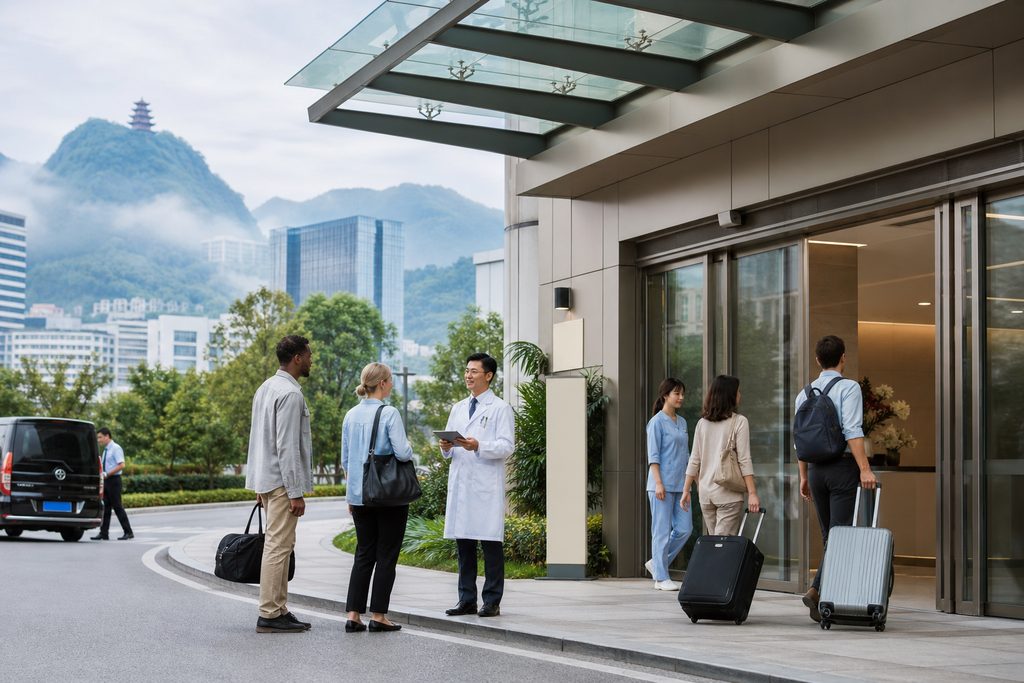
First Affiliated Hospital of Guizhou Medical University Oncology for International Patients: A Practical Guide
Cancer changes everything. When you or someone you love receives a diagnosis, the search for the right treatment becomes urgent — and for many patients, that search now crosses borders. The oncology treatment cost at Guizhou Medical University and its affiliated hospital is one reason international patients are looking toward Guiyang, the capital of Guizhou province in southwestern China. But cost is only part of the equation. Understanding whether this hospital fits your clinical needs, how to navigate it as a foreigner, and what the actual process looks like matters just as much.
Our team at China Medical Services has spent years helping patients from Europe, the Middle East, Southeast Asia, and beyond evaluate Chinese hospitals. We do not treat cancer. We help you understand your options, connect you with the right oncology departments, and manage the logistics that make international treatment feasible. This guide explains what the First Affiliated Hospital of Guizhou Medical University offers in oncology, what it costs, and how to approach it if you are considering treatment there.
Key Takeaways
- The First Affiliated Hospital of Guizhou Medical University is a major tertiary (Grade 3A) hospital in Guiyang, with an oncology department that handles a high volume of cancer cases annually.
- Oncology treatment costs in Guizhou are typically 50% to 70% lower than equivalent care in the United States or Western Europe, even after factoring in travel.
- The hospital is not an international-only facility — English-speaking staff are limited, and foreign patients need a bilingual medical companion or coordinator to navigate registration, consultations, and hospital admissions.
- Standard public outpatient clinics cannot be pre-booked from overseas. Remote video consultations or written second opinions are the practical first step before committing to travel.
The Problem: Cancer Treatment Costs Are Crushing Patients in Western Countries
Cancer care in the United States routinely exceeds six figures. A single year of treatment for advanced lung cancer can cost over $200,000. Even with insurance, out-of-pocket expenses for surgery, chemotherapy, radiation, and immunotherapy often reach $30,000 to $50,000 annually. In the United Kingdom and Canada, the financial burden is lower but wait times create a different kind of crisis. The NHS target of 62 days from urgent referral to first treatment is missed for a significant percentage of patients — and some wait four to six months for radiotherapy.
That delay is not just inconvenient. It is clinically meaningful. For aggressive cancers, a three-month delay can mean the difference between operable disease and metastasis. Patients in middle-income countries face their own challenges: limited access to modern radiotherapy equipment, shortages of targeted therapies, or oncology departments that lack subspecialized surgical teams. The result is that a growing number of patients are asking a hard question: is there a hospital that offers competent cancer care at a price I can actually afford, without a six-month wait?
Guiyang is not the first city that comes to mind. Beijing, Shanghai, and Guangzhou dominate international attention. But that is precisely why the economics work differently here.
Why Guizhou Medical University’s Affiliated Hospital Deserves a Closer Look
Clinical Volume and Institutional Scale
The First Affiliated Hospital of Guizhou Medical University is the largest hospital in Guizhou province and a designated Grade 3A facility — the highest classification in China’s hospital tier system. It operates over 3,000 beds and serves as the provincial referral center for complex cases across western China. The oncology department treats a patient volume that most Western cancer centers would struggle to match. High case volume matters in oncology. Studies consistently show that hospitals performing more cancer surgeries have lower complication rates and better long-term survival.
China’s hospital system is built differently from what many Western patients expect. A single top-tier Chinese hospital may see 10,000 outpatient visits in one day. That scale creates efficiency — but it also means the system assumes patients can navigate it themselves. International patients cannot, at least not without help. That is a structural reality, not a criticism.
Technology That Keeps Pace With Western Standards
The oncology department at this hospital uses modern radiotherapy platforms, including linear accelerators capable of intensity-modulated radiation therapy (IMRT) and image-guided radiation therapy (IGRT). These are the same technologies used in major cancer centers in the United States and Europe. Chemotherapy protocols follow NCCN and CSCO guidelines — the latter being China’s national oncology guideline, which is closely aligned with international standards. Targeted therapy and immunotherapy drugs approved in China now include many of the same agents available in Western markets, often at significantly lower prices due to national drug procurement negotiations.
What the hospital does not offer is a Western-style concierge experience. There is no international patient lounge. English-speaking nurses are rare. Medical records are in Chinese. These are not reasons to avoid the hospital. They are reasons to prepare properly.
Why Lower Cost Does Not Mean Lower Quality
The oncology treatment cost at Guizhou Medical University is structurally lower than in the US or Europe for reasons that have nothing to do with quality. Physician salaries in China are a fraction of Western levels. Hospital construction costs are lower. Drug prices are negotiated nationally. Administrative overhead is minimal compared to the insurance-driven bureaucracy of American healthcare. The same chemotherapy drug that costs $10,000 per cycle in the US may cost $2,000 to $3,000 in China. The same radiotherapy course that bills $50,000 in California might cost $8,000 to $12,000 in Guiyang.
Is cancer treatment safe in China? The honest answer is that safety depends on the hospital. At a Grade 3A provincial center like this one, infection control, surgical protocols, and chemotherapy safety standards are enforced through national hospital accreditation. But communication gaps and cultural differences do create risks for foreign patients who arrive unprepared. A patient who cannot read their lab results or understand their discharge instructions faces real hazards. That is not a quality problem with the medicine. It is a logistics problem that can be solved.
Oncology Treatment Cost at Guizhou Medical University: What to Actually Expect
Let us get specific. The following figures are based on our team’s experience coordinating care at provincial-level Chinese hospitals and published price surveys. They are ranges, not quotes. Final costs vary by diagnosis, stage, drug regimen, and hospital department.
| Treatment Item | Guizhou Medical University Affiliated Hospital (Estimated) | United States (Average) | United Kingdom (Private) |
|---|---|---|---|
| Oncology consultation (initial) | $30 – $80 | $300 – $600 | $250 – $500 |
| CT scan (chest/abdomen) | $150 – $300 | $1,500 – $3,000 | $800 – $1,500 |
| PET-CT scan | $600 – $900 | $4,000 – $7,000 | $2,500 – $4,000 |
| Chemotherapy (per cycle, standard regimen) | $1,500 – $4,000 | $10,000 – $30,000 | $6,000 – $15,000 |
| Radiotherapy (full course, IMRT) | $8,000 – $15,000 | $50,000 – $100,000 | $30,000 – $60,000 |
| Major cancer surgery (e.g., lung resection) | $8,000 – $20,000 | $60,000 – $150,000 | $40,000 – $90,000 |
These are the numbers that make patients from the US, UK, Australia, and the Middle East look seriously at Chinese hospitals. Even with international flights, accommodation, and coordination services added, the total cost of treatment in Guiyang typically lands at 30% to 50% of what the same care would cost at home. For uninsured patients or those facing high deductibles, that difference is life-changing.
But there is a catch. These prices apply to the standard public hospital pathway. Foreign patients cannot simply walk in and access this pathway without Chinese language ability and local navigation. The international department or VIP clinic — which offers English support and faster scheduling — charges 1.5 to 2 times the standard rate. Still far below Western prices, but important to understand before you plan a budget.
How to Book Cancer Treatment at Guizhou Medical University: The Real Process
Here is the process we walk patients through. It is not complicated, but it is specific.
Step one: remote evaluation. You send your existing medical records — pathology reports, imaging, blood work, treatment history — to the oncology department for a written second opinion or video consultation. This costs between $300 and $800 depending on the specialist’s seniority and whether you choose a written opinion or a live video call. The medical team reviews your case and tells you whether they can treat you, what they recommend, and what it would cost. This step is critical. It prevents you from flying to China only to discover the hospital cannot help you.
Step two: decision and planning. If the remote evaluation confirms a feasible treatment plan, you decide whether to proceed. At this point, you need to plan your travel dates, visa, accommodation, and hospital coordination. This is where a bilingual medical companion becomes essential. The hospital will not arrange your visa. It will not book your hotel. It will not translate your medical records into English for your home doctor. Someone has to do that work.
Step three: arrival and in-person consultation. You arrive in Guiyang and attend your first in-person oncology consultation. The doctor reviews your case face-to-face, orders any additional tests, and confirms the treatment plan. Surgery, if needed, is scheduled after this consultation — not before. Chinese public hospitals require an in-person visit before any surgical admission. There is no way around this rule.
Step four: treatment and follow-up. Treatment proceeds according to the confirmed plan. After discharge, you return home with translated medical records and a follow-up plan. Many patients continue remote video consultations with the same oncology team after returning home.
Is the First Affiliated Hospital of Guizhou Medical University the Right Choice for You?
This hospital is not the right fit for every international cancer patient. Let us be direct about that.
It is a strong option if you have a common cancer type — lung, breast, colorectal, gastric, liver, cervical — and you need surgery, chemotherapy, or radiotherapy at a cost you can afford. It is also a reasonable choice if you have been quoted a long wait time in your home country and need treatment sooner. The hospital’s oncology department handles these cases daily, at volume, with modern equipment.
It is a weaker choice if you have a very rare cancer requiring highly specialized clinical trials that this hospital may not offer, or if you need cutting-edge CAR-T therapy or the newest immunotherapy agents that are only available at a handful of elite centers in Beijing or Shanghai. In that case, you should look at hospitals in our oncology department rankings or consider top-ranked hospitals in larger cities.
For patients considering medical tourism packages for oncology in China, be cautious. Some agencies market all-inclusive packages that bundle treatment, hotel, and translation into a single price. These can be convenient, but they often mark up hospital services significantly. You may pay $30,000 for a package that would cost $15,000 if arranged directly. Our advice: get a written second opinion first, understand the actual hospital costs, and only then decide whether a package is worth the convenience premium.
Practical tip: Before contacting any hospital in China, gather every medical document you have — pathology slides, imaging CDs, blood test results, and a written summary from your current oncologist. The quality of your remote evaluation depends entirely on the completeness of your records.
Practical Considerations: Visas, Payments, and Language for Guiyang Cancer Treatment
Let us cover the logistics that actually determine whether this works.
Visa. Foreign patients traveling to China for medical treatment apply for an S2 visa, which covers short-term private affairs including medical treatment. Family members accompanying you apply for the same S2 category. The visa requires supporting documents from the hospital — typically a treatment invitation letter or appointment confirmation. Processing takes one to four weeks depending on your home country’s Chinese embassy or consulate. Do not apply for an M visa. That is for commercial and trade activities, not medical care.
Payment. Chinese public hospitals require prepayment. You deposit funds at admission, and treatment costs are deducted as services are provided. International credit cards are not accepted at most public hospital counters. You will need a Chinese bank account, UnionPay card, or a coordinator who can handle payments for you. Some international departments accept wire transfers. Confirm this before you travel.
Insurance. Most Western insurance plans do not directly reimburse treatment at Chinese public hospitals. You pay upfront and submit claims afterward. Whether your insurer reimburses depends on your policy’s out-of-network and international coverage terms. Some private international insurers do have direct billing arrangements with Chinese private hospitals, but the First Affiliated Hospital of Guizhou Medical University is a public institution — expect to pay out of pocket and seek reimbursement.
Language. This is the single biggest practical barrier. Medical records, prescriptions, and discharge instructions will be in Chinese. You will not understand them. Your home doctor will not understand them. A bilingual medical companion or professional medical translation service is not a luxury here — it is a necessity. Without it, you risk medication errors, missed follow-up instructions, and serious miscommunication with your care team.
Important: Do not assume the hospital will provide English interpretation. Some doctors speak basic English, but it is not guaranteed, and it is rarely sufficient for complex oncology discussions. Plan for professional interpretation from day one.
Frequently Asked Questions
At accredited Grade 3A hospitals like the First Affiliated Hospital of Guizhou Medical University, cancer treatment follows national clinical guidelines aligned with international standards. Infection control, surgical safety, and chemotherapy protocols are regulated through hospital accreditation. The main safety risk for foreign patients is not the medicine — it is communication. Patients who cannot understand their treatment plan, medication schedule, or follow-up instructions face preventable risks. Proper interpretation and coordination mitigate this substantially.
For a standard cancer treatment course — surgery plus adjuvant chemotherapy, for example — total costs at this hospital typically range from $15,000 to $40,000. The same treatment in the United States would commonly cost $100,000 to $250,000. Radiotherapy courses run $8,000 to $15,000. These are hospital costs only. You must add flights, accommodation, visa fees, and coordination services. Even with those additions, most patients save 50% or more compared to Western private care.
You cannot book surgery or hospital admission remotely. Chinese public hospitals require an in-person consultation before scheduling any surgical procedure. What you can do remotely is obtain a written second opinion or video consultation with the oncology team. This confirms whether the hospital can treat your specific case and gives you a realistic treatment plan and cost estimate before you commit to travel. This remote step is strongly recommended — it prevents wasted trips.
Generally, no. The First Affiliated Hospital of Guizhou Medical University is a public hospital that operates on a prepayment model. You pay for services as they are provided, then submit claims to your insurance company for reimbursement. Whether you are reimbursed depends on your policy. Some international private insurers may have provisions for overseas treatment, but direct billing arrangements with Chinese public hospitals are rare. Check your policy’s international coverage terms before planning treatment.
This is a real consideration that many patients overlook. Your Chinese oncology team will provide a discharge summary and treatment record — but these will be in Chinese unless you arrange translation. You should plan for translated medical records before leaving Guiyang. Many patients continue remote video consultations with their Chinese oncologist after returning home, and your local oncologist can use the translated records to manage ongoing care. Coordination between your Chinese and home medical teams is not automatic. It requires deliberate planning.
Your Next Step
The First Affiliated Hospital of Guizhou Medical University offers competent, modern cancer care at a fraction of Western prices — but it is not a hospital you can navigate alone as a foreign patient. The right approach is to start with a remote evaluation, understand your actual treatment plan and costs, and only then commit to travel. Our team at
For more medical information and treatment options in China, visit chinamedservices.com (China Medical Services).
