GZMU First Affiliated Hospital Guangzhou Respiratory: 15 Years as China’s #1 Pulmonology
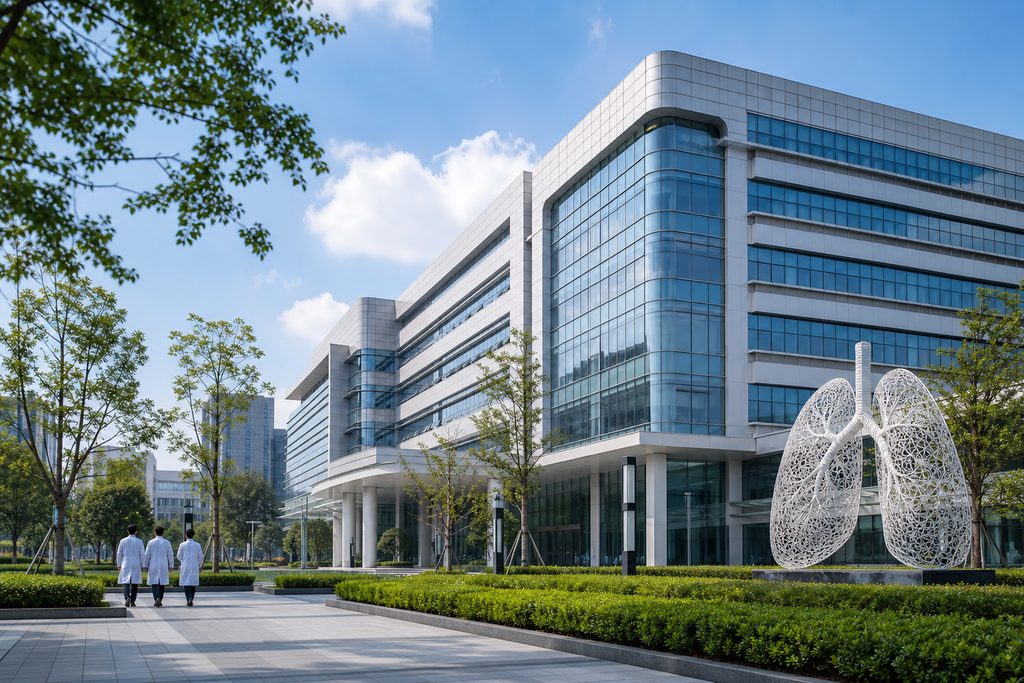
Have you ever wondered what happens when a hospital dominates its field for 15 consecutive years? Not through marketing. Through sheer clinical volume and research output that reshapes national treatment guidelines. That is the reality at the First Affiliated Hospital of Guangzhou Medical University. Its respiratory department has held the number one position in China’s most authoritative hospital ranking for a decade and a half. When you search for “GZMU First Affiliated Hospital Guangzhou Respiratory: China Number One Pulmonology 15 Years,” you are not chasing a catchy slogan. You are looking at a verifiable track record that matters deeply if you face a complex lung condition.
Our team has spent years connecting international patients with China’s top-tier medical institutions. We have seen the confusion firsthand. Patients arrive with questions about cost, quality, and logistics. They want to know if the clinical reputation is real and whether the financial trade-off makes sense. This article answers those questions directly. No vague assurances. Just the facts you need to make an informed decision about seeking care at what is, by any objective measure, China’s leading respiratory center.
Key Takeaways
- GZMU First Affiliated Hospital’s respiratory department has been ranked #1 in China for 15 consecutive years by the Fudan University Hospital Ranking, the country’s most trusted medical evaluation system.
- The hospital operates the State Key Laboratory of Respiratory Disease, founded by Dr. Zhong Nanshan, the epidemiologist who led China’s SARS response and remains one of the most cited respiratory researchers globally.
- Treatment costs for complex pulmonology procedures typically range from $8,000 to $25,000 USD, roughly one-fifth to one-third of comparable care in the United States, though final pricing varies significantly by case complexity and the specific treatment pathway chosen.
- Independent navigation of this hospital is extremely difficult for non-Chinese speakers. The public registration system requires in-person queuing, Chinese-language documentation, and local payment methods. The international medical center offers a structured alternative but requires coordination well before travel.
The Problem: When Your Lungs Need Expertise That Feels Out of Reach
Lung disease kills. It kills methodically and across borders. The World Health Organization’s 2019 Global Health Estimates placed chronic obstructive pulmonary disease as the third leading cause of death worldwide, claiming 3.23 million lives annually. Lung cancer remains the deadliest malignancy, responsible for 1.8 million deaths each year. These are not rare conditions. They affect approximately 1 in 8 people over their lifetime in some form, from early-stage nodules requiring precise diagnosis to end-stage fibrosis demanding transplant evaluation.
Now consider what happens after diagnosis. A patient in London might wait 18 weeks for a specialist respiratory consultation under NHS referral pathways. A patient in Vancouver faces a median wait of 10.4 weeks between specialist referral and first appointment, per 2023 data from the Fraser Institute. These delays are not theoretical inconveniences. For a lung nodule with suspicious features, 18 weeks can mean the difference between stage I and stage III disease.
Cost creates another wall. A full lung cancer workup with advanced molecular profiling and robotic-assisted biopsy in the United States can exceed $40,000 before treatment even begins. Pulmonary endarterectomy for chronic thromboembolic pulmonary hypertension, a procedure performed at only a handful of US centers, routinely exceeds $150,000 in hospital charges. Insurance may cover much of it. But for the uninsured, the underinsured, or those with high-deductible plans, these numbers are catastrophic. For international patients without US insurance, they are simply impossible.
This is the gap. You need world-class respiratory care. Your local system offers long waits, prohibitive costs, or both. And somewhere in the back of your mind, a question forms: is there a place where the expertise matches what I would find at Mayo Clinic or Royal Brompton, but the math actually works?
Who We Are
We are not a hospital. We do not employ doctors, provide clinical diagnoses, or offer medical treatment. What we do is build the bridge between you and China’s most authoritative medical institutions. Our team handles the logistical architecture of your medical journey: hospital matching based on your specific diagnosis, appointment coordination through official international channels, bilingual medical companion services during every hospital visit, and the visa guidance that makes travel possible. We exist because China’s top hospitals deliver extraordinary clinical value, but their systems were designed for domestic patients who speak Mandarin and navigate them daily. You need someone who knows both worlds. That is our role.
Why GZMU First Affiliated Hospital’s Respiratory Department Delivers Results
The First Affiliated Hospital of Guangzhou Medical University is not simply a large pulmonology department. It is the national center that sets respiratory treatment standards for a country of 1.4 billion people. When Chinese pulmonologists debate the optimal management of severe asthma or the diagnostic criteria for interstitial lung disease, the guidelines they reference were likely authored by faculty from this institution. The Fudan University Hospital Ranking, China’s equivalent to the US News & World Report hospital rankings but arguably more rigorous in its peer-review methodology, has placed this department at number one in respiratory medicine every single year since the specialty rankings began. Fifteen years. No other department in any specialty holds a comparable streak.
Clinical Volume Creates Diagnostic Precision
The numbers are staggering in a way that directly benefits patients. The respiratory outpatient clinics at GZMU First Affiliated handle over 12,000 patient visits annually. The bronchoscopy center performs more than 7,000 procedures each year, including advanced diagnostic techniques like endobronchial ultrasound-guided transbronchial needle aspiration and navigational bronchoscopy for peripheral nodules. A pulmonologist here might see more complex interstitial lung disease cases in one month than a community pulmonologist in the UK sees in a year.
Why does volume matter? Because pattern recognition drives diagnostic accuracy. Lung diseases are notorious mimics. Sarcoidosis can look like tuberculosis. Hypersensitivity pneumonitis can masquerade as idiopathic pulmonary fibrosis. The physician who has seen 500 cases of each develops an instinct that no textbook can replicate. At GZMU, the sheer patient flow ensures that the rarest presentations become familiar. For an international patient with an undiagnosed lung condition that has stumped multiple specialists at home, walking into a clinic where your unusual presentation is the third one that week changes everything.
Research Infrastructure That Shapes Global Practice
The State Key Laboratory of Respiratory Disease sits at the core of this institution. Founded by Dr. Zhong Nanshan, a name that requires no introduction in Chinese medicine but deserves one internationally: he identified the SARS coronavirus in 2003, led China’s clinical response to that epidemic, and has since built the world’s largest respiratory research network. His team’s work on air pollution and lung health, published in The Lancet and the New England Journal of Medicine, has influenced air quality policy from Beijing to Brussels.
This laboratory does not conduct abstract bench science disconnected from patient care. Its research programs feed directly into clinical protocols. The hospital’s work on low-dose CT screening for lung cancer in never-smokers, a population largely ignored by Western screening guidelines, has identified early-stage cancers in thousands of patients who would otherwise have presented with advanced disease. Their clinical trials unit runs dozens of studies simultaneously, giving patients access to next-generation targeted therapies and immunotherapies years before these drugs reach markets in Southeast Asia, the Middle East, or Eastern Europe.
For a patient considering whether GZMU respiratory department is good for lung disease, the answer lies in this integration. You get treated by the same physicians who are writing the treatment guidelines. That proximity to the cutting edge is hard to find anywhere else at this price point.
Guangzhou Medical University Hospital’s Pulmonology Ranking Versus Cost Reality
Let us address the obvious question. Many international patients ask some version of “is Guangzhou Medical University hospital number one for lungs.” The answer is yes, by the most authoritative ranking system in Chinese medicine. But rankings alone do not justify a medical journey across continents. The financial equation does.
| Procedure | GZMU First Affiliated (USD, estimated range) | United States (USD, estimated range) | United Kingdom Private (USD, estimated range) |
|---|---|---|---|
| Advanced bronchoscopy with biopsy and molecular profiling | $3,000–6,000 | $15,000–30,000 | $12,000–22,000 |
| Video-assisted thoracoscopic surgery for early-stage lung cancer | $10,000–18,000 | $40,000–80,000 | $35,000–60,000 |
| Comprehensive ILD workup with multidisciplinary team review | $2,500–5,000 | $12,000–25,000 | $10,000–20,000 |
| Pulmonary rehabilitation program (4-week intensive) | $3,000–6,000 | $15,000–30,000 | $12,000–25,000 |
These figures are estimates. Every case differs. The GZMU First Affiliated Hospital pulmonology price you ultimately pay depends on your specific diagnosis, the treatment pathway your physician recommends, the length of hospital stay, and whether you access care through the international medical center or the standard public pathway. But the structural cost advantage is real. It stems from lower labor costs in China’s healthcare system, higher patient throughput, and a medical device and pharmaceutical pricing environment that avoids the extreme markups seen in the US market. Quality does not suffer. The hospital’s infection rates, surgical complication statistics, and five-year survival outcomes for lung cancer surgery are published in peer-reviewed journals and compare favorably with international benchmarks.
What You Need to Know Before Going Alone
The clinical excellence is real. So are the barriers. Anyone who tells you that navigating a Chinese public hospital as a foreigner is straightforward has never tried it. We have guided hundreds of patients through this process, and we have seen where it breaks down when people attempt it independently.
- Public Registration Systems Are Not Built for International Patients: The standard outpatient department requires same-day, in-person queuing for registration tickets. These tickets are released in limited numbers each morning. The registration interface is entirely in Chinese. Payment requires a Chinese bank card or WeChat Pay linked to a mainland Chinese identity. Without a bilingual companion who understands the hospital’s internal workflow, you may spend hours in the wrong queue and still not secure a consultation. The international medical center bypasses this system, but its appointments require advance coordination through official channels, not a simple online booking.
- Visa Requirements Demand Precision: Medical treatment in China requires an S2 visa with a specific annotation for medical purposes. The supporting documentation must include an official invitation letter from the hospital, proof of appointment, and detailed treatment plans. Consular officers scrutinize these applications. A generic invitation or incomplete documentation leads to rejection. The S2 visa is distinct from the M visa, which is for commercial activities and cannot legally be used for medical treatment. Confusing the two is a common and costly mistake.
- Medical Records Must Be Professionally Translated: The physicians at GZMU are world-class. Most senior faculty speak functional English, particularly those who publish internationally. But the hospital’s internal systems operate in Chinese. Your medical records, imaging reports, pathology slides, and prior treatment summaries must be translated into Chinese with sufficient precision that a pulmonologist can make clinical decisions based on them. Machine translation is not adequate for this purpose. A mistranslated pathology report leads to a wrong treatment plan.
How We Help You Navigate This
These barriers exist for structural reasons, not malice. China’s public hospital system was designed to serve a domestic population of 1.4 billion people efficiently. It does that remarkably well. It was not designed with international patients in mind. That is where we step in.
Our process starts with your medical records. You send us what you have. We review them with our clinical coordinators to determine whether GZMU First Affiliated is the right match for your specific condition. Sometimes it is. For complex interstitial lung disease, difficult-to-diagnose pulmonary infections, or early-stage lung cancer requiring minimally invasive surgery, it often is. Sometimes another Chinese hospital is a better fit. We tell you that too. We do not benefit from sending you to the wrong institution.
Once we confirm the match, we handle the official appointment coordination through the hospital’s international medical center. This is not a backdoor arrangement. It is the legitimate channel for overseas patients, staffed by English-speaking coordinators who understand both the clinical workflow and the administrative requirements. We arrange for professional translation of your medical records. We guide you through the S2 visa application, providing the precise documentation package that consular officers expect to see. We arrange airport pickup and accommodation near the hospital.
When you arrive, a bilingual medical companion meets you. This person speaks fluent English and Mandarin, understands the hospital’s physical layout and administrative processes, and stays with you through every consultation, test, and procedure. They translate in real time between you and your physicians. They handle registration, payment, pharmacy queues, and discharge paperwork. You focus entirely on your health. They handle everything else.
After treatment concludes, we coordinate follow-up arrangements. Many international patients return home with a detailed treatment summary in English and a direct line to their Chinese physician for follow-up questions. Some return periodically for surveillance scans. The relationship does not end when you board your flight.
For patients who want to understand the pulmonology package at GZMU hospital as an international patient, we provide transparent pricing breakdowns before you travel. The hospital’s international medical center issues official cost estimates based on your treatment plan. Our coordination fees are quoted separately and clearly. There are no hidden charges. No surprises that appear on a bill after surgery.
Frequently Asked Questions
You cannot book directly through the hospital’s public website. The international pathway requires coordination through the hospital’s official international medical center, which accepts overseas patients by advance arrangement. We handle this coordination on your behalf. The process involves submitting your medical records for clinical review, receiving a treatment plan and cost estimate, securing an official invitation letter, and then scheduling your appointments. Expect this to take two to four weeks from initial contact to confirmed appointment dates, depending on the complexity of your case and the physician’s availability.
The First Affiliated Hospital of Guangzhou Medical University is the best respiratory hospital in Guangzhou by every objective measure, and its costs are significantly lower than equivalent care in North America or Western Europe. A complex pulmonology workup that might cost $25,000 in the United States typically runs $5,000 to $8,000 here. The best respiratory hospital Guangzhou cost comparison is favorable, but it is important to understand that you are not trading quality for savings. You are accessing a different healthcare economy where structural factors, not clinical compromises, drive the price difference. The hospital’s international medical center charges more than the public pathway but still substantially less than Western private hospitals, and it provides the English-language support and streamlined scheduling that international patients require.
The department compares favorably to top-tier Western respiratory centers in clinical outcomes, and it exceeds most in clinical volume and specific subspecialty expertise. If you have a rare interstitial lung disease, the ILD program here sees more cases annually than almost any single center in Europe. If you need advanced interventional pulmonology, the bronchoscopy volume ensures procedural expertise. The department’s limitation for international patients is not clinical quality. It is the administrative and linguistic barrier that makes independent access difficult. With proper coordination through the international medical center, you receive care from physicians whose research is published in the same journals as their counterparts at National Jewish Health or Royal Brompton Hospital.
Yes, it is ranked number one in respiratory medicine by the Fudan University Hospital Ranking, and yes, that ranking has practical implications for your care. The ranking is determined by peer assessment from hundreds of Chinese respiratory specialists and objective metrics including research output and clinical outcomes. A number-one ranking attracts the most complex cases, which further concentrates expertise. The physicians treating you have seen your condition, or a variant of it, more times than physicians at lower-volume centers. The multidisciplinary team that reviews your case includes pathologists, radiologists, and thoracic surgeons who specialize exclusively in chest diseases. That focused expertise translates into more accurate diagnoses and more precisely tailored treatment plans.
This is the question everyone should ask. The hospital has standard protocols for managing complications, and its intensive care units are equipped to handle respiratory failure, post-surgical complications, and medical emergencies. The international medical center maintains communication with your family and your home-country physicians throughout your stay. That said, you are far from home. If an extended hospitalization becomes necessary, your family may need to arrange longer-term accommodation in Guangzhou. We assist with this. Your travel insurance or medical tourism insurance should include coverage for complication management and medical evacuation if needed. We strongly recommend verifying this coverage before travel. The vast majority of international patients complete their treatment without serious complications and return home on schedule, but planning for the unlikely scenario is part of responsible medical travel.
Your Next Step
The First Affiliated Hospital of Guangzhou Medical University has earned its 15-year position at the top of Chinese respiratory medicine through measurable clinical excellence, not marketing. For patients facing complex lung disease with limited options at home, it represents a genuine alternative: world-class expertise at a fraction of Western costs. The barriers to access are real but surmountable with the right support. If you are considering this path, start with a conversation. Tell us about your diagnosis, your treatment history, and what you are hoping to achieve. We will give you an honest assessment of whether GZMU First Affiliated is the right fit and what the journey would look like. No pressure. No hard sell. Just the information you need to make your next decision.
Learn more about how we coordinate care at China’s top hospitals on our patient services page. If you are still exploring which institution is right for your condition, our directory of Fudan-ranked hospitals provides detailed profiles of every top-tier institution in our network.
For more medical information and treatment options in China, visit chinamedservices.com (China Medical Services).
