Hainan General Hospital Cardiology for International Patients: Real Costs, Safety, and Booking Truth
Have you ever wondered whether a top-tier Chinese cardiology department could actually handle your heart procedure safely — and what it would really cost you as a foreigner? The search for “Hainan General Hospital cardiology price for foreigners” usually starts with a spreadsheet of quotes from home and a knot of anxiety about quality. We get that. Our team has spent years helping international patients navigate exactly this decision, and the picture is more nuanced than most people expect.
Key Takeaways
- Coronary artery bypass grafting at top Chinese public hospitals typically runs $12,000–20,000, versus $120,000+ in the United States — a 5–10x gap that holds even when you add travel costs.
- Hainan General Hospital (Hainan Provincial People’s Hospital) is a Grade-A tertiary hospital with a functioning international department, but its cardiology volume is modest compared to Beijing or Shanghai centers.
- You cannot book surgery from abroad through the standard public outpatient channel — remote evaluation, a proxy consultation, or the hospital’s VIP/international pathway is the realistic route.
- Safety outcomes at Chinese tertiary cardiac centers are comparable to Western benchmarks for routine CABG and PCI, but you must verify the specific team’s annual volume before committing.
The Problem: Heart Surgery at Western Prices Is Breaking People
In the United States, a single coronary artery bypass graft (CABG) procedure without complications averages over $120,000 in billed charges. Even insured patients routinely face $15,000–30,000 in out-of-pocket costs after deductibles, coinsurance, and out-of-network surprises. In the United Kingdom, NHS waiting lists for elective cardiac surgery stretched past 12 months for many patients in 2023–2024, with some trusts reporting 18-month waits for valve replacement. Canada’s median wait for CABG was 13.1 weeks in 2023, but that figure hides wide provincial variation — and it is only the wait for surgery, not the months of diagnostic testing before it.
This is not a niche problem. Cardiovascular disease remains the leading cause of death globally, affecting approximately 1 in 3 adults over 45 in developed economies. When a patient needs a valve replaced or a bypass performed, “wait and see” is not a clinical strategy — it is a sentence to progressive heart failure. The financial and temporal math pushes more patients to look beyond their borders. That search often lands on China, where cardiac surgery volume is the highest in the world and prices remain structurally lower.
Why China’s Cardiac Centers Deliver Results
The case for considering Chinese cardiology is built on three pillars: volume, technology, and cost structure. None of these are marketing claims — they are observable facts about how the system operates.
Clinical Volume Drives Better Outcomes
Fuwai Hospital in Beijing performs more than 14,000 cardiac surgeries annually — the highest volume of any heart center on the planet. That is roughly triple the volume of the busiest US center, Cleveland Clinic. Volume matters because cardiac surgery is a craft skill: anastomosis quality, bypass graft selection, and intraoperative decision-making all improve with repetition. Studies published in The Annals of Thoracic Surgery and Circulation have repeatedly shown an inverse relationship between hospital and surgeon volume and 30-day mortality for CABG and valve procedures.
Hainan General Hospital does not operate at Fuwai’s scale. Its cardiac surgery program is competent but smaller — measured in the hundreds of cases annually, not thousands. That is a critical distinction. The hospital’s cardiology department handles diagnostic catheterization, PCI (angioplasty and stenting), and some valve work, but complex redo surgeries or high-risk valve replacements may be better directed to higher-volume centers on the mainland. We state this plainly because our job is to match patients to the right center, not to oversell a single facility.
Technology and Efficiency at Scale
Chinese tertiary hospitals adopted digital subtraction angiography (DSA) suites, 3D electroanatomic mapping, and transcatheter aortic valve replacement (TAVR) platforms at a pace that surprised many Western observers. A patient arriving at a top Chinese cardiac center in 2026 can expect radial-artery PCI as the default approach, drug-eluting stents from major international manufacturers, and hybrid operating rooms for complex structural cases.
The operational difference is throughput. Chinese public hospitals run catheterization labs from early morning into the evening, six days a week. A diagnostic angiogram that takes three weeks to schedule in the UK can often be completed within 48–72 hours of arrival in China — if the patient has already completed remote evaluation and records review.
Cost Advantage Without Quality Compromise
Why is the Hainan General Hospital cardiology price for foreigners so much lower than Western quotes? The answer is structural, not cosmetic. Chinese public hospital pricing is regulated by provincial health commissions, not set by market negotiation between insurers and providers. Physician salaries are fixed and modest by Western standards. Malpractice insurance costs are a fraction of US levels. Hospital construction was heavily state-subsidized, so capital costs do not need to be recovered through procedure fees.
None of that reduces clinical quality. What it reduces is the administrative and defensive-medicine overhead that bloats Western healthcare bills. The same drug-eluting stent that costs $1,500–3,000 in a US hospital is billed at $500–900 in a Chinese public hospital — same manufacturer, same device, different reimbursement system.
What “Hainan General Hospital Cardiology” Actually Means for You
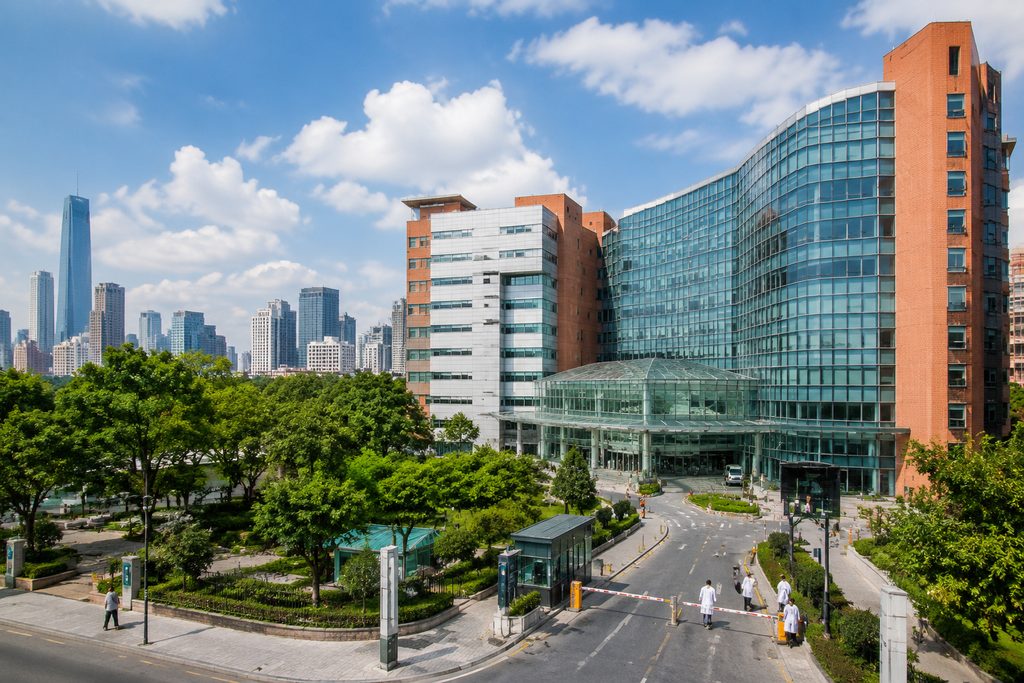
Hainan General Hospital, officially Hainan Provincial People’s Hospital, sits in Haikou, the provincial capital. It is a Grade-A tertiary hospital — the highest classification in China’s hospital hierarchy — and it operates an international medical department that handles foreign patients. The cardiology department provides full diagnostic services: echocardiography, stress testing, 24-hour Holter monitoring, coronary CT angiography, and invasive catheterization.
What it is not is a destination cardiac surgery center on the level of Fuwai, Anzhen, or Zhongshan. For straightforward PCI, pacemaker implantation, or diagnostic workup, Hainan General is a reasonable option — especially if you are already in Southeast Asia or prefer a tropical recovery environment. For complex multi-vessel CABG, redo surgery, or high-risk valve replacement, we would direct you to a higher-volume cardiac center in Beijing or Shanghai and use Hainan for preoperative evaluation or postoperative rehabilitation if desired.
The realistic path for an international patient looks like this:
- Remote records review — you send existing echocardiograms, angiograms, and blood work. A cardiologist reviews them and gives a written opinion on whether your case fits the hospital’s capabilities.
- Proxy consultation — if you want a specific department to formally assess your case before you travel, a coordinator can register you and present your materials in person at the hospital.
- Travel and in-person evaluation — you arrive on an S2 visa, complete any missing diagnostics, and meet the treating team face-to-face. Surgery or intervention is scheduled only after this step.
- Procedure and recovery — hospital stay, then either local recovery or transfer back home with a full discharge summary in English.
Is Heart Surgery Safe in Hainan China? What the Data Actually Shows
The honest answer is: yes, for the right patient and the right procedure — but you must verify the specific team. A 2023 analysis of Chinese cardiac surgery outcomes published in the Chinese Medical Journal reported 30-day mortality rates for isolated CABG at major tertiary centers between 1.0% and 2.5%, which aligns with Society of Thoracic Surgeons benchmarks in the United States (1.5–2.0% for low-risk patients). PCI mortality at Chinese tertiary centers is below 0.5% for elective cases, comparable to European registries.
Hainan General Hospital’s specific outcomes are not published in international peer-reviewed journals. That does not mean they are bad — it means you cannot independently verify them. The province of Hainan has invested heavily in medical infrastructure since 2018, when it was designated a free trade port with a medical tourism pilot zone in Boao. But Boao’s international hospitals are separate from Hainan General, and the provincial hospital’s cardiac program has not yet built a global reputation.
So how do you evaluate safety without published data? You ask direct questions. How many CABGs did this surgeon perform last year? What is the department’s annual PCI volume? What is the rate of conversion from PCI to emergency CABG? What infection-control protocols does the ICU follow? A serious center answers these questions with specific numbers. A center that deflects is telling you something.
| Procedure | China Top Public (USD) | Hainan General Est. (USD) | United States (USD) | Thailand Private (USD) |
|---|---|---|---|---|
| Coronary Angiography | $800–1,500 | $600–1,200 | $8,000–15,000 | $2,000–3,500 |
| PCI with 1 Drug-Eluting Stent | $6,000–10,000 | $5,000–8,000 | $35,000–60,000 | $12,000–18,000 |
| CABG (3-vessel, uncomplicated) | $12,000–20,000 | $10,000–16,000 | $120,000–200,000 | $25,000–40,000 |
| Aortic Valve Replacement (surgical) | $15,000–25,000 | $12,000–20,000 | $150,000–250,000 | $30,000–50,000 |
| TAVR (transcatheter) | $30,000–45,000 | Not routinely offered | $180,000–300,000 | $50,000–70,000 |
Prices vary by hospital and case complexity. The figures above reflect 2026 public hospital international department pricing for self-paying patients, not domestic Chinese rates. Hainan General estimates are based on provincial pricing schedules and typical case complexity — always confirm current quotes before making any decision.
How Much Does Angioplasty Cost in China for International Patients?
Angioplasty with stenting is the most common cardiac intervention requested by international patients, and the cost question deserves a direct answer. In a top-tier Chinese public hospital international department, a single-vessel PCI with one drug-eluting stent typically runs $6,000–10,000 all-in: procedure fee, stent, catheterization lab time, 2–3 day hospital stay, and basic medications. Add a second stent and the incremental cost is roughly $1,500–2,500 per additional stent.
At Hainan General Hospital, expect a slightly lower range — $5,000–8,000 for a single-stent PCI through the international department. The provincial pricing schedule is more modest than Beijing or Shanghai, and the hospital is actively courting medical tourism from Southeast Asia. That said, the same caveat applies: for complex bifurcation lesions, left main disease, or chronic total occlusions, a higher-volume center may be the better clinical choice even if it costs $2,000 more.
The comparison that matters most: the same procedure in the United States bills $35,000–60,000, and even with insurance, a patient with a $6,000 deductible and 20% coinsurance pays $12,000–17,000 out of pocket. Thailand’s private hospitals, the traditional medical tourism destination for cardiac care, charge $12,000–18,000. China undercuts both while offering comparable device technology and higher procedural volume at its top centers.
Booking Cardiac Bypass at Hainan General Hospital: The Real Sequence
One thing we must be completely clear about: you cannot book cardiac bypass at Hainan General Hospital — or any Chinese public hospital — by emailing the hospital and asking for a surgery date. The Chinese public hospital system does not work that way. Outpatient registration is same-day, in-person, and surgery is scheduled only after the treating surgeon has seen you in clinic.
For international patients, this creates a practical problem: flying to Haikou without any prior contact means arriving at a massive hospital with limited English signage, registering as a new patient, waiting in queues, and hoping the cardiologist you need is available. It is doable if you speak Mandarin and have time. It is risky if you do not.
The workaround is the international department or a coordination service. Here is the sequence that actually works:
- Remote evaluation first. Send your complete cardiac records — angiogram images on CD or DICOM files, echocardiogram report, stress test results, current medication list. A cardiologist reviews them and confirms whether your case is appropriate for the hospital.
- Written second opinion or video consultation. You receive a documented assessment: what the diagnosis is, what treatment is recommended, whether the hospital can perform it, and what additional testing is needed on arrival. Written second opinions from top specialists run $300–500; video consultations with a specialist cost $500–800.
- Proxy registration if needed. If you want to lock in a specific department or specialist before traveling, a coordinator can register you and present your materials in person. This does not guarantee a specific surgeon, but it gets your file into the right hands.
- Travel on an S2 visa. Medical treatment falls under the S2 short-stay visa category, not the M visa (which is for commercial and trade activities only). Your hospital invitation letter and treatment plan support the application. Processing typically takes 1–4 weeks depending on your home country’s Chinese embassy or consulate.
- In-person consultation and scheduling. You meet the cardiologist, complete any missing diagnostics (often same-day or next-day), and receive a surgery date. For non-emergency CABG, expect 1–2 weeks between arrival and surgery.
The key question readers ask us: is heart surgery safe in Hainan China if I follow this path? The answer depends on honest patient selection. If your case is routine and the team has adequate volume, yes. If your case is complex and the team is honest about its limits, they will refer you onward — and that referral is itself a sign of a trustworthy center.
Hainan General Hospital International Patient Heart Valve Replacement: What to Expect
Valve replacement is a different animal from PCI or CABG. The surgical approach — mechanical versus bioprosthetic valve, open versus transcatheter — depends on your age, valve anatomy, and risk profile. Hainan General Hospital performs surgical aortic and mitral valve replacement, but transcatheter options (TAVR/TMVR) are not routinely available there as of 2026. If you need TAVR, you should be looking at Beijing, Shanghai, or Guangzhou centers.
For a surgical valve replacement at Hainan General, the realistic all-in cost through the international department is $12,000–20,000 depending on valve type and length of ICU stay. That compares to $150,000–250,000 in the United States and $30,000–50,000 in Thailand. The hospital stay is typically 10–14 days for uncomplicated cases, followed by 2–4 weeks of local recovery before flying home.
One practical consideration: valve selection. Chinese hospitals stock mechanical valves from St. Jude and Medtronic and bioprosthetic valves from Edwards and Medtronic. If you have a strong preference for a specific valve model, confirm availability before traveling. The same applies to anticoagulation management — if you receive a mechanical valve, you need a clear warfarin management plan for after you return home.
For patients seeking the best cardiology hospital Hainan medical tourism package, the honest guidance is this: Hainan is an attractive destination for recovery and rehabilitation, with its clean air and warm climate. But for the actual procedure, the stronger clinical argument points to higher-volume cardiac centers elsewhere in China. A hybrid approach — surgery in Beijing or Shanghai, recovery in Hainan — is increasingly popular among patients who can afford the extra logistics.
Practical Considerations: Documentation, Visas, Payment, and Follow-Up
Before you book anything, gather your documentation. You need: all cardiac imaging in original digital format (DICOM files are strongly preferred over printed films), complete blood work from the last 3 months, a medication list with dosages, a summary letter from your home cardiologist, and any prior procedure reports. Missing records are the single most common reason remote evaluations get delayed.
Visa is straightforward but must be done correctly. Apply for an S2 visa citing medical treatment as the purpose. The hospital’s international department can issue an invitation letter and treatment plan to support your application. Family members accompanying you also apply for S2 visas. Processing times vary by consulate — plan for 2–4 weeks minimum. We never guarantee visa approval; that decision rests entirely with the Chinese embassy or consulate reviewing your application.
Payment is upfront. Chinese public hospitals require a deposit before admission
Frequently Asked Questions
Yes. The hospitals used for international patients are JCI-accredited and follow the same international safety standards as top hospitals in the US and Europe. Surgical teams perform high volumes of procedures — often more than their Western counterparts — which studies show leads to better outcomes.
Costs vary by procedure and hospital, but international patients typically save 40-80% compared to US prices — even when factoring in travel and accommodation. A consultation with our team will give you an exact, all-inclusive quote with no hidden fees.
Send us your existing medical reports to get started. We handle everything from hospital selection and appointment scheduling to visa assistance and post-operative recovery planning. Your medical records are reviewed by the specialist before you even book a flight.
For more medical information and treatment options in China, visit chinamedservices.com (China Medical Services).
