China Hainan Visa Free Zone: How Boao Lecheng Treatment Works
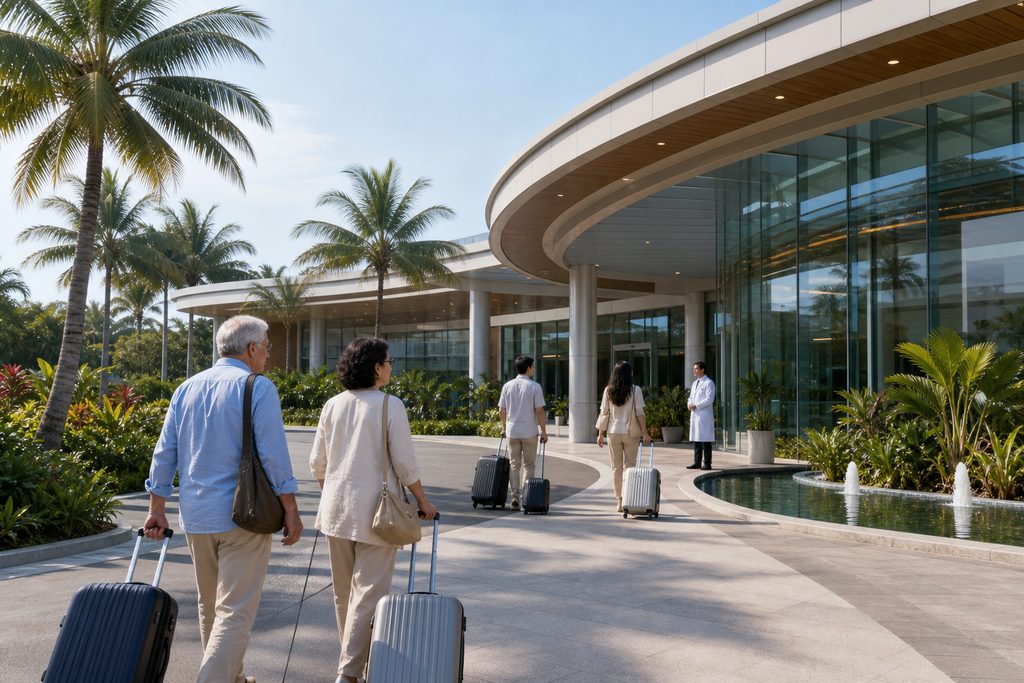
China Hainan Visa Free Zone: How Boao Lecheng Treatment Works
While a patient in the United Kingdom waits an average of 18 weeks for a specialist referral under the NHS, a traveler landing at Haikou Meilan International Airport can clear immigration without a visa and be inside a consultation room in the Boao Lecheng International Medical Tourism Pilot Zone the same afternoon. The Boao Lecheng treatment cost for many therapies runs 60–80% below Western private-pay rates. That gap explains why more than 80,000 international patients have entered the zone since 2018.
Key Takeaways
- Boao Lecheng is China’s only special medical zone where drugs and devices approved in the US, EU, or Japan can be used legally before mainland China approval — currently over 400 such products are available.
- Citizens from 59 countries, including the US, UK, Canada, Australia, and most of the EU, can enter Hainan visa-free for up to 30 days for medical purposes.
- The Boao Lecheng treatment cost is typically half to one-fifth of Western private rates, but the zone is not a budget hospital — it is a regulated pilot for advanced therapies.
- Language, documentation, and hospital access rules are the biggest practical barriers. Most international patients use a coordination service to handle these before arrival.
The Problem: Advanced Treatments Exist, but Regulatory Timelines Block Access
Drug approval delays are not an abstraction. The median gap between FDA approval and availability in other developed health systems now exceeds 12 months for oncology therapies. For patients with aggressive cancers, rare diseases, or degenerative conditions, that gap is not an inconvenience. It is the difference between having a treatment option and not having one.
Consider the numbers. The US FDA approved 55 novel drugs in 2023. In the same year, fewer than 30 of those reached patients in the UK, and even fewer in Canada and Australia. A patient with a rare sarcoma in Sydney cannot simply ask for a drug that is approved in Boston. Their physician cannot legally prescribe it. The system says wait.
Boao Lecheng was built to solve exactly this problem. Created in 2013 under a State Council policy, the zone operates under a special regulatory framework that allows licensed medical institutions to use drugs, vaccines, and medical devices that have marketing approval in the US, EU, or Japan — without waiting for China’s National Medical Products Administration (NMPA) to complete its own review. As of early 2025, more than 400 such products have been administered in the zone to over 100,000 patients.
Why Boao Lecheng Delivers Results Where Other Systems Stall
Regulatory Speed Without Cutting Corners
The core mechanism is called “special import approval.” A hospital inside the zone files a patient-specific application with the Hainan Medical Products Administration. If the drug or device is already approved in a reference jurisdiction — the FDA, EMA, or Japan’s PMDA — the review is typically completed within 3 to 7 working days. Compare that to a full NMPA marketing authorization, which routinely takes 2 to 5 years.
But this is not a loophole. Every application requires a licensed physician’s prescription, a documented clinical need, and informed patient consent. The patient is monitored under the same adverse-event reporting standards that apply in mainland hospitals. The speed comes from regulatory design, not from weakened oversight.
Clinical Volume That Builds Competence
Hospitals inside the zone are not boutique clinics. Ruijin Hospital Hainan Branch, a satellite of Shanghai’s Ruijin Hospital, operates a full tertiary-care facility. The Boao Super Hospital, one of the zone’s flagship institutions, runs over 30 specialty centers. West China Hospital‘s Hainan affiliate brings the weight of one of China’s largest academic medical centers.
Volume matters in medicine. A cardiologist who performs 500 ablations per year sees patterns that a physician performing 50 does not. The zone’s anchor hospitals draw on the patient volumes of their parent institutions — Ruijin alone handles over 4 million outpatient visits annually in Shanghai. That clinical depth is available inside a zone smaller than many university campuses.
The Boao Lecheng Treatment Cost Advantage Is Structural, Not Sacrificial
Let us address the obvious question: why is the Boao Lecheng treatment cost lower than Western private rates? The answer lies in economics, not quality cuts. Chinese physician salaries, while rising, remain far below US or Australian levels. Hospital construction costs are lower. Malpractice insurance burdens are smaller. Administrative overhead — the billing, coding, and insurance-negotiation apparatus that consumes roughly 25% of US hospital spending — is dramatically leaner.
Those structural differences mean a course of a cutting-edge oncology drug that might cost $180,000 privately in the US can run $40,000 to $70,000 in Boao Lecheng. A complex orthopedic procedure using the latest Japanese implant technology may cost $25,000 in the zone versus $90,000 privately in London. Lower cost here is not a discount on quality. It is the absence of an inflated cost base.
How Does Boao Lecheng Medical Tourism Work Step by Step
The process is not as simple as booking a flight and walking into a hospital. But it is also not a bureaucratic labyrinth. Here is the actual sequence, based on how our team has coordinated dozens of cases.
Step 1: Remote Evaluation Before You Travel
You cannot simply arrive and demand a specific drug. Every treatment in the zone starts with a clinical evaluation. Most patients begin by sending existing medical records — imaging, pathology reports, treatment history — to a hospital inside the zone for a written second opinion. This costs between $300 and $500 depending on the specialty. The physician reviews your case and determines whether a specific drug or device available in the zone is actually appropriate for your condition.
This step is not optional. It protects you from traveling 8,000 miles only to discover that the treatment you read about is not suitable for your diagnosis.
Step 2: Application and Approval
If the evaluating physician recommends a specific therapy, the hospital files the special import approval application with the Hainan Medical Products Administration. The application includes your diagnosis, the physician’s rationale, the product’s foreign approval documentation, and your signed consent. Processing typically takes 3 to 7 working days. Some urgent oncology cases have been approved in 48 hours.
Step 3: Arrival and Treatment
Once approval is granted, you travel to Hainan. Citizens of 59 countries enter visa-free through Haikou Meilan International Airport or Sanya Phoenix International Airport. The visa-free entry covers 30 days, which is sufficient for most treatment courses. For longer stays, you can apply for an S2 visa before travel or extend your stay through the local exit-entry administration.
Treatment itself follows standard clinical protocols. You are admitted to the hospital, receive your therapy under physician supervision, and are monitored for adverse events. The hospital’s international department handles language interpretation and coordinates with your home physician if needed.
Can Foreigners Get Treatment in Boao Lecheng? Eligibility and Realistic Expectations
The short answer is yes. The zone was explicitly designed to attract international patients, and foreigners have been treated there since the first pilot approvals in 2018. But “can” and “should” are different questions.
Who benefits most from Boao Lecheng:
- Patients with cancers that have progressed on standard therapy and need a drug approved in the US or EU but not yet available in their home country
- Patients with rare diseases where the only approved therapy exists in a reference jurisdiction
- Patients needing specific medical devices — orthopedic implants, cardiac devices, ophthalmic lenses — that are newer than what their home system offers
- Patients who want a second opinion from a top-tier Chinese specialist before committing to a treatment plan
Who should think carefully before booking a flight:
- Patients seeking routine care. The zone is not cheaper for standard treatments than mainland Chinese hospitals, which already offer significant savings over Western prices
- Patients whose condition is stable and well-managed on existing therapy. The zone’s value is access to new options, not routine maintenance
- Patients who expect a Western-style private hospital experience. The hospitals in the zone are excellent, but they are Chinese hospitals — the pace, the communication style, and the administrative processes differ from what you may be used to
Best Hospitals in Hainan for International Patients: A Practical Comparison
Chinese hospitals, including those in Boao Lecheng, operate on a prepayment model. You will be asked to pay a deposit before admission, and additional fees are settled as treatment progresses. International credit cards are accepted at the zone’s hospitals, but wire transfer is often more practical for large amounts. Some hospitals accept major international insurance, but most patients pay out of pocket and submit claims for reimbursement afterward.
Budget realistically. A written second opinion costs $300–500. A video consultation with a top specialist runs $500–800. The treatment itself varies widely — a course of a new oncology drug might run $40,000–70,000, while a complex orthopedic procedure could be $20,000–35,000. These figures are ranges, not quotes. Your actual Boao Lecheng treatment cost depends on your diagnosis, the specific product, and the hospital’s current pricing.
Follow-Up After You Return Home
One of the most overlooked aspects of cross-border treatment is what happens after you fly home. The hospital in Boao Lecheng will provide a discharge summary and treatment records in English. You should share these with your home physician immediately. If you received a drug that is not yet approved in your home country, your local doctor may be limited in how they can manage side effects or prescribe follow-up care.
Most hospitals in the zone offer follow-up video consultations. Use them. The physician who treated you is the best source of guidance on what to expect in the weeks and months after therapy.
Frequently Asked Questions
Is the 30-day visa-free entry enough for a full treatment course?
For many outpatient therapies, yes. A course of a new oncology drug may require 2–3 visits over 30 days, which fits within the window. For surgical procedures requiring longer recovery or multiple cycles of therapy, you should apply for an S2 visa before travel. The S2 visa covers stays up to 180 days and is the standard category for medical treatment.
What happens if the drug or device I need is not available in Boao Lecheng?
The zone’s formulary covers over 400 products, but it is not unlimited. If the specific therapy you need is not available, the hospital’s physicians may recommend an alternative that is available. If no suitable alternative exists, you will be told so directly. No reputable hospital in the zone will administer a product that is not approved for use there.
Are the doctors in Boao Lecheng as qualified as those in mainland top hospitals?
Yes. The zone’s hospitals are staffed by physicians from their parent institutions — Ruijin, West China, and other Fudan-ranked hospitals. Many specialists rotate between the mainland campus and the Hainan branch. The clinical standards are the same, and the special import approval process adds an additional layer of regulatory oversight that does not exist for routine treatments.
Can I book treatment in Boao Lecheng without a referral from my home doctor?
You can, but you should not. The remote evaluation process requires your existing medical records, and a physician in the zone must determine that a specific therapy is clinically appropriate before any application is filed. A referral from your home doctor is not mandatory, but it helps. What is mandatory is a complete and accurate medical history.
What if something goes wrong during treatment?
All hospitals in the zone operate under Chinese medical regulations, which include mandatory adverse-event reporting and patient safety standards. The special import approval framework requires that any adverse event be reported to the Hainan Medical Products Administration within 24 hours. You are protected by the same legal framework that governs all medical care in China. That said, cross-border medical treatment carries inherent risks, and you should discuss these honestly with both your home physician and the treating physician in Boao Lecheng before proceeding.
Your Next Step
The Boao Lecheng zone is a genuine innovation — a place where regulatory timelines do not determine whether a patient gets access to a potentially life-changing therapy. But the process of getting there, getting evaluated, and getting treated is not something most patients should navigate alone. We are China Medical Services, a coordination team that helps international patients connect with top Chinese hospitals — including those in Boao Lecheng — by handling remote evaluations, application logistics, and on-the-ground support. We are not a hospital, and we do not provide medical advice.
If you are considering treatment in Hainan, start with a conversation. Our team can review your case, explain your options, and help you decide whether Boao Lecheng — or another Chinese hospital — is the right fit. Request a free consultation and we will respond within one business day.
For more medical information and treatment options in China, visit chinamedservices.com (China Medical Services).
