Hainan Visa-Free Entry: Our Companion for Medical Treatment in Boao
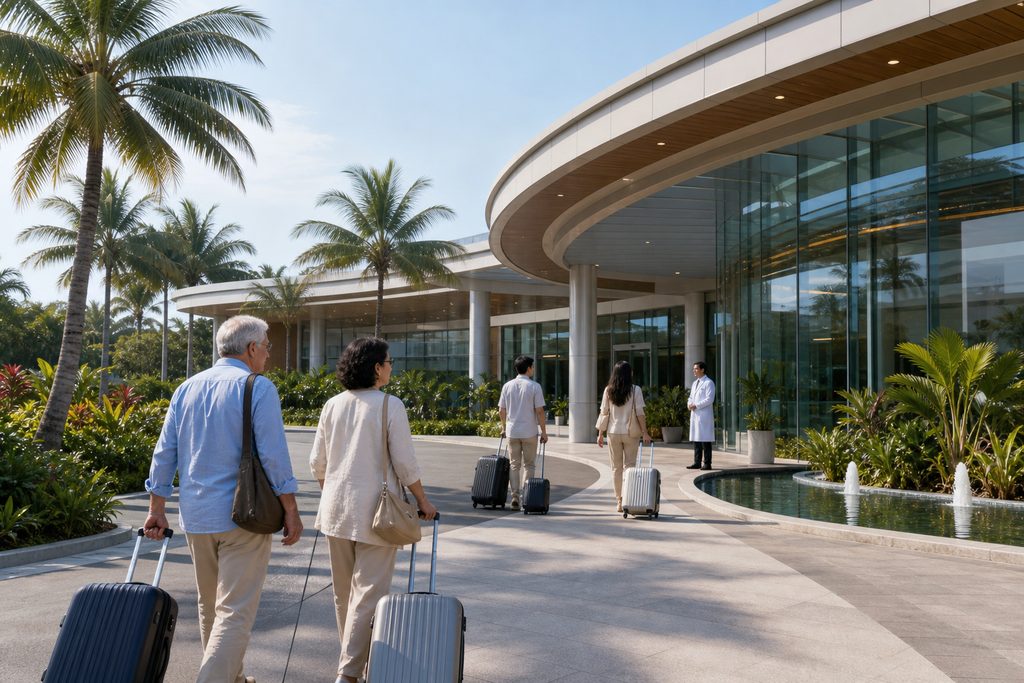
Hainan Visa-Free Entry: Our Companion for Medical Treatment in Boao
Hainan’s visa-free entry policy lets citizens from 59 countries stay for up to 30 days without a visa. That opens a door to Boao Lecheng International Medical Tourism Pilot Zone — one of the most unusual healthcare destinations in China. But getting the treatment you need inside that window takes planning. Most travelers underestimate the paperwork, the language barrier, and the clinical evaluation steps before any procedure gets scheduled. Our team handles those logistics daily, and we’ve seen what trips people up.
Boao is not a typical medical tourism hub. It hosts real hospitals and clinics operating under special national policies that allow faster approval for drugs and devices not yet widely available elsewhere in China. For certain patients, that is genuinely valuable. For others, the best hospitals in China for medical tourism are in Beijing, Shanghai, or Guangzhou — cities with deeper clinical experience and more established international patient pathways. Knowing which fits your case matters more than chasing the visa-free convenience.
Hainan Visa-Free Entry for Medical Treatment: The Short Answer
Yes, you can enter Hainan visa-free for medical treatment purposes. Citizens of 59 countries — including the US, UK, Germany, France, Australia, and most of the EU — can stay for 30 days. You need a confirmed medical appointment or at least a formal evaluation plan from a licensed medical institution in the pilot zone before you travel. Immigration officers may ask for supporting documents from the hospital or clinic.
But here is the catch. The visa-free entry does not allow you to travel from Hainan to mainland China for further treatment without a separate visa. If your evaluation reveals that you need care in Guangzhou or Shanghai, you will need an S2 visa. And S2 applications for medical purposes require hospital documents that take time to prepare. Planning around this constraint is the single most important logistical decision you will make.
Who This Is Right For — and Who It Isn’t
Boao’s medical tourism zone works well for a specific profile of patient. The zone specializes in treatments that use internationally approved drugs and devices that are still awaiting broader regulatory approval in mainland China. Think advanced oncology drugs, certain cardiovascular devices, aesthetic and regenerative medicine procedures, and some ophthalmic treatments.
Good candidates typically include:
- Patients who have exhausted locally approved treatment options at home and are seeking access to newer drugs or devices already approved in the US, EU, or Japan
- Patients who want a medical evaluation or second opinion from Chinese specialists without committing to a full mainland hospital stay
- Patients combining a short medical consultation with a recovery period in Hainan’s resort environment
- Patients whose condition is stable enough that a 30-day window is realistic for evaluation, treatment, and initial recovery
Who should not pursue this path:
- Patients needing major surgery with long recovery times — 30 days is often too tight for complex procedures and follow-up
- Patients whose condition requires a multidisciplinary team across multiple specialties in a large academic hospital
- Patients wanting the lowest possible cost — Boao’s pilot-zone pricing is often higher than standard public hospital rates in mainland China
- Patients who cannot travel with a companion or arrange remote support — language barriers in Hainan are real, and the medical zone is not fully English-speaking
The Options, Compared
If you are considering medical treatment in Hainan, you are really choosing between three paths. The table below lays out the practical differences.
| Factor | Boao Pilot Zone (Hainan) | Public Top-100 Hospital (Beijing/Shanghai) | Private International Hospital (Shanghai/Beijing) |
|---|---|---|---|
| Visa requirement | 30-day visa-free for 59 nationalities | S2 visa required | S2 visa required |
| Access to new drugs/devices | Fast-tracked under special policy | Standard national approval timeline | Standard, but faster import channels |
| English-speaking staff | Limited; translators available at extra cost | Limited; international department varies | Standard; most staff bilingual |
| Typical consultation cost | $100–$300 | $50–$150 (public rate) | $150–$400 |
| Procedure cost vs. US | 20–40% of US price | 10–20% of US price | 30–50% of US price |
| Insurance direct billing | Rarely | No | Yes, with major international insurers |
The right column depends on your priority. If access to a specific new drug is the entire reason you are traveling, Boao is hard to beat. If you want the deepest clinical expertise at the lowest cost, a public top-100 hospital in Beijing or Shanghai — with an S2 visa — is usually the better choice. If you want the smoothest experience and your insurer covers it, a private international hospital makes sense. Most patients we work with end up combining: a remote evaluation first, then a decision about where to go.
What Actually Happens Inside the Boao Pilot Zone
The Boao Lecheng International Medical Tourism Pilot Zone is a designated area in Qionghai, about a two-hour drive from Haikou and one hour from Sanya. It is not a single hospital. It is a cluster of licensed medical institutions — some public, some private, some joint ventures with foreign partners. The zone’s special policy allows approved institutions to use drugs and devices that have marketing authorization in other developed countries but not yet in mainland China. That is the core value proposition.
But the zone is not a walk-in clinic. Every institution requires advance registration and medical records review before you arrive. You cannot simply fly in and expect a same-day consultation. The typical sequence is: remote records review → written treatment proposal → appointment confirmation → visa-free entry → in-person evaluation → procedure scheduling → treatment → short recovery → departure. That sequence takes days, not hours. And the 30-day clock starts the moment you land.
Boao Medical Tourism Package Cost: What You Are Really Paying For
Costs in Boao vary widely by institution and treatment type. A basic medical evaluation package — including records review, one specialist consultation, and basic diagnostic tests — typically runs $500 to $1,500. A more comprehensive health screening package with imaging and laboratory work can reach $2,000 to $5,000. Treatment costs are separate and depend entirely on the procedure and the drugs or devices involved.
For comparison, a cardiac evaluation in a top Beijing hospital might cost $300 to $800, while the same evaluation in a private international hospital in Shanghai could be $800 to $2,000. Boao sits in the middle, but the premium is justified only if you need access to a specific fast-tracked drug or device. If you are just looking for a general health check, the mainland is cheaper.
What is not included in most Boao package prices: accommodation, local transport, translation services, and any follow-up care after you leave. Hotels near the zone range from $60 to $300 per night. A bilingual medical companion — someone who handles registration, translates during consultations, and manages logistics — typically costs from $300 per day. For most international patients, that companion is the difference between a stressful trip and a workable one.
How to Book Surgery in China as a Foreigner: The Real Sequence
Booking surgery in China is not like booking a hotel. There is no online checkout. Public hospitals in mainland China do not allow overseas patients to reserve surgery slots before an in-person outpatient consultation. The doctor must see you, review your records, and agree that surgery is indicated. Only then can a date be scheduled. For Boao institutions, the process is similar — remote records review first, then in-person evaluation, then procedure scheduling.
If you want to lock in a surgery date before you travel, you are looking at the international department or VIP channel of a hospital. That costs more — typically 1.5 to 2 times the standard rate — but it gives you a confirmed timeline and English-speaking coordination. This is where a service like ours earns its fee. We do not sell access. We coordinate the process: translate your records, submit them through the correct channel, confirm the appointment, and arrange a bilingual companion to be with you on the day. If we cannot secure the appointment you asked for, the coordination fee is fully refunded.
The question “is it safe to have surgery in China” comes up constantly. The honest answer: at top-ranked hospitals, yes, with qualifications. China’s best hospitals perform extremely high volumes of surgery. Fuwai Hospital in Beijing performs over 14,000 cardiac surgeries per year — the highest volume in the world. Volume drives proficiency. But safety also depends on communication. A patient who cannot communicate symptoms, allergies, or concerns is at higher risk anywhere. That is why we insist on a bilingual companion for any surgical patient who does not speak Chinese.
Practical Considerations: Documents, Payment, and Follow-Up
Before you book anything, gather your medical records. You will need recent imaging reports, lab results, pathology reports if relevant, and a summary letter from your current physician. All documents must be translated into Chinese for most public hospitals, though Boao institutions and private international hospitals often accept English. Translation typically takes 3 to 5 business days and costs $50 to $150 per document set.
Payment is another friction point. Public hospitals in China require prepayment — you deposit funds at admission and the hospital deducts as treatment proceeds. International credit cards are not always accepted at public hospital counters. Private international hospitals and most Boao institutions accept major credit cards, but confirm before you travel. International health insurance rarely covers treatment in China directly; you pay first and claim reimbursement later. Some private hospitals offer direct billing with specific insurers, but Boao institutions generally do not.
Follow-up after you return home is the piece most patients forget. Chinese doctors will want to review post-treatment imaging or lab work. You need a plan for who reads those results and how they get communicated back. Without a coordinator, this often falls apart. With one, it is a scheduled email.
Frequently Asked Questions
Yes, if you hold a passport from one of the 59 eligible countries. The 30-day stay is fixed and cannot be extended from within Hainan. You must have documentation from a licensed medical institution in the pilot zone confirming your appointment. Immigration officers have discretion, so a formal appointment letter matters. If you need more than 30 days or plan to travel to mainland China for care, apply for an S2 visa before you leave home.
Usually not. Boao’s pricing reflects its special regulatory status and resort-adjacent location. Standard consultations and diagnostics cost more than public hospital rates in mainland cities. The value is access, not price. If you need a drug or device that is not yet approved in mainland China, Boao may be your only option in China. If you just need high-quality care at the lowest cost, a public top-100 hospital in Beijing or Shanghai is typically 20 to 50 percent cheaper.
Boao institutions operate under Chinese medical regulations, and malpractice claims follow Chinese law. That is a different legal environment than most Western patients are used to. Your recourse options are limited compared to what you might expect at home. This is a real risk, and you should weigh it honestly. For complex procedures with meaningful complication risk, we often recommend treatment at a large academic hospital in Beijing or Shanghai — institutions with deep experience managing complications. Boao is strongest for treatments with well-established safety profiles that happen to use newer drugs or devices.
No. JCI accreditation is a useful signal for private international hospitals, but most of China’s best public hospitals are not JCI-accredited. They are ranked by the Fudan University hospital ranking system, which evaluates clinical reputation, research output, and specialty strength. The Fudan Top 100 list includes 340+ hospitals across 37 cities, and many of these are world-class by any measure. JCI matters more if you want direct insurance billing and Western-style service. For clinical outcomes, the Fudan ranking is the better guide.
For Boao, allow at least 4 to 6 weeks. That covers records translation, remote evaluation, appointment confirmation, and travel logistics. For mainland public hospitals with S2 visa processing, allow 8 to 12 weeks. The visa alone can take 2 to 4 weeks depending on your home country’s Chinese embassy or consulate. Rushing this process is the most common mistake we see — and the most avoidable one.
Your Next Step
Hainan’s visa-free window is a genuine opportunity for the right patient with the right condition. But the value only materializes if the clinical fit is right, the paperwork is complete, and someone on the ground can bridge the language and logistics gap. That is what we do. China Medical Services is not a hospital and we do not diagnose or treat. We coordinate — records translation, appointment confirmation, bilingual companions, and visa guidance. If you are considering Boao or any medical treatment in China, start with a free consultation. Tell us your condition and your goals. We will tell you honestly whether Hainan makes sense, or whether a different city serves you better. No pressure, no obligation — just a clear-eyed read on your options. Request your free consultation here.
For more medical information and treatment options in China, visit chinamedservices.com (China Medical Services).
