Hair Restoration Hospitals in Chengdu: Costs, Top Clinics, and How to Book
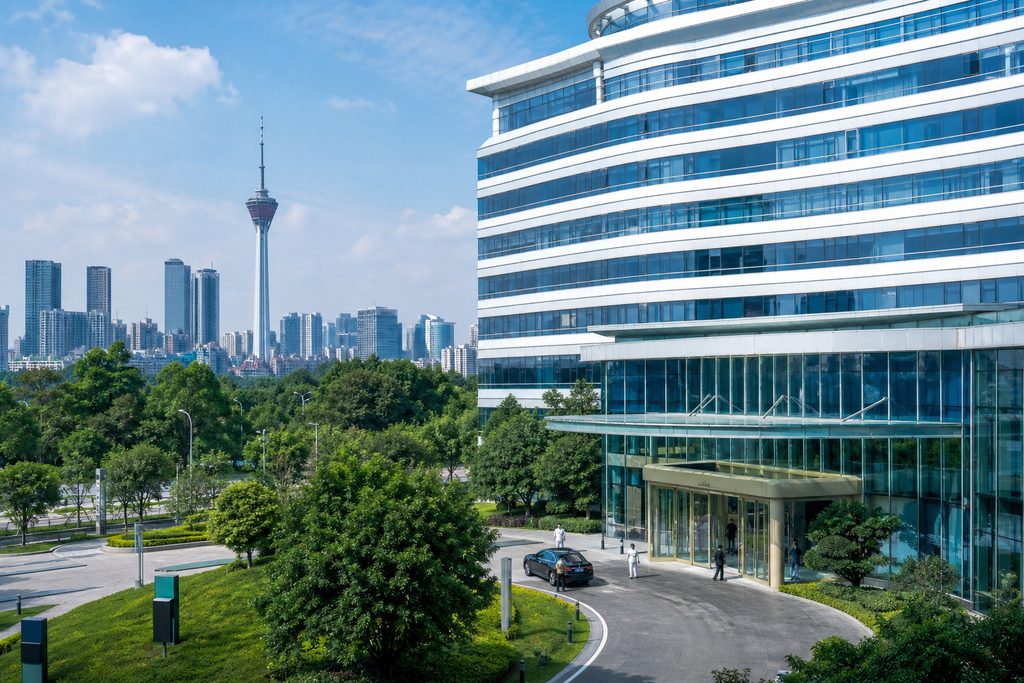
When 44-year-old Daniel from Melbourne started losing density along his hairline, he did what most people do first: he googled. What he found was a wall of Turkish clinics, Bangkok packages, and Instagram before-and-afters with no verifiable medical credentials behind them. He wanted something else. A real hospital, a real surgeon, and a price that did not require a second mortgage. That search eventually led him to Chengdu, a city of 21 million in southwestern China that most Western patients have never considered for hair restoration — and that is precisely why it deserves a closer look.
Here is the short version. Hair transplant cost Chengdu typically falls between $3,000 and $8,000 for a standard FUE procedure of 2,000 to 3,500 grafts, depending on hospital tier and case complexity. That is roughly one-quarter to one-third of comparable U.S. pricing. But cost is only the first question. The harder ones involve safety, surgeon selection, and how a foreigner actually books a procedure inside a Chinese public hospital system that was not designed for overseas patients.
Hair Restoration Hospitals in Chengdu: The Short Answer
Chengdu has several credible options for surgical hair restoration, split across three tiers: large public tertiary hospitals with dermatology or plastic surgery departments, dedicated private hair restoration clinics, and international medical centers attached to major hospitals. The best-known public institution in the city is West China Hospital, part of Sichuan University and consistently ranked among China’s leading medical centers in the Fudan Hospital Rankings. It is a genuine academic powerhouse. It is also enormous, with daily outpatient volumes in the tens of thousands, and it does not operate like a Western boutique clinic.
That distinction matters more than any price list. In China, a public hospital’s hair restoration service is a medical department, not a consumer brand. You will not find a slick consultation suite with a latte machine. You will find qualified physicians, standardized protocols, and a queue.
Key takeaway: Chengdu offers real medical-grade hair restoration at 25–35% of Western prices — but the booking process, language barrier, and hospital culture require preparation. The procedure is straightforward. Getting to it is the hard part.
Who This Is Right For — and Who It Isn’t
Hair restoration is not a universal solution, and any clinic that tells you otherwise is selling something. Here is an honest breakdown.
Typically a good candidate:
- Men with stable androgenetic alopecia (pattern baldness) who have been losing hair for 3+ years and have a clear donor area at the back of the scalp
- Patients with sufficient donor density — generally 60+ follicular units per cm² in the donor zone
- Women with traction alopecia or scarring alopecia that has stabilized
- Anyone willing to commit to a 12–18 month timeline to see final results
- Patients who understand that surgery slows or fills hair loss but does not stop the underlying process
Probably not a good candidate:
- Active diffuse shedding from untreated thyroid disease, iron deficiency, or medication side effects — fix the cause first
- Alopecia areata in an active phase, which is an autoimmune condition and responds to medical, not surgical, treatment
- Patients under 25 whose hair loss pattern has not yet stabilized
- Anyone with uncontrolled diabetes, bleeding disorders, or active scalp infection
- People expecting a full head of hair restored from a Norwood 6–7 pattern with limited donor supply
If you fall into the second group, a surgical consultation is not the right first step. A dermatology evaluation is. That is a conversation worth having before you book a flight.
The Options, Compared
Before comparing countries, compare what you are actually buying. The table below reflects typical ranges for a 2,500-graft FUE procedure. All figures vary by hospital and case complexity, and none should be treated as a quote.
| Destination | Typical Cost (2,500 grafts) | Surgeon Credentialing | Language Support | Wait Time |
|---|---|---|---|---|
| United States | $12,000–$20,000 | Board-certified dermatologists/plastic surgeons | Native English | 2–8 weeks |
| United Kingdom | £7,000–£12,000 (~$9,000–$15,000) | GMC-registered specialists | Native English | 4–12 weeks |
| Turkey | $1,500–$4,000 | Highly variable; many technician-led operations | Mixed; often translator-mediated | Days to weeks |
| Chengdu, public tertiary hospital | $3,000–$6,000 | Hospital-employed physicians, academic affiliation | Limited; bilingual support usually required | 1–4 weeks after consultation |
| Chengdu, private/international clinic | $5,000–$8,000 | Varies; verify surgeon credentials directly | Often English-capable | Days to 2 weeks |
Which column matters most depends on you. If price is the deciding factor and you are comfortable navigating a foreign hospital system, the public tertiary route in Chengdu is the strongest value. If you want an English-speaking coordinator from the first phone call, a private international clinic costs more but removes friction. Turkey remains the cheapest option globally — and also the one with the widest variance in quality and regulation.
For patients weighing a broader range of options across China, our overview of top-ranked hospitals by city is a useful starting point.
What “Best Hair Restoration Clinic China” Really Means for Chengdu
Search that phrase and you will get a hundred listicles, most of them paid placements. So let us define terms. A genuinely strong hair restoration clinic — in Chengdu or anywhere in China — has four markers.
First, the operating physician is a licensed medical doctor, not a technician. This is the single biggest differentiator globally. In Turkey especially, many “surgeons” never touch the patient; technicians perform the extraction and implantation. In Chinese public hospitals, the physician performing the procedure is a hospital-employed doctor with a documented license. Ask for the license number. A legitimate clinic will provide it.
Second, the clinic performs a proper pre-operative assessment: trichoscopy, donor density measurement, and a discussion of medical adjuncts like finasteride or minoxidil. Surgery without a medical plan for the underlying condition is a temporary fix.
Third, the graft count and technique are documented in writing before you pay. FUE, FUT, and DHI are different procedures with different recovery profiles and prices. Vague promises like “maximum density” mean nothing.
Fourth, there is a clear post-operative protocol with follow-up. Hair restoration results are judged at 12 months, not 12 days. A clinic that disappears after the procedure is not a clinic.
Practical tip: Request the surgeon’s license number, the planned graft count, and the technique in writing before any deposit. Any hesitation on these three items is your answer.
How Much Do Hair Implants Cost in Chengdu?
Pricing in China is usually quoted per graft or as a flat package. Per-graft rates at Chengdu public hospitals commonly range from $1.20 to $2.50 per graft for FUE. Private international clinics run higher, often $2.00 to $3.50 per graft. A 2,500-graft session therefore lands somewhere between $3,000 and $8,000.
What drives the variance? Graft count is the biggest factor — a Norwood 3 case needing 1,800 grafts costs far less than a Norwood 5 needing 3,500. Technique matters too; DHI and sapphire FUE carry premiums over standard FUE. Surgeon seniority, hospital tier, and whether the procedure is performed in a standard department or an international/VIP channel all shift the number. International departments typically run 1.5 to 2 times standard pricing but include English-speaking staff and shorter waits.
What is usually included: the procedure itself, local anesthesia, basic post-operative medication, and one follow-up visit. What is often not included: PRP therapy add-ons, extended medication, accommodation, airport transfers, and interpretation. Ask for an itemized breakdown in writing.
For a broader sense of how Chinese surgical pricing compares across specialties, our China Medical Services resource library covers cost comparisons for dozens of procedures.
Is Hair Transplant Safe in China?
The honest answer: the procedure itself is safe when performed by a qualified physician in a licensed facility, and China’s top-tier hospitals meet that bar. Hair transplantation is a superficial, outpatient procedure under local anesthesia. Serious complications are rare anywhere. The real risks are aesthetic — poor graft survival, unnatural hairline design, donor scarring — and those depend almost entirely on operator skill.
China’s regulatory environment for medical practice is strict. Physicians must hold a national license, and hospitals are subject to health commission oversight. The larger risk for foreign patients is not regulatory but informational: you may not be able to evaluate a surgeon’s track record the way you could at home, and language barriers can obscure what is actually being proposed.
Caution: Avoid any provider that quotes a price before examining your scalp, promises a specific result, or cannot show a medical license. These red flags are universal — they are not specific to China.
How to Book a Hair Transplant in China as a Foreigner
This is where most patients hit a wall. Chinese public hospitals generally do not allow overseas patients to book a specialist outpatient appointment in advance through an online portal. Registration typically happens on the day, in person, in Chinese. Surgery cannot be scheduled until after an in-person consultation.
There are two realistic paths around this.
The first is the hospital’s international department or VIP channel. These exist specifically for foreign patients and offer English-capable staff, expedited scheduling, and a smoother process — at roughly 1.5 to 2 times standard pricing. Not every Chengdu hospital operates one, so verification is needed case by case.
The second is remote pre-evaluation. You send photographs and medical history, a Chinese specialist reviews them, and you receive a written assessment and a proposed plan before you travel. This does not replace the mandatory in-person consultation, but it tells you whether the trip is worth making and roughly what it will cost. Our team coordinates this through our consultation and companion services.
On the visa side, medical travel to China uses the S2 visa for short stays, with supporting documentation from the treating hospital. Stays exceeding 180 days fall under S1. Accompanying family members apply under the same category. Requirements shift, so confirm current rules with the nearest Chinese embassy or consulate before applying. Note that the M visa is for commercial and trade activity and is not the correct category for medical treatment.
Frequently Asked Questions
A 2,500-graft FUE procedure in Chengdu typically runs $3,000–$8,000, versus $12,000–$20,000 in the United States. The gap reflects lower operating costs and physician fees in China, not a difference in the procedure itself. Final pricing depends on graft count, technique, and whether you use a standard or international department.
Yes, when performed at a licensed hospital by a credentialed physician. Hair transplantation is an outpatient procedure under local anesthesia with a low rate of serious complications anywhere in the world. The meaningful variable is operator skill, not geography. Verify the surgeon’s license and ask for the planned graft count in writing.
Not directly at most public hospitals. Standard registration happens in person on the day, and surgery is scheduled only after that consultation. International departments and VIP channels offer more flexibility. Remote pre-evaluation through a coordinator can confirm feasibility and cost before you commit to travel, but it does not replace the required in-person exam.
Plan for 5–7 days minimum. Day one is consultation and pre-operative assessment. Day two is typically the procedure, which takes 6–8 hours. Days three through five cover the first post-operative check and wound care. Most patients fly home after day five, though final results take 12–18 months to fully develop.
This is a fair concern and worth planning for. Reputable hospitals provide written post-operative instructions and a follow-up schedule. Some complications, like infection or poor graft survival, may require evaluation by a dermatologist in your home country. Before booking, ask what remote follow-up support the hospital offers and get it in writing. Do not assume it will be available.
Your Next Step
Chengdu is a legitimate destination for hair restoration — not a bargain-bin alternative, but a genuine medical option at a fraction of Western pricing. The procedure is the easy part. The coordination is where most patients need help, and where a little preparation saves a lot of frustration.
We are China Medical Services, a coordination service that connects international patients with Chinese hospitals. We are not a hospital and we do not provide medical diagnoses. What we do is help you understand your options, arrange remote evaluations, coordinate appointments, and provide bilingual support on the ground so the language barrier does not become the deciding factor.
If you are still in the research stage, that is exactly the right time to reach out. A short conversation about your situation costs nothing and usually clarifies more than another week of googling.
This article is for general information only and does not constitute medical advice. Treatment decisions should be made in consultation with a qualified physician who has examined you in person.
For more medical information and treatment options in China, visit chinamedservices.com (China Medical Services).
