Bile Duct Cancer Specialist: Oriental Hepatobiliary Cost & Access
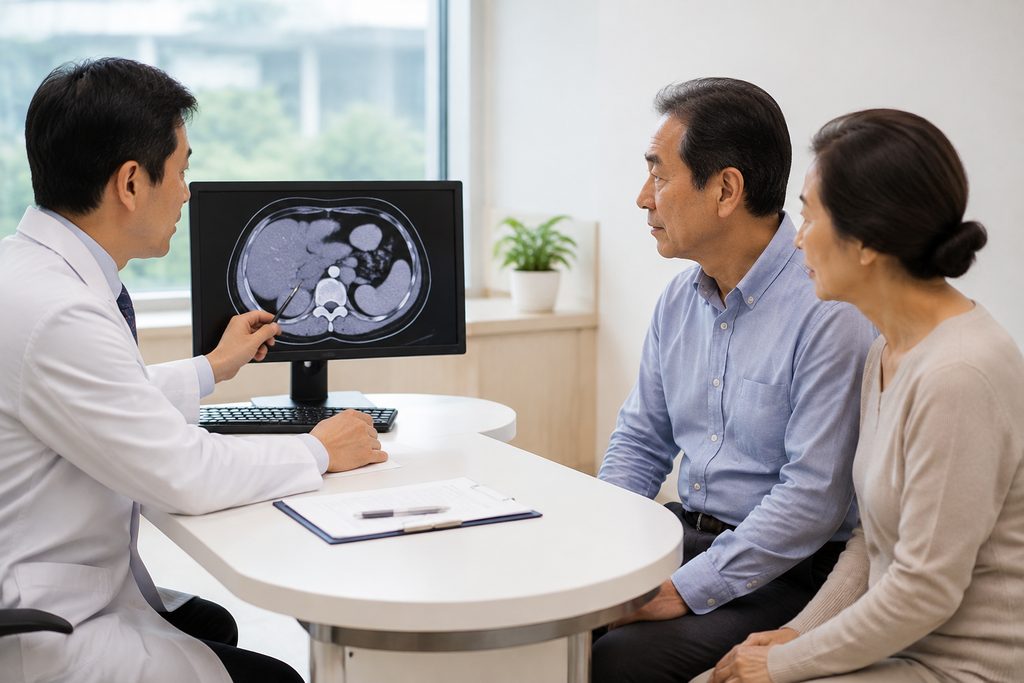
Have you been diagnosed with cholangiocarcinoma and told your surgical window is closing? The search for a bile duct cancer specialist in Shanghai often starts with a single Google query — and ends with more questions than answers. The cost of hepatobiliary surgery at centers like Oriental Hepatobiliary Surgery Hospital typically ranges from $25,000 to $55,000 for complex resections, roughly one-fifth to one-third of comparable care in the United States. But price is only one variable. Surgeon volume, hospital infrastructure, and whether the tumor is actually resectable matter more than any number on an invoice.
We connect international patients with China’s top-tier hepatobiliary departments. Our team has spent years mapping which hospitals actually perform high volumes of hilar cholangiocarcinoma resections — and which ones merely list the service on a website. The distinction saves lives. This article breaks down what a bile duct cancer specialist in Shanghai costs, what the Oriental Hepatobiliary hospital international patient price structure looks like in practice, and how to evaluate whether traveling to China for this surgery is the right decision for your specific case.
Bile Duct Cancer Specialist Shanghai Cost: The Short Answer
For a major bile duct resection at a top Shanghai hepatobiliary center, expect to pay between $25,000 and $55,000. That includes hospitalization, surgeon fees, anesthesia, and standard post-operative monitoring. Complex cases requiring vascular reconstruction or extended hepatectomy push toward the upper end. The same surgery in the United States routinely exceeds $120,000 before insurance negotiations. But here’s the caveat: the price you’re quoted remotely almost never matches the final bill. Imaging review may reveal the tumor is more advanced than initially staged. Additional procedures get added. And international patient channels carry coordination fees that standard domestic patients never see.
Who This Is Right For — and Who It Isn’t
Surgery for cholangiocarcinoma is technically demanding. Patient selection determines outcomes as much as surgeon skill. Based on what we see from hospitals in our network, here’s who typically benefits from pursuing treatment in China.
Good candidates for traveling to Shanghai:
- Patients with intrahepatic or perihilar cholangiocarcinoma that a surgeon has confirmed is resectable on recent imaging
- Patients who need a second opinion on resectability after being turned down for surgery at home
- Patients facing 3+ month surgical wait times who have a tumor with documented growth on serial scans
- Patients who can fund treatment out-of-pocket or have insurance that reimburses international care
- Patients who are functionally independent — ECOG performance status 0 or 1 — and can tolerate a 10-14 hour operation
Who should not pursue this path:
- Patients with distant metastases confirmed on PET-CT or MRI — surgery is not curative in this setting, and no hospital in Shanghai or anywhere else changes that biology
- Patients with main portal vein or bilateral hepatic artery involvement that a multidisciplinary team has deemed unresectable
- Patients with active cholangitis or sepsis — these require stabilization before any travel is considered
- Patients with Child-Pugh class C cirrhosis — the remnant liver volume simply cannot support life after major resection
- Patients who cannot tolerate a 10+ hour flight or who lack a companion for the post-operative period
Being honest about who should stay home is part of what we do. A long flight with an undrained biliary obstruction can turn a treatable cancer into a fatal infection. Timing matters more than geography.
The Options, Compared
Not every bile duct cancer diagnosis leads to the same treatment pathway. Here’s how the genuine alternatives stack up — in China and elsewhere.
| Treatment Setting | Typical Cost (USD) | Surgical Volume | Wait Time for Surgery | Language Support |
|---|---|---|---|---|
| Shanghai top-tier public hospital (international channel) | $25,000–55,000 | High — 100+ hepatobiliary resections/year at leading centers | 2–6 weeks after imaging review | Coordinator-dependent; many surgeons speak limited English |
| Shanghai private international hospital | $60,000–110,000 | Lower — typically 30–60 cases/year | 1–3 weeks | Strong — English-speaking physicians and staff |
| United States academic center | $120,000–250,000 | Variable — top centers perform 50–100 cases/year | 4–12 weeks | Native English |
| Thailand or India private hospital | $18,000–40,000 | Moderate — 40–80 cases/year at leading centers | 1–4 weeks | English widely spoken |
If your priority is surgeon experience with hilar cholangiocarcinoma specifically, Shanghai’s high-volume public hepatobiliary centers are hard to beat. The surgeons who staff these departments operate on bile duct tumors weekly, not monthly. If your priority is seamless English communication and Western-style nursing ratios, a private international hospital in Shanghai or a Western academic center fits better — at a price. Patients who need complex vascular reconstruction should prioritize case volume over comfort. That points to the public tier.
What Survival Data Actually Shows for Bile Duct Cancer Surgery in China
The question patients actually ask is blunt: what is the survival rate for bile duct cancer surgery in China? Here’s the honest answer. For intrahepatic cholangiocarcinoma undergoing complete resection, published five-year survival rates from major Chinese hepatobiliary centers range from 25% to 40%, depending on nodal status and margin clearance. For perihilar cholangiocarcinoma — the most technically demanding subtype — five-year survival after R0 resection runs 20% to 35%. These numbers align with outcomes from Memorial Sloan Kettering and MD Anderson. Nobody in Shanghai or New York is curing metastatic cholangiocarcinoma with a scalpel. But for resectable disease, surgical volume correlates with margin-negative resection rates, and margin status is the single strongest predictor of long-term survival.
One thing to understand about Chinese surgical culture: aggressive resection is more common here than in many Western centers. Chinese hepatobiliary surgeons are more likely to attempt extended resections in borderline cases. That cuts both ways. Higher R0 rates for some patients. Higher perioperative risk for others. A written second opinion from a hepatobiliary specialist in China’s top-ranked departments can clarify whether your specific tumor is one a Shanghai surgeon would attempt — and what the realistic risks are.
How to Find a Top Hepatobiliary Surgeon in Shanghai
Searching “how to find a top hepatobiliary surgeon in Shanghai” from outside China leads to a wall of hospital websites with generic English pages. Here’s what actually works.
First, understand the landscape. Shanghai has roughly 18 hospitals on the Fudan University hospital ranking Top 100 list — more than any city except Beijing. Among those, a handful have dedicated hepatobiliary surgery departments with international patient offices. Oriental Hepatobiliary Surgery Hospital, affiliated with the Second Military Medical University, is one of them. The hospital performs over 3,000 hepatobiliary procedures annually, making it one of the highest-volume centers in Asia for liver and bile duct surgery.
But volume alone doesn’t identify your surgeon. You need to know who specifically handles hilar resections, what their personal case numbers look like, and whether they’ve published on your subtype. That information is not on any English-language website. It comes from Chinese-language academic databases, hospital internal records, and direct inquiry through the international patient office. This is where a coordinator who reads Chinese and understands the system earns their fee.
Practical steps you can take without a coordinator:
- Request the hospital’s international patient office contact through their official website and ask specifically about surgeon case volumes for cholangiocarcinoma, not general liver surgery
- Send your imaging and pathology reports for a remote review — most top Shanghai centers offer this for a fee
- Ask for the names of two or three specific surgeons, then search PubMed for their publication record on bile duct cancer
- Request a video consultation before committing to travel — the surgeon’s willingness to speak with you directly is itself a signal
One caution: the surgeon you see on a hospital’s promotional page is not necessarily the surgeon who operates on international patients. Senior professors often delegate to their teams. Clarify who will actually hold the scalpel before you sign anything.
Bile Duct Cancer Treatment Packages China: What’s Actually Included
Several medical tourism agencies advertise “bile duct cancer treatment packages China” with all-inclusive pricing. Read those packages carefully. Most include airport pickup, hotel booking, hospital registration, and interpretation — not the surgery itself. The surgery is billed separately by the hospital, often with a deposit required before admission.
A typical international patient pathway at a Shanghai public hepatobiliary center looks like this:
Week 1: Arrival, hospital registration, repeat imaging (CT/MRI/PET-CT as indicated), blood work, cardiopulmonary evaluation. Cost: $2,000–5,000 for diagnostics.
Week 2: Multidisciplinary review, surgical planning, pre-operative optimization (biliary drainage if needed, nutritional support). Cost: $3,000–8,000 depending on interventions.
Week 3: Surgery. Hospitalization 7–14 days for uncomplicated resection. Cost: $20,000–45,000.
Weeks 4–6: Post-operative recovery, drain management, wound care, early follow-up imaging. Cost: $3,000–7,000 if extended stay is needed.
Total realistic range: $28,000–65,000 for an uncomplicated case. Complications add 20–50%. Adjuvant chemotherapy, if indicated, is a separate cost entirely — typically $3,000–6,000 per cycle in China.
What the Oriental Hepatobiliary hospital international patient price includes depends on which department admits you. The international VIP ward charges a premium for English-speaking nursing staff and private rooms — typically 1.5 to 2 times the standard ward rate. Standard wards are cheaper but offer no language support. You cannot have both. Choose based on your actual needs, not the brochure.
Practical Considerations: Records, Visas, and Payment
Getting from a diagnosis at home to a hospital bed in Shanghai requires paperwork discipline. Here’s what matters.
Medical records: You need recent contrast-enhanced CT or MRI (within 4–6 weeks), a pathology report confirming cholangiocarcinoma, tumor marker results (CA19-9, CEA), liver function tests, and any prior surgical or procedural reports. All documents must be translated into Chinese for the hospital’s review. A certified medical translator is worth the cost — a mistranslated pathology report can change a surgeon’s assessment of resectability.
Visa: Foreign nationals traveling to China for medical treatment apply for an S2 visa, which covers short-term private affairs including medical treatment. The hospital must issue an invitation letter and a treatment confirmation document. Family members accompanying you also apply for S2 visas. Processing typically takes 1–3 weeks after documents are submitted. The M visa is for commercial activities and is not appropriate for medical travel.
Payment: Chinese public hospitals require a deposit before admission. International bank transfers are accepted by most international patient offices, but processing can take 5–10 business days. Some hospitals accept major credit cards with a processing fee. Cash is not practical for amounts this size. Insurance reimbursement is your responsibility — Chinese hospitals provide itemized invoices and medical records for claims, but they do not bill international insurers directly except at private international hospitals.
Follow-up care after returning home: This is the piece most patients underestimate. A bile duct resection requires ongoing surveillance — CT every 3–6 months, tumor markers, sometimes ongoing biliary stent management. Your home oncologist must be willing to take over follow-up based on Chinese records. Before you travel, confirm this with your local team. A surgeon in Shanghai can remove your tumor, but they cannot manage your long-term surveillance from 7,000 miles away.
Important: We do not provide medical advice. The information here is educational. Any decision about surgery for cholangiocarcinoma must be made with a qualified hepatobiliary surgeon who has reviewed your personal imaging and pathology.
Frequently Asked Questions
For resectable intrahepatic cholangiocarcinoma, five-year survival after complete resection at major Chinese centers ranges from 25% to 40%. For perihilar tumors, the range is 20% to 35%. These figures assume margin-negative resection and no distant metastases. Survival drops sharply for margin-positive resections or node-positive disease. No center in China or elsewhere can quote you a personal survival number — your tumor biology, response to prior treatment, and liver function determine your individual outcome far more than the hospital’s published statistics.
For uncomplicated major resection at a top public hepatobiliary center, plan for $25,000 to $55,000 in hospital and surgical fees. Add $5,000–10,000 for pre-operative evaluation and diagnostics. Add $3,000–7,000 for post-operative recovery and extended stay. Total realistic budget: $33,000 to $72,000. Complications increase costs by 20–50%. The Oriental Hepatobiliary hospital international patient price for VIP ward accommodation runs 1.5 to 2 times the standard ward rate. Adjuvant chemotherapy, if needed, is billed separately.
Yes. Most top Shanghai hepatobiliary centers offer remote consultation services. You send your imaging, pathology, and clinical records. A specialist reviews them and provides a written opinion, and you can schedule a video call to discuss findings. Written second opinions from top specialists typically cost $300–500. Video consultations with senior hepatobiliary surgeons run $500–800. This is the smartest first step — it tells you whether traveling is even worth considering before you spend money on flights and visas.
This happens in roughly 15–20% of cases where preliminary review suggested resectability. The hospital may offer alternative treatments — biliary drainage, stenting, systemic therapy, or palliative procedures. You are not obligated to proceed with any treatment you do not want. You can return home. This is why the remote review process matters: it reduces, but does not eliminate, the risk of arriving for surgery that cannot be performed. A written second opinion before travel is the single best way to reduce this risk.
Shanghai’s top hepatobiliary centers handle international patients routinely. The surgical safety record at high-volume centers is comparable to Western academic hospitals. The real risks are logistical, not medical: language barriers in non-international wards, difficulty navigating hospital bureaucracy, and gaps in post-discharge coordination. Using a bilingual medical companion or an international patient coordinator addresses most of these. What no coordinator can fix is the biology of your disease. If your tumor is borderline resectable, no amount of logistical support changes that reality.
Your Next Step
The decision to travel to China for bile duct cancer surgery is not one you make from a website. It starts with a review of your actual imaging and pathology by a surgeon who operates on this disease every week. Our team at China Medical Services helps you get that review — we coordinate written second opinions and video consultations with hepatobiliary specialists at Shanghai’s top-ranked hospitals, including Oriental Hepatobiliary Surgery Hospital. We are not a hospital, we do not employ doctors, and we do not make diagnoses or treatment recommendations. What we do is handle the logistics: records translation, hospital communication, appointment coordination, and on-the-ground support if you decide to travel. Start with a free consultation — tell us about your diagnosis, and we’ll help you figure out whether this path makes sense for your specific case. No pressure, no obligation, just straight answers.
Bile duct cancer moves fast. The window for curative surgery does not stay open indefinitely. If you’re considering treatment in China, begin the evaluation process now — before the tumor makes the decision for you.
For more medical information and treatment options in China, visit chinamedservices.com (China Medical Services).
