Health Checkup in China: From Booking to Results for Foreigners
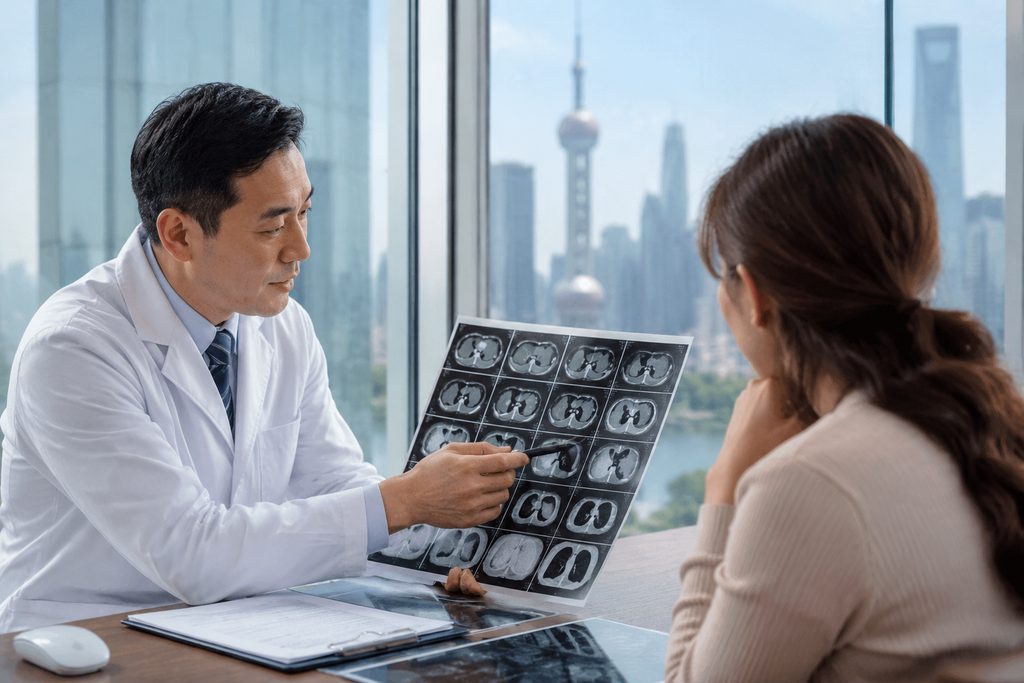
While an executive physical at a top US clinic can run $5,000 to $10,000 and require a four-month wait, a comprehensive full body checkup cost China’s leading hospitals offer typically lands between $300 and $800 — often with same-week scheduling. The equipment is the same: Siemens MRI, GE CT, Roche analyzers. The difference is throughput. Chinese hospitals run physical exams as an industrial process, not a boutique service. That means speed and price advantages that are hard to find anywhere else. But it also means the experience can feel overwhelming if you arrive without a plan.
This guide walks through the entire sequence: choosing a hospital, booking, what happens on the day, how results are delivered, and what to do when the report lands in your inbox. We have coordinated hundreds of these checkups for international patients at Fudan-ranked public hospitals and JCI-accredited private international facilities. Here is what actually happens.
How This Actually Works, Step by Step
You send us your age, medical history, current medications, and any specific concerns — family history of cardiac disease, a lingering cough, unexplained fatigue. We match you with an appropriate package at a suitable hospital. For most patients, that means a public tertiary hospital with an international department, or a private international hospital if you want direct insurance billing and fully English-speaking staff from start to finish.
Booking takes two to five business days. You do not need to be in China yet. The hospital confirms a date, and we send you preparation instructions: fasting requirements, which medications to pause, what to bring. You fly in, typically arriving one or two days before the exam. On the day itself, a bilingual coordinator meets you at the hospital entrance at 7:30 AM.
The exam runs three to six hours depending on the package. You move through stations — blood draw, ultrasound, CT, ECG, chest X-ray, specialist consultations. Your coordinator handles registration, payment windows, queue tickets, and translation at every step. By early afternoon, you are done. Preliminary results are often available the same evening. The full written report, with imaging and lab values, takes three to seven business days.
Full Body Checkup Cost China: What the Numbers Actually Mean
The full body checkup cost China hospitals charge varies by city, hospital tier, and package depth. A standard comprehensive package at a top public hospital in Beijing or Shanghai — covering blood panels, abdominal ultrasound, chest X-ray, ECG, and basic specialist reviews — runs from $300 to $500. Add cardiac stress testing, carotid ultrasound, low-dose lung CT, and tumor markers, and you are looking at $500 to $800. Executive packages at private international hospitals like United Family or Jiahui start around $1,000 and can reach $2,500 with same-day results and dedicated physician consultations.
Contrast that with the US, where a comparable executive physical at Mayo Clinic or Cleveland Clinic runs $4,000 to $10,000, often with a three-to-six-month lead time. In the UK, private health screening packages at BUPA or Nuffield Health cost £800 to £2,500, with waits of several weeks. The price gap is real. So is the pace.
| Package Level | What It Includes | Typical Cost (USD) | Duration |
|---|---|---|---|
| Standard Comprehensive | Blood panel, abdominal ultrasound, chest X-ray, ECG, basic specialist review | $300–500 | 3–4 hours |
| Enhanced / Executive | Above plus cardiac stress test, low-dose lung CT, carotid ultrasound, tumor markers | $500–800 | 4–6 hours |
| Private International Hospital | Full executive panel, same-day physician consultation, English report | $1,000–2,500 | 4–6 hours |
Prices vary by hospital and case complexity. What you pay depends on which add-ons you select and whether you go through a public hospital international department or a private facility.
Best Hospital for Executive Health Screening Shanghai: How to Choose
Shanghai has the deepest concentration of screening options in China. The question of the best hospital for executive health screening Shanghai really depends on what you prioritize: clinical authority, English-language service, or insurance convenience.
For clinical depth, Zhongshan Hospital Fudan University runs one of the largest health management centers in the country. It is a Fudan-ranked top-tier institution with a dedicated physical examination building. The volume is high, the equipment is current, and the physicians reviewing your results are the same specialists who handle complex inpatient cases. Expect efficient but not luxurious service. Bring patience for crowds.
For a Western-style experience, Shanghai United Family Hospital and Jiahui International Hospital offer executive screening with English-speaking physicians, private rooms, and direct billing with major international insurers. You pay more — often two to three times the public hospital rate — but the process is closer to what you would expect at a private clinic in London or Singapore. If you are flying in specifically for a screening and want minimal friction, this is the pragmatic choice. Our team regularly coordinates both options depending on patient preference and insurance coverage. You can compare public and private options on our private international hospitals page.
How Long Does a Health Checkup Take in China? A Realistic Timeline
The short answer: three to six hours on the day, three to seven business days for the full report. But the complete process — from first inquiry to holding a translated report in your hand — spans two to four weeks. Here is the honest breakdown.
| Stage | What Happens | Typical Duration |
|---|---|---|
| Inquiry & package selection | You share history and goals; we recommend a package and hospital | 1–3 days |
| Booking confirmation | Hospital confirms date; we send preparation instructions | 2–5 business days |
| Visa processing | S2 visa application with hospital invitation letter | 1–3 weeks, depending on your consulate |
| Travel & arrival | Fly in, settle, fast overnight before exam | 1–2 days |
| Exam day | Registration, fasting blood draw, imaging, consultations | 3–6 hours |
| Report generation | Lab results finalize; radiologists and physicians sign off | 3–7 business days |
| Translation & review | English translation; follow-up consultation if needed | 2–5 business days |
The stage people forget is the visa. You need an S2 visa for medical treatment purposes. The hospital issues an invitation letter, which you submit with your application. Processing times vary by country. Some consulates turn it around in five business days. Others take three weeks. Plan backward from your preferred exam date, not forward from today.
What Can Go Wrong — and What Happens Then
High patient volume means things occasionally go sideways. A CT scanner goes down for maintenance and your slot gets pushed two hours. A lab re-runs a sample because a value came back borderline. The specialist reviewing your ultrasound is called to an emergency and your consultation gets reassigned to a junior physician. These are not rare events. They are the texture of a high-throughput public hospital system.
What happens then? If you are on your own, you wait, you ask questions in a language you do not speak, and you burn half a day. With a coordinator on site, the fix is usually fast: rebook the scan, chase the lab, request the senior physician. That is the entire value of having someone in the building who knows the system and speaks the language. You cannot fix these problems from a hotel room with Google Translate.
Another failure mode: you book a cheap package without understanding what it excludes. A $200 “basic” screening at a public hospital may not include tumor markers, cardiac imaging, or any specialist consultation. You leave with normal bloodwork and no real insight. This is why we insist on package review before booking. The cheapest option is sometimes the most expensive in terms of missed information.
Is Medical Checkup in China Reliable for Foreigners? What the Evidence Shows
It depends on your policy. Many international insurers reimburse preventive screenings at JCI-accredited facilities. Public hospital international departments provide itemized receipts for reimbursement. Private international hospitals often bill insurers directly. Check with your provider before booking, and ask specifically about preventive care coverage.
This happens, and it is the reason you came. If a scan reveals a suspicious finding, the reviewing physician will flag it and recommend next steps — additional imaging, a specialist referral, or a biopsy. We can coordinate those follow-up appointments at the same hospital, often within days. You are not left alone with a worrying report and no path forward.
No, but you need someone who does. Private international hospitals have English-speaking staff throughout. Public hospital international departments have English-speaking coordinators, but the technicians and many physicians still work primarily in Chinese. A bilingual companion makes the difference between a smooth three-hour exam and a frustrating six-hour ordeal.
Give yourself four to six weeks from first inquiry to exam day. That covers package selection, booking, visa processing, and travel. If you already have a valid Chinese visa, you can compress this to two weeks. Last-minute bookings are possible but leave no room for visa delays or scheduling conflicts.
Your Next Step
A health checkup in China is a fast, affordable way to get a comprehensive picture of your health using world-class equipment and experienced physicians. The process requires planning, but the payoff is real: same-week scheduling, detailed reports, and costs that are a fraction of Western prices. We are China Medical Services — we help international patients navigate Chinese healthcare, from hospital matching to bilingual coordination on the day and result interpretation afterward. We do not provide medical advice; we connect you with the physicians who do. If you are considering a screening, tell us your situation and we will help you figure out whether it makes sense.
Frequently Asked Questions
Yes. The hospitals used for international patients are JCI-accredited and follow the same international safety standards as top hospitals in the US and Europe. Surgical teams perform high volumes of procedures — often more than their Western counterparts — which studies show leads to better outcomes.
Costs vary by procedure and hospital, but international patients typically save 40-80% compared to US prices — even when factoring in travel and accommodation. A consultation with our team will give you an exact, all-inclusive quote with no hidden fees.
Send us your existing medical reports to get started. We handle everything from hospital selection and appointment scheduling to visa assistance and post-operative recovery planning. Your medical records are reviewed by the specialist before you even book a flight.
For more medical information and treatment options in China, visit chinamedservices.com (China Medical Services).
