Heart Surgery in China During Winter: Safety, Costs, and Recovery Reality
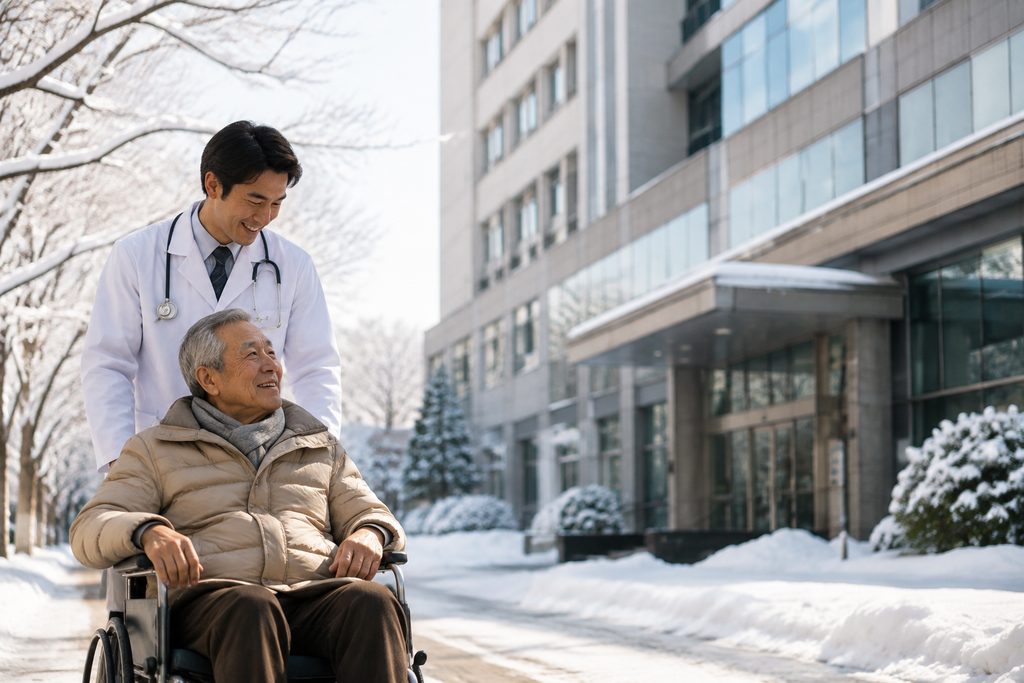
When 52-year-old Daniel from Manchester received his coronary artery disease diagnosis in late November, his cardiologist recommended bypass surgery within six to eight weeks. Daniel stared at the calendar. That meant January. In China, where he had been researching affordable cardiac care, January meant temperatures near freezing in Beijing and Shanghai. His first search query was blunt: “Can I have heart surgery during winter in China?” The answer is yes — and in some ways, winter is no worse than any other season, provided you understand how Chinese hospitals manage cold-weather cardiac cases.
Heart Surgery in Winter: The Short Answer
Yes, you can have heart surgery in China during winter. Top cardiac centers like Fuwai Hospital in Beijing and Zhongshan Hospital in Shanghai perform thousands of procedures year-round, including peak winter months. Cold weather itself does not increase surgical risk inside a climate-controlled operating theater. What changes in winter is everything around the surgery: air quality, respiratory infection exposure, and post-discharge recovery logistics. The heart surgery cost China winter travelers pay is generally the same as in other seasons, though seasonal demand around Chinese New Year can affect scheduling. But if your cardiac condition is progressing, waiting for spring is usually riskier than proceeding in winter.
Who This Is Right For — and Who It Isn’t
Winter cardiac surgery in China works well for certain patients. Others should think carefully before booking flights.
Typically good candidates:
- Patients with stable but significant coronary artery disease, valve dysfunction, or congenital defects that need intervention within 3–6 months
- Those who have already completed diagnostic testing (angiogram, echocardiogram, stress test) and have clear surgical indications
- People who can tolerate a 2–4 week stay in China and have a companion for the first week after discharge
- Patients whose home-country wait times exceed their clinical safety window
Who should reconsider winter travel for surgery:
- Patients with decompensated heart failure or unstable angina requiring emergency intervention — they should not travel internationally at all
- Those with severe COPD or recurrent winter respiratory infections; cold, dry air and hospital exposure can trigger complications
- Anyone who cannot arrange at least 10–14 days of post-operative recovery before a long-haul flight
- Patients whose anticoagulation management is already unstable — travel and dietary changes complicate INR monitoring
Winter does not make surgery unsafe. But it adds logistical friction. Being honest about that friction is how we help patients decide correctly.
The Options, Compared
If you need heart surgery and winter is your window, you have three realistic paths. Here is how they compare for a typical coronary artery bypass graft (CABG) case.
| Factor | China (Top Public Cardiac Center) | China (Private International Hospital) | United States (Major Academic Center) |
|---|---|---|---|
| Typical CABG cost | $12,000–20,000 | $35,000–60,000 | $120,000–200,000+ |
| Wait time for surgery | 2–6 weeks after in-person consultation | 1–3 weeks | 4–12 weeks (varies by region and insurance) |
| Winter-specific considerations | Large public hospital, high patient volume, limited English at standard registration | English-speaking staff, more personalized winter recovery support | High cost, but no language barrier and familiar insurance processes |
| Post-op monitoring style | ICU + ward, family typically assists with non-medical care | ICU + private room, nursing support more comprehensive | ICU + step-down unit, standardized protocols |
| Best for | Cost-sensitive patients who can arrange a bilingual companion | Patients wanting English communication and direct insurance billing | Patients with comprehensive insurance and no budget constraint |
The public cardiac center route suits most medical travelers because the surgical volume is extraordinary. Fuwai Hospital alone performs over 14,000 cardiac surgeries annually — more than any single center in the world. That repetition breeds technical proficiency. The private international route costs more but removes language friction. The U.S. route is familiar but financially devastating for the uninsured or underinsured.
What Cold Weather Actually Changes About Heart Surgery Recovery in China
Search “how cold weather affects heart surgery recovery China” and you will find scattered forum posts and little clinical guidance. Here is what actually matters, based on how Chinese cardiac teams manage winter patients.
Cold air constricts peripheral blood vessels. That raises blood pressure and makes the heart work harder — exactly what you do not want in the first two weeks after sternotomy or valve replacement. Chinese cardiac wards keep indoor temperatures at 22–24°C (72–75°F) year-round. The operating theaters are even more tightly controlled. So the hospital phase is not the problem.
The challenge is the transition from hospital to hotel or serviced apartment. Discharge typically happens 7–10 days after CABG, 5–7 days after valve surgery. You will still have sternal precautions: no lifting over 5 kg, no pushing or pulling heavy objects, limited arm movement. Walking outside in near-freezing temperatures is possible but should be brief and layered. Many patients book accommodations within 10–15 minutes of the hospital specifically to minimize cold exposure during follow-up visits.
Air quality matters more than temperature. Beijing and other northern cities can see elevated PM2.5 levels in winter due to heating-season emissions. For a post-operative cardiac patient, poor air quality stresses the cardiopulmonary system. Shanghai, Guangzhou, and Shenzhen generally have better winter air quality than Beijing, though all major Chinese cities have improved dramatically over the past decade. If you have pre-existing lung issues, consider a southern city for surgery. Zhongshan Hospital in Shanghai is among the best cardiac hospital Shanghai for foreigners options precisely because it combines top-tier cardiac surgery with a more moderate winter climate.
And one more winter-specific factor: respiratory infections. Hospital-acquired pneumonia risk exists in any season, but winter brings higher circulating rates of influenza and RSV. Chinese hospitals screen for respiratory symptoms on admission and isolate febrile patients. You can reduce your own risk by getting a flu vaccine at least two weeks before travel and wearing a mask in crowded hospital corridors.
Heart Surgery Cost China Winter: What You Actually Pay
The heart surgery cost China winter patients encounter breaks down into three buckets: the surgery itself, the hospital stay, and the non-medical logistics.
Surgery and hospital fees. A CABG at a top public cardiac center runs $12,000–20,000. Valve replacement (mechanical or bioprosthetic) ranges $18,000–30,000 depending on valve type. Complex congenital repairs or aortic surgery can reach $35,000–50,000. These figures include surgeon fees, anesthesia, operating theater, ICU stay (typically 2–4 days), and ward stay (typically 5–10 days). They do not include pre-operative testing if done in China, which can add $1,500–3,000.
Private international hospitals. United Family, Jiahui, and Parkway facilities charge $35,000–60,000 for CABG. You pay for English-speaking staff, direct insurance billing, and a more Western-style recovery environment. Some international insurers cover these facilities directly.
Non-medical costs. Winter flights to China are often cheaper than summer peak-season fares. Budget $800–1,500 round-trip from Europe, $1,200–2,000 from North America. Accommodation near a major cardiac center runs $60–120 per night for a serviced apartment. A bilingual medical companion costs from $300 per day — this person handles registration, translation, and navigation through a hospital system where single-day outpatient volume can exceed 10,000 patients. For a two-week surgical stay, total non-medical costs typically land between $5,000 and $10,000 per person including companion fees.
Is it safe to have heart surgery in China from a financial standpoint? Yes, if you understand the payment structure. Public hospitals require prepayment — you deposit funds upfront and the hospital draws down as services are delivered. Insurance reimbursement happens after the fact, meaning you need liquid capital or a confirmed direct-billing arrangement. Private international hospitals are more likely to bill your insurer directly.
Practical Considerations: Records, Visa, and Winter Logistics
Before any Chinese cardiac surgeon will schedule you, they need your complete medical file. That means recent angiography images (not just the report), echocardiogram with measurements, stress test results, current medication list, and a cardiologist’s referral letter summarizing your diagnosis and surgical indication. Chinese top-tier hospitals will not book surgery based on a one-page summary. They want primary data.
Your visa category is S2, which covers short-term private affairs including medical treatment. The hospital’s international department will issue an invitation letter and treatment confirmation document. You submit these to the Chinese embassy or consulate in your home country. Processing typically takes 5–10 business days, but winter is also peak travel season around Chinese New Year (late January through February). Embassies slow down. Apply early. Your accompanying family member also needs an S2 visa.
Chinese New Year deserves special attention if you are planning heart surgery in winter. The holiday shifts dates annually but usually falls in late January or February. Hospitals remain open — cardiac surgery does not stop — but staffing thins for about a week, and many non-essential services pause. If your surgical window overlaps Chinese New Year, confirm with the hospital’s international department that your surgeon and ICU team will be present. Some patients deliberately schedule surgery before the holiday to recover during the quieter period.
Payment methods: public hospitals accept UnionPay, major credit cards (with processing fees), and international wire transfers. Cash is not practical for amounts over $10,000. Private international hospitals accept most major insurance plans and credit cards. Bring documentation of your ability to pay — hospitals may request proof before confirming surgery dates.
Follow-up after returning home: Chinese cardiac surgeons typically want a check-up at 1 month post-op, which can be done remotely via video consultation if you send recent echocardiogram and blood work results. Written second opinions and remote follow-ups cost $100–500 depending on the specialist’s seniority. Your home cardiologist handles day-to-day medication adjustments.
Frequently Asked Questions
Yes, with qualifications. The surgery itself happens in a climate-controlled environment. The risks that increase in winter — respiratory infections, cold-induced vasoconstriction during recovery, air quality fluctuations — are manageable with planning. Choose a hospital with a dedicated international department, book accommodation near the facility, and get vaccinated against influenza before travel. If you have severe COPD or recurrent winter bronchitis, discuss timing with both your home cardiologist and the Chinese surgical team before committing.
Technically yes, but we strongly advise against it. After sternotomy, you cannot lift more than 5 kg for six to eight weeks. You will need help with luggage, grocery runs, and navigating follow-up appointments. A bilingual medical companion handles hospital logistics but is not a personal caregiver. If you cannot bring a family member, budget for both a companion and a private nurse for the first week post-discharge. That adds roughly $1,500–2,500 to your total cost.
Serious post-operative complications — sternal wound infection, valve dysfunction, arrhythmia requiring intervention — occur in a small percentage of cases regardless of where surgery happens. Chinese cardiac centers provide discharge summaries and imaging records in English upon request. Your home cardiologist can manage most issues. If a complication is directly related to the surgery and requires re-intervention, you would need to weigh returning to China versus being treated locally. This is the inherent trade-off of medical travel. No hospital, Chinese or otherwise, can guarantee a complication-free outcome.
Some private international hospitals market heart surgery packages China medical tourism travelers can book in advance. These typically bundle surgery, hospital stay, and basic coordination services. Public top-tier hospitals do not offer packages — they charge per service rendered. What a coordination service like China Medical Services provides is not a package but a pathway: we handle hospital matching, appointment coordination, document translation, and on-the-ground support. The hospital bills you directly for all medical services. Any coordination fees are separate and transparent.
Most cardiac surgeons recommend 10–14 days after discharge before a long-haul flight. That means a total China stay of 3–4 weeks for CABG, slightly less for minimally invasive valve procedures. Flying too early increases deep vein thrombosis risk and leaves you far from your surgical team if complications arise. Some patients extend their stay to 6 weeks and complete the first post-op echocardiogram in China before returning home. The decision depends on your recovery trajectory and your surgeon’s assessment.
Your Next Step
Winter heart surgery in China is feasible, safe, and dramatically less expensive than equivalent care in the United States or Western Europe. The key is preparation: complete records, early visa application, accommodation near the hospital, and honest communication about your respiratory and cardiac status. We help international patients navigate this process — matching you with appropriate cardiac centers, coordinating appointments, and providing bilingual support on the ground. We are not a hospital, and we do not provide medical advice or diagnoses. If you are weighing winter surgery in China, start with a free consultation to discuss your case and timeline. A clear plan beats a cold-weather gamble every time.
Winter in China will not make your heart surgery riskier. Poor planning will. Get the planning right, and the season becomes just another detail.
Ready to explore your options? Request a free consultation and our team will help you map out a realistic timeline, budget, and hospital shortlist for your cardiac procedure.
For more medical information and treatment options in China, visit chinamedservices.com (China Medical Services).
