Health Checkup: Why Travelers and Expats in China Get Screened
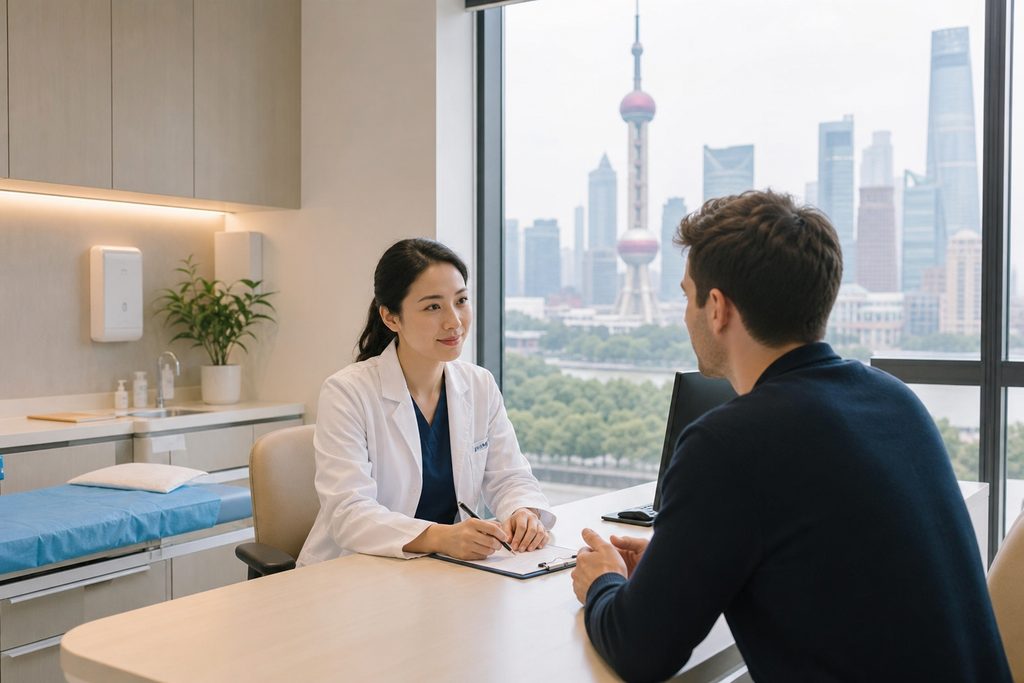
When 38-year-old Daniel, an architect from Texas, landed in Shanghai for a three-year project, he had one nagging worry. His father had died of colon cancer at 61, and Daniel had skipped his last two annual physicals back home. He knew he needed a comprehensive screening. He also knew his US insurance deductible made a full workup painfully expensive. A colleague mentioned that executive health screenings at Chinese hospitals were thorough, fast, and surprisingly affordable. Daniel was skeptical. Was it safe? Would the doctors speak English? What would a full body checkup cost China compared to what he would pay in Houston?
He is not alone in asking these questions. Every year, hundreds of thousands of expatriates, business travelers, and medical tourists land in Chinese cities like Beijing, Shanghai, and Guangzhou. Many of them consider getting a health checkup while they are already in the country. The draw is clear: access to high-volume hospitals, modern imaging equipment, and prices that often undercut Western private clinics by 60 to 80 percent.
But navigating the system as a foreigner is not straightforward. Hospital registration, language barriers, and wildly different package structures can turn a simple screening into a confusing ordeal. This guide breaks down what you need to know about getting a full body checkup cost China, how the process works, which hospitals to consider, and what to watch out for.
Key Takeaways
- A full body checkup cost China typically ranges from $150 to $1,200 depending on hospital tier, imaging included, and whether you use a VIP or international clinic.
- Top-tier Chinese hospitals perform tens of thousands of screenings annually, with same-day results for most bloodwork and imaging.
- Language is the single biggest barrier — most public hospital staff do not speak English, which is why bilingual coordination matters.
- You cannot always book a specific doctor online from overseas, but screening packages at international medical centers are usually reservable in advance.
The Problem: Health Screenings in the West Are Expensive and Slow
A comprehensive executive physical in the United States at a facility like the Mayo Clinic or Cleveland Clinic can run anywhere from $3,000 to over $10,000 when imaging, cardiac stress testing, and specialist consultations are included. Even a mid-tier private screening in London or Sydney rarely comes in under $1,500. And wait times for non-urgent imaging can stretch for weeks.
For the uninsured or underinsured, these numbers are simply out of reach. A 2023 survey by the Kaiser Family Foundation found that 38 percent of American adults skipped or delayed a recommended medical test due to cost. That is a dangerous gamble. Early detection of conditions like colorectal cancer, cardiovascular disease, and type 2 diabetes dramatically improves outcomes. But when the price of a screening feels like a luxury purchase, many people roll the dice.
This is where China enters the conversation. The country has invested heavily in hospital infrastructure over the past two decades. Major cities now host facilities with 3T MRI machines, low-dose CT scanners, and automated laboratory lines that process thousands of samples per hour. The operational scale is staggering. A single large public hospital in Shanghai might see 10,000 outpatient visits in one day. That volume drives efficiency — and efficiency drives down cost.
Why China Delivers Results for Health Checkups
Clinical Volume and Equipment Density
Volume matters in screening. Radiologists who read hundreds of chest CTs per week develop pattern recognition that no textbook can teach. Chinese physicians at top-tier hospitals work in some of the highest-throughput imaging departments on the planet. A 2022 study published in The Lancet Regional Health – Western Pacific noted that low-dose CT lung cancer screening in China has expanded rapidly, with several large municipal programs scanning over 100,000 asymptomatic residents annually. The readers interpreting these scans see more pathology in a month than many Western radiologists see in a year.
Equipment is also newer than much of what you find in aging Western hospital systems. Many Chinese hospitals installed their first 3T MRI or 256-slice CT within the last decade. That means current-generation machines with faster scan times and lower radiation doses.
Structural Cost Advantages Without Cutting Corners
Lower prices do not mean lower standards. The cost gap exists because of structural economics: lower physician salaries relative to the US, higher patient throughput, and state-subsidized hospital construction. A senior radiologist in Shanghai earns a fraction of what a comparable specialist earns in New York. The hospital does not need to charge $2,000 for an MRI to cover its labor costs.
So a full body checkup cost China that includes abdominal ultrasound, chest X-ray or low-dose CT, comprehensive blood panels, ECG, and a physician consultation can come in under $400 at a reputable public hospital. The same package at a private international hospital in Shanghai, with English-speaking staff and hotel-like service, might run $800 to $1,500. Still far below Western private clinic pricing.
Same-Day Results and Streamlined Workflows
Most Chinese health screening centers are designed for efficiency. You arrive at 7:30 AM, register at a dedicated checkup floor, and move through stations: blood draw, ultrasound, ECG, imaging, physical exam. By noon, you are done. Blood results are often available by late afternoon. Imaging reports typically follow within 24 to 48 hours.
This is a fundamentally different experience from the fragmented Western model, where you might wait three weeks for a cardiology appointment, then another two weeks for an echocardiogram, then another week for results. The Chinese system compresses the entire process into a single morning.
What a Typical Full Body Checkup Package Includes
Packages vary by hospital and tier, but most comprehensive screenings include the following core components:
- Blood work: complete blood count, liver and kidney function, lipid profile, fasting glucose, HbA1c, thyroid panel, and tumor markers (CEA, AFP, CA19-9, PSA for men, CA-125 for women).
- Imaging: chest X-ray or low-dose CT, abdominal ultrasound, thyroid ultrasound. Higher-tier packages add cardiac ultrasound, carotid ultrasound, or whole-body MRI.
- Cardiac assessment: resting ECG, sometimes a treadmill stress test or coronary calcium scoring for men over 40.
- Specialist review: a physician summarizes findings and flags abnormalities. Some packages include a consultation with an internist or cardiologist.
- Optional add-ons: gastroscopy, colonoscopy, bone density scan, mammography, or prostate ultrasound.
If you are wondering how long does a full health checkup take in Beijing, the answer depends on the package. A standard executive screening at a hospital like Peking Union Medical College Hospital International Medical Services typically takes 3 to 4 hours on-site. Add a gastroscopy or colonoscopy, and you are looking at a second visit or a full day. Results for routine labs are usually same-day. Pathology from endoscopic biopsies takes 3 to 5 days.
Best Hospitals in Shanghai for Health Screening
Shanghai is the most popular entry point for international patients seeking checkups. The city has the second-highest concentration of Fudan-ranked top hospitals in China, with 18 institutions on the national Top 100 list. For health screenings, three categories of facilities stand out.
Public hospital international departments offer the best balance of clinical authority and price. Zhongshan Hospital Fudan University and Huashan Hospital both operate dedicated international medical centers with English-speaking coordinators. A comprehensive screening at these facilities typically runs $300 to $700. You get access to the same physicians and equipment that serve the general public, but with shorter queues and translation support.
Private international hospitals are the easiest option for first-time visitors. Facilities like Jiahui International Hospital and Shanghai United Family Hospital are designed for expatriates. English is the working language. Insurance direct billing is standard. The trade-off is price: expect to pay $800 to $1,500 for a comparable package. But the experience is frictionless — no language stress, no crowded hallways, no guesswork.
Dedicated health screening centers, often operated as separate wings of large public hospitals, are the budget option. These centers handle high volume and offer package prices starting around $150 for a basic screening. The catch: almost no English support. If you go this route without a bilingual companion, bring a Chinese-speaking friend.
| Hospital Type | Example Facilities | Typical Package Cost | English Support | Best For |
|---|---|---|---|---|
| Public hospital international dept. | Zhongshan, Huashan, Ruijin | $300–$700 | Partial (coordinators) | Clinical authority at moderate cost |
| Private international hospital | Jiahui, United Family, Parkway | $800–$1,500 | Full | Expatriates, insurance billing, ease |
| Public screening center | District-level hospital checkup wings | $150–$400 | Minimal | Budget-conscious, Chinese-speaking |
One question we hear constantly: is medical checkup in China safe for foreigners? The short answer is yes, with caveats. The clinical standard at top-tier hospitals is high. Infection control protocols in international departments meet JCI benchmarks. The caveats are operational: language barriers can lead to missed instructions or misunderstood results. And the sheer volume of patients in public areas can feel overwhelming if you are not used to it. Choosing a facility with structured international patient services eliminates most of these risks.
How to Book an Executive Health Screening Package in China
Booking a screening as a foreigner is different from booking one as a local. Here is the process that works reliably.
First, decide what you need. A basic package covers bloodwork, chest imaging, and abdominal ultrasound. An executive package adds cardiac testing, more tumor markers, and specialist review. If you have specific concerns — family history of colon cancer, heavy smoking history, chronic fatigue — tell the coordinator upfront. Packages can be customized.
Second, choose your facility tier. If you want clinical prestige and lower cost, target a public hospital international department. If you want zero friction, book a private international hospital. If you are on a tight budget and speak some Chinese, a public screening center works.
Third, contact the facility or a coordination service. Many international departments accept email or WeChat booking. You will need to provide your passport number, desired date, and package selection. Some hospitals require a deposit. Others accept payment on arrival. If you want to book executive health screening package China from overseas, private international hospitals are the most reliable responders. Public hospital international departments can be slower to reply, especially during Chinese holidays.
Fourth, prepare for the visit. Fast for 8 to 12 hours before bloodwork. Bring your passport, previous medical records if relevant, and a list of current medications. Arrive early — most screening centers open at 7:30 AM and the early slots move fastest.
Practical Considerations: Insurance, Payment, and Follow-Up
Payment is straightforward but worth planning. Public hospitals in China require prepayment. You load money onto a hospital card at registration, and each test deducts from the balance. International departments usually accept Visa, Mastercard, and UnionPay. Private international hospitals accept major credit cards and often bill insurance directly. If your insurer is a global carrier like Cigna, Aetna International, or Allianz, check whether the facility is in-network before you book.
Insurance reimbursement is a different story for public hospitals. You will pay out of pocket and submit claims afterward. Ask for itemized receipts and English translations of all reports. Most international departments provide these automatically. Public screening centers often do not.
What about the international patient health checkup China price difference between public and private? It is significant. The same abdominal ultrasound that costs $80 at a public international department might cost $200 at a private hospital. The gap narrows when you factor in translation, coordination, and insurance billing convenience. For many expatriates, the premium is worth it. For budget travelers, it is not.
Visa considerations matter too. If you are coming to China specifically for a medical checkup, you may need an S2 visa, which covers short-term private affairs including medical treatment. Tourist visas are generally not appropriate for planned medical visits. If you are already in China on a work or family visa, no additional visa is needed for a screening. Always confirm current requirements with your nearest Chinese embassy or consulate, as rules change.
After the screening, you will receive a report — usually in Chinese, with English translation available at international departments. Review it with the physician on-site. If anything is flagged, you may be referred for follow-up testing. That can often be done the same week. If you return home before results are complete, most hospitals will email reports. Some offer video follow-up consultations for an additional fee.
Frequently Asked Questions
Yes, significantly. A comprehensive package at a top public hospital international department in Shanghai typically costs $300 to $700. The equivalent at a US academic medical center would run $3,000 to $8,000. At private Chinese international hospitals, expect $800 to $1,500 — still 50 to 70 percent below Western private clinic pricing.
At international departments and private international hospitals, yes. Physicians in these settings are generally bilingual or work with trained medical interpreters. At standard public hospital screening centers, English support is rare. If you choose a public facility without an international department, bring a bilingual companion or hire a coordination service.
This is actually the point of screening — to catch problems early. If an abnormality is found, the facility will recommend follow-up testing. At a top-tier hospital, you can often schedule that follow-up within days. Many international patients choose to complete diagnostic workups in China because the cost advantage extends to advanced imaging and specialist consultations. You are never obligated to continue care at the same facility.
Private international hospitals can usually accommodate bookings within a few days to a week. Public hospital international departments may need one to two weeks, especially for executive packages that include gastroscopy or colonoscopy. Peak seasons — October holiday, Chinese New Year — book out faster. Plan ahead if your travel dates are fixed.
Depends on your policy. Many international insurers have direct billing arrangements with private hospitals like United Family and Jiahui. Public hospital international departments typically require payment upfront, with reimbursement claimed afterward. Check with your insurer before booking. Ask specifically whether the facility is in-network and whether preventive screenings are covered under your plan.
Your Next Step
Getting a health checkup while you are in China is a practical, cost-effective way to take control of your health. The key is choosing the right facility and understanding the process before you arrive. We help international patients navigate this system — from selecting a hospital to booking a screening package to arranging bilingual support on the day of your visit. We are not a hospital and do not provide diagnoses. But we do know how the system works, and we can help you move through it without the stress. If you would like help planning a checkup at one of the 340+ top-ranked hospitals in our network, start with a free consultation and we will point you in the right direction.
The core message is simple: you do not need to choose between quality and affordability. With the right preparation, a health screening in China gives you both. Take the first step — your future self will thank you.
For more medical information and treatment options in China, visit chinamedservices.com (China Medical Services).
