Health Screening Abroad: Will My Screening Find Problems I Do Not Know About?
Key Takeaways
- A comprehensive health screening in China typically costs $300–$1,500 depending on depth, imaging included, and hospital tier — roughly one-fifth to one-tenth of comparable Western executive panels.
- High-end screening packages in Shanghai and Beijing commonly bundle low-dose CT, cardiac ultrasound, tumor markers, and endoscopy — modalities often excluded from standard Western annual physicals.
- No screening protocol detects everything. Incidental findings are common, and follow-up diagnostics can add cost and anxiety — a reality every patient should understand before booking.
- Language barriers and registration logistics in Chinese public hospitals are real. Planning ahead — or using a bilingual coordination service — materially changes the experience.
The Problem: What You Do Not Know Can Hurt You
You feel fine. Bloodwork from last year came back normal. So why would a full body check up cost China anything beyond a routine physical? The uncomfortable answer lives in the data: approximately 1 in 3 adults walks around with undiagnosed hypertension, and roughly 1 in 5 with prediabetes — neither of which produces symptoms until damage is already underway. The World Health Organization estimates that noncommunicable diseases now account for 74% of all deaths globally. Many of those deaths trace back to conditions that were detectable years earlier.
Western annual physicals rarely close this gap. A standard US executive panel might include basic labs, an EKG, and a chest X-ray. What it usually skips: low-dose CT lung screening, coronary artery calcium scoring, abdominal ultrasound, thyroid imaging, and upper GI endoscopy. Those are precisely the tests most likely to surface the problems you do not know about. And in the United States, adding them piecemeal can push the bill past $3,000 — often with months of specialist wait times between each step.
Why a Comprehensive Screening in China Delivers More Depth
China’s top-tier hospitals run screening programs at a scale almost unimaginable in Western systems. Fuwai Hospital in Beijing performs over 14,000 cardiac surgeries annually — the highest volume in the world. That volume translates into operational efficiency most Western centers cannot match. For a patient asking “can a health screening detect hidden diseases,” the honest answer is: it depends entirely on what the screening includes. And in China, the inclusion list is longer for the same money.
Imaging Depth That Western Panels Often Omit
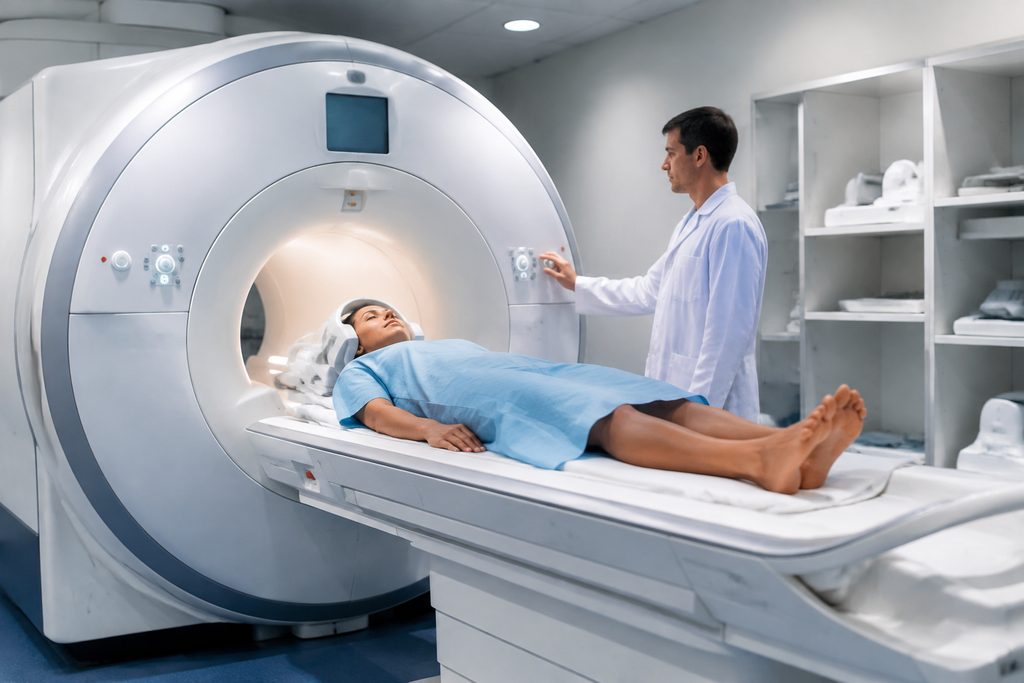
Many comprehensive health screening package Shanghai price points include low-dose spiral CT of the chest as a standard component. In the US, the same scan is typically reserved for long-term smokers over 50 under specific insurance criteria. Chinese executive packages frequently bundle coronary artery calcium scoring, carotid ultrasound, and abdominal ultrasound into a single morning session. The National Lung Screening Trial demonstrated that low-dose CT reduces lung cancer mortality by 20% in high-risk populations. That is the difference between finding a stage I lesion and finding a stage IV one.
One Morning, One Campus, One Report
The structural advantage is simple: Chinese screening centers are designed for throughput. A patient arrives at 7:30 AM, completes labs, imaging, and specialist reviews, and receives a consolidated preliminary report by early afternoon. No separate appointments. No six-week waits between cardiology and radiology. That operational reality is why a full body check up cost China stays low while scope stays broad — fixed infrastructure and high daily patient volume spread overhead across far more cases.
Why Lower Cost Does Not Mean Lower Quality
Labor economics explain most of the gap. A radiologist’s salary in Shanghai is a fraction of a US radiologist’s, even at Fudan-ranked hospitals. Equipment is the same: Siemens, GE, Philips. The top 5% of China’s 35,000+ hospitals — ranked by Fudan and JCI — operate imaging departments running 24/7. Cost savings come from volume and wage structure, not from cutting corners on calibration or protocol. The same low-dose CT protocol that costs $800 in New York costs $120–$200 in Shanghai. The machine is identical. The reading quality, at a top-tier center, is comparable.
What Diseases Can a Full Body Scan Actually Find
Let us be precise about what a full body scan can find — and what it cannot. A well-designed screening panel targets silent, early-stage disease across five categories.
Cardiovascular disease. Coronary artery calcium scoring detects calcified plaque years before symptoms. Carotid ultrasound identifies stenosis that predicts stroke risk. Combined, these two tests surface the leading killer of adults worldwide — often in patients with normal cholesterol panels.
Early malignancy. Low-dose CT finds lung nodules as small as 2–3 mm. Abdominal ultrasound catches liver and kidney lesions. Tumor markers like CA-125, PSA, and AFP add biochemical signals. No panel rules out all cancers, but a structured panel catches the most common ones at treatable stages.
Metabolic disorders. Fasting glucose, HbA1c, lipid profile, thyroid function, and liver enzymes. These are standard everywhere — but bundled with imaging, they gain context. A fatty liver on ultrasound plus elevated ALT tells a story a blood test alone cannot.
Structural abnormalities. Gallstones, kidney cysts, uterine fibroids, thyroid nodules. Most are benign. Some are not. Knowing they exist is the first step to watching them appropriately.
Chronic infection markers. Hepatitis B and C serology, H. pylori testing. In many Western panels these are optional add-ons. In China, where HBV prevalence historically runs higher, they are often default inclusions.
What a Screening Cannot Promise
Here is the part most marketing materials skip. No screening finds everything. A full body scan will not reliably detect early pancreatic cancer, small bowel tumors, or microscopic metastases. It will not diagnose depression, early dementia, or most autoimmune conditions. And it will absolutely produce false positives.
Incidental findings — a 4 mm lung nodule, a slightly enlarged thyroid, a borderline ovarian cyst — occur in roughly 30–40% of comprehensive scans. Most are harmless. But each one triggers follow-up imaging, repeat labs, or specialist consults. That means additional cost and, honestly, additional worry. A good screening program prepares you for this. A bad one hands you a report and disappears.
Before you book: Ask exactly what the package includes, who reads the images, and how incidental findings are handled. A $200 “full body scan” that produces a stack of images without a radiologist’s integrated interpretation is not a screening — it is a photo album.
Executive Health Check Up Beijing Cost: What to Expect
Beijing and Shanghai anchor China’s premium screening market. An executive health check up Beijing cost typically ranges from $500 to $1,500 at international departments of top public hospitals. Private international facilities — United Family, Jiahui, Raffles — price comparable packages at $1,200 to $3,000, with English-speaking staff and direct insurance billing.
| Screening Component | Typical US Price (USD) | China Top Public Hospital (USD) | China Private International (USD) |
|---|---|---|---|
| Comprehensive labs + EKG | $400–$800 | $80–$200 | $250–$500 |
| Low-dose chest CT | $500–$1,200 | $100–$250 | $200–$400 |
| Abdominal + thyroid ultrasound | $600–$1,500 | $60–$150 | $150–$300 |
| Coronary calcium score | $250–$600 | $80–$200 | $150–$350 |
| Upper GI endoscopy (sedated) | $1,500–$3,000 | $200–$500 | $400–$800 |
| Full executive panel (bundled) | $2,500–$5,000+ | $500–$1,500 | $1,200–$3,000 |
Prices vary by hospital and case complexity. A package at Peking Union Medical College Hospital‘s international department will cost more than the same tests at a municipal hospital — but the difference buys English-language coordination, consolidated reporting, and faster scheduling. For many international patients, that difference is the entire point.
How to Book a Full Medical Check Up Abroad Without Losing Your Mind
Booking a full medical check up abroad is not like booking a hotel. Chinese public hospitals do not offer simple online scheduling for international patients. Most require in-person registration with a hospital-issued medical card. Some international departments accept advance bookings by phone or email, but response times vary wildly. Language is the first barrier. Process is the second.
The practical sequence looks like this: identify the hospital and package, confirm availability, prepare a passport and visa, arrange payment (public hospitals require prepayment; international departments accept card or wire transfer), arrive one day early for registration, complete the screening, and receive the report — often same-day for basic panels, 3–7 days for comprehensive ones with pathology.
Visa category matters. Medical travelers to China generally apply for an S2 visa, which covers short-term private affairs including medical treatment. The hospital’s invitation letter or appointment confirmation supports the application. Family members accompanying the patient apply under the same category. Requirements shift by embassy, so confirm with the nearest Chinese consulate before booking flights.
Records matter more than you think. Bring all prior imaging, lab results, and medication lists. A radiologist comparing a new lung nodule against a scan from two years ago can often rule out malignancy on the spot — saving you a biopsy and a month of anxiety.
Frequently Asked Questions
No. Screening reduces risk, it does not eliminate it. A well-designed panel catches the most common silent diseases — cardiovascular plaque, early lung and abdominal cancers, metabolic disorders — with high sensitivity. But some conditions, particularly early pancreatic or ovarian cancer, can evade even aggressive imaging. Screening is a risk-reduction tool, not a guarantee.
You will receive a report flagging the finding, usually with a recommended follow-up. For minor findings — small nodules, benign cysts — the recommendation is typically repeat imaging in 6–12 months. For concerning findings, the hospital will advise further diagnostics, which may include biopsy, contrast MRI, or specialist consultation. Those follow-ups cost extra and are not included in the screening package price.
A single low-dose chest CT delivers roughly 1.5 mSv of radiation — about the same as six months of natural background exposure. The risk from one scan is negligible for adults over 40. But radiation exposure is cumulative, so do not repeat full-body CT scans annually without a clinical reason. A good program uses ultrasound and MRI where appropriate to minimize total dose.
At private international hospitals, yes — English-speaking staff are standard. At public hospital international departments, English support is generally available but inconsistent. A bilingual medical companion, available from services like China Medical Services, handles registration, navigation, and translation throughout the screening day. For a $300–$500 daily rate, it removes the single biggest friction point for foreign patients.
Public top-tier hospitals offer the deepest clinical expertise and the lowest prices — but with more paperwork and less hand-holding. Private international facilities offer smoother logistics, English-first service, and direct insurance billing — at roughly double the cost. If your priority is diagnostic depth at minimum cost, choose a Fudan-ranked public hospital’s international department. If your priority is convenience and comfort, choose a private facility. Both are legitimate options; the right choice depends on your budget and tolerance for friction.
Your Next Step
A screening cannot promise you a clean bill of health — but it can replace the anxiety of not knowing with a structured, evidence-based picture of where you stand. That is worth something real. We help international patients navigate China’s top-tier hospitals — from package selection and appointment coordination to on-the-ground bilingual support during the screening itself. We are not a hospital and we do not interpret results or provide diagnoses. If you are considering a comprehensive screening in China, start with a conversation about what you actually need at our consultation page. No pressure. Just clarity.
For more medical information and treatment options in China, visit chinamedservices.com (China Medical Services).
