Healthcare in Changsha for Foreigners: A Guide to Top Hospitals
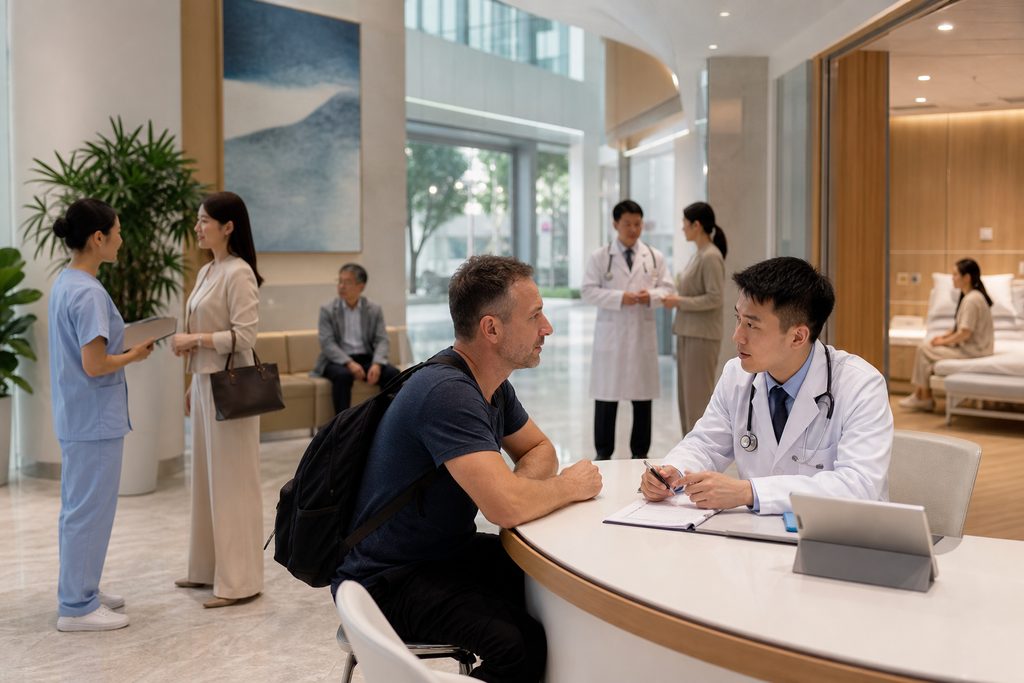
You have probably heard that seeking medical care in China means compromising on quality or navigating a system that is impossible for outsiders to understand. The reality in a city like Changsha is the exact opposite. While it lacks the international reputation of Beijing or Shanghai, Changsha is home to some of the most technologically advanced medical facilities in the country, specifically in the fields of organ transplantation, cardiology, and minimally invasive surgery. However, the gap between world-class clinical care and a comfortable patient experience is bridged by preparation. For a foreigner, the quality of your healthcare in Changsha depends less on the surgeon’s skill—which is often exceptional—and more on how you access the system.
Healthcare in Changsha for Foreigners: The Short Answer
Yes, foreigners can access high-quality healthcare in Changsha. The city hosts at least two hospitals ranked among China’s top 100, offering advanced treatments at a fraction of Western costs. The catch is that the public system is designed for local volume, not international concierge service. You cannot simply walk into a top public hospital, swipe a credit card, and see a specialist without a local medical card and a pre-booked appointment. To access the best hospitals in Changsha for foreigners, you either need to navigate the Chinese-language registration apps or utilize the hospital’s International Department, which offers English support and faster processing for a premium fee.
Who This Is Right For — and Who It Isn’t
Changsha is an excellent choice for a specific profile of medical traveler. It is not a generic destination for everyone.
You are likely a good candidate if:
- You are seeking complex tertiary care, such as cardiac surgery, liver transplantation, or advanced oncology treatments, where Changsha’s top hospitals (like Xiangya) excel.
- You are an expat living in Hunan province who needs reliable specialist care without traveling to Beijing or Shanghai.
- You are a medical tourist looking for significant cost savings on high-acuity procedures (e.g., a heart bypass that costs $120,000 in the US might be $15,000 here).
- You are interested in combining modern treatment with Traditional Chinese Medicine (TCM) rehabilitation.
You should reconsider if:
- You require a purely Western-style private hospital experience with direct insurance billing for a simple check-up. Changsha’s private international sector is smaller than Shanghai’s or Beijing’s.
- You are looking for a vacation-style medical spa. This is a serious clinical destination.
- You have a condition that is stable and manageable at home. The logistical hurdles of traveling to China for a minor issue rarely outweigh the benefits.
The Options, Compared
Understanding where to go is the first step. Changsha’s medical landscape is dominated by the “Xiangya” brand, which is affiliated with Central South University. These are massive public institutions. There is also a growing private sector.
| Facility Type | Example / Brand | Best For | English Support | Cost Level |
|---|---|---|---|---|
| Top-Tier Public (International Dept) | Xiangya Hospital, Xiangya Second Hospital | Complex surgery, oncology, transplants | Yes (dedicated staff, but limited) | Medium-High (1.5-2x standard local rate) |
| Standard Public (VIP/Special Needs) | Hunan Provincial People’s Hospital | General specialist consultations, diagnostics | Limited (requires translation help) | Low-Medium |
| Private / International Clinic | Local international clinics (e.g., parts of Xiangya’s private wing) | Primary care, health checks, minor issues | High (English-speaking GPs) | High (similar to Western outpatient costs) |
| Traditional Chinese Medicine | Hunan University of Chinese Medicine Affiliates | Chronic pain, rehabilitation, wellness | Low (translators essential) | Low |
For a life-threatening condition, the public international departments are your only viable choice. For a sprained ankle or a persistent cough, a private clinic is more comfortable. The middle ground—a standard public hospital VIP ward—offers excellent value if you have a translator.
Why Xiangya Hospital Dominates the Landscape
When researching the best hospitals in Changsha for foreigners, you will repeatedly encounter the name “Xiangya.” The Xiangya Hospital of Central South University is the crown jewel of healthcare in Hunan. It consistently ranks among China’s top 20 hospitals in the Fudan University Hospital Rankings.
What does that mean for you? It means the volume of cases is staggering. The surgical teams perform thousands of complex procedures annually. High volume generally correlates with high proficiency. If you are seeking a cardiac valve replacement or a complex tumor resection, the surgeons here have seen it all. The hospital is particularly renowned for its organ transplantation and neurosurgery departments. However, this excellence comes with crowds. The outpatient hall can feel like a train station at rush hour. This is why the International Department exists—to provide a quieter, faster lane for those willing to pay for it.
How Much Does Medical Treatment Cost in Changsha?
This is the primary driver for many medical travelers. The savings can be substantial, but you must understand the pricing tiers.
For a standard consultation with a senior specialist in the public system, the registration fee might be as low as $10 to $30. A private clinic consultation might run $80 to $150. The real savings appear in surgical procedures.
Consider a coronary artery bypass graft (CABG). In the United States, the average billed charge is well over $120,000. In a top-tier public hospital in Changsha, the total cost—including surgery, hospital stay, and medications—often falls between $12,000 and $20,000. Even if you add the 1.5x to 2x premium for the International Department, you are still looking at a fraction of Western costs.
But be careful: these prices are for the medical service itself. They rarely include the cost of complications, extended ICU stays, or the logistical costs of travel and accommodation. A hip replacement might cost $8,000, but if you need to stay in a hotel for three weeks of recovery, that adds up. Also, note that public hospitals require prepayment. You will need to deposit funds before treatment begins. Private clinics often bill insurance directly, but their cash prices are higher.
Practical Considerations: Visas, Language, and Logistics
Getting here is a process. You cannot simply book a flight and show up at the hospital gate expecting surgery.
Visa: Do not apply for an M visa. The M visa is strictly for commercial and trade activities. For medical treatment, you need an S2 visa. This is the short-stay category for private affairs, which includes medical treatment. You will need a letter of invitation or an appointment confirmation from the hospital to support your application. Accompanying family members also apply for the S2. Always check the latest requirements with the Chinese embassy or consulate in your country, as rules can shift.
Language: This is the biggest barrier. Outside of the International Department, English is rarely spoken. Even in the international wing, the depth of English can vary. You cannot navigate the registration, payment, and pharmacy queues without help. This is where a bilingual medical companion becomes essential. They handle the logistics—queuing, paying, and translating—so you can focus on recovery.
Records: Bring your medical records. Chinese specialists are highly skilled, but they need your history. Have your imaging (CT, MRI) and pathology reports translated into Chinese before you arrive. This saves days of delay.
Frequently Asked Questions
For serious medical issues, yes. The clinical quality at Xiangya is world-class. For routine care, it can be frustrating due to language barriers and crowding. Most expats use the International Departments or private clinics for primary care and go to the public system for major surgery.
You cannot book a standard public outpatient slot from overseas. The system opens slots only days in advance and requires a Chinese ID or medical card. However, you can book through the hospital’s International Department or via a coordination service. This bypasses the standard queue and secures a specific time with a specialist.
This is the hardest part. If you stay in Changsha, you are near the hospital. If you fly home too early, you risk losing continuity of care. We recommend planning a recovery period in Changsha or a nearby city before flying. Your home doctor may not be familiar with the specific techniques used in China, so obtaining a detailed operative report and discharge summary in English is critical.
Yes, but they are less formalized than in Bangkok or Seoul. Most “packages” are actually coordination services that bundle hospital fees, translation, and accommodation. Be wary of any agency promising a specific surgical outcome or a “guaranteed” appointment with a specific doctor. Legitimate services facilitate access; they do not sell medical results.
Your Next Step
Navigating a foreign healthcare system is daunting, but you do not have to do it alone. The key takeaway is that Changsha offers exceptional value and quality for complex care, provided you plan for the language and logistical hurdles. We are not doctors, and we do not provide medical diagnoses. We are a medical concierge team that helps international patients connect with the right specialists, arrange video consultations, and coordinate the logistics of traveling to China. If you are considering treatment in Changsha, start by gathering your medical records and reaching out for a free consultation. We can help you understand your options and take the next step with confidence.
For more medical information and treatment options in China, visit chinamedservices.com (China Medical Services).
