How to Confirm a Doctor via the Hospital Website: A Practical Guide for International Patients
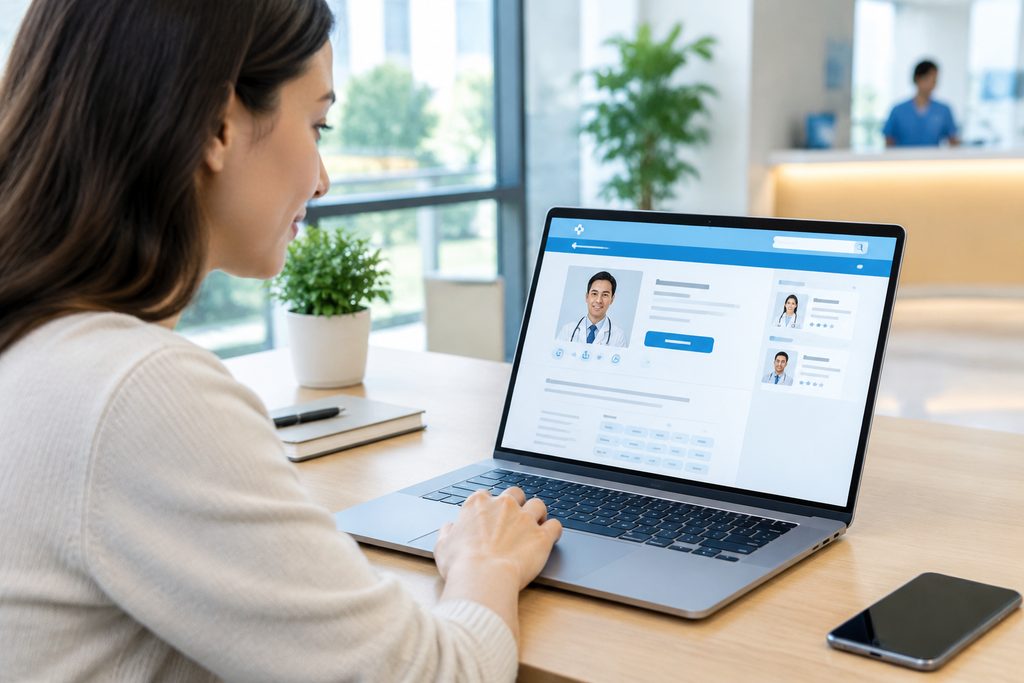
Every year, more than 300,000 international patients travel to China for medical treatment, according to industry estimates. They come for cardiac surgery at Fuwai Hospital, oncology care in Shanghai, orthopedic procedures in Beijing. But before booking a flight, most hit the same wall: how do you actually know the doctor you found online is real, licensed, and qualified? The hospital website is your first line of defense. Learning how to verify doctor credentials hospital website China is not just a nice-to-have skill. It is the difference between informed confidence and a leap of faith.
Our team at China Medical Services has spent years helping Western patients navigate this exact process. We have seen what works, what confuses people, and what red flags matter. This guide walks through the real steps, the honest limitations, and the practical workarounds.
How This Actually Works, Step by Step
The process is more manual than most patients expect. Chinese hospital websites are not always built for international users. Some have English versions. Many do not. But the verification path is consistent once you know what to look for.
Start with the official hospital domain. For public hospitals, that usually ends in .cn or sits on a university domain. For private international hospitals like United Family or Jiahui, the site will be in English and often JCI-accredited. Do not trust third-party directories that scrape names without verification.
Then navigate to the department page. Cardiology, oncology, orthopedics — whatever applies. Each department typically lists its attending physicians with title, education, and sometimes clinical focus. Look for the doctor’s full name in Chinese characters. That matters more than you think. Many doctors share romanized names, but the Chinese characters are unique identifiers.
Cross-check the doctor’s license number. Public hospital profiles sometimes include a medical license registration number. If not, you can look it up on the National Health Commission’s practitioner query system. It is in Chinese, but the search fields are simple: name, hospital, department. A valid license means the doctor is legally registered to practice in China.
Finally, check the hospital’s official announcement section for any disciplinary notices or credential updates. It is rare, but it exists. And if you are working with a coordinator like us, we run these checks before you ever get on a call.
How to Verify Doctor Credentials Hospital Website China: What the Site Actually Shows
Let’s be honest about what a hospital website will and will not tell you. Most public hospital pages show the doctor’s title (chief physician, associate chief, attending), their department, and a short bio. Some list education history. Very few list board certification in the Western sense, because China’s system uses professional titles rather than board exams.
That distinction trips up many Western patients. You may search for “is Beijing United Family hospital doctor board certified” and find nothing, because the phrase does not map cleanly onto the Chinese credentialing system. Instead, look for these signals: years of practice, number of procedures performed, academic appointments, and whether the doctor holds a professorship at a major medical university.
For public hospitals, the Fudan ranking badge matters. A hospital listed in the Fudan Top 100 for a specific specialty means the department as a whole meets a high national standard. The individual doctor’s profile then tells you whether they are a senior member of that department. Both pieces together give you a reasonable picture.
Private international hospitals are easier. United Family, Parkway, Raffles — these hospitals hire doctors with international training and often list credentials like US board certification, UK GMC registration, or equivalent. Their websites are built for English-speaking patients, so the profiles are more detailed.
Still, a website profile is a starting point, not a final answer. We always recommend a written second opinion or video consultation before committing to travel. That is where you actually hear the doctor’s assessment of your case.
A Realistic Timeline
Verification takes longer than people expect. Here is what a typical timeline looks like for an international patient trying to confirm a doctor through hospital websites and follow-up channels.
| Stage | What Happens | Realistic Duration |
|---|---|---|
| Days 1–3 | Identify 3–5 candidate hospitals and departments; locate official websites | 2–3 days |
| Days 4–10 | Extract doctor profiles; translate Chinese pages if needed; cross-check license numbers | 5–7 days |
| Days 11–21 | Send medical records for written second opinion or schedule video consultation | 7–14 days |
| Weeks 4–6 | Receive written opinion or complete video consult; confirm doctor is appropriate for your case | 2–3 weeks |
| Weeks 6–10 | Apply for S2 visa with hospital invitation letter; arrange travel | 2–4 weeks |
| Weeks 10–12 | Arrive in China; in-person consultation; schedule surgery or treatment if indicated | 1–2 weeks |
People forget the translation step. If your medical records are in English, the hospital may require certified Chinese translation before a senior specialist will review them. That adds days. Visa processing adds more. Plan for the full 10 to 12 weeks from first search to hospital arrival.
What Can Go Wrong — and What Happens Then
Plenty can go wrong. We want you to know the failure modes before they surprise you.
The first is outdated profiles. Hospital websites are not always updated promptly. A doctor may have transferred departments, retired, or moved to another hospital. If you find a profile that looks perfect but the hospital confirms the doctor no longer practices there, you start over. That is frustrating, but it is better than arriving for a consultation with someone who is not there.
The second is name confusion. Two doctors with the same romanized name but different Chinese characters. You think you are reading about a senior cardiac surgeon, but the profile actually belongs to a junior physician in a different subspecialty. This is why cross-checking the Chinese characters matters so much.
The third is fake or misleading third-party sites. Some agencies create polished pages that look like hospital profiles but are actually marketing funnels. They may list real doctors but inflate credentials or invent affiliations. If a site does not link back to the official hospital domain, treat it with suspicion.
What happens then? You contact the hospital’s international department directly. Most top hospitals have one. They can confirm whether a doctor is currently practicing, what their title is, and whether they accept international patients. If the hospital does not respond, that itself is information. It may mean the international channel is understaffed, or it may mean the hospital is not set up for foreign patients at all.
Where to Find Doctor CVs and Specialist Profiles for International Patients
The search phrase “find doctor CV on hospital website international patients” reflects a real gap. Most Chinese public hospital websites do not publish full CVs. You get a paragraph, maybe a photo, sometimes a list of publications. That is it.
So where do you find more? Academic databases. Many senior specialists at top hospitals are also university professors. Their publication records on PubMed or CNKI show research focus and clinical volume indirectly. A cardiac surgeon with 50 publications on valve repair is likely deeply experienced in that procedure.
Conference programs are another source. Major medical conferences in China list speakers with affiliations and topics. If a doctor is invited to speak on complex PCI techniques at a national cardiology meeting, that is a strong signal.
And then there is direct inquiry. Our team often contacts hospital international departments on behalf of patients to request a doctor’s current CV and clinical focus. Some hospitals provide it. Some do not. When they do, it is usually more current than the website.
For private international hospitals, the situation is different. The phrase “is Beijing United Family hospital doctor board certified” leads to profiles that often list US or UK board certifications directly. That makes verification much easier for Western patients. But those hospitals charge accordingly — typically 1.5 to 2 times the public hospital rate for the same procedure.
Practical Considerations: Records, Visa, Payment, and Language
Confirming the doctor is only part of the puzzle. You also need to think about what comes next.
Medical records. You will need recent imaging, lab results, pathology reports if relevant, and a summary from your home physician. These should be translated into Chinese for public hospital review. Some hospitals accept English for the international department, but do not assume it.
Visa. Foreigners traveling to China for medical treatment use the S2 visa, with the purpose annotated as medical treatment. Family members accompanying you also apply for S2. The hospital can provide an invitation letter to support the application. Processing time varies by consulate, but plan for at least two to four weeks.
Payment. Public hospitals require prepayment. You deposit funds at admission, and treatment costs are deducted from that balance. Insurance is typically reimbursement-based — you pay first, then claim. Private international hospitals often bill insurers directly, which is easier if your policy covers China.
Language. Top public hospitals see thousands of patients daily. Very few staff speak English outside the international department. Even within that department, you will need help with registration, queueing, payment, and navigating between buildings. A bilingual medical companion — typically from $300 per day — removes that friction entirely.
Frequently Asked Questions
Look for the doctor’s profile on the official hospital site, then note their full Chinese name and hospital. Use the National Health Commission’s practitioner query system to confirm the license is active. If the site does not list a license number, contact the hospital’s international department directly and ask for written confirmation.
Official hospital websites are generally reliable for basic facts like department, title, and education. But they can be outdated. Always cross-check with the hospital directly before making travel decisions. Third-party sites are riskier and should not be your only source.
That is common. Many top specialists at public hospitals have no English-language web presence. You will need translation help to read their Chinese profile and to communicate with the hospital. This is one of the most practical reasons international patients use a coordinator service.
Yes. Check whether the hospital appears in the Fudan Top 100 for the relevant specialty, or whether it holds JCI accreditation if it is a private international hospital. A qualified doctor at an unaccredited hospital is a different risk profile than the same doctor at a top-ranked institution.
No. Chinese public hospitals require an in-person consultation before scheduling surgery. You cannot book a procedure purely online. Verification helps you choose the right doctor and hospital, but the actual surgical plan is only confirmed after you arrive and meet the specialist.
Your Next Step
Verifying a doctor through a Chinese hospital website is doable, but it is time-consuming and full of friction points. That is where we come in. China Medical Services maintains a database of 340+ top-ranked hospitals across 37 cities, and our team handles verification, record translation, appointment coordination, and bilingual accompaniment. We do not practice medicine, and we do not promise outcomes. We simply make it possible for you to reach the right specialist with confidence.
If you are considering treatment in China, start with a free consultation. Tell us your diagnosis and what you are looking for. We will help you map the options — no pressure, just clarity. Visit our patient services page to begin. Or explore our database of top-ranked Chinese hospitals to see what is available in your specialty.
For more medical information and treatment options in China, visit chinamedservices.com (China Medical Services).
