Medical Tourism from South Asia to China: Full Support Hub for India, Pakistan & Bangladesh Patients
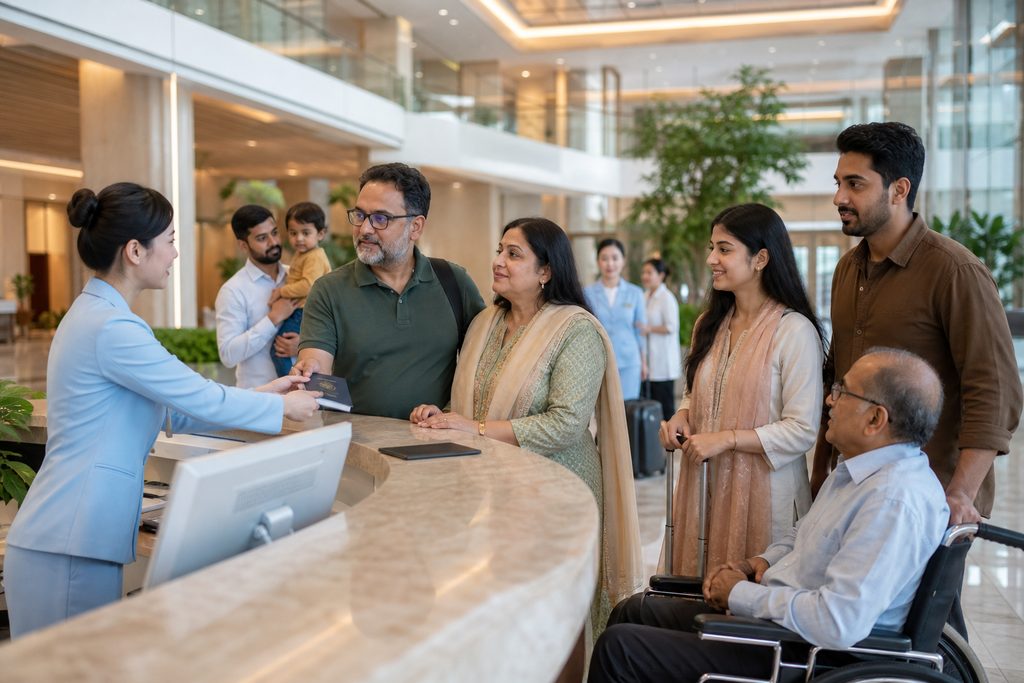
Have you ever sat in a hospital corridor, clutching a scan report, wondering if the treatment plan you just heard is truly the only option? The fear isn’t always the diagnosis. Sometimes, it’s the wait time. Or the cost. Or the quiet suspicion that newer technology exists somewhere else. For families across India, Pakistan, and Bangladesh, that search often leads to a single, pressing question: can China’s massive medical infrastructure actually deliver better, faster, and more affordable care?
The short answer is yes. But the gap between a Google search and sitting in a consultation room in Shanghai or Beijing is filled with logistical hurdles that can overwhelm even the most determined patient. We see this every day. Our team connects South Asian patients with China’s top-tier hospitals, and the pattern is always the same: the medical capabilities are world-class, but navigating the system without a bridge is nearly impossible. This article lays out exactly what that bridge looks like—from identifying the best cancer hospital in China for Indian patients to understanding the real cost of a complex procedure and securing the right visa.
Key Takeaways
- China’s top-ranked hospitals perform surgical volumes that dwarf most Western centers, with cardiac units like Fuwai Hospital completing over 14,000 heart surgeries annually.
- Treatment costs in China’s public hospitals typically range from one-fifth to one-tenth of US prices, but South Asian patients must budget for international patient channel coordination.
- A major barrier is the visa process—medical travelers from India, Pakistan, and Bangladesh cannot use business visas and must secure an S2 visa with proper hospital documentation.
- You should never book flights before a remote consultation confirms a feasible treatment plan; arriving without a pre-arranged hospital connection leads to long, uncertain queues.
The Problem: When Waiting Lists and Costs Leave Families Without Options
A 2022 study in *The Lancet Oncology* highlighted a stark reality for South Asia: the region accounts for a disproportionately high share of global cancer deaths, yet access to advanced radiotherapy machines stands at less than 0.5 units per million population in parts of India and Bangladesh. Compare that to the recommended 1.5 units. The numbers translate into crowded wards and treatment delays that oncologists know can change a prognosis from curable to palliative.
Cost is the second blow. A bone marrow transplant in a top-tier Indian private hospital can run between $25,000 and $40,000. In Pakistan, accessing cutting-edge immunotherapy often means paying entirely out of pocket, with limited domestic trial access. Bangladeshi patients frequently travel to India, Singapore, or Thailand, only to find that complex cardiac or neurosurgeries still exceed family budgets.
Then there is the wait. A joint replacement that might take 4 to 6 weeks to schedule in a major Delhi hospital can face far longer queues in public systems. When pain is daily and mobility is gone, that wait is not just inconvenient—it is disabling. Families start searching for alternatives not out of curiosity, but out of desperation. They need a system that can absorb their case quickly, with demonstrated expertise, at a number that does not wipe out a generation of savings.
Why China’s Hospital System Delivers Results for South Asian Patients
The skepticism is understandable. Isn’t the language barrier insurmountable? Aren’t the top hospitals only for domestic patients? The reality on the ground is different. China’s government has invested heavily in positioning its top medical centers as global destinations, and the clinical output backs up the ambition.
Surgical Volume That Creates Unmatched Expertise
A surgeon who performs a procedure 300 times a year simply sees patterns that a surgeon performing it 30 times a year might miss. China’s top hospitals operate at a scale that is difficult to comprehend until you witness it. Fuwai Hospital in Beijing, the world’s largest cardiovascular center, completes over 14,000 cardiac surgeries annually. That is more than many entire countries perform. For a patient from Lahore or Dhaka facing a complex congenital heart repair, the volume argument is compelling: you want a team that has seen your exact anomaly hundreds of times.
The same scale applies in oncology. Hospitals like the Cancer Hospital Chinese Academy of Medical Sciences handle patient volumes that drive rapid protocol refinement. When our team is asked about the best cancer hospital in China for Indian patients, we point to centers ranked in Fudan University’s prestigious specialty reputation list. These are not just large hospitals. They are institutions where specific tumor types are treated with a level of sub-specialization that matches or exceeds what is available in Singapore or Seoul.
Technology Adoption at Speed and Scale
China’s hospital procurement cycles are fast. Robotic surgical systems like the da Vinci Xi are now common in major urology and thoracic surgery departments. Proton therapy centers, once rare across Asia, are operational in Shanghai and other cities. For a prostate cancer patient from Karachi, access to robotic surgery in China can mean a nerve-sparing procedure with better continence outcomes—and a price tag far below what a private room in a US hospital would command.
This is not about futuristic promises. It is about technology that is already integrated into daily clinical workflows. Minimally invasive techniques that reduce hospital stays from two weeks to four days. Intraoperative imaging that lets neurosurgeons remove tumors more completely. These are concrete, available tools.
Cost Structures That Defy Expectations
The question “how much does liver transplant cost in China” comes up frequently in our initial consultations. The honest answer is that it depends heavily on the hospital tier and the patient’s condition. But as a reference point, a liver transplant in a top Chinese public hospital’s international department can range from $80,000 to $120,000. In the United States, the same procedure before insurance often exceeds $500,000. Even compared to private Indian hospitals, where a transplant might run $40,000 to $60,000, the Chinese option can be competitive when you factor in the integrated post-operative care and the specific expertise of centers handling high-risk cases.
Lower cost does not mean corner-cutting. It reflects structural economic differences. Labor costs for highly skilled nursing and support staff are lower. Hospital construction and operational overhead are different. The volume itself drives efficiency. A hospital doing 500 transplants a year can amortize its fixed costs in ways a center doing 50 cannot.
| Procedure | China (International Dept) | India (Private Top-Tier) | USA (Pre-Insurance) |
|---|---|---|---|
| Heart Bypass Surgery | $12,000 – $20,000 | $8,000 – $15,000 | $120,000+ |
| Liver Transplant | $80,000 – $120,000 | $40,000 – $60,000 | $500,000+ |
| Knee Replacement (Single) | $10,000 – $18,000 | $6,000 – $10,000 | $35,000 – $50,000 |
| Proton Therapy (Full Course) | $30,000 – $50,000 | Limited availability | $100,000 – $200,000 |
Note: All figures are estimates in USD and vary by hospital, case complexity, and length of stay. Always confirm with the hospital directly.
Navigating Hospital Selection: What South Asian Patients Need to Know
Google searches for “cheap heart surgery packages in Beijing for Bangladesh patients” or “top JCI accredited hospitals in Shanghai for foreigners” reveal a common hope: that there is a clear, ranked list with transparent pricing. The reality is messier. China’s best hospitals are public institutions with enormous daily patient loads. They do not operate like private international hospitals in Bangkok or Dubai. Understanding the landscape is the first step to making a smart choice.
Public Teaching Hospitals vs. Private International Hospitals
The public teaching hospitals—places like Peking Union Medical College Hospital, West China Hospital in Chengdu, and Ruijin Hospital in Shanghai—are where the deepest clinical expertise resides. These are the hospitals ranked in the Fudan Top 100, covering 45 specialties. They are where difficult cases get referred. The trade-off is that the standard public outpatient system is designed for Chinese citizens. Registration happens on the day, queues form at dawn, and everything is in Mandarin.
For international patients, these same hospitals operate dedicated international medical centers or VIP departments. This is the pathway that matters. Through these channels, you get senior specialists, shorter wait times for consultations, and English-speaking coordination. The price is higher than the public rate—usually 1.5 to 2 times—but still far below Western private care.
Private international hospitals like United Family Healthcare, Jiahui Health, and Parkway Shanghai offer a different experience. They are built for expatriates and medical travelers. English is the operating language. Insurance direct billing is standard. They hold JCI accreditation, the same gold standard you would find in top hospitals in Singapore. For straightforward procedures, maternity care, or comprehensive health screenings, they are excellent. But for ultra-complex oncology or a rare neurosurgical condition, the deepest expertise often sits in the public teaching hospitals’ international wings.
So which is the best cancer hospital in China for Indian patients? It depends on the cancer. For thoracic oncology, a center in Shanghai might lead. For hematologic malignancies, a different institution in Beijing. There is no single answer, which is why a specialty-matched referral matters more than a brand name.
Visas and Documentation: The Gatekeeper Most South Asians Underestimate
The question “can Pakistani patients get visa for medical treatment in China” is not just common—it is the single most anxiety-producing part of the entire process. The answer is yes, but the pathway is specific and unforgiving of mistakes.
Medical travelers from India, Pakistan, and Bangladesh must apply for an S2 visa, which is a short-term private affairs visa annotated for medical treatment. This is not a business visa. The M visa, which many South Asian business travelers are familiar with, is strictly for commercial and trade activities. Showing up at the Chinese embassy with an M visa and a hospital letter will get you rejected. We have seen it happen.
The S2 visa application requires an invitation letter from the Chinese hospital where you will receive treatment. This is the critical document. A legitimate hospital will issue this only after a formal evaluation—typically following a remote consultation where your medical records have been reviewed and a treatment plan has been preliminarily agreed upon. You cannot simply book an appointment online and get this letter. The hospital’s international department must verify your case and confirm they will accept you.
Accompanying family members also apply for S2 visas, not tourist L visas, if they are acting as caregivers. The documentation package is similar: hospital invitation letters noting the companion, proof of relationship, and financial solvency evidence. Processing times vary by embassy, but applicants should plan for at least two to four weeks. Pakistani and Bangladeshi applicants should be particularly meticulous about financial documentation, as visa officers will scrutinize the ability to cover treatment costs without resorting to unauthorized work.
How Medical Tourism Companies Bridge the Gap
Searching for “medical tourism companies in China for South Asian patients” yields a growing list of providers. The value of a competent coordinator is not in opening doors that would otherwise be closed—it is in knowing which doors exist and how to approach them without wasting weeks.
A good coordination team handles several things simultaneously. Medical records translation is the first bottleneck. Chinese specialists need reports in Mandarin or at least in clearly formatted English with key values highlighted. A pathology slide from a lab in Chittagong or a radiology CD from a clinic in Multan needs to be digitized, organized, and presented in a way that a Chinese oncologist can review efficiently. This is not trivial administrative work. A poorly translated or incomplete record leads to a vague remote consultation, which leads to an unhelpful treatment estimate.
Then there is hospital matching. The coordinator should be able to say, “For your specific sarcoma subtype, the sarcoma center at this particular Shanghai hospital has more published experience than the general oncology department at a more famous Beijing hospital.” This is not marketing. It is triage based on specialty rankings, surgical volumes, and the availability of specific technologies.
Once a hospital is identified and a remote consultation confirms a feasible plan, the coordinator handles the visa invitation letter, schedules the in-person consultation upon arrival, arranges a bilingual medical companion for the days of heavy testing and doctor meetings, and helps with accommodation that is close enough to the hospital for daily visits. For a family that does not speak Mandarin and has never set foot in China, this support is not a luxury. It is the difference between a focused treatment journey and a disorienting ordeal.
Practical Considerations: Money, Records, and Follow-Up Care
Payment in Chinese public hospitals is predominantly prepaid. You deposit a sum at admission, and the hospital draws against it for tests, medications, and procedures. International credit cards are accepted at international departments, but limits can be an issue. A single transaction on a foreign card above a certain threshold—say $5,000—may trigger a fraud block unless you have pre-notified your bank. We advise patients to arrange multiple payment methods and to confirm daily limits with their bank before traveling.
Medical records from South Asia can be fragmented. A patient from India might have digital scans from one center, paper reports from another, and a pathology block stored at a third. Gathering everything before the remote consultation is essential. The Chinese specialist will want to see original imaging, not just the written report. If a biopsy was done, the paraffin block or unstained slides should be available to ship for re-staining and second-opinion pathology in China. This is standard practice and often requested.
Insurance reimbursement is another layer. Most Indian and Pakistani private health insurance policies do not have direct billing arrangements with Chinese hospitals. Patients pay upfront and file for reimbursement upon return. It is critical to get a detailed, itemized invoice and a discharge summary in English from the Chinese hospital. Without these, the insurance claim will stall. Check your policy’s fine print for overseas treatment coverage before committing to travel.
Follow-up after returning home is a concern that many families overlook. A complex surgery in China is only as good as the six-month recovery that follows. The Chinese surgical team will provide a detailed discharge plan, but the patient’s local cardiologist or oncologist in their home city must be willing to take over monitoring. We recommend identifying that local doctor before traveling to China and, with patient consent, sharing the Chinese treatment plan so the handoff is seamless.
Frequently Asked Questions
Yes, you can apply directly. The critical document is the official invitation letter from the Chinese hospital. You will also need to demonstrate sufficient funds and a clear treatment plan. However, obtaining that invitation letter without a coordinator who can liaise with the hospital’s international department in Mandarin can be slow and frustrating. The visa itself is an S2 visa, not an M or L visa.
In China’s top public hospital international departments, a liver transplant typically ranges from $80,000 to $120,000 USD. In India’s top private centers, the range is often $40,000 to $60,000. The Chinese cost is higher, but the decision often hinges on specific surgical expertise, donor compatibility protocols, and the integrated post-transplant monitoring available at high-volume Chinese centers. It is not a simple price comparison.
The term “package” is misleading. Reputable Chinese hospitals do not sell surgery as a fixed-price package because complications and individual patient needs vary. What does exist is a transparent estimate provided after a remote review of your angiogram and medical history. Heart bypass surgery in a top Beijing hospital’s international department might cost between $12,000 and $20,000 USD. This is significantly cheaper than in the US or Europe, and the surgical volume at a center like Fuwai Hospital is world-leading, but it is not a standardized tourist package.
Shanghai has several JCI-accredited hospitals that cater specifically to international patients. These include Jiahui International Hospital, Shanghai United Family Hospital, and Parkway Shanghai. They offer English-speaking staff, direct insurance billing, and a Western-standard care environment. For complex tertiary care, the international departments of public hospitals like Huashan Hospital and Ruijin Hospital also meet rigorous quality standards, though their JCI accreditation status varies by unit.
There is no single “best” hospital for all cancers. The Cancer Hospital Chinese Academy of Medical Sciences in Beijing and Fudan University Shanghai Cancer Center are both top-ranked in the Fudan specialty reputation lists and treat large numbers of international cases. The right choice depends on your specific diagnosis. A coordinator should match your pathology report and staging to the center with the most relevant sub-specialty expertise and available clinical protocols.
Your Next Step
Choosing to travel abroad for medical care is not a simple consumer decision. It is a deeply personal calculation of trust, cost, and hope. The Chinese hospital system offers genuine strengths—surgical volume, rapid technology adoption, and a cost structure that keeps advanced care within reach for South Asian families. The challenge is access.
Our team at China Medical Services exists to solve that access problem. We are not a hospital and we do not provide medical advice or diagnoses. We are coordinators
For more medical information and treatment options in China, visit chinamedservices.com (China Medical Services).
