Hospital Founding Year: How to Verify Age and Why It Matters
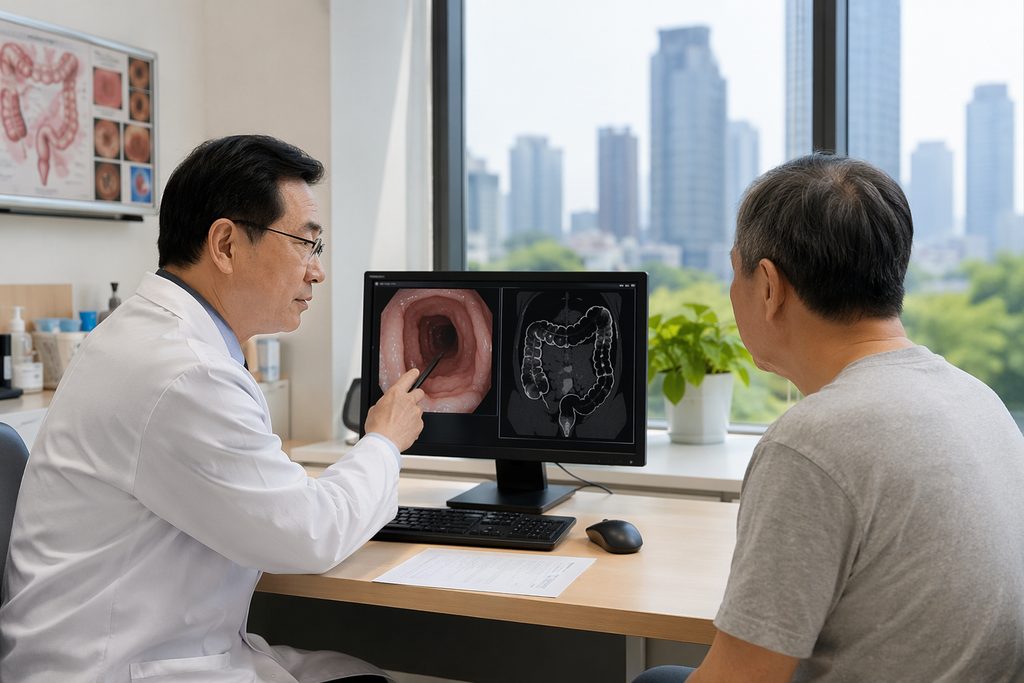
When 54-year-old Daniel from Manchester started researching cardiac surgery options abroad, he had a spreadsheet with columns for cost, surgeon credentials, and JCI accreditation status. What he didn’t have was any way to tell whether a hospital with a gleaming website had been treating heart patients for forty years or four. His cardiologist back home had shrugged when asked about hospital reputation in Shanghai. So Daniel did what most patients do: he googled the hospital name, scrolled through the first page of results, and found… marketing brochures. Every hospital calls itself “world-class.” Every institution claims “decades of excellence.” None of them made it easy to verify when the place actually opened its doors.
That’s the gap this article fills. Hospital age verification China methods exist, but they’re scattered across government databases, accreditation records, and academic archives. You need to know where to look, what counts as legitimate evidence, and — just as importantly — whether founding year even matters for your specific treatment.
Hospital Age Verification China: The Short Answer
You can verify a Chinese hospital’s founding year through three primary channels: the hospital’s official registration record with the National Health Commission (NHC), its JCI or other international accreditation history, and its listing in the Fudan University hospital rankings database. The NHC record is definitive — it shows the legal establishment date. JCI records show when international quality standards were first met, which is often decades after founding. Neither is hard to access, but both require knowing exactly where to look.
The complication: many Chinese hospitals have complex administrative histories. A hospital founded in 1937 might have merged with two others in 1998, changed its name in 2005, and moved to a new campus in 2019. The “founding year” you see on an English-language website might refer to the original institution, the current legal entity, or the newest building. That’s why a single number rarely tells the whole story.
Who Needs This Information — and Who Doesn’t
Founding year matters most for patients considering complex procedures: cardiac surgery, neurosurgery, organ-adjacent treatments, oncology protocols. Longevity correlates with case volume, and case volume correlates with outcomes. A hospital that has performed 14,000+ cardiac surgeries annually for two decades has institutional knowledge that a five-year-old facility simply cannot replicate.
You should verify hospital founding year if:
- Your procedure requires high cumulative surgical volume (cardiac, neuro, transplant-adjacent)
- You’re comparing hospitals across different Chinese cities and need an objective differentiator
- Your home doctor specifically asked about institutional experience
- You’re considering a hospital that markets heavily to international patients but has limited public history
You probably don’t need to obsess over founding year if:
- You’re seeking a routine checkup, health screening, or minor outpatient procedure
- You’re comparing private international hospitals — most opened after 2000, and their value proposition is service quality, not institutional age
- You’re using a proxy consultation service where the hospital’s current department head credentials matter more than its 1950s origins
Daniel’s case fell into the first category. He needed to know whether the Shanghai hospital he was considering had enough cardiac surgery history to trust. The answer wasn’t on the hospital’s homepage.
The Options, Compared: Where to Look for Hospital Founding Year
| Method | What It Shows | Reliability | Access Difficulty | Best For |
|---|---|---|---|---|
| NHC hospital registration record | Legal establishment date, current administrative status | High — official government record | Moderate — Chinese-language portal, requires hospital’s Chinese name | Definitive verification |
| JCI accreditation history | When international quality standards were first met | High — independently audited | Easy — public directory on JCI website | Understanding international readiness |
| Fudan University rankings | Current tier status, specialty reputation | High for ranking, indirect for founding year | Easy — published annually | Cross-referencing institutional age with reputation |
| Hospital’s own website | Whatever the marketing team chose to publish | Variable — often omits mergers or name changes | Very easy | Starting point only |
| Academic publication history | Earliest peer-reviewed papers listing the hospital as affiliation | Moderate — confirms research activity, not founding | Hard — requires PubMed or CNKI search | Verifying long-term research presence |
For most international patients, the practical path is: check JCI first (English, easy), then cross-reference with the Fudan ranking entry, then — if you need definitive proof — request the NHC registration number from the hospital’s international patient department. A hospital that hesitates to provide its NHC registration number is a red flag.
Hospital Establishment Year Lookup: The Step-by-Step Process
Here’s the exact sequence we walk our clients through when they ask how to find when a hospital was founded. It takes about 30 minutes if you have the hospital’s Chinese name.
Step 1: Get the Chinese name. This is the single biggest obstacle for foreign patients. “Zhongshan Hospital” is the English rendering of 中山医院, but the official registered name might be “复旦大学附属中山医院” (Zhongshan Hospital Affiliated to Fudan University). Without the full Chinese name, NHC lookup is nearly impossible. Your medical concierge or a bilingual contact should provide this.
Step 2: Check JCI’s public directory. Go to the JCI website, search the hospital’s English name, and note the initial accreditation date. JCI lists this clearly. If the hospital isn’t JCI-accredited, that’s not automatically disqualifying — many of China’s top public hospitals (including several on the Fudan Top 100 list) have never sought JCI because they don’t serve international patients as a primary market. But the absence of JCI means you’ll rely more heavily on domestic ranking data.
Step 3: Cross-reference with Fudan rankings. Our top-ranked hospitals database organizes Fudan Top 100 hospitals by city, with tier labels (A++++ through A). If a hospital appears in the A++++ tier for cardiac surgery, its founding year is almost certainly 1950 or earlier — those institutions built their reputations over generations. A hospital that appears in the rankings but was founded in 2005 is rare and usually a specialty center.
Step 4: Verify via NHC if precision matters. The National Health Commission maintains a hospital registration database. Access requires navigating a Chinese-language interface and entering the hospital’s full registered name. Your bilingual medical companion can handle this. The record shows the establishment date and any major administrative changes.
Step 5: Look at academic history. Search PubMed for the hospital’s English name. The earliest publication dates give you a sense of when the institution began producing research. Fuwai Hospital, for example, has cardiac surgery publications dating back decades — consistent with its status as the world’s highest-volume cardiac surgery center with 14,000+ annual procedures.
Is Hospital Founding Year Important for Medical Tourism?
The honest answer: it depends on what you’re treating, and treating founding year as a proxy for quality without context can mislead you.
For high-complexity procedures — cardiac bypass, neurovascular intervention, complex oncology surgery — founding year matters because it correlates with cumulative case volume. A cardiac surgery department that has operated since 1956 has handled complications, refined protocols, and trained generations of surgeons. A department founded in 2018 might have excellent individual surgeons who trained elsewhere, but the institutional memory is thinner.
But here’s the counterpoint. Some of China’s best private international hospitals were founded after 2000. United Family Healthcare opened its first Beijing facility in 1997. Jiahui Health launched in Shanghai in 2017. These institutions don’t have 60-year histories, but they offer English-speaking staff, JCI accreditation, direct insurance billing, and Western-style care coordination that older public hospitals often lack. For a patient seeking a knee replacement or a comprehensive health screening, a 2015-founded private hospital might serve them better than a 1930s public institution where no one speaks English at the registration desk.
So the question isn’t “is founding year important?” but “is founding year important for my procedure and my priorities?” For Daniel’s cardiac surgery, yes. For a travel medicine consultation, no.
Compare Hospital History China Medical Treatment: What the Numbers Actually Show
Let’s look at what hospital age data reveals when you compare across Chinese cities. The Fudan Top 100 hospitals distribute across 23 cities, with Beijing hosting 21, Shanghai 18, and Guangzhou 10. Beijing and Shanghai’s dominance isn’t just about current funding — it’s about institutional age. Peking Union Medical College Hospital was founded in 1921. Ruijin Hospital in Shanghai traces its origins to 1907. West China Hospital in Chengdu opened in 1892. These are not new institutions learning on the job.
Compare that with Shenzhen. Shenzhen is a young city — its oldest major hospital, Shenzhen People’s Hospital, opened in 1980. That doesn’t mean Shenzhen hospitals are bad. It means they lack the multi-generational case volume of Beijing or Shanghai institutions. A patient comparing hospital history China medical treatment options would reasonably conclude that for ultra-complex procedures, Beijing and Shanghai institutions offer deeper institutional experience, while Shenzhen offers modern facilities and often shorter coordination times.
The oldest JCI accredited hospital Shanghai has is a question we receive periodically. Shanghai’s JCI-accredited hospitals are predominantly private or international — United Family, Jiahui, Parkway, Raffles. These institutions were founded in the 1990s or later. The oldest JCI accredited hospital Shanghai can claim is not a century-old public institution; it’s a relatively young private facility that chose to pursue international accreditation that older public hospitals never needed. That distinction matters. Don’t confuse “oldest JCI accredited” with “oldest hospital.” They’re different questions with different answers.
What It Costs to Verify Hospital Founding Year — and What’s Free
No. Older hospitals have deeper institutional experience, but newer private international hospitals often provide better service quality, English support, and insurance coordination. For complex procedures where cumulative case volume drives outcomes, age matters more. For routine procedures and patient experience, age matters less. Match the hospital to your specific needs.
That’s unusual for a legitimate hospital and worth investigating. Every hospital operating legally in China has an NHC registration record. If the hospital’s international department won’t provide its NHC registration number when asked, that’s a significant red flag. Legitimate hospitals have nothing to hide about their founding date.
Not necessarily. JCI accreditation measures process quality and safety protocols, not clinical outcomes. A JCI-accredited private hospital in Shanghai might have excellent service standards but far lower cardiac surgery volume than a non-JCI public hospital like Zhongshan Hospital. For outcome prediction, look at case volume and Fudan specialty rankings alongside JCI status.
Use the Fudan Top 100 list as your baseline — it groups hospitals by city and tier. Then check individual hospital pages for founding year and specialty rankings. Our specialty department rankings show which hospitals rank in China’s top 10 for specific fields like oncology, cardiac surgery, and orthopedics. That specialty-level data matters more for your outcome than the hospital’s overall founding year.
Your Next Step
Hospital founding year is a useful filter, but it’s not a treatment plan. What you ultimately need is a specialist who has reviewed your records and can tell you what’s feasible. That’s where we come in — China Medical Services maintains a database of 340+ top-ranked hospitals across 37 Chinese cities, representing the top 5% of China’s 35,000+ hospitals by Fudan and JCI rankings. We’re not a hospital, and we don’t provide diagnoses or medical advice. We help you identify which institutions genuinely match your condition, verify their credentials, and coordinate the logistics if you decide to proceed. Start with a free consultation — tell us your diagnosis, your priorities, and your questions, and we’ll map out your options without pressure.
Frequently Asked Questions
Yes. The hospitals used for international patients are JCI-accredited and follow the same international safety standards as top hospitals in the US and Europe. Surgical teams perform high volumes of procedures — often more than their Western counterparts — which studies show leads to better outcomes.
Costs vary by procedure and hospital, but international patients typically save 40-80% compared to US prices — even when factoring in travel and accommodation. A consultation with our team will give you an exact, all-inclusive quote with no hidden fees.
Send us your existing medical reports to get started. We handle everything from hospital selection and appointment scheduling to visa assistance and post-operative recovery planning. Your medical records are reviewed by the specialist before you even book a flight.
For more medical information and treatment options in China, visit chinamedservices.com (China Medical Services).
