Hearing Test Cost in China: What to Know Before You Book
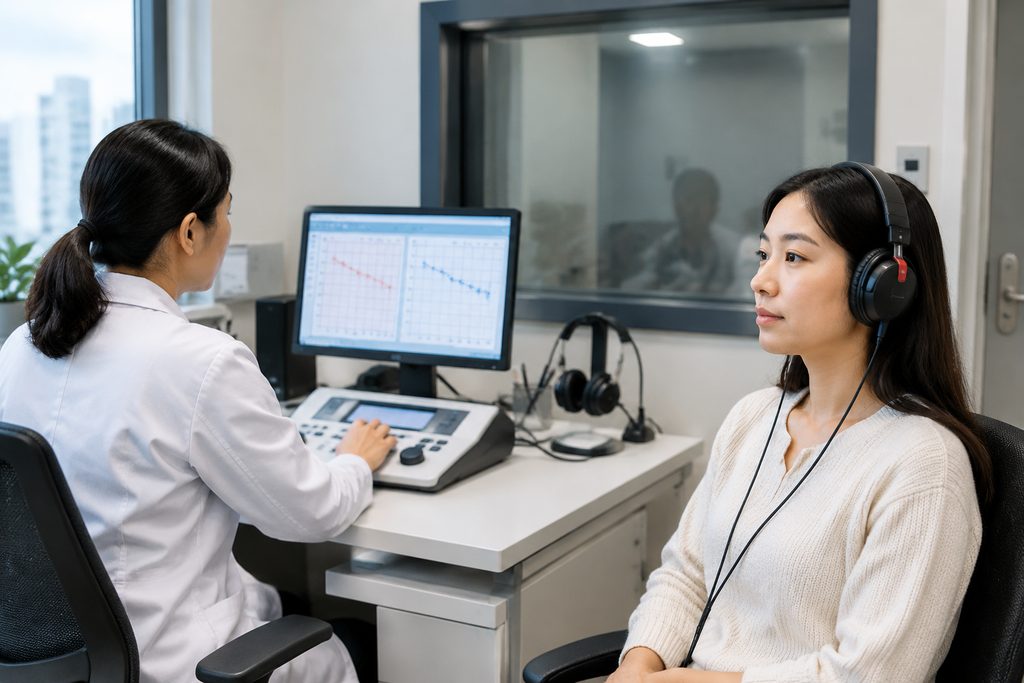
While a private audiology clinic in the United States routinely bills $250 or more for a single comprehensive hearing evaluation, a full audiometric workup at a top-tier Chinese hospital often lands between $30 and $80. That gap is not a typo. It reflects a system where the equipment is the same, the audiologists are trained to international standards, and the price is set by a public hospital rather than a private practice.
So what should you actually expect to pay, and is the low number hiding a catch? Here is the honest breakdown.
Hearing Test Cost in China: The Short Answer
A basic pure-tone audiometry test at a Chinese public hospital typically costs between $10 and $25. A comprehensive evaluation — including speech audiometry, tympanometry, and otoacoustic emissions — usually runs $40 to $90 at a top-ranked public hospital, and $150 to $400 at a private international clinic in Beijing or Shanghai. The number depends almost entirely on which tier of hospital you walk into.
But price is only half the story. China’s public hospital system was not designed for foreign patients. The registration desk speaks Mandarin, the queue starts before sunrise, and same-day appointments are the norm rather than the exception. Understanding that reality matters more than the price tag.
Who This Is Right For — and Who It Isn’t
A hearing test in China makes sense for a specific kind of traveler. It is not for everyone.
Good candidates typically include:
- Expats already living in China who need routine or diagnostic audiology
- Travelers combining a hearing evaluation with other medical care in the same trip
- Patients seeking a second opinion on sudden hearing loss, tinnitus, or Meniere’s disease
- Anyone pricing a hearing aid and test package where the device cost dominates
- Families exploring cochlear implant evaluation, where the total cost gap versus the US is substantial
Who should probably stay home:
- Anyone with an active ear infection, perforated eardrum, or recent ear surgery — treat that first, locally
- Patients who cannot travel for medical reasons or lack the mobility for a large hospital campus
- Someone whose insurance only reimburses at home and who cannot float the cost upfront
- Travelers on a tight 48-hour itinerary — a proper workup plus consultation rarely fits
Being honest about the second list matters. A hearing test is low-risk, but the logistics around it are not trivial for everyone.
The Options, Compared
Three realistic paths exist for a foreigner. Each has a different price, speed, and comfort level.
| Option | Typical Cost (USD) | Wait / Booking | English Support | Best For |
|---|---|---|---|---|
| Public hospital, standard OPD | $10–$25 basic; $40–$90 full workup | Same-day queue, no advance booking | Limited | Expats, budget-focused, flexible schedules |
| Public hospital, International / VIP wing | $80–$200 | Advance booking possible | Yes, staff interpreters | Travelers wanting speed and English |
| Private international clinic | $150–$400 | Scheduled appointment | Yes, English-speaking audiologists | Direct insurance billing, Western-style service |
If you are already in China and speak some Mandarin, the standard outpatient route delivers the best value by a wide margin. If you are flying in specifically for care and want a fixed appointment with English support, the international wing or a private clinic removes most of the friction — at three to ten times the price.
Where to Go: Hospitals and Clinics That Serve Foreigners
Not every hospital is set up for international patients, and the difference in experience is large. China has more than 35,000 hospitals; our network covers 340+ top-ranked institutions across 37 cities, selected from the top 5% nationally.
For a hearing test in Beijing, the major teaching hospitals in the Dongcheng and Chaoyang districts operate dedicated international departments where you can book ahead. Peking Union Medical College Hospital is the best-known name, though appointments fill fast. Several large tertiary hospitals in the capital also run full audiology labs with the same equipment found in Western clinics.
If you are searching for the best hearing clinic in Shanghai for foreigners, the picture is similar. Top-tier hospitals such as Ruijin and Zhongshan have audiology and ENT departments, and the private international hospitals — United Family, Jiahui, Parkway — offer English-speaking audiologists with direct insurance billing. For a straightforward evaluation, the private route is faster. For complex cases like sudden sensorineural hearing loss, a public tertiary hospital’s ENT department usually has deeper diagnostic resources.
You can browse hospitals by city through our ranked hospital directory, or filter by specialty through the department guides to find ENT and audiology services near where you will stay.
How Much Does a Hearing Test Cost in China — and What Drives the Variance?
The single biggest factor is hospital tier. A community hospital may charge $10 for pure-tone audiometry. A top-ranked tertiary hospital charges more for the same test because the equipment is newer, the audiologist is more specialized, and you are paying for a higher standard of diagnostic accuracy.
Test type matters just as much. Here is roughly what each component costs:
- Pure-tone audiometry (the basic hearing threshold test): $10–$25
- Speech audiometry (word recognition): $15–$35
- Tympanometry (middle ear function): $10–$30
- Otoacoustic emissions (OAE): $20–$50
- Auditory brainstem response (ABR): $80–$200, higher at private clinics
Add a physician consultation — usually $15 to $60 at a public hospital — and a full diagnostic package lands in the $60 to $150 range. A hearing aid and test package in China is a separate calculation: the test is cheap, but the devices range from $200 for basic models to $3,000+ for premium digital aids, depending on brand and features.
Practical Considerations: Records, Visa, and Payment
Bring your records. If you have prior audiograms, ENT notes, or imaging, bring translated copies. Chinese specialists work efficiently but they rely on documentation, and a missing file can mean a repeat test.
Visa category. Medical travel to China uses the S2 visa, which covers short-stay private affairs including medical treatment. Family members accompanying you apply under the same category. The M visa is for commercial and trade activities only — it is not a medical visa, and using it for treatment is a mistake. Requirements shift, so confirm current rules with the nearest Chinese embassy or consulate and secure your hospital’s supporting documents before applying.
Payment. Public hospitals require upfront payment and issue receipts you can submit to your insurer later. Private international hospitals often bill insurance directly, which is a real convenience if your plan supports it.
Language. This is where most foreign patients underestimate the challenge. A top Chinese hospital can see tens of thousands of outpatients in a single day. Signage, registration, and instructions are in Mandarin. Without support, a simple test can consume an entire morning.
Follow-up. If you are diagnosed with something requiring ongoing care, plan how that continues after you return home. Ask for a written summary in English before you leave.
Frequently Asked Questions
A basic test in China runs $10 to $25 at a public hospital versus $150 to $300 in the US. A full diagnostic workup is $40 to $90 in China versus $300 to $600 in the US. The gap widens further at private clinics, though those prices still undercut most Western private practices.
At standard public hospital outpatient departments, no — registration happens on the day, in person, in Mandarin. Advance booking is possible through international or VIP wings and private clinics, which is one reason many travelers choose those routes despite the higher price.
Yes, unless you are visa-exempt or already in the country. Medical treatment falls under the S2 short-stay visa category, with accompanying family members applying under the same category. Approval is never guaranteed, so apply early with proper hospital documentation.
Some private international hospitals bill insurers directly. Public hospitals generally require you to pay upfront and seek reimbursement afterward. Confirm coverage with your insurer before traveling — do not assume.
Major Chinese hospitals can handle most follow-up diagnostics and treatment, including sudden hearing loss and cochlear implant evaluation. But any decision about treatment should be made with a qualified physician who knows your full history — ideally one you can continue seeing after you return home.
Your Next Step
The core message is simple: a hearing test in China is affordable, widely available, and clinically reliable — but the system around it was built for locals, not visitors. Knowing the price tiers, the booking reality, and the visa category turns a confusing process into a manageable one.
We are China Medical Services, a coordination team that connects international patients with Chinese hospitals. We are not a hospital and we do not diagnose or treat anyone. If you want help matching a hospital, arranging an appointment, or having a bilingual companion guide you through the visit, you can start with a free consultation — no pressure, just a conversation about what you need.
For more medical information and treatment options in China, visit chinamedservices.com (China Medical Services).
