Why Heart Valve Replacement Costs Less in China: A 2025 Cost Breakdown
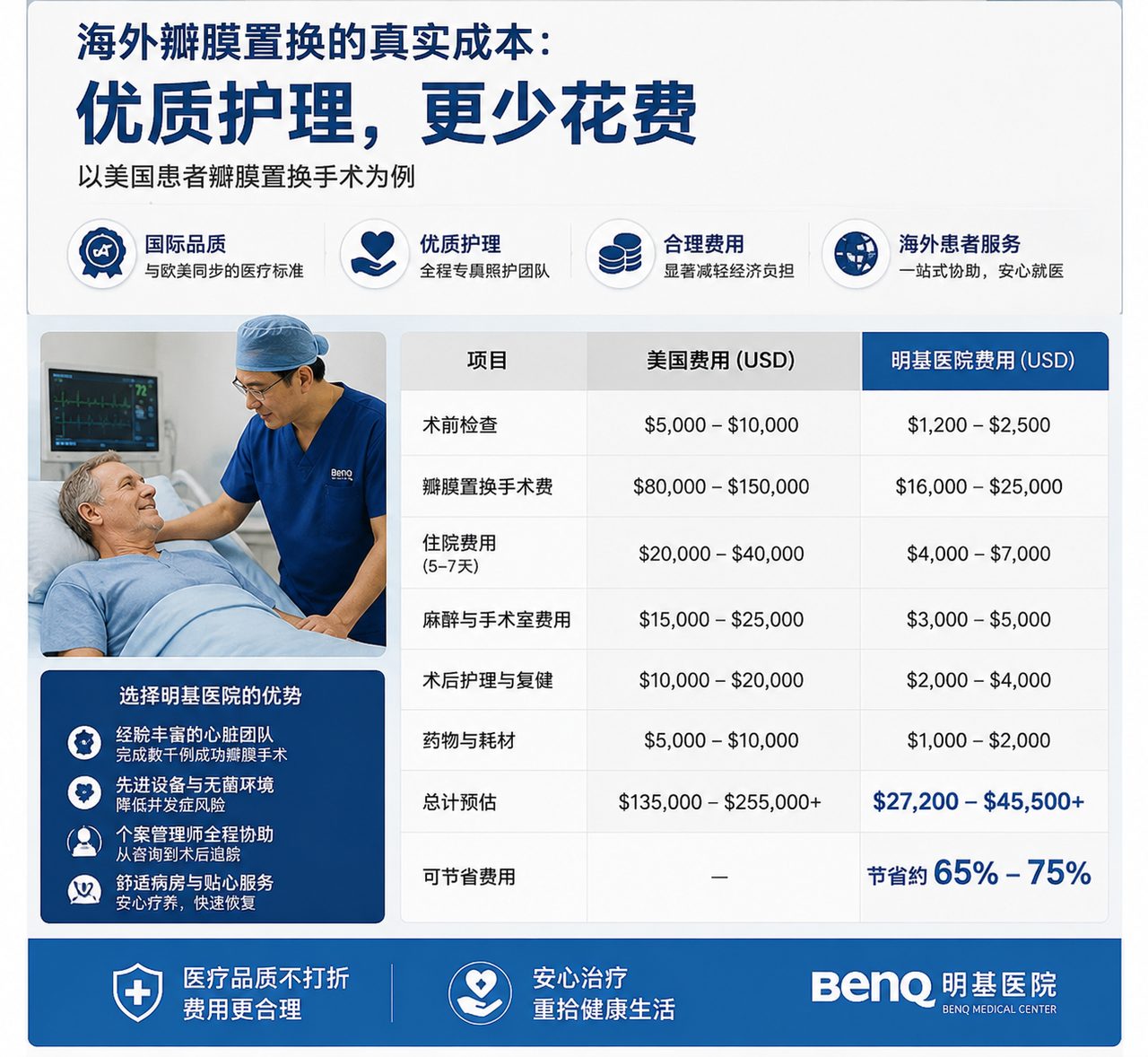
Why Heart Valve Replacement Costs Less in China: The Real Numbers Behind the Savings
According to the American Heart Association’s 2024 Heart Disease and Stroke Statistics update, the average cost of a surgical aortic valve replacement in the United States now exceeds $170,000 before insurance adjustments. In China, the same procedure at a top-ranked cardiac center typically ranges from $25,000 to $45,000. That gap is not a fluke. It is structural. And for the estimated 300,000 international patients who sought medical care in China in 2023, according to China’s National Health Commission reporting, heart valve replacement cost China is one of the most frequently researched procedures — and one of the most misunderstood.
We work with international patients every week who are weighing the same decision. Some are uninsured. Some are underinsured. Some have been quoted prices that simply do not work for their families. This article explains why the price difference exists, what it does and does not mean for quality, and what a realistic treatment pathway looks like if you are considering it.
Key Takeaways
- Heart valve replacement cost China at top public cardiac centers runs $25,000–$45,000, compared to $150,000–$200,000+ in the US for comparable procedures.
- Fuwai Hospital in Beijing performs over 14,000 cardiac surgeries annually — the highest single-center volume globally — with outcomes that meet or exceed international benchmarks.
- Foreign patients cannot simply book surgery online. You must complete an in-person consultation first, unless you use a hospital’s international/VIP channel.
- Language, hospital navigation, and post-operative follow-up are the three biggest practical barriers — and they are manageable with the right preparation.
The Problem: Cardiac Surgery Prices in the US Have Become Untenable
A 2023 analysis published in Health Affairs found that hospital prices for valve replacement surgery in the United States grew 4.7% annually from 2015 to 2022, outpacing general inflation by nearly two full percentage points. The same study noted that the spread between the lowest and highest hospital charges for an identical valve procedure in the same metropolitan area can exceed $100,000. That is the reality for American patients: the price you pay depends less on the surgery itself and more on which hospital system your insurance network happens to include.
For the 27.6 million Americans who were uninsured in 2023, according to the US Census Bureau, these prices are not an inconvenience. They are a wall. Even for insured patients, a high-deductible health plan can leave $10,000 to $20,000 in out-of-pocket costs before the insurer pays a single dollar. That is before travel, rehabilitation, or lost income during recovery.
And the problem is not uniquely American. Patients from Canada, the UK, Australia, and New Zealand face public system wait times for elective valve surgery that can stretch from six months to over two years, depending on the province or trust. A 2022 report from the Canadian Institute for Health Information found that only 66% of patients received valve replacement within the recommended benchmark time. The rest waited. Some waited long enough for their condition to worsen.
Why Heart Valve Replacement Costs Less in China: Structural Economics, Not Corner-Cutting
The short answer is labor costs and hospital efficiency. The long answer is more interesting. China’s top cardiac centers operate at a scale that fundamentally changes the unit economics of surgery. When a hospital performs 14,000 cardiac surgeries a year, the cost of an operating theater, perfusion team, and intensive care unit gets amortized across thousands of procedures. That volume does not degrade quality — in cardiac surgery, volume has been repeatedly shown to improve it.
Clinical Volume Drives Better Outcomes at Fuwai and Comparable Centers
Fuwai Hospital in Beijing, part of the Chinese Academy of Medical Sciences, is the highest-volume cardiac surgery center in the world. Its annual surgical volume exceeds 14,000 cases, according to hospital-published data. To put that in perspective, the Cleveland Clinic — widely regarded as the top US cardiac center — performs approximately 4,000 cardiac surgeries annually. A 2021 study in the Journal of the American College of Cardiology found that hospitals performing more than 200 valve surgeries per year had significantly lower 30-day mortality rates than lower-volume centers. Fuwai performs more than 2,000 valve procedures alone each year.
Why Is Heart Surgery Cheaper in China? The Cost Structure Explained
Labor represents roughly 55-60% of US hospital costs. In China, physician and nursing salaries at public hospitals are a fraction of US levels — not because Chinese surgeons are less skilled, but because the entire wage structure of the economy is different. A senior cardiac surgeon at a top Chinese public hospital earns the equivalent of $80,000 to $150,000 annually. A comparable US cardiac surgeon earns $500,000 to $800,000. That difference alone accounts for a substantial share of the price gap.
Also, Chinese public hospitals do not carry the same administrative overhead. US hospitals spend an estimated 25-30% of total expenditures on billing, insurance, and administrative functions, according to a 2021 JAMA study. Chinese public hospitals operate on a direct-payment model. No insurance billing department. No prior authorization staff. No collections agency. You pay for the procedure, the hospital stay, and the medication. That is it.
Cardiac Surgery Price Shanghai vs USA: A Direct Comparison
| Procedure Component | Average US Price (USD) | Shanghai Top Public Hospital (USD) | Shanghai Private International Hospital (USD) |
|---|---|---|---|
| Surgical aortic valve replacement (bioprosthetic) | $150,000 – $200,000 | $28,000 – $38,000 | $55,000 – $75,000 |
| Surgical mitral valve replacement | $160,000 – $210,000 | $30,000 – $40,000 | $60,000 – $80,000 |
| Transcatheter aortic valve replacement (TAVR) | $180,000 – $220,000 | $35,000 – $45,000 | $70,000 – $90,000 |
| Hospital stay (7-10 days, including ICU) | Included, but itemized at $15,000 – $25,000 | Included in package | Included in package |
| Surgeon fee | $8,000 – $15,000 (separate billing) | Included | Included |
Prices vary by hospital and case complexity. The figures above reflect published price ranges and patient-reported costs through our coordination service from 2023-2025. Bioprosthetic valves from Edwards Lifesciences or Medtronic cost the same in Shanghai as they do in Boston — the valve itself is an imported medical device. The savings come from everything around the valve: the surgery, the hospital stay, the nursing care, the imaging, the anesthesia.
Best Heart Hospital in China for Foreigners: What Actually Matters
Foreign patients often ask us to name the single best heart hospital in China. The honest answer is that it depends on your specific valve, your age, your surgical risk profile, and whether you need isolated valve surgery or combined procedures like valve plus bypass. Fuwai Hospital in Beijing is the reference point for complex and high-volume cardiac surgery. Zhongshan Hospital at Fudan University in Shanghai is the strongest cardiac center in East China, with particular depth in minimally invasive valve procedures and TAVR. Both are ranked in the top tier of Fudan University’s national hospital rankings for cardiac surgery — a classification system that places them among China’s top 10 cardiac surgery departments, not just top 100 hospitals overall.
For patients who require English-speaking staff and Western-style billing, private international hospitals like Jiahui International Hospital in Shanghai and United Family Healthcare in Beijing and Guangzhou offer cardiac surgery coordination through partnerships with top public hospital surgeons. These are more expensive — roughly 1.5 to 2 times the public hospital price — but they handle language, insurance documentation, and international patient logistics in-house. You can explore our directory of top-ranked hospitals by city to compare options, or review cardiac surgery department rankings for a deeper dive into which centers lead in valve procedures.
How the Process Works for International Patients: A Step-by-Step Reality Check
Here is what most patients get wrong: they assume they can email a Chinese hospital, book a surgery date, and fly over. That is not how Chinese public hospitals operate. The standard pathway at a public hospital requires an in-person outpatient consultation first. You register, you see the specialist, the specialist orders tests, and only after reviewing those results does the surgical team schedule the procedure. For a foreign patient with no Chinese language ability and no local contact, this step alone can take weeks of trial and error.
The alternative is the international/VIP channel. Most top-tier public hospitals — including Fuwai, Zhongshan, and Peking Union Medical College Hospital — operate an international medical department. These departments handle foreign patient registration, provide English interpretation, and coordinate specialist consultations. The cost is higher than the standard public channel, typically 1.5 to 2 times, but it includes services that would otherwise require a bilingual medical companion or significant personal effort. The video consultation route — where you send your existing echocardiogram, CT scans, and medical history to a Chinese cardiac team for a remote review — costs $100 to $300 for a standard international department consultation, or $500 to $800 for a top-specialist video consultation. That consultation fee is credited in full toward on-the-ground coordination if you proceed to treatment within 90 days.
Can you trust heart valve surgery in China? The question deserves a direct answer. The top cardiac centers are not bargain-basement operations. Fuwai Hospital’s 30-day mortality rate for isolated valve replacement is below 1%, according to hospital-reported data presented at the 2023 China Heart Congress. That is comparable to the Society of Thoracic Surgeons benchmark for high-volume US centers. The difference is not the surgery. The difference is everything around the surgery — language, navigation, follow-up, and the coordination burden. If you can handle those, the clinical care is world-class.
Who Should Not Consider Heart Valve Replacement in China
This option is not for everyone. If you have a complex case requiring multi-valve surgery plus coronary bypass plus aortic root reconstruction, and you have excellent insurance coverage in the US, the marginal savings may not justify the logistical complexity. If you cannot travel internationally due to severe heart failure (NYHA Class IV) or unstable angina, no reputable Chinese hospital will accept you for elective surgery — and neither should you attempt the trip. If you require long-term mechanical circulatory support or a heart transplant, that is a different conversation entirely, and one that falls outside the scope of this article.
Also, be realistic about follow-up. After valve replacement, you need echocardiograms at regular intervals for the rest of your life. If you live in a country where you can get those done locally, fine. But if your home country’s healthcare system is the reason you are looking abroad in the first place, you need a plan for ongoing monitoring. Some patients return to China annually for follow-up. Others arrange remote review of locally performed echocardiograms. Neither option is free, and both should factor into your total cost calculation.
Practical Considerations: Visa, Payment, and Medical Records for Valve Surgery in China
For medical treatment in China, foreign patients apply for an S2 visa, which covers short-term private affairs including medical treatment. If your treatment and recovery will exceed 180 days, you apply for an S1 visa instead. The M visa is for commercial and trade activities — it is not the correct category for medical travel. Bring your hospital invitation letter, medical records, and proof of funds to the Chinese embassy or consulate. Processing times vary by country, but plan for at least three to four weeks.
Payment is direct. Chinese public hospitals require prepayment before scheduled surgery, typically 50-70% of the estimated total. Wire transfers are standard, though some international departments accept major credit cards with a processing fee. If you have international health insurance, you pay upfront and seek reimbursement afterward — Chinese public hospitals do not bill foreign insurers directly. Private international hospitals like Jiahui and United Family do offer direct billing with select insurers, which can simplify the process considerably.
Your medical records matter more than your visa. Chinese cardiac surgeons will not proceed with surgery based on a summary report. You need the actual imaging — echocardiogram DICOM files, coronary angiography images, CT scans — plus a complete medical history, current medication list, and any prior surgical reports. If your records are not in English or Chinese, you will need certified translations. This is where a written second opinion (costing $300 to $500) can save you thousands: a Chinese cardiac team reviews your records remotely and tells you whether you are a surgical candidate before you spend money on flights and hotels.
Practical tip: Request your complete medical records from your home hospital at least six weeks before your planned travel date. Hospitals can take 2-4 weeks to release imaging files, and you do not want a records delay to become a surgery delay.
Frequently Asked Questions
Not through the standard public hospital channel. Public hospitals require an in-person consultation before scheduling surgery. However, many top hospitals operate international departments that can pre-review your records remotely and coordinate a consultation-plus-surgery timeline before you fly. This is not a guarantee of a specific surgery date, but it dramatically reduces the uncertainty. Hospital appointment coordination services start from $300, with a full refund if the appointment cannot be secured as described.
Yes. The prosthetic valves used in top Chinese cardiac centers are the same FDA-approved and CE-marked devices used in Western hospitals — Edwards, Medtronic, Abbott, and LivaNova all supply the Chinese market. Mechanical valves from St. Jude and On-X are also standard. The valve is not where the savings come from, and it is not where you should compromise.
This is the hardest question to answer honestly. Chinese hospitals provide post-operative care during your hospital stay and typically schedule a follow-up at 1 month and 3 months. After you return home, the responsibility for ongoing monitoring shifts to you and your local healthcare system. Some Chinese cardiac teams offer remote follow-up via video consultation for international patients, typically costing $100 to $300 per session. But if you develop a surgical complication — endocarditis, paravalvular leak, valve thrombosis — you will need local emergency care. This is not unique to China; it applies to any medical travel. The key is to have a local cardiologist who knows your surgical history and can coordinate with your Chinese team if needed.
For a surgical valve replacement at a top public hospital in Beijing or Shanghai, budget $25,000 to $45,000 for the procedure itself. Add $3,000 to $6,000 for international flights and a 2-3 week stay for the patient and one companion. Add $1,000 to $3,000 for visa fees, document translation, and local transportation. If you use a bilingual medical companion for hospital navigation, budget from $300 per day. A full-service coordination package, including airport transfer, hospital registration, interpretation, and discharge logistics, typically runs $5,000 to $8,000. Total realistic budget: $35,000 to $60,000. That is still 65-80% below the US cash price.
Your Next Step
If you are weighing heart valve replacement cost China against your local options, the most useful thing you can do right now is gather your medical records and get an honest assessment of whether you are a surgical candidate. China Medical Services helps international patients navigate Chinese hospitals — we are not a hospital, we do not provide diagnoses, and we will not tell you to come to China if it is not the right decision for your case. What we do is connect you with top-ranked cardiac centers, coordinate remote consultations before you commit to travel, and handle the on-the-ground logistics if you decide to proceed. Request a free consultation and we will help you think through the numbers, the timeline, and the practical realities — no pressure, just information.
For more medical information and treatment options in China, visit chinamedservices.com (China Medical Services).
