Heavy Ion Therapy in China: Real Access, Costs, and What to Expect
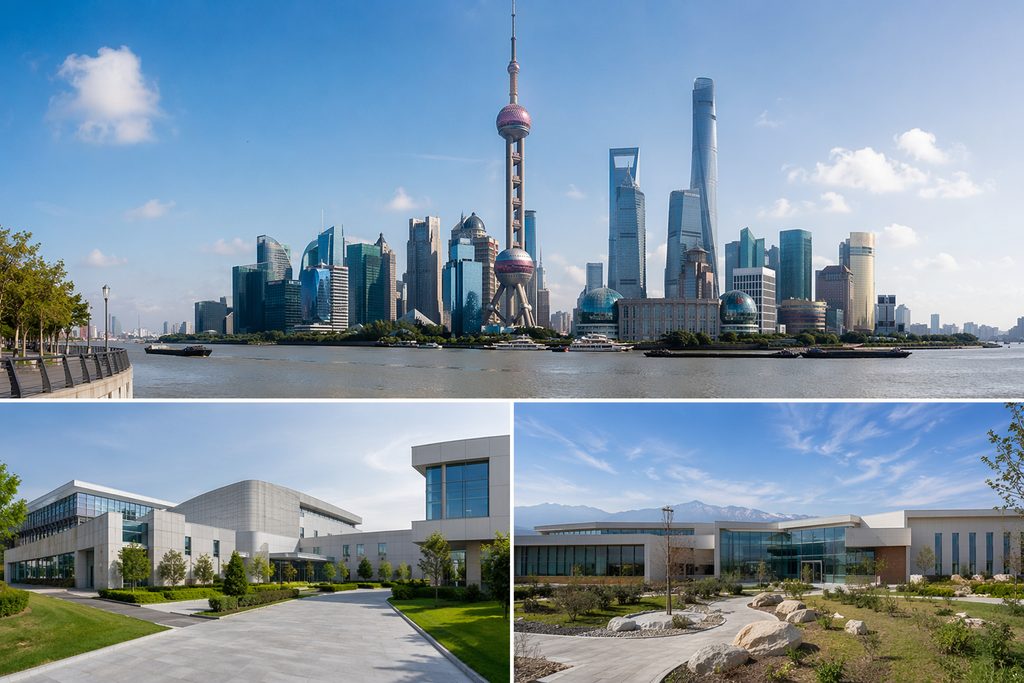
When 54-year-old Daniel from Manchester was diagnosed with an adenoid cystic carcinoma at the base of his skull, his oncologist laid out the options carefully. Surgery carried a high risk of facial nerve damage. Conventional photon radiation would deliver dose to the brainstem. Then his specialist mentioned carbon ion therapy. Daniel had never heard of it. His first search was exactly this: can you get heavy ion therapy in China? The short answer is yes. China operates several of the world’s most advanced heavy ion and carbon ion treatment centers, and they accept international patients. But access is not as simple as booking a flight.
Key Takeaways
- China has multiple operational heavy ion and carbon ion therapy centers, including facilities in Shanghai, Lanzhou, and Wuwei, with several more under construction.
- Heavy ion therapy cost China typically ranges from $40,000 to $80,000 per treatment course, significantly below comparable proton or carbon ion pricing in the United States, Japan, or Germany.
- Carbon ion therapy delivers 2 to 3 times the biological effectiveness of proton therapy for radioresistant tumors like chordoma, chondrosarcoma, and adenoid cystic carcinoma.
- International patients cannot simply walk into a Chinese heavy ion center. Treatment requires medical records review, an in-person or remote consultation, and often a multi-week stay for the full fractionated course.
The Problem: Limited Access to the Most Precise Form of Radiation
Heavy ion therapy — primarily using carbon ions — represents the most physically precise form of external beam radiation available today. Unlike photons or even protons, carbon ions deposit most of their energy at a sharply defined depth inside the tumor. This is the Bragg peak. The result is less radiation to surrounding healthy tissue and a higher biological kill effect on the tumor itself. For certain radioresistant cancers, that combination changes the treatment calculus entirely.
But access is brutally limited. As of 2024, the Particle Therapy Co-Operative Group listed fewer than 15 operational carbon ion centers worldwide. Japan has the most, followed by China and a handful of facilities in Europe. The United States does not have a single operational carbon ion center. American patients who need this therapy must travel internationally. That means navigating a foreign healthcare system, language barriers, visa requirements, and the challenge of coordinating a multi-week treatment course from thousands of miles away. The costs abroad are also substantial. Proton vs heavy ion therapy price abroad comparisons show that carbon ion treatment in Japan or Germany typically runs between $50,000 and $100,000, not including travel, lodging, or consultation fees. For many patients, those numbers are prohibitive.
Then there is the eligibility question. Not every tumor benefits from heavy ion therapy. In fact, most common cancers — breast, prostate, colon, lung — are usually treated effectively with surgery, conventional radiation, or proton therapy. Heavy ion therapy earns its keep in a narrower band: skull base chordomas, chondrosarcomas, adenoid cystic carcinomas, certain sarcomas, and selected recurrent or radioresistant tumors. The patients who need it are a small group. But for them, it can be the difference between a viable treatment plan and a grim set of alternatives.
Why China Has Become a Serious Destination for Heavy Ion Therapy
The question is heavy ion therapy available for cancer in China has a clear answer. Yes. China has invested heavily in particle therapy infrastructure over the past decade, and the country now operates several carbon ion facilities with growing clinical experience. Three factors make China a practical destination for international patients.
Clinical Volume and Growing Experience
China’s heavy ion centers have treated thousands of patients since the first domestic facility opened in Wuwei, Gansu Province, in 2020. The Shanghai Proton and Heavy Ion Center at Fudan University — one of the best heavy ion therapy centers Shanghai has to offer — began treating patients even earlier, using a combined proton and carbon ion system. By the end of 2023, that single center had treated more than 5,000 patients across a range of indications. That volume matters. Particle therapy is technically demanding. Centers that treat more patients develop better protocols, sharper quality assurance, and more refined patient selection criteria. China’s busiest centers now publish clinical outcome data in peer-reviewed journals, and their results for chordoma and chondrosarcoma track closely with Japanese and European benchmarks.
Domestic Technology at Scale
China did not simply import its heavy ion technology. The Wuwei facility uses a domestically designed and manufactured carbon ion system developed by the Institute of Modern Physics, Chinese Academy of Sciences. That system has since been replicated at additional sites, including a center in Lanzhou. The significance is structural. Domestic production lowers the capital cost of building and operating these facilities. That cost reduction eventually reaches patients. It also means China is not dependent on foreign vendors for maintenance, upgrades, or spare parts — a real operational advantage for a technology this complex.
Cost Advantage Without Quality Compromise
Heavy ion therapy cost China runs roughly half to two-thirds of what comparable treatment costs in Japan or Germany. A full course at a Chinese carbon ion center typically falls between $40,000 and $80,000, depending on the number of fractions, tumor location, and whether the patient uses the standard public channel or the international/VIP channel. The same treatment at Japan’s National Institute of Radiological Sciences or Germany’s Heidelberg Ion-Beam Therapy Center generally starts around $70,000 and can exceed $100,000. The cost difference is not a reflection of lower quality. It reflects lower labor costs, lower facility overhead, and the fact that Chinese hospitals operate at much higher patient volumes than their Western counterparts. A carbon ion physicist in Shanghai earns a fraction of what the same specialist earns in Heidelberg. That economic reality translates directly into lower treatment bills without any reduction in technical standards.
How the Treatment Process Actually Works in China
If you are considering how to book heavy ion therapy treatment China, understand that the process is staged and deliberate. It is not like scheduling an MRI. The pathway typically runs like this.
First, you submit your complete medical records — imaging, pathology reports, prior treatment summaries, and a physician referral letter if available. The center’s radiation oncology team reviews these documents to determine whether your tumor type is appropriate for heavy ion therapy. Not every patient who wants carbon ion treatment will be accepted. The centers are selective because the technology is scarce and the clinical benefit is real only for specific indications.
Second, if the records review is favorable, you will be asked to attend a consultation. This can happen remotely via video or in person. The consultation covers treatment planning, the number of fractions required, expected side effects, and the total cost estimate. For international patients, many centers offer English-language coordination through their international departments. If you are working with a medical concierge service or a bilingual coordinator, they can arrange the consultation and translate the clinical discussion.
Third, once you agree to proceed, the center fabricates your immobilization devices and performs a simulation CT scan. Treatment planning then takes one to two weeks. The actual treatment course for carbon ion therapy is typically shorter than conventional radiation — often 12 to 16 fractions delivered over 3 to 4 weeks, depending on the protocol. Some centers use even shorter courses for selected tumors. You will need to stay near the center for the duration. That means arranging accommodation, local transportation, and daily logistics in a Chinese city where English is not widely spoken outside the hospital.
Fourth, after treatment concludes, you return home with a follow-up plan. Most centers schedule imaging at 3, 6, and 12 months post-treatment to assess response. Those follow-ups can often be done in your home country, with images sent back to the treating center for review.
Proton vs Heavy Ion: What the Numbers Actually Mean
Patients frequently ask how effective is carbon ion therapy for tumors compared to proton therapy. The honest answer is that for most cancers, proton therapy is sufficient and more widely available. But for radioresistant histologies, carbon ion offers a measurable biological advantage. Carbon ions have a relative biological effectiveness roughly 2 to 3 times that of protons. That means the same physical dose of carbon ions causes more irreparable DNA damage in the tumor. For slow-growing, radioresistant tumors like chordoma and adenoid cystic carcinoma, that difference translates into higher local control rates.
Published data from Japanese and European centers show five-year local control rates for skull base chordoma treated with carbon ion therapy in the range of 70 to 85 percent. Comparable proton series report 60 to 75 percent. The differences are modest but clinically meaningful for patients with few other options. The trade-off is cost and access. The table below summarizes the practical differences.
| Factor | Proton Therapy | Carbon Ion (Heavy Ion) Therapy |
|---|---|---|
| Relative biological effectiveness | 1.1x photons | 2-3x photons |
| Best indications | Pediatric tumors, brain, spine, many solid tumors | Radioresistant tumors: chordoma, chondrosarcoma, adenoid cystic carcinoma, some sarcomas |
| Global centers operational | 100+ | Fewer than 15 |
| Typical treatment course | 20-35 fractions | 12-16 fractions |
| Cost range (international patient, self-pay) | $30,000-$120,000 | $40,000-$100,000 |
| Availability in China | Multiple centers, including Shanghai Proton and Heavy Ion Center | Shanghai, Lanzhou, Wuwei; additional centers opening |
Choosing between the two modalities should be driven by tumor histology, not by what is available locally. A patient with a typical prostate cancer does not need carbon ion therapy. A patient with a clival chordoma may benefit significantly from it. The decision belongs in the hands of a radiation oncologist who treats these tumors regularly.
Practical Considerations: Visas, Payments, and What to Bring
International patients traveling to China for heavy ion therapy need an S2 visa, which covers short-term private affairs including medical treatment. The S2 visa is not the same as the M visa, which is strictly for commercial and trade activities. Do not apply for an M visa for medical travel. The hospital will provide an invitation letter and treatment confirmation documents that support your S2 application. Visa processing times vary by country, so begin the process as soon as the center confirms your treatment slot.
Payment is another practical hurdle. Chinese public hospitals, including their international departments, generally require prepayment before treatment begins. You will be asked to deposit a portion of the estimated treatment cost before the first fraction. The balance is typically settled before discharge. Most centers accept international bank transfers and major credit cards through their international billing offices, but confirm the accepted payment methods before you travel. Cash payments are impractical for amounts this large.
Insurance reimbursement is possible but not guaranteed. Many international insurers will cover heavy ion therapy if it is deemed medically necessary and if the treating center meets their credentialing standards. You will need pre-authorization, and you should obtain it in writing before committing to treatment. Chinese centers are not typically in-network with Western insurers, so you will likely pay out of pocket and seek reimbursement afterward. Keep every receipt, every clinical note, and every imaging report.
Language is the final practical barrier. Outside the international departments of top-tier hospitals, English is not widely spoken in Chinese medical facilities. You will need someone to help with registration, payment, scheduling, and translation during consultations. Some patients bring a bilingual family member. Others hire a local coordinator. The hospital’s international office can provide some assistance, but their capacity is limited. Plan for this before you arrive. A day spent lost in a Chinese hospital corridor is a day you do not get back.
Frequently Asked Questions
Yes. Chinese heavy ion centers accept international patients, but acceptance is not automatic. Each center reviews medical records before offering a treatment slot, and not every tumor type is eligible. The Shanghai Proton and Heavy Ion Center, the Wuwei Heavy Ion Center, and the Lanzhou Heavy Ion Center all have established pathways for foreign patients, typically through their international departments.
Heavy ion therapy cost China typically runs $40,000 to $80,000 for a full treatment course. Japan and Germany generally charge $70,000 to $100,000 or more for the same treatment. The lower Chinese pricing reflects lower labor and facility costs, not reduced treatment quality. Final pricing varies by hospital, tumor location, number of fractions, and whether you use the standard or international channel.
Recurrence after carbon ion therapy is uncommon for appropriately selected tumors, but it does happen. If local recurrence occurs, re-irradiation with heavy ions is sometimes possible, depending on the dose already delivered to surrounding tissues. Other options include surgery, conventional radiation, or systemic therapy. The treating center will outline a surveillance schedule and discuss salvage options before you leave. You are not abandoned after the last fraction.
Yes. Heavy ion therapy is delivered in fractions, typically 12 to 16 sessions over 3 to 4 weeks. You must be physically present for each session. Some centers require daily visits; others treat on weekdays only. You should plan for at least one month in China, including time for simulation, treatment planning, and the treatment course itself.
The initial consultation can often be done remotely via video. But the treatment itself requires in-person visits for simulation, immobilization, and daily fractions. A remote second opinion is a practical first step. If the center confirms you are a candidate, you then travel for treatment. No reputable center will promise a treatment slot without first reviewing your records.
Your Next Step
Heavy ion therapy is a powerful tool, but only for the right tumors and the right patients. If you are exploring this option, start with your medical records and a clear understanding of your tumor’s histology. Our team at China Medical Services helps international patients navigate Chinese hospitals — we coordinate record reviews, arrange remote consultations with heavy ion centers, and support visa and travel logistics. We are not a hospital and we do not provide diagnoses or treatment recommendations. If you want to know whether heavy ion therapy in China is a realistic option for your case, request a free consultation and we will help you understand the pathway. You can also review our directory of top-ranked Chinese hospitals to see which centers offer particle therapy.
Daniel eventually completed his carbon ion course in Shanghai. The tumor has been stable on imaging for two years. His case is not unique. But it required careful planning, the right records, and a clear-eyed understanding of what heavy ion therapy can and cannot do. That is the foundation any patient should build before booking a flight.
For more medical information and treatment options in China, visit chinamedservices.com (China Medical Services).
