Hemorrhoid Treatment in China: Real Costs, Hospitals, and What to Expect
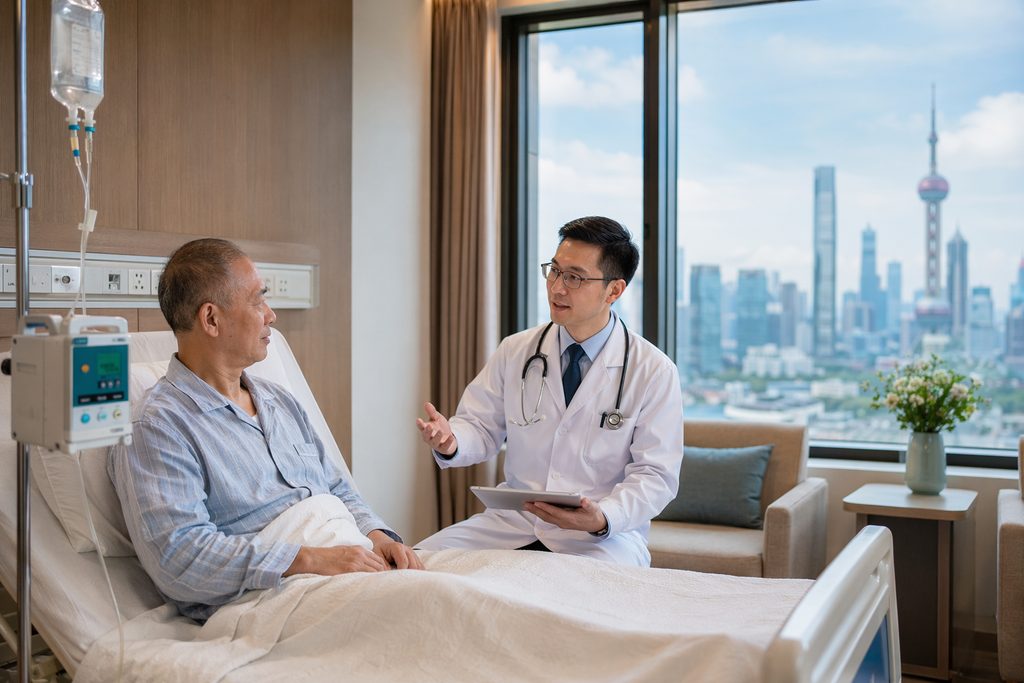
While patients in the United States routinely face bills of $8,000 to $12,000 for an uncomplicated hemorrhoidectomy, the same procedure at a top-tier public hospital in Shanghai or Beijing typically runs between $1,200 and $3,000. The clinical protocols are the same. The devices are the same. The difference is the system you are standing in. That gap is why medical tourism hemorrhoid treatment China searches have climbed steadily among Western patients who are either uninsured, underinsured, or staring down a high-deductible plan that makes a routine procedure feel like a financial emergency.
We are not going to pretend this is simple. Flying to another country for rectal surgery is a decision with real friction. Language, logistics, and the fear of the unknown are all legitimate. But the arithmetic is hard to ignore, and once you understand what actually drives the cost, the path becomes much clearer.
How This Actually Works, Step by Step
Most patients assume they need to book a flight, land in China, and start wandering hospital corridors. That is not how it works, and doing it that way is a recipe for wasted time and unnecessary expense. Here is the sequence we walk our patients through.
First, you send your existing medical records. A colonoscopy report, a surgeon’s note, maybe a recent anoscopy finding. These need to be in English or accompanied by a certified translation. Our team reviews them with the colorectal department at a hospital that fits your case. For hemorrhoids, that usually means a general surgery or proctology unit at a large public teaching hospital, or a private international hospital if you want a fully English-speaking environment.
Second, you get a written assessment. The specialist looks at your grade of hemorrhoids — internal, external, mixed, grade I through IV — and tells you whether you are a candidate for rubber band ligation, sclerotherapy, stapled hemorrhoidopexy (PPH), or a conventional excisional hemorrhoidectomy. This matters enormously for cost. A banding procedure might cost $300. A full hemorrhoidectomy with a hospital stay could run $3,000. The written second opinion from a top specialist costs $300 to $500, and that fee is credited in full toward our on-the-ground coordination if you decide to proceed within 90 days.
Third, you decide. If you want to move forward, we coordinate the appointment through the hospital’s international department or VIP channel. This is the step that confuses many Western patients. You cannot simply email a Chinese public hospital and book a surgery date. The system requires an in-person consultation first. What we do is arrange that consultation with the right department, prepare your translated records, and have a bilingual companion meet you at the hospital to handle registration, payment, and navigation.
Fourth, you travel. You fly in, attend the consultation, and in many cases the surgery is scheduled within days, not months. For a straightforward hemorrhoidectomy, the hospital stay is typically one to three nights. Recovery at a nearby hotel or serviced apartment for another three to seven days is common before you fly home.
What Does Hemorrhoid Treatment Cost China Really Look Like?
Let’s get specific. The numbers below are based on our experience coordinating care at public tertiary hospitals and private international facilities across major Chinese cities. They are ranges, not quotes. Your final bill depends on the hospital tier, the procedure type, the length of stay, and whether you go through the standard public channel or the international VIP channel, which typically costs 1.5 to 2 times more but gives you English-speaking coordination and shorter waits.
| Procedure | Public Hospital (Standard Channel) | Public Hospital (International/VIP) | Private International Hospital |
|---|---|---|---|
| Rubber band ligation (per session) | $200 – $500 | $400 – $800 | $600 – $1,200 |
| Sclerotherapy injection | $250 – $600 | $500 – $1,000 | $700 – $1,500 |
| Stapled hemorrhoidopexy (PPH) | $1,500 – $3,500 | $2,500 – $5,000 | $4,000 – $7,000 |
| Conventional hemorrhoidectomy (excisional) | $1,200 – $3,000 | $2,000 – $5,000 | $3,500 – $8,000 |
| Laser or minimally invasive hemorrhoidoplasty | $1,000 – $2,500 | $1,800 – $4,000 | $3,000 – $6,000 |
For context, hemorrhoid surgery price Shanghai at a leading public hospital like Zhongshan Hospital or Ruijin Hospital, through the standard channel, usually lands between $1,500 and $2,800 for a conventional hemorrhoidectomy. The same procedure at a private facility like United Family or Jiahui in Shanghai starts around $4,000 and can go higher depending on the surgeon and room type.
How much is hemorrhoid surgery in China compared to what you would pay at home? In the United States, the average cash price for a hemorrhoidectomy is $8,000 to $12,000, and that is before anesthesia and facility fees, which can add another $3,000 to $5,000. In the UK, private hemorrhoid surgery runs £2,500 to £4,500. In Australia, expect AUD $4,000 to $7,000. The savings are real, but they come with travel costs — flights, accommodation, and our coordination fee. Even adding those in, most patients come out well ahead.
A Realistic Timeline
Here is what the calendar actually looks like, from the moment you start researching to the day you fly home. This assumes a straightforward case — grade II or III internal hemorrhoids, no complications like fistula or fissure, and a patient who is otherwise healthy.
| Stage | What Happens | Duration |
|---|---|---|
| Day 1 – 7 | You gather records, send them to us, and we arrange a written second opinion or video consultation with a colorectal specialist. | 1 week |
| Week 2 – 3 | Specialist reviews your case, confirms candidacy, and recommends a procedure. We confirm hospital availability and provide a cost estimate. | 1 – 2 weeks |
| Week 3 – 5 | You apply for an S2 visa with the hospital’s invitation letter and supporting documents. Visa processing varies by embassy. | 1 – 3 weeks |
| Week 5 – 6 | You fly to China. In-person consultation happens on day one or two. Pre-op blood work and ECG are done the same day or next morning. | 2 – 3 days |
| Week 6 | Surgery. For banding or sclerotherapy, this is outpatient. For hemorrhoidectomy, expect a 1 – 3 night hospital stay. | 1 – 3 days |
| Week 7 | Recovery at a nearby hotel. A follow-up visit checks the surgical site. You receive discharge documents in English. | 3 – 7 days |
| Week 7 – 8 | You fly home. Follow-up with your local doctor is recommended at the two-week mark. | Ongoing |
Notice the waiting steps people forget. Document translation takes a few days if you don’t have English records. Visa processing depends entirely on your home country’s Chinese embassy workload. And the in-person consultation cannot be skipped — Chinese public hospitals will not schedule surgery without it. Plan for a total of six to eight weeks from first contact to flying home.
What Can Go Wrong — and What Happens Then
We would rather tell you now than have you discover it in a hospital corridor in a foreign city.
The most common failure mode is the patient who lands in China without a confirmed appointment, walks into a public hospital, and tries to register. The registration desk does not speak English. The queue is hundreds of people deep. The specialist you wanted is fully booked for the next three weeks. You are now burning hotel nights and getting nowhere. This is exactly what our bilingual companion service exists to prevent. It costs from $300 per day, and it covers registration, queueing, payment, translation, and navigation. It does not guarantee you a specific surgeon or a specific surgery date — no legitimate service can promise that at a Chinese public hospital — but it means you are never standing alone at a counter with no idea what to do next.
Another failure mode is the patient who books surgery through the standard channel to save money, then discovers that the nursing staff speaks no English and the discharge instructions are in Chinese. For a hemorrhoidectomy, post-operative care instructions matter — sitz baths, stool softeners, wound care, signs of infection. If you cannot understand them, you are at risk. The VIP channel at public hospitals, or a private international hospital, solves this. It costs more, but the gap is not as wide as you might think, and the peace of mind is worth it for most patients.
And then there is the patient who underestimates recovery. A hemorrhoidectomy is not a minor procedure. The first bowel movement after surgery is often described as the most painful part of the entire experience. Flying home 48 hours after surgery is a bad idea. Give yourself a week on the ground. If a complication arises — a post-operative bleed, urinary retention, an infection — you want to still be in the same city as your surgeon, not on a 14-hour flight.
Choosing the Best Hospital for Hemorrhoids in Beijing — and Beyond
If you search for the best hospital for hemorrhoids in Beijing, you will find names like Peking Union Medical College Hospital (PUMCH), China-Japan Friendship Hospital, and Beijing Friendship Hospital. All are excellent. But “best” is a slippery word. What you actually want is a hospital with a dedicated colorectal surgery department, high procedure volume, and an international department that can handle foreign patients.
PUMCH is consistently ranked among China’s top hospitals for general surgery and has a well-established international medical services department. China-Japan Friendship Hospital has a strong proctology unit and sees a high volume of hemorrhoid cases. Beijing Friendship Hospital is another solid choice, particularly for patients who want a slightly less crowded environment than PUMCH.
But Beijing is not the only option. Shanghai’s Zhongshan Hospital and Ruijin Hospital both have excellent colorectal surgery departments. Guangzhou’s Nanfang Hospital and Chengdu’s West China Hospital are equally strong. The right choice depends on where you can get a direct flight, where the wait is shortest, and which hospital’s international department responds fastest to your case. Our team can help you compare options across our database of 340+ top-ranked hospitals in 37 cities, all drawn from the Fudan rankings and JCI accreditations.
Practical Considerations: Visas, Payment, Insurance, and Follow-Up
Let’s handle the logistics that actually determine whether this works.
Visa. You need an S2 visa for medical treatment in China. Not an M visa — that is for commercial and trade activities, and using it for medical travel is incorrect. The S2 visa is the short-stay category used for private affairs, including medical treatment. Your accompanying family member also applies for an S2. The hospital’s international department will provide an invitation letter and treatment confirmation, which you submit with your application. Processing times vary by embassy, so start early. We never guarantee visa approval, but we do make sure your documents are in order.
Payment. Chinese public hospitals require pre-payment. You deposit an estimated amount at admission, and the hospital deducts from it as services are rendered. Any remainder is refunded at discharge. Private international hospitals may accept direct billing from international insurers, but public hospitals almost never do. You pay upfront, then claim reimbursement from your insurer if your policy covers overseas treatment. Check your policy carefully before you commit.
Insurance. Most US and European health insurance plans do not cover elective surgery in China. Some medical tourism policies do. Some high-deductible plans with health savings accounts will reimburse you. If you are counting on insurance, get pre-authorization in writing before you book anything.
Language. Even at top hospitals, the standard public channel operates in Chinese. The international department is the exception. If you go through the standard channel without a companion, you will struggle. This is not a criticism — it is simply the reality of a system that serves tens of thousands of domestic patients daily.
Follow-up at home. Your Chinese surgeon will give you discharge instructions, and we request they be provided in English. But your local doctor should still see you within two weeks of returning home. Bring your records, your procedure notes, and any imaging. A good local GP or colorectal surgeon can manage the rest of your recovery.
Frequently Asked Questions
A conventional hemorrhoidectomy at a top Chinese public hospital typically costs $1,200 to $3,000, versus $8,000 to $12,000 in the United States. Even at a private international hospital in Shanghai or Beijing, you are usually looking at $3,500 to $8,000 — still well below US cash prices.
No. Chinese public hospitals require an in-person consultation before scheduling surgery. What you can do remotely is send your records for a written second opinion or video consultation, confirm you are a surgical candidate, and get a cost estimate. Then you travel for the consultation and surgery in one trip.
At a top-ranked hospital with a dedicated colorectal department, the clinical protocols and devices are comparable to what you would find in the US or Europe. The key is choosing the right hospital — one with high procedure volume and an international department. The risk is not the surgery itself; it is navigating the system without language support or local knowledge.
This is the risk you must accept. Your Chinese surgeon is not going to manage your recovery from 6,000 miles away. You need a local doctor who can see you within two weeks of return. Most complications from hemorrhoid surgery — bleeding, infection, urinary retention — appear within the first week, which is why we recommend staying in China for at least seven days after a hemorrhoidectomy.
Usually not, unless you have a specific medical tourism policy or an employer plan with overseas coverage. Public hospitals require upfront payment. Private international hospitals may direct-bill certain insurers. Check your policy before you commit, and get any pre-authorization in writing.
Your Next Step
The decision to travel for hemorrhoid treatment is not one to make lightly. But the cost difference is real, the clinical quality at top Chinese hospitals is high, and the path is well-trodden if you have the right support. We do not perform surgery, and we do not promise outcomes. What we do is handle the coordination — hospital matching, record translation, appointment scheduling, bilingual accompaniment, and visa guidance — so you can focus on getting better.
If you want to know whether this makes sense for your specific case, send us your records and a brief note about your situation. A specialist will review them, and we will tell you honestly whether China is the right option for you. Start with a free consultation at our patient services page, or explore our database of top-ranked hospitals across China to see where you might receive care.
You are not committing to anything by asking. You are just getting the information you need to make a clear-headed decision. That is exactly where you should start.
For more medical information and treatment options in China, visit chinamedservices.com (China Medical Services).
