Limb Deformity Correction in China: Sixth Team Insights & Costs
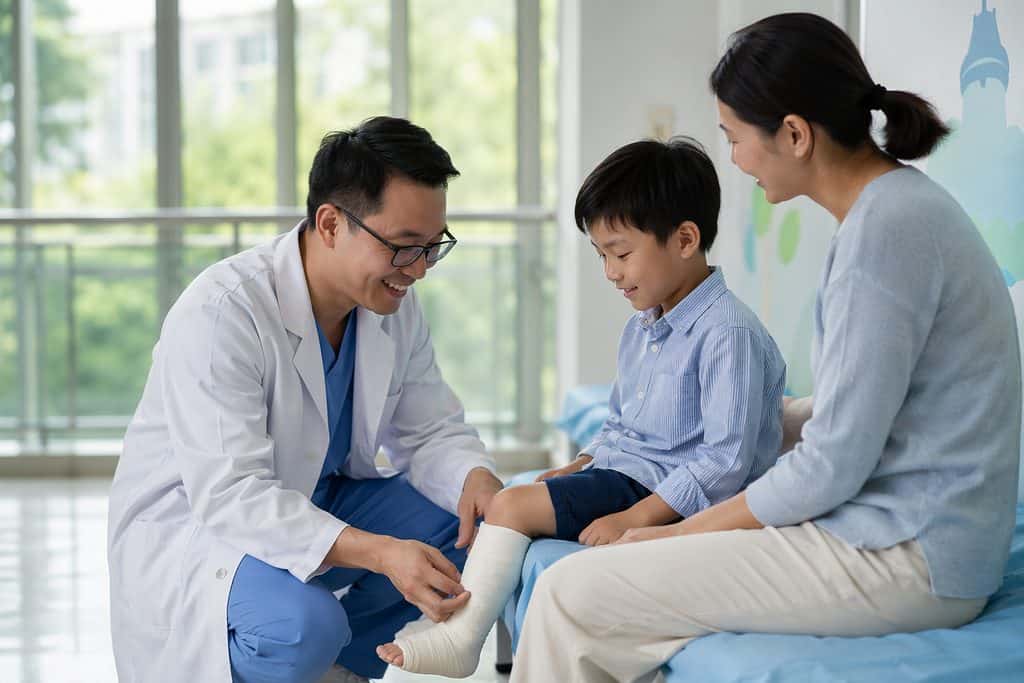
Limb Deformity Correction in China: What the “Sixth Team” Model Means for Your Child
Roughly one in every 1,000 children born worldwide has a clinically significant limb deformity — and for families in the United States, the United Kingdom, and the Gulf, the surgical bill that follows can run past $80,000 before physical therapy even begins. That single number is why searches for limb deformity correction cost China have climbed so sharply among parents who cannot wait three years on a public orthopedic list. China now performs more limb-lengthening and deformity-correction procedures annually than any other country, and the phrase “Sixth Team” keeps surfacing in parent forums. It is not a hospital. It is not a brand. Understanding what it actually refers to — and what it does not — will save you both money and months of confusion.
How This Actually Works, Step by Step
Here is the real sequence, from your living room to a walking child. No abstractions.
Step one — you send records. You gather the X-rays, the standing full-length lower-limb radiographs, the MRI if one exists, the genetic workup, and the operative notes from any prior surgery. Digital files, DICOM preferred, PDF acceptable.
Step two — a Chinese specialty team reviews them. Not a call-center agent. A pediatric orthopedic surgeon or a limb reconstruction fellow at a top-ranked hospital reads the imaging and writes back with an assessment: what the deformity is, whether it is congenital, post-traumatic, or metabolic, and what surgical options exist. This is a written second opinion, and it typically costs $300–500.
Step three — you speak with the team. A video consultation follows, usually $100–300 for a standard international department, $500–800 if you want a named senior specialist on the call. You ask your questions. They tell you what they would do.
Step four — a plan and a quote. Only now does a realistic cost figure appear, because limb deformity correction pricing depends entirely on whether you need one osteotomy or a staged lengthening with an external fixator over eight months.
Step five — you decide whether to travel. Nothing forces the trip. Some families take the written opinion back to their local surgeon. Others proceed to China.
What “Sixth Team” Really Refers To — and Why It Matters for Hospital Choice
There is no single answer, because the best unit for a congenital tibial pseudarthrosis is not necessarily the best for post-traumatic length discrepancy. Start with the Fudan specialty rankings for Orthopedics, then filter for hospitals with a dedicated pediatric limb reconstruction team and on-site rehabilitation. Volume and published outcomes matter more than brand recognition.
At accredited top-tier hospitals, the surgical safety profile is broadly comparable to Western centers of similar volume. The greater practical risk for international families is communication and follow-up logistics, not the operating room. Bilingual support during admission meaningfully reduces that risk.
For internal fixation, protected weight-bearing usually begins within weeks and functional recovery within three to six months. For gradual lengthening with an external fixator, expect the frame to stay on for four to nine months depending on the length gained, with consolidation continuing afterward. Full recovery often extends past the one-year mark.
Surgery cannot be scheduled from overseas without an in-person consultation at most public hospitals. What can be arranged in advance is a written second opinion, a video consultation, and coordination of the appointment and admission slot through the hospital’s international department. Final surgical decisions are made after face-to-face assessment.
Your Next Step
The Sixth Team phrase points to something real — specialized limb reconstruction units doing high-volume, technically demanding work at a fraction of Western cost. It does not point to a shortcut. Records first, opinion second, travel third. That order protects your child and your budget.
We are China Medical Services. We translate records, coordinate appointments through official hospital international departments, and provide bilingual accompaniment on the ground. We do not practice medicine, we do not promise a specific surgeon or date, and we do not sell access. If you would like a written opinion reviewed before you decide anything, start with a free consultation — no obligation, and no pressure to travel.
This article is for general information only and is not medical advice. Treatment decisions for limb deformity should be made with a qualified orthopedic surgeon who has examined your child in person.
Frequently Asked Questions
Yes. The hospitals used for international patients are JCI-accredited and follow the same international safety standards as top hospitals in the US and Europe. Surgical teams perform high volumes of procedures — often more than their Western counterparts — which studies show leads to better outcomes.
Costs vary by procedure and hospital, but international patients typically save 40-80% compared to US prices — even when factoring in travel and accommodation. A consultation with our team will give you an exact, all-inclusive quote with no hidden fees.
Send us your existing medical reports to get started. We handle everything from hospital selection and appointment scheduling to visa assistance and post-operative recovery planning. Your medical records are reviewed by the specialist before you even book a flight.
For more medical information and treatment options in China, visit chinamedservices.com (China Medical Services).
