Henan Cancer Hospital Zhengzhou: A Guide for International Patients
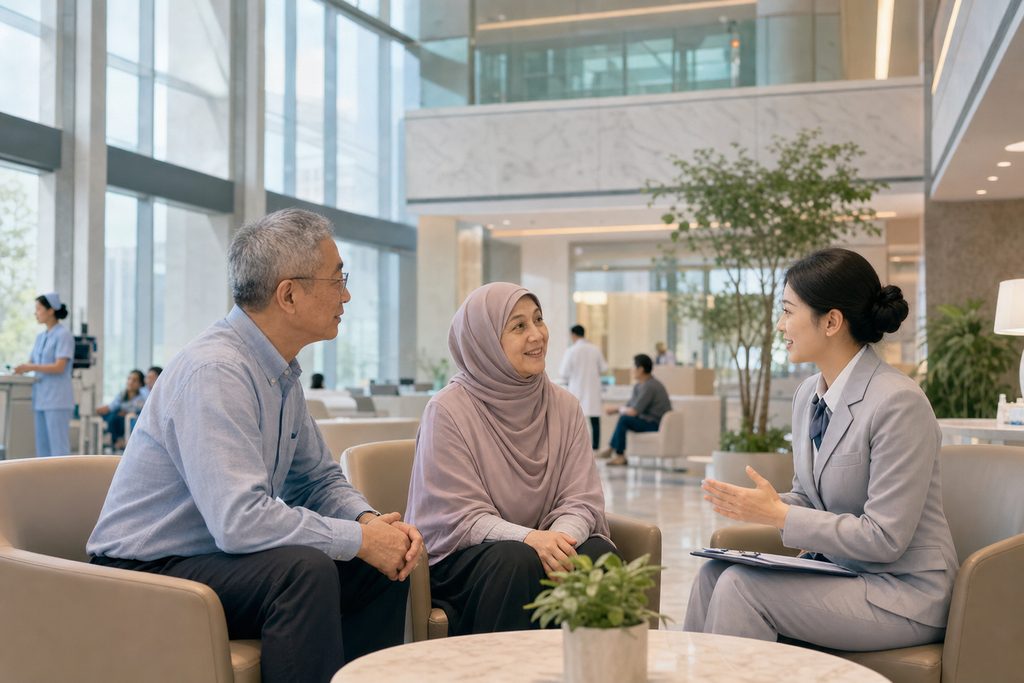
Henan Cancer Hospital Zhengzhou: A Guide for International Patients
China now records roughly 400,000 cross-border patient visits a year across its major medical hubs, and oncology sits near the top of the list. For Henan Cancer Hospital Zhengzhou international patients, the appeal is straightforward: a provincial center treating enormous volumes of cancer cases, at a fraction of Western prices. Zhengzhou is not Beijing or Shanghai. That matters, and this guide explains exactly how it matters.
Henan Province has around 100 million residents. Its cancer hospital serves them at scale, which means its clinicians see more tumors in a year than most Western centers see in a decade. Volume builds pattern recognition. It also builds waiting rooms that operate entirely in Chinese.
Here is what we tell families who ask about Zhengzhou: the medicine can be excellent, and the logistics are harder than in the coastal hubs. Both things are true.
How This Actually Works, Step by Step
The sequence below reflects how public tertiary hospitals in China actually admit foreign patients. It is not the same as booking a private clinic in Bangkok or Istanbul.
Step one — gather your records. You send us your pathology report, imaging (CT, MRI, PET-CT), surgical notes if any, and current medication list. These need certified English translation if they are not already in English. Chinese hospitals generally require Chinese translations for internal review, and we handle that conversion.
Step two — a written second opinion. The relevant specialty at a Chinese hospital reviews your file and returns written analysis, treatment suggestions, and direction. This is a document, not a prescription. It tells you whether your case is one this hospital handles well, and what they would likely propose.
Step three — video consultation, if you want it. You speak online with the specialty team, explain your symptoms and goals, and hear their recommendations directly. For complex cases, a multidisciplinary team review can be arranged.
Step four — appointment coordination. If you decide to travel, we coordinate registration through the hospital’s international office or VIP channel, create the hospital medical card, and confirm what you need to bring. Ordinary outpatient registration in China cannot be pre-booked from abroad. Surgery cannot be scheduled before an in-person consultation. That is the rule, and no intermediary changes it.
Step five — arrival and the in-person visit. A bilingual companion meets you, handles queuing, registration, payment, and translation. The specialist examines you, orders any additional tests, and only then discusses a treatment plan and date.
Step six — admission and treatment. Admission follows hospital rules and bed availability. We never promise a specific surgeon or a specific surgery date. We promise to coordinate as far as the hospital allows.
Is Henan Cancer Hospital Good for Foreigners? An Honest Assessment
Start with the rankings. In the Fudan Hospital Rankings, China’s most widely cited hospital league table, the comprehensive list places hospitals into tiers rather than numbered positions — A++++ down to A. Henan Cancer Hospital sits in the upper tiers nationally, and its oncology specialty appears among the country’s stronger programs. We do not quote a specific national rank because the comprehensive list does not publish one.
What the hospital genuinely offers:
- Extremely high case volume in esophageal, gastric, lung, liver, and breast cancers
- Established radiation oncology and chemotherapy infrastructure
- Costs well below Beijing and Shanghai for equivalent procedures
- A large, modern campus with imaging and pathology under one roof
What it does not offer as smoothly:
- A mature English-language international patient department compared with top Beijing or Shanghai hospitals
- Staff who routinely speak English outside designated international channels
- The density of international hotels, restaurants, and expat services found in Shanghai
So the honest answer to “is Henan Cancer Hospital good for foreigners” is this: the oncology is strong, the international infrastructure is thinner. If your case is straightforward and your budget is tight, Zhengzhou can be a rational choice. If your case is rare, heavily pretreated, or you need a clinical trial, a coastal hub may serve you better. Our specialty rankings by department let you compare oncology programs directly.
A Realistic Timeline
Families consistently underestimate two things: document translation and appointment lead time. Both are built into the table below.
| Stage | Typical Duration | What Slows It Down |
|---|---|---|
| Records gathering and translation | 3–10 days | Incomplete pathology slides, missing imaging discs |
| Written second opinion | 3–7 business days | Complex cases needing multiple specialties |
| Video consultation scheduling | 5–14 days | Time zone gaps, specialist availability |
| S2 visa application | 1–3 weeks | Consulate backlog, incomplete hospital invitation documents |
| Travel and arrival | 2–5 days | Flight availability, jet lag recovery |
| In-person consultation and testing | 2–7 days | Test queues, additional imaging required |
| Admission and treatment start | 3–14 days after consultation | Bed availability, pre-treatment assessment |
Realistic total from first contact to treatment start: four to eight weeks. Anyone promising you two weeks is either selling a private hospital package or guessing.
What Can Go Wrong — and What Happens Then
This is the section most guides skip. It is the one that matters.
The hospital declines your case. It happens. Some tumors are better managed elsewhere, and some patients are too frail for the travel and treatment. If the second opinion comes back saying the case is not a good fit, you have lost a few hundred dollars and gained a clear answer. That is a good outcome compared with flying 12 hours to be turned away.
The visa is delayed or refused. S2 applications require supporting hospital documents, and consulates assess each case individually. We prepare the paperwork carefully, but no one can guarantee approval. Build a two-week buffer into your plans.
The plan changes after in-person examination. Chinese specialists frequently order fresh imaging once you arrive. Sometimes the picture is different from what your home scans suggested. The plan adjusts. This is normal medicine, not a bait-and-switch.
No bed is available when you need one. Large public hospitals run at capacity. Admission can be pushed by days. If your condition is urgent, say so early and consider a hospital with more slack or a private international facility.
Language breaks down outside the consultation room. The doctor may speak reasonable English. The cashier, the lab technician, and the pharmacy window will not. This is precisely why bilingual accompaniment exists.
What Cancer Treatment Costs in a Chinese Hospital
Cost is the reason most international patients look at China at all. The comparison below uses published ranges for common oncology procedures. Actual figures vary by hospital, stage, drug regimen, and length of stay.
| Service | China (Top Public) | United States |
|---|---|---|
| Comprehensive initial workup | $800–2,500 | $8,000–20,000 |
| Chemotherapy cycle (drug-dependent) | $500–3,000 | $5,000–30,000 |
| Radiation therapy course | $4,000–15,000 | $40,000–120,000 |
| Major oncologic surgery | $8,000–25,000 | $60,000–200,000 |
| 30-day inpatient stay | $3,000–10,000 | $30,000–100,000 |
The pattern is consistent: Chinese public hospital pricing runs roughly one-fifth to one-tenth of US pricing for comparable interventions. Zhengzhou sits at the lower end of the Chinese range because it is not a first-tier coastal city.
Two caveats. Public hospitals require prepayment, and insurance reimbursement happens afterward — often back home, often partially. Private international hospitals bill insurers directly but cost considerably more. And drug pricing varies enormously depending on whether a regimen uses domestic generics or imported agents.
Practical Considerations: Records, Visas, Payment, and Follow-Up
Records. Bring original pathology slides if you can. Chinese pathologists frequently want to re-read them, and a second read can change the treatment plan.
Visa. Medical travel to China uses the S2 visa, annotated for medical treatment purposes. Stays beyond 180 days require the S1 category. Accompanying family members apply for S2 as well. Note carefully: the M visa is a commercial and trade visa and has nothing to do with medical treatment. Requirements shift, so confirm current documentation with your nearest Chinese embassy or consulate.
Payment. Expect to prepay at public hospitals. Bring a card that works internationally and confirm your daily limits before you travel.
Language. Budget for a bilingual companion. It is the single highest-value line item for a foreign patient navigating a Chinese public hospital.
Follow-up at home. Ask for your imaging on disc and a written treatment summary in English before discharge. Your oncologist at home will need both, and retrieving them remotely later is painful.
If you want to compare Zhengzhou against other options first, our guide to medical treatment in China covers the broader landscape of hospital types, costs, and access routes.
Frequently Asked Questions
Not in the way you would book a private clinic. Chinese public hospitals do not allow overseas pre-booking of ordinary outpatient slots, and surgery cannot be scheduled before an in-person consultation. What you can arrange in advance is a written second opinion, a video consultation, and coordination through the hospital’s international or VIP channel. Everything else is confirmed after you arrive and are examined.
Some senior physicians do, particularly those who have trained abroad, and international departments provide interpretation. Outside those channels, expect Chinese only. Registration clerks, lab staff, and pharmacy windows will not accommodate English. A bilingual medical companion is not a luxury here — it is the difference between a smooth visit and a lost day.
For a typical surgical case with a short inpatient stay, plan on $15,000 to $35,000 including diagnostics, surgery, and recovery — though figures vary widely by hospital and case complexity. Chemotherapy and radiation courses are priced per cycle or per course. Add accommodation, food, and companion services. Get a written estimate after the in-person consultation, before you commit to treatment.
You are free to decline and seek care elsewhere. Nothing obligates you to proceed. This is why we recommend the written second opinion and video consultation stages first — they let you evaluate the plan before spending money on travel. A second opinion that rules out China is just as valuable as one that confirms it.
Yes, and we encourage it. Accompanying family members apply for the S2 visa with the same medical annotation. Having someone who knows your history in the room is genuinely useful, especially during the first consultation when a lot of information arrives at once.
Your Next Step
Zhengzhou is a serious oncology center with real depth and lower prices than China’s coastal hubs. It is also a city where a foreign patient without language support will struggle. Knowing which of those facts dominates your situation is the whole decision.
We are China Medical Services. We connect international patients with hospitals across 37 cities, and we handle record translation, appointment coordination through official hospital channels, and bilingual accompaniment. We do not sell access, and we do not promise outcomes.
If you want a straight answer about whether your case fits Zhengzhou, send us your reports and ask. A written second opinion costs less than a flight, and it will tell you more.
This article is for general information only and is not medical advice. Treatment decisions should always be made with a qualified physician who has reviewed your individual case.
For more medical information and treatment options in China, visit chinamedservices.com (China Medical Services).
