Herniated Disc Treatment in China: Costs, Top Hospitals, and How to Start
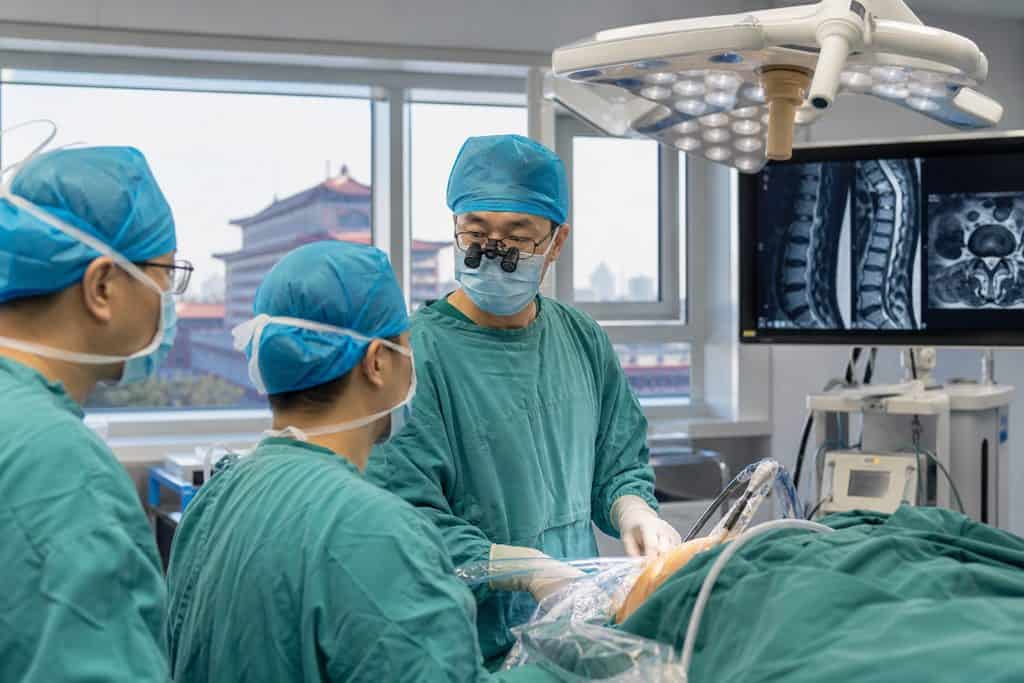
Roughly 1 in 13 people who visit a doctor for low back pain end up with a herniated disc diagnosis, and somewhere between 5% and 20% of those patients eventually hear the words “you may need surgery.” For a Western patient facing that sentence, the next thought is usually about money and time. A single-level lumbar discectomy in the United States runs $20,000 to $50,000 before insurance negotiations. In China, the same procedure at a top-ranked public hospital typically lands between $6,000 and $12,000 — all-in, including the hospital stay. That gap is why searches for herniated disc treatment cost China have climbed steadily among patients in the US, UK, Canada, and Australia.
But cost is only half the story. The other half is whether the surgery is done well, by whom, and how a foreigner with no Mandarin navigates a hospital that sees 10,000 outpatients a day. This guide walks through the real numbers, the hospitals that international patients actually use, and the sequence of steps that turns a Google search into a discharged patient on a plane home.
How This Actually Works, Step by Step
Nobody flies to China for spine surgery on a whim. The process starts remotely, and it starts with your existing imaging.
Step 1 — You send records. An MRI report (and the DICOM files if you have them), a recent X-ray or CT if available, your symptom history, and any prior treatments. Conservative care matters here: surgeons want to know whether you have already tried physical therapy, epidural steroid injections, or medication.
Step 2 — A Chinese spine specialist reviews the file. This happens as a written second opinion, typically $300–500 for a top-hospital expert, or as a video consultation ($100–300 at a standard international department, $500–800 with a top specialist). You get a written analysis: does this disc actually need surgery, what approach is recommended, and what the realistic recovery looks like.
Step 3 — You decide whether to travel. Some patients learn they are not surgical candidates at all. Others confirm the plan and move to logistics.
Step 4 — Appointment coordination. This is where the system gets specific. Standard public hospital outpatient registration cannot be booked from overseas in advance — you queue on the day. To lock in a senior surgeon and an English-speaking international department, you go through the hospital’s international or VIP channel. Coordination fees start around $300, and if the appointment cannot be secured, that fee is refunded.
Step 5 — In-person consultation, then surgery. In Chinese public hospitals, surgery is scheduled only after a face-to-face consultation. There is no path around this. You arrive, meet the surgeon, complete pre-operative testing, and are admitted.
Step 6 — Recovery and follow-up. Discectomy patients typically leave the hospital within 2–4 days. Follow-up imaging and physiotherapy instructions travel home with you.
What Herniated Disc Treatment Actually Costs in China
Prices vary by hospital tier, city, surgical technique, and how many disc levels are involved. The ranges below reflect what international departments at top-ranked Chinese hospitals quote for self-paying foreign patients. They are not quotes — they are planning figures.
| Procedure | China (top public hospital) | United States | United Kingdom (private) |
|---|---|---|---|
| Microdiscectomy, single level | $6,000–$12,000 | $20,000–$50,000 | £8,000–£15,000 |
| Endoscopic discectomy | $5,000–$10,000 | $18,000–$40,000 | £7,000–£13,000 |
| Lumbar fusion, single level | $12,000–$22,000 | $50,000–$110,000 | £20,000–£35,000 |
| Cervical disc replacement | $10,000–$18,000 | $40,000–$80,000 | £15,000–£28,000 |
| Hospital stay (per day, international ward) | $200–$600 | $3,000–$8,000 | £800–£2,000 |
These figures include surgeon fees, anesthesia, implants where applicable, and the inpatient stay. They exclude flights, accommodation, and the bilingual companion service. A realistic all-in budget for a single-level discectomy, including two weeks in China for the patient and one companion, runs $12,000–$20,000. That is still a fraction of the US number, and it is the reason a medical tourism package for spine surgery China style trip pencils out for uninsured or underinsured patients.
Shanghai and Beijing sit at the top of the range. Chengdu, Wuhan, and Hangzhou can be 15–25% lower for equivalent surgical quality, because the hospital is excellent but the city’s cost of living is lower.
A Realistic Timeline
Patients consistently underestimate the administrative lead time. Here is what the calendar actually looks like.
| Stage | Typical duration | What people forget |
|---|---|---|
| Records gathering and translation | 3–7 days | Radiology reports must be translated into Chinese; DICOM files need to be uploaded, not emailed as photos |
| Written second opinion turnaround | 3–10 business days | Top specialists review in batches; complex cervical cases take longer |
| Video consultation scheduling | 1–2 weeks | Time zone alignment with a surgeon’s clinic hours |
| S2 visa application | 1–3 weeks | Requires an invitation or supporting letter from the receiving hospital; processing time varies by consulate |
| Appointment and admission coordination | 1–3 weeks | Senior surgeons’ international clinics fill up; peak periods are worse |
| Travel and pre-operative testing | 3–5 days in country | Blood work, ECG, and anesthesia clearance happen after arrival |
| Surgery and inpatient stay | 2–5 days | Discectomy is short; fusion is longer |
| Recovery before flying home | 7–14 days | Most surgeons want a wound check and a follow-up scan before long-haul travel |
Add it up and a well-organized patient is looking at six to ten weeks from first email to surgery date. Anyone promising you a two-week turnaround is either skipping the visa or skipping the consultation.
What Can Go Wrong — and What Happens Then
Honest failure modes, in order of how often they occur.
The surgeon says no. This happens more than patients expect. If your imaging shows a disc bulge that does not match your symptoms, or if you have not completed conservative treatment, a good surgeon will decline to operate. That is a correct outcome, not a wasted trip — but it is why the remote second opinion exists.
The visa is delayed. S2 applications for medical treatment require supporting documentation from the hospital. If the hospital letter is slow, your consulate appointment slips. Build two extra weeks into any plan.
The appointment cannot be secured for your preferred dates. Senior surgeons have limited international clinic slots. Our coordination service refunds the fee in full if the requested appointment cannot be arranged, but the calendar problem is real.
Complications. Any spine surgery carries risks of infection, nerve injury, dural tear, and failed back syndrome. Top Chinese hospitals report complication rates in line with international benchmarks, but no hospital anywhere offers a zero-risk discectomy. Ask the surgeon directly for their personal revision rate.
Language breakdown in the ward. This is the most common practical problem. Nursing staff on general wards rarely speak English. A bilingual medical companion — from $300 per day — handles registration, queueing, payment, and translation at the bedside.
How to Choose a Spine Hospital in China
China has more than 35,000 hospitals. The Fudan Hospital Ranking, which evaluates clinical reputation across 45 specialties, places only the top 100 in its comprehensive tier system (graded A++++ down to A). For orthopedics and spine surgery, the recognized leaders include Peking University Third Hospital in Beijing, Shanghai Sixth People’s Hospital, and West China Hospital in Chengdu. Each ranks in the top tier for orthopedic reputation nationally.
For foreign patients specifically, three factors matter more than raw ranking:
- Does the hospital have an established international department? This determines whether anyone will speak English to you at 7 a.m. on admission day.
- Does the spine surgeon operate on foreign patients regularly? Volume with international cases correlates with smoother logistics, not necessarily better surgery.
- Is the hospital JCI-accredited or on the Fudan Top 100? Both are reasonable proxies. Private international hospitals such as United Family and Jiahui offer Western-style service and direct insurance billing, but for complex revision spine surgery, the high-volume public academic centers remain the reference standard.
Our specialty rankings by department list the top hospitals for orthopedics, and the Fudan Top 100 hospital directory groups them by city so you can compare Beijing, Shanghai, and Guangzhou options side by side.
Practical Considerations: Records, Visa, Payment, and Follow-Up
Records. Bring your MRI on physical media or a cloud link. Bring translated reports. Bring a list of every medication with generic names.
Visa. Foreign patients coming to China for medical treatment apply for the S2 visa, annotated for medical treatment purposes. Stays exceeding 180 days require the S1 category. Accompanying family members apply for S2 as well. Note carefully: the M visa is a commercial and trade visa and has nothing to do with medical care. Requirements shift, so confirm current documentation with the nearest Chinese embassy or consulate before booking flights.
Payment. Public hospitals require prepayment. International insurance is typically reimbursed after the fact rather than billed directly, though some private international hospitals do offer direct billing with select insurers. Budget in cash or wire transfer, not credit card, for the hospital deposit.
Follow-up at home. Ask for your operative report, implant documentation, and discharge summary in English before you leave the hospital. Your local physiotherapist will need them.
Frequently Asked Questions
At top-ranked public hospitals and JCI-accredited international hospitals, complication rates for lumbar microdiscectomy are broadly comparable to Western academic centers. The variable that changes most for foreign patients is not surgical safety — it is communication and aftercare coordination. Choose a hospital with a functioning international department, and ask the surgeon for their own complication and revision figures rather than relying on general claims.
Shanghai and Beijing are the most expensive cities in China for international-department spine surgery, typically $6,000–$12,000 for a single-level microdiscectomy. Beijing’s Peking University Third Hospital and Shanghai’s Sixth People’s Hospital both sit at the top of the orthopedic rankings, so the price difference between them is small. Second-tier cities with strong medical schools can be 15–25% cheaper for comparable quality.
No — and be skeptical of anyone who says otherwise. Chinese public hospitals require an in-person consultation before scheduling surgery. What can be arranged in advance is the appointment itself through the hospital’s international or VIP channel, plus a remote video consultation with the surgical team. The surgery date is set after you are examined in person.
That is a legitimate and common result. Roughly 80–90% of herniated disc patients improve with conservative management within six to twelve weeks. A written second opinion that tells you to continue physical therapy has saved you the cost of a trip, which is exactly the outcome the process is designed to produce.
You can arrange it yourself if you read Mandarin, understand how Chinese hospital registration works, and have weeks to spend on logistics. Most international patients use coordination support for the appointment, the visa documentation, and the bilingual companion during the hospital stay. The clinical decisions remain entirely between you and the surgeon.
Your Next Step
The core message is simple: herniated disc treatment in China costs roughly one-fifth to one-quarter of US prices at hospitals with internationally recognized spine programs, but the savings only materialize if the process is sequenced correctly — records first, remote review second, travel last. China Medical Services is a coordination service, not a medical provider. We do not diagnose, we do not operate, and we do not promise outcomes. What we do is translate your records, route them to the right specialty team, coordinate appointments through official hospital channels, and put a bilingual companion beside you in the ward. If you want to know whether your MRI would even qualify for surgery in China, start with a free consultation at our patient services page — no commitment, no pressure, just a clear answer about your options.
This article is for general information only and does not constitute medical advice. Treatment decisions should always be made with a qualified physician who has reviewed your individual imaging and history.
For more medical information and treatment options in China, visit chinamedservices.com (China Medical Services).
