Sending Your Scans to China for Review: Costs, Safety, and Timelines
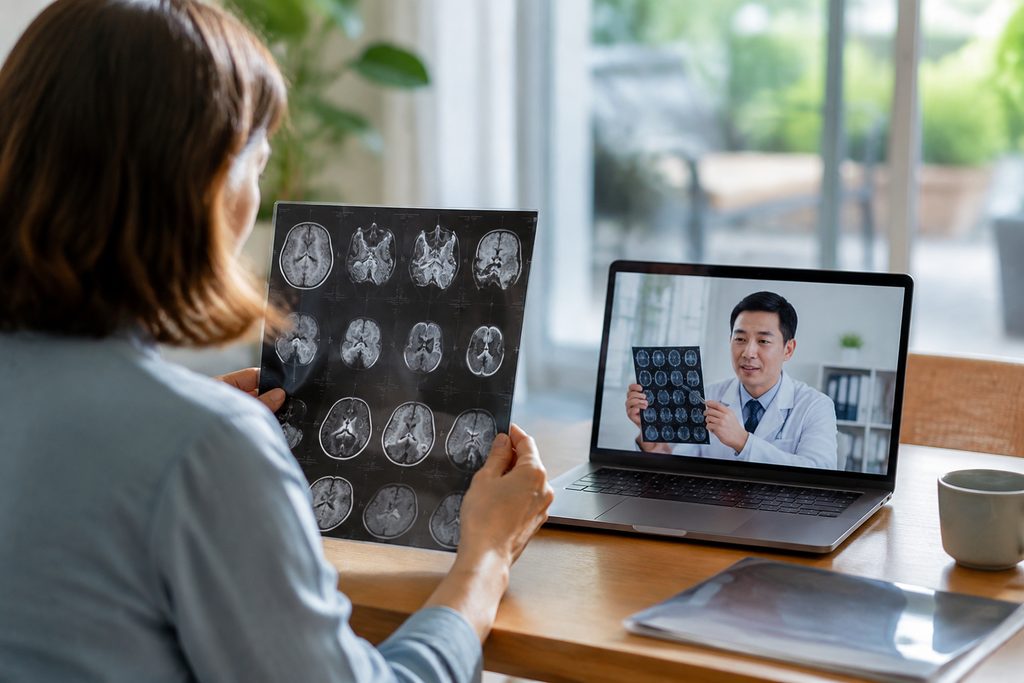
Sending Your Scans to China for Review: Costs, Safety, and Timelines
A 2023 analysis in *The Lancet* estimated that more than 80 million imaging studies are performed in China annually across its top-tier hospitals. That volume matters to you for one reason: the radiologists reading those scans see rare presentations constantly. When a patient in Ohio or Dubai has a scan that three local specialists interpret differently, sending those images to a Chinese tertiary hospital for a fresh read has become a practical option. The MRI scan review cost China providers charge is often a fraction of what a U.S. second opinion runs — and the process can be completed without leaving your home.
This guide explains exactly how the process works, what it costs, how long it takes, and where the genuine risks lie.
How This Actually Works, Step by Step
The sequence is simpler than most people expect. Here is what happens from the moment you decide to pursue a review.
Step one: gather your source files. You need the original DICOM files from your MRI, CT, or PET scan — not the printed film, not a PDF of the radiologist’s report. DICOM files live on a CD or DVD the imaging center gave you, or they sit in a patient portal. If you only have the written report, a review is still possible, but the consultant is working from someone else’s interpretation rather than the raw images.
Step two: send the records. Most Chinese international departments accept uploads through a secure portal or a hospital-designated cloud link. Some still ask for physical media shipped by courier. Your clinical history, prior imaging, pathology slides if relevant, and current medications go along with the scans.
Step three: translation and intake. A coordinator converts your English-language history into a structured Chinese summary the specialty team can read quickly. This is not a word-for-word translation. It is a clinical abstract.
Step four: the review itself. A radiologist or the relevant specialist — a neurosurgeon for a brain lesion, an orthopedic oncologist for a bone tumor — examines the images against your history and produces a written opinion. You receive it in English.
Step five: the conversation. If you want more than a document, a video consultation lets you ask questions directly. That is where most patients get real clarity.
Is It Legal and Safe to Send Medical Records to China?
That happens, and it is often the point of seeking a review. A disagreement does not mean either side is wrong — it usually reflects different diagnostic thresholds or treatment philosophies. Bring the written opinion to your local physician and ask them to explain where the two assessments diverge. That conversation is more valuable than either document alone.
Reputable hospitals require signed consent and use encrypted transfer. But privacy frameworks differ between countries, and no cross-border arrangement offers identical legal protection to staying within your home system. If that distinction matters to you, weigh it honestly before sending anything.
A written second opinion from a top-tier Chinese hospital typically runs $300–$500. A comparable formal review at a major U.S. academic center commonly costs $500–$2,000 or more, with inconsistent insurance coverage. Final pricing varies by hospital and case complexity.
No. Sending records and receiving a remote opinion requires no visa. The S2 visa becomes relevant only if you decide to travel to China for in-person evaluation or treatment.
Your Next Step
The core message is straightforward: a remote scan review is a low-cost, low-commitment way to get a second set of expert eyes on your imaging before you make a major treatment decision. It will not replace your local physician, and it is not a prescription — it is a written opinion for reference.
Our team at China Medical Services coordinates this process: records handling, translation, hospital matching, and scheduling through official international departments. We do not provide medical care and we do not sell access to any specialist or surgical slot. If a review makes sense for your situation, we can tell you which specialty and which hospital fit your case, and what it will cost. A first conversation costs nothing.
Frequently Asked Questions
Yes. The hospitals used for international patients are JCI-accredited and follow the same international safety standards as top hospitals in the US and Europe. Surgical teams perform high volumes of procedures — often more than their Western counterparts — which studies show leads to better outcomes.
Costs vary by procedure and hospital, but international patients typically save 40-80% compared to US prices — even when factoring in travel and accommodation. A consultation with our team will give you an exact, all-inclusive quote with no hidden fees.
Send us your existing medical reports to get started. We handle everything from hospital selection and appointment scheduling to visa assistance and post-operative recovery planning. Your medical records are reviewed by the specialist before you even book a flight.
For more medical information and treatment options in China, visit chinamedservices.com (China Medical Services).
