Hidden Fees in Chinese Hospitals: What Foreign Patients Must Know
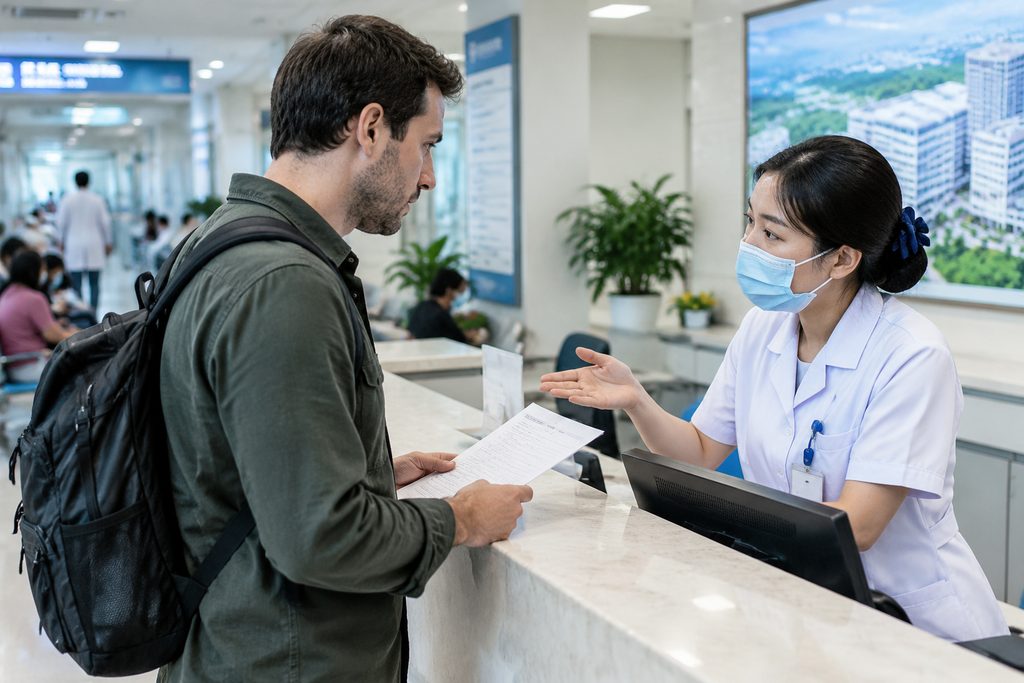
You have probably seen the advertised price for a procedure at a Chinese hospital and thought it seemed too good to be true. Sometimes it is. But not for the reasons you might assume. The base surgical fee quoted by a top-tier public hospital in Shanghai or Beijing is often genuinely low — what catches foreign patients off guard are the layers of costs that never appear on the initial quote. Hidden fees in Chinese hospitals are less about deception and more about a system built for domestic patients who understand its unwritten rules. You do not. That is the problem.
Our team has walked hundreds of international patients through billing statements from public and private hospitals across 37 cities. We have seen the same line items confuse people from London, Dubai, and Singapore. The good news: almost all of these fees are predictable once you know where to look. This article maps them out so you can budget like an insider.
Key Takeaways
- Public hospital quotes typically cover only the procedure itself — expect 20% to 40% in additional line items like consumables, nursing, and diagnostic re-testing.
- International VIP departments charge 1.5 to 2 times standard pricing, but include English coordination, priority scheduling, and itemized billing that reduces surprise charges.
- Deposit requirements at public hospitals often run 50% to 100% of the estimated total before admission, and payment is required upfront — insurance reimbursement happens after discharge.
- Private international hospitals like United Family and Jiahui offer direct insurance billing and bundled quotes, which nearly eliminates hidden fees but costs more at baseline.
The Problem: You Are Quoting a Price From a System You Do Not Understand
A 2023 report by the World Health Organization noted that out-of-pocket health spending in China accounts for roughly 28% of total health expenditure — lower than in many emerging economies but structurally different from what Western patients expect. In the US, a hospital quote usually bundles the surgeon’s fee, anesthesia, facility charge, and basic supplies into one number. In China, public hospitals itemize almost everything separately. The quote you receive by email is often just the surgical procedure fee. Nothing else.
That means a cardiac bypass quoted at $15,000 can become $21,000 by discharge. Not because anyone is cheating you. Because the original number never included the consumables, the post-operative monitoring, the nursing tier you selected, or the diagnostic imaging that the surgical team orders after admission. For a patient flying in from abroad, that gap feels like a hidden fee. For a local patient, it is just how billing works.
Why Understanding the Real Cost Structure Matters Before You Fly
You cannot negotiate what you cannot see. And you cannot see the full picture until you understand how Chinese hospitals classify charges. Let us break that down.
Public Hospital Billing: The Itemized Reality
China’s top public hospitals — the ones on the Fudan ranking list — operate at enormous scale. A single outpatient department at West China Hospital in Chengdu can see over 20,000 patients in a day. That volume drives efficiency, but it also means billing is designed for speed and standardization, not for patient comprehension. Every syringe, every gauze pad, every blood test gets a line item.
For a foreign patient, the most common surprise line items include:
- Consumables and implants — stents, screws, mesh, and catheters are billed separately from the surgeon’s fee. These can be 30% to 50% of the total bill in orthopedic and cardiac cases.
- Nursing tier upgrades — standard ward nursing is included, but semi-private or private rooms with dedicated nursing support cost extra per day.
- Repeat diagnostics — Chinese hospitals routinely re-run imaging and blood work on admission, even if you bring recent results from home. This is a clinical protocol, not a money grab, but it adds cost.
- Interpreter or coordination fees — if you do not bring your own bilingual support, the hospital may charge for translation services or route you through their international department, which has its own fee schedule.
None of these are illegitimate. All of them are invisible on a basic quote.
International VIP Departments: Higher Base Price, Fewer Surprises
Most of the top-ranked hospitals in our database of 340+ hospitals operate a separate international or VIP wing. These departments charge roughly 1.5 to 2 times the standard public rate. In exchange, you get English-speaking staff, faster scheduling, private rooms, and — most relevant to this article — consolidated billing that looks closer to what Western patients expect.
But even here, you need to ask one specific question: “Does this quote include consumables and post-operative monitoring?” If the answer is vague, treat the quote as a floor, not a ceiling.
Private International Hospitals: The Bundled Alternative
Facilities like United Family, Jiahui, and Parkway Health operate on a different model entirely. They are JCI-accredited, English-first, and built for expatriates and medical travelers. Most offer direct insurance billing with major international insurers. Their quotes tend to be comprehensive — facility, physician, nursing, and routine consumables in one number. You pay more upfront, but the variance between quote and final bill is usually under 10%.
That predictability has real value when you are managing a medical budget from another country.
Hidden Fees in Chinese Hospitals: The Line Items That Actually Surprise People
Let us get specific. Based on billing statements we have reviewed with patients, here are the charges that most often trigger a confused email or phone call after discharge.
| Fee Category | Typical Range (USD) | What It Actually Covers |
|---|---|---|
| Admission deposit (public hospital) | $3,000 – $15,000 | Prepaid before admission; applied to final bill; balance refunded or topped up |
| Consumables and implants | $2,000 – $20,000+ | Stents, joint prostheses, surgical mesh, catheters — billed per unit |
| Repeat diagnostic imaging | $200 – $1,500 | CT, MRI, ultrasound re-done on admission per hospital protocol |
| Private room upgrade | $80 – $300 per day | Semi-private or private ward with dedicated nursing |
| Bilingual coordination (if not pre-arranged) | $100 – $500 per visit | Hospital-provided translation or international department administrative fee |
| Discharge medications | $100 – $800 | Prescriptions filled at hospital pharmacy before leaving |
These ranges reflect what we have seen across public tertiary hospitals in Beijing, Shanghai, and Guangzhou. Actual amounts vary by hospital and case complexity — that phrase will appear again because it is the honest truth about Chinese medical pricing.
How to Get a Realistic Cost Estimate Before You Commit
So how do you avoid the sticker shock? You stop accepting the first number you are given and start asking for a written, itemized estimate. Here is the process we recommend to every patient who contacts us through our consultation service.
Step 1: Request a Written Quote From the International Department
Public hospital websites rarely list prices. You need to contact the international or VIP office directly. Ask for a written estimate that includes: surgeon fee, anesthesia, operating room, consumables, ward fees for the expected length of stay, and routine post-operative monitoring. If they cannot provide this, that is a signal — not necessarily of bad faith, but of a department that does not serve many foreign patients.
Step 2: Add a Contingency Buffer
Plan for 20% to 30% above the written estimate. This covers repeat diagnostics, unexpected consumables, a longer stay, or a higher nursing tier. If you do not use it, you get it back or it stays in your pocket. If you do use it, you are not scrambling mid-treatment.
Step 3: Clarify the Deposit and Payment Schedule
Chinese public hospitals require prepayment. The admission deposit is typically 50% to 100% of the estimated total. You will be asked to top up the deposit as the balance draws down during your stay. Payment is made by card or bank transfer — international credit cards are accepted at international departments but may incur a processing fee. Private international hospitals often bill insurance directly, which changes the cash flow entirely.
Step 4: Understand What Your Insurance Actually Covers
Most international insurers will reimburse treatment at Chinese public hospitals, but you pay first and claim later. The hospital provides an itemized receipt and discharge summary, which you submit to your insurer. Reimbursement timelines vary from 2 weeks to 3 months. If you have a policy with direct billing arrangements, private international hospitals are the smoother path.
Practical tip: Before you transfer any deposit, ask for the hospital’s official bank account details and confirm them against the hospital’s website or a trusted coordinator. Wire fraud targeting medical travelers is real, and a quick verification prevents a very expensive mistake.
What the Numbers Mean When You Compare China to the US or Europe
Even with every hidden fee accounted for, the total cost of major surgery in China typically lands at one-fifth to one-tenth of the US price. A cardiac bypass that costs $120,000 or more in the United States runs $12,000 to $20,000 at a top Chinese public hospital — and that is the all-in number, including consumables and a private room. A hip replacement quoted at $40,000 in the US might total $8,000 to $12,000 in China.
The structural reasons are straightforward. Labor costs for nurses and support staff are lower. Hospital construction and land costs are often subsidized by the state. And the sheer patient volume — Fuwai Hospital in Beijing performs over 14,000 cardiac surgeries annually, more than any other center in the world — spreads fixed costs across far more cases.
But lower cost does not mean lower quality. The top 5% of China’s 35,000+ hospitals, ranked by Fudan University and JCI, produce clinical outcomes comparable to good Western centers. The challenge is not the medicine. It is the navigation — the language, the billing, the deposit management, the discharge paperwork. That is where hidden fees live, and where preparation pays off.
Practical Considerations: Payment, Visas, and Documentation
If you are planning treatment in China, you need to handle several logistics before you land. None are complicated, but all of them affect your final bill.
Visa category. Foreign nationals traveling to China for medical treatment apply for an S2 visa, which covers short-term private affairs including medical care. Accompanying family members also apply for S2. Stays longer than 180 days require an S1 visa. You will need supporting documents from the hospital — typically an invitation letter or treatment confirmation — so request these early. The M visa is for commercial and trade activities and is not appropriate for medical travel.
Payment methods. International departments accept major credit cards, but Chinese hospitals generally do not accept foreign insurance as direct payment. You pay the deposit and ongoing charges yourself, then claim reimbursement. For large amounts, a wire transfer to the hospital’s official account is common. Some private international hospitals offer direct billing with insurers like Cigna, Aetna, and Allianz — check your policy before choosing a facility.
Documentation you need. Bring your passport, recent medical records, imaging files on CD or USB, a list of current medications, and your insurance policy details. Hospitals will re-run diagnostics, but your existing records help the clinical team understand your history and avoid redundant testing where possible.
Language and interpretation. Outside the international departments, English is rare. Even in top hospitals, the nursing staff and billing office may speak only Mandarin. If you do not have a bilingual companion, you will pay for hospital translation services — or you will be lost. This is not a hidden fee so much as an operational reality.
Caution: Never assume a quote includes everything. Always ask: “Does this estimate include consumables, ward fees, and post-operative monitoring?” If the answer is unclear, budget an additional 30%.
Frequently Asked Questions
Chinese public hospitals itemize consumables, diagnostics, and nursing separately from the procedure fee. These are standard charges, not fraudulent additions. The issue is usually that the initial quote only covered the surgical fee. Request an itemized written estimate from the international department before you travel, and add a 20% to 30% buffer for line items that emerge during treatment.
Not in the way you might negotiate in a private Western hospital. Public hospital pricing is regulated and non-negotiable. What you can control is the choice of facility and department. Private international hospitals offer bundled pricing with fewer variables. International VIP departments at public hospitals offer a middle ground — higher base rates but more transparent billing and English coordination. The negotiation happens at the selection stage, not at the billing desk.
This is a serious situation and one you must avoid. Public hospitals will pause non-emergency treatment if your deposit balance runs out. They will not discharge you in an unsafe condition, but they may delay elective procedures or transfers until payment is arranged. This is why we tell every patient to secure a financial buffer before flying. If your insurance reimbursement is slow, you still need cash flow during the hospital stay. Plan for the worst-case total, not the best-case quote.
Your Next Step
Hidden fees in Chinese hospitals are not a secret plot — they are a structural feature of a billing system designed for domestic patients. Once you understand the categories, you can budget accurately and choose a facility that matches your financial and clinical needs. Our team at China Medical Services helps international patients navigate this exact process: getting itemized quotes, clarifying what is included, coordinating with hospital international departments, and providing bilingual support on the ground. We are not a hospital and we do not provide medical advice — we are the bridge between you and the Chinese healthcare system.
If you are considering treatment in China and want a realistic cost picture before you commit, request a free consultation through our patient coordination service. We will help you understand what the numbers really mean — before you book a flight.
For more medical information and treatment options in China, visit chinamedservices.com (China Medical Services).
