Affiliated Hospital Inner Mongolia Medical University International Patient Service: Hohhot East-West Medicine
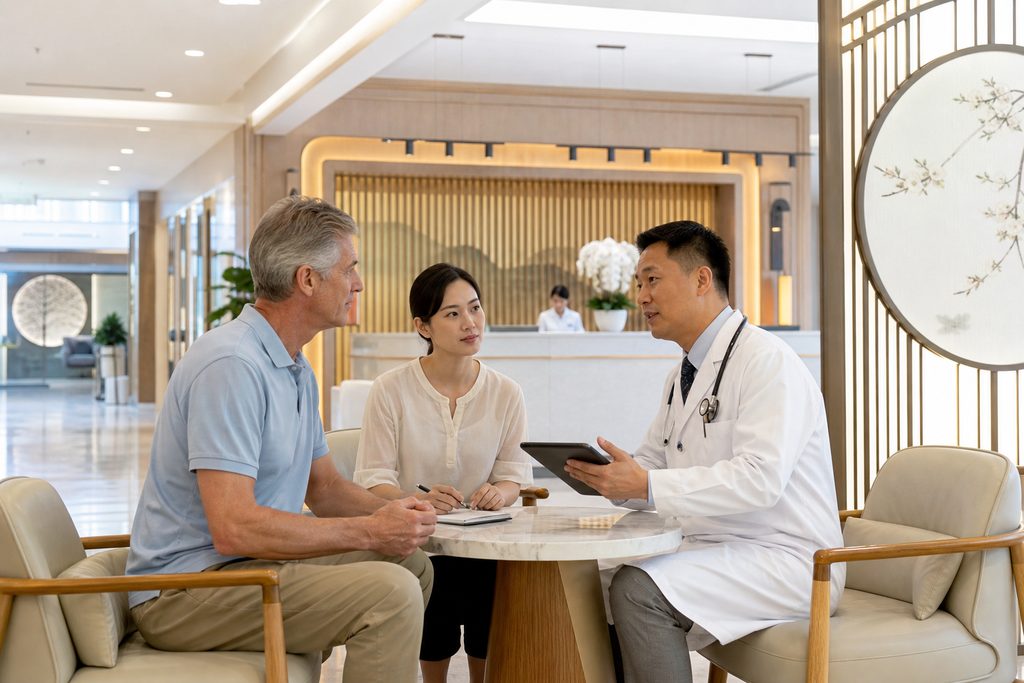
You have probably heard that seeking integrated medicine in China means choosing between genuine traditional practices and modern Western science. That you cannot find both under one roof, delivered by one team, without a chaotic, uncoordinated experience. The reality at the Affiliated Hospital of Inner Mongolia Medical University in Hohhot is starkly different. Here, the integration is not a marketing slogan. It is the operational DNA of a hospital that treats over 1.5 million outpatients annually. Our team has coordinated care for international patients at this exact facility. We have seen how their dual-diagnosis protocol—where a patient is assessed simultaneously by a Western-trained cardiologist and a Mongolian medicine specialist—produces treatment plans that neither discipline could conceive alone. The question is not whether this model works. The question is why more Western patients are not accessing it, and what it actually costs to do so.
Key Takeaways
- The Affiliated Hospital of Inner Mongolia Medical University is a top-tier, 3,000-bed academic medical center that formally integrates Mongolian traditional medicine, TCM, and Western biomedicine under a single clinical governance structure.
- For international patients, a comprehensive integrated medicine consultation with bilingual coordination typically starts from $300, while full inpatient treatment packages for complex chronic conditions can range from $5,000 to $15,000—a fraction of comparable Western integrative programs.
- The hospital’s international patient service is a dedicated, centralized department, but it requires advance coordination; walk-in access for foreigners without a local guarantor or Chinese medical records is not practically feasible.
- Understanding the “integrated Chinese Western medicine approach” is critical: it is not alternative medicine replacing conventional care. It is a regulated, evidence-guided model where conventional diagnostics and therapies are augmented by traditional modalities to manage side effects, improve function, and address root constitutional imbalances.
The Problem: Chronic Conditions Trapped in a Single-System Silo
Approximately 133 million Americans live with at least one chronic disease. That is 40% of the population. For many, the standard biomedical model offers a narrowing path: a diagnosis, a pharmaceutical protocol, and a slowly escalating cycle of specialist referrals that treat the body as a collection of disconnected parts. A patient with rheumatoid arthritis sees a rheumatologist for immunosuppressants. Their crushing fatigue and digestive disturbances—side effects of the very drugs meant to help—are outsourced to another specialist. The root system dysfunction is never addressed. This fragmentation is not a failure of individual doctors. It is a structural limitation of a healthcare paradigm that excels at acute crisis intervention but often struggles with the systemic, multi-factorial nature of chronic illness.
What happens when this model fails? Patients turn to integrative and functional medicine. In the United States, the out-of-pocket cost for a comprehensive integrative medicine program at a leading academic center can exceed $10,000 for the initial workup alone, with ongoing monthly costs in the thousands. In Europe, wait times for integrative oncology consultations at public university hospitals can stretch past three months. The demand for a cohesive, whole-system approach to complex disease is enormous. The supply of affordable, institutionally rigorous programs is not.
Who We Are
We are not a hospital. We do not provide medical treatment or clinical diagnoses. We are your logistical architects—we bridge the gap between you and China’s top-tier medical expertise. Our team at China Medical Services has built a database of over 340 top-ranked hospitals across 37 cities, and we know which institutions genuinely deliver on their promises versus those that simply have a polished website. When a patient asks us about the Affiliated Hospital of Inner Mongolia Medical University’s international patient service in Hohhot, we do not just send a brochure. We explain exactly how their East-West medicine model works in practice, what the integrated medicine hospital Inner Mongolia price structure looks like for a foreign patient, and what barriers you will hit if you try to navigate this alone. We have coordinated cases here. We understand the clinical strengths and the administrative friction points. Our role is to make the complex simple and the opaque transparent.
Why the Affiliated Hospital of Inner Mongolia Medical University Delivers a Genuine Integrated Medicine Model
The term “integrated medicine” is often diluted. At this hospital, it has a specific, regulated definition. The institution is one of the few in China formally designated as a National Clinical Research Base for Mongolian Medicine. This is not a small wellness center. It is a 3,000-bed academic medical center with 36 clinical departments, a full spectrum of Western surgical and diagnostic capabilities, and a parallel, equally rigorous traditional medicine infrastructure. The integration happens at the diagnostic and treatment planning level, not as an afterthought.
Clinical Volume and the “Dual-Track” Diagnostic Protocol
Volume drives diagnostic precision. The hospital’s outpatient volume exceeds 4,500 patients per day. Within this massive throughput, the international patient service carves out a protected, slower-paced clinical pathway for foreign patients. A typical initial consultation for a chronic condition does not start with a single doctor. It starts with a coordinated intake where a Western internal medicine specialist and a Mongolian medicine or TCM practitioner conduct parallel assessments. The Western track runs standard labs, advanced imaging, and immunological panels. The traditional track performs pulse diagnosis, tongue examination, and a constitutional assessment based on Mongolian medical theory—which shares roots with Tibetan medicine but has its own distinct diagnostic categories. The two teams then convene, discuss the case, and produce a single, unified treatment plan. This is the “integrated Chinese Western medicine approach” in its most authentic institutional form.
What is Integrated Chinese Western Medicine Approach: Beyond the Buzzword
The phrase gets thrown around loosely. Let us define it precisely as it is practiced here. It is a clinical model where conventional Western diagnostics and therapies form the structural backbone of the treatment plan, while traditional modalities are deployed to achieve three specific objectives: mitigate treatment side effects, restore homeostatic regulation, and address constitutional vulnerabilities that Western medicine acknowledges but does not therapeutically target. For example, a cancer patient receiving chemotherapy will have their oncology protocol managed by a Western-trained oncologist. Simultaneously, a Mongolian medicine specialist will prescribe a customized herbal decoction and external therapy—such as a specialized moxibustion technique—to manage nausea, protect liver function, and maintain white blood cell counts. This is not an either-or proposition. It is a single, unified prescription signed off by both departments.
Cost Structure: The Integrated Medicine Hospital Inner Mongolia Price Reality
The financial advantage is structural, not a reflection of lower quality. A full initial integrated medicine consultation package, including Western labs, imaging, and a dual-specialist assessment, typically starts from $300. A 14-day inpatient integrated treatment program for a complex autoimmune condition, including daily traditional therapies, Western monitoring, and specialist consultations, often falls between $5,000 and $8,000. More intensive programs, such as integrated post-stroke rehabilitation combining hyperbaric oxygen, acupuncture, and physical therapy, can extend to $15,000 for a month-long stay. For context, a comparable integrative medicine inpatient program at a major German university hospital can cost €20,000 to €35,000. In the United States, a two-week integrative chronic pain program at a leading center routinely exceeds $40,000. The Hohhot east west medicine treatment cost advantage is not marginal. It is transformative for patients facing years of out-of-pocket chronic disease management.
| Treatment Category | Estimated Cost at Affiliated Hospital, Hohhot (USD) | Comparable US/EU Cost (USD) |
|---|---|---|
| Initial Integrated Medicine Consultation (dual-specialist, labs, imaging) | $300 – $600 | $2,500 – $5,000 |
| 14-Day Inpatient Integrated Autoimmune Program | $5,000 – $8,000 | $25,000 – $45,000 |
| 1-Month Integrated Post-Stroke Rehabilitation | $10,000 – $15,000 | $40,000 – $70,000 |
| Single Traditional Therapy Session (acupuncture, moxibustion, bone-setting) | $30 – $60 | $100 – $250 |
Note: All prices are estimates and vary by hospital and case complexity. These figures represent the medical costs only and do not include our coordination service fees, travel, or accommodation.
What You Need to Know Before Going Alone
The clinical offering is impressive. The administrative reality for an independent foreign patient is brutal. We tell every patient this upfront: the hospital’s international patient service exists, but it is not designed for unsupported walk-in access. Here are the barriers you will face if you attempt to book international patient service Hohhot hospital without a local coordinator.
- Visa Documentation and Invitation Letters: To obtain an S2 visa for medical treatment, you need a formal invitation letter and a treatment confirmation from the hospital. The hospital’s international department issues these, but only after a clinical review determines your case is appropriate for their services. This chicken-and-egg problem—no visa without hospital confirmation, no confirmation without a detailed medical history review—can paralyze the process for weeks. Our team handles this by submitting your translated medical records, facilitating a preliminary video consultation if required, and securing the official documentation in a format that consulates recognize.
- Language and Medical Translation Precision: The international patient service has English-speaking coordinators, but the deep clinical conversations—the nuanced discussion of your autoimmune markers, the specific questions a Mongolian medicine doctor asks about your sleep, digestion, and emotional patterns—these happen in Chinese or Mongolian. A general interpreter will not suffice. You need a bilingual medical companion who understands the terminology of both Western pathology and traditional medicine. Without this, the integrated diagnostic process breaks down.
- Payment and Insurance Realities: The hospital operates on a prepayment system. You deposit funds at admission, and services are drawn against that balance. While some international insurance plans with out-of-network benefits will reimburse these costs, the hospital does not do direct billing with foreign insurers. You pay upfront, then seek reimbursement. We provide detailed, coded invoices and medical summaries formatted for insurance submission, but the cash flow burden is real and must be planned for.
How We Help You Navigate This
The strongest clinical data and the hospital’s own research focus point to chronic, systemic conditions where conventional medicine offers management but not resolution. Autoimmune disorders—rheumatoid arthritis, lupus, ankylosing spondylitis—are a major focus. The integration of Mongolian medicine’s anti-inflammatory herbal formulas and external therapies with disease-modifying antirheumatic drugs (DMARDs) is a well-documented protocol here. Chronic digestive disorders, post-stroke rehabilitation, and gynecological conditions like endometriosis and PCOS are also core strengths. Cancer supportive care—not as a replacement for oncology but as a parallel intervention to manage treatment side effects and improve quality of life—is another area where the dual-track model shows clear benefits.
This is a fair and necessary question. The traditional medicine component is not risk-free. Herbal formulas can interact with pharmaceuticals, and some patients experience temporary digestive upset or shifts in symptoms as their system re-regulates. The hospital’s model mitigates this risk through the dual-specialist oversight. Your Western-trained physician monitors your labs and clinical status continuously. If a traditional therapy is not tolerated, it is adjusted or discontinued. The plan is not fixed; it is reviewed and modified based on your response. Our role as your coordinator includes ensuring that any concern you raise—about a symptom, a side effect, or a lack of progress—is immediately escalated to both your Western and traditional medicine teams.
You cannot simply call and book a bed for next week. The process requires a clinical review of your medical records, a determination of suitability, and the issuance of an invitation letter for your visa. We recommend a minimum of four to six weeks of lead time. The sequence is: initial consultation with us, medical record translation and submission, hospital review and treatment plan proposal, visa documentation, travel booking, and arrival. For patients seeking a specific senior specialist, additional lead time may be required. The hospital’s international patient service coordinates all this, but they work through partners like us for the pre-arrival logistics and in-country support.
The hospital itself is a fully accredited, government-regulated public institution. It is not a “medical tourism facility” in the commercial sense. The safety and regulatory oversight come from the hospital’s standing as a university-affiliated, top-tier public hospital. The “package” element refers to how we bundle the non-medical logistics—visa support, accommodation, transportation, bilingual companionship—around the hospital’s clinical services. The medical care you receive is identical in quality and regulatory scrutiny to what a domestic Chinese patient receives. Our added layer ensures you can access and navigate that care without language or cultural barriers compromising your experience.
Your Next Step
The Affiliated Hospital of Inner Mongolia Medical University represents a specific, powerful proposition: access to a rigorously regulated, institutionally embedded integrated medicine model at a cost that makes long-term chronic disease management financially viable for patients who have been priced out of Western integrative programs. The trade-off is distance, cultural adjustment, and the absolute necessity of a skilled local coordinator. If you have been cycling through specialists without addressing the root system dysfunction, this model deserves your serious attention. The integrated medicine hospital Inner Mongolia price structure changes the calculus of what is possible for your care.
Start with a conversation. Our team will review your case, explain whether this hospital or another in our network of top-ranked Chinese hospitals is the right fit, and outline a clear, no-obligation pathway forward. Request a free consultation today. You bring your medical history. We will bring the roadmap.
Frequently Asked Questions
Yes. We work with JCI-accredited and major Grade 3A tertiary hospitals that follow international safety standards comparable to top hospitals in the US and Europe. Surgical teams perform high volumes of procedures — often more than their Western counterparts — which studies show leads to better outcomes.
Costs vary by procedure and hospital, but international patients typically save 40-80% compared to US prices — even when factoring in travel and accommodation. A consultation with our team will give you an exact, all-inclusive quote with no hidden fees.
Send us your existing medical reports. The relevant specialty reviews them and gives you a written opinion, including treatment direction and options, before you commit to any travel. From there you can add a video consultation with the doctor, or have us attend an appointment on your behalf.
For more medical information and treatment options in China, visit chinamedservices.com (China Medical Services).
