Which Hospital in China Offers Cancer Treatment? A Foreigner’s Guide
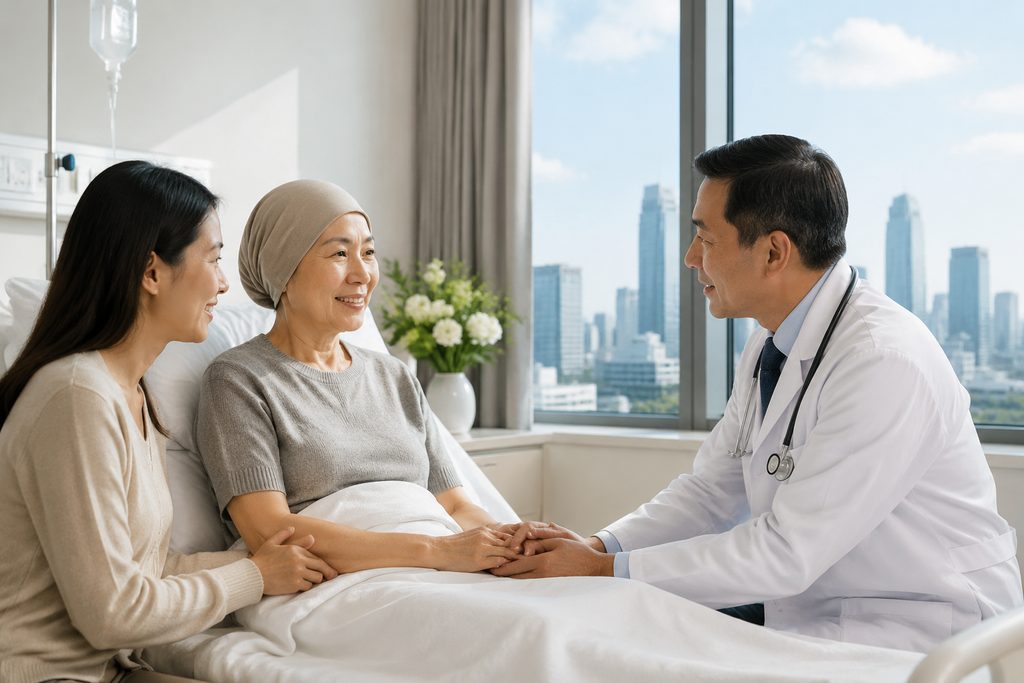
Have you been staring at a diagnosis, wondering if flying halfway around the world for treatment actually makes sense? The search for the best cancer hospital in China for foreigners usually starts with fear and ends with a spreadsheet of confusing names. Here is the short version: China has 340+ top-ranked hospitals across 37 cities, and roughly two dozen of them run dedicated international medical centers built specifically for patients like you. The real question is not whether China has good cancer hospitals. It is which one matches your exact diagnosis, budget, and language needs.
Which Hospital in China Offers Cancer Treatment: The Short Answer
Multiple hospitals in China offer world-class cancer treatment to international patients. The most recognized names include Peking Union Medical College Hospital in Beijing, Fudan University Shanghai Cancer Center, and Sun Yat-sen University Cancer Center in Guangzhou. All three rank among China’s top 10 for oncology in the Fudan specialty reputation rankings. They treat tens of thousands of cancer patients annually. But here is the caveat that changes everything: a hospital’s reputation does not mean its international department will accept your case quickly, communicate in English, or fit your budget. The hospital that is best for a Chinese citizen is often not the best cancer hospital in China for foreigners.
That distinction matters more than most patients realize.
Who This Is Right For — and Who It Isn’t
International patients who benefit most from Chinese cancer care tend to share a few characteristics. You are a good candidate if you need a treatment that is approved and widely used in China but expensive or hard to access at home. That includes certain targeted therapies, proton therapy, CAR-T cell therapy for blood cancers, and complex surgical procedures where Chinese surgeons perform high volumes. You should also be comfortable with a system that runs differently from Western hospitals — more paperwork, faster treatment timelines, and a stronger reliance on in-person evaluation before any major procedure.
Who should not pursue this:
- Patients in active clinical trials at home who would lose their place by leaving
- Anyone whose condition is too unstable for long-haul air travel
- Patients expecting a fully Western-style experience with no language friction whatsoever
- Those whose insurance will not cover out-of-network international care and who cannot self-pay
If you need a second opinion before committing to a treatment path, a remote consultation often makes more sense than flying to China first. We will get to that.
The Options, Compared
Not all cancer hospitals in China are the same. They split into three broad tiers, and each serves a different kind of international patient.
| Hospital Type | Examples | English Support | Cost Level | Best For |
|---|---|---|---|---|
| Public Top-Tier (International Dept) | Peking Union, Zhongshan, West China | Dedicated staff, variable quality | $15,000–$60,000 per treatment course | Complex surgeries, rare cancers, advanced protocols |
| Private International Hospitals | United Family, Jiahui, Parkway | Native-level English, Western-trained doctors | $30,000–$100,000+ | Chemotherapy, diagnostics, comfort-focused care |
| Specialized Cancer Centers | Fudan Shanghai Cancer Center, Sun Yat-sen Cancer Center | International offices, interpreter support | $20,000–$70,000 | Specific cancer types with high case volumes |
Private international hospitals are easier to navigate. Public top-tier hospitals offer more clinical depth. If you are dealing with a rare or aggressive cancer, the public tier usually wins on expertise. If you want a smoother experience with less friction, the private tier makes more sense.
Top Oncology Hospitals in Beijing and Shanghai: What Actually Matters
Patients searching for top oncology hospitals in Beijing usually land on two names: Peking Union Medical College Hospital and Beijing Cancer Hospital. Peking Union is the most famous hospital in China, period. Its oncology department handles complex multi-system cases, and its international medical center has decades of experience with foreign patients. Beijing Cancer Hospital is smaller and more focused, with strong programs in gastrointestinal and thoracic cancers.
Shanghai is a different story. Fudan University Shanghai Cancer Center is arguably the most specialized cancer-only institution in the country. It treats over 500,000 outpatients annually and runs one of China’s largest clinical trial programs. For many international patients, this is the single best answer to the question of which hospital in China offers cancer treatment at the highest volume. Shanghai also offers a more international environment than Beijing, with better English penetration in daily life.
And then there is Guangzhou. Sun Yat-sen University Cancer Center leads in nasopharyngeal carcinoma, a cancer that is rare in the West but common in southern China. That means Chinese oncologists there see more cases in a month than many Western specialists see in a career. Volume translates to pattern recognition.
Is Cancer Treatment Good in China?
The honest answer: it depends on the hospital, the cancer type, and what you are comparing it to. For many solid tumors, Chinese outcomes now match or approach Western benchmarks. Five-year survival rates for breast, cervical, and certain gastrointestinal cancers at top Chinese centers are comparable to those in the US and Europe. China also approves some cancer drugs earlier than the FDA, particularly for hepatocellular carcinoma and nasopharyngeal carcinoma, because those cancers are more common in Asia.
But “good” is not uniform. A top-10 oncology hospital in Shanghai is not the same as a provincial hospital in a smaller city. The gap between China’s best and its average is wider than in most Western systems. That is exactly why patients ask is cancer treatment good in China — and why the answer always comes back to hospital selection. If you choose from the top tier, yes, treatment is good. If you choose poorly, you are gambling.
One more factor: speed. Chinese hospitals move fast. A patient diagnosed in the US might wait six weeks for surgery. In Shanghai, that same surgery often happens within two weeks of the first consultation. For aggressive cancers, that timeline difference matters.
Cancer Treatment Cost in Shanghai and Beyond
Let us talk numbers. The cancer treatment cost in Shanghai varies wildly by treatment type and hospital tier. A full course of standard chemotherapy at a public top-tier hospital typically runs $15,000 to $30,000. At a private international hospital, the same protocol might cost $40,000 to $80,000. Surgery for a complex gastrointestinal tumor at Fudan Shanghai Cancer Center often lands between $20,000 and $50,000, including hospital stay.
So how much is chemotherapy in China? For standard regimens using generic drugs, expect $3,000 to $8,000 per cycle at public hospitals. Newer targeted therapies and immunotherapies push that higher — $8,000 to $15,000 per cycle. CAR-T cell therapy, which is approved in China for certain leukemias and lymphomas, costs $100,000 to $150,000. That is still roughly half the US price of $400,000 to $500,000.
What drives the variance: hospital tier, drug type (generic vs. patented), length of hospital stay, and whether you need an interpreter or international coordinator. None of these prices include flights, accommodation, or visa costs.
Compared to the US, most Chinese cancer treatment costs run one-fifth to one-third of American prices. That gap has narrowed for cutting-edge therapies but remains significant for surgery and standard chemotherapy.
Practical Considerations: Records, Visas, and Language
You cannot just book a flight and walk into a Chinese oncology department. The system requires preparation. Here is what actually matters.
Medical records come first. Chinese hospitals want complete documentation: pathology reports, imaging (DICOM files preferred), treatment history, and a summary letter from your current oncologist. Everything should be translated into Chinese. Some international departments accept English records, but most specialists review cases in Chinese. Translation quality affects the accuracy of the initial assessment.
Visa comes second. For medical treatment in China, you apply for an S2 visa with a note indicating the purpose of treatment. Family members accompanying you also apply for S2 visas. The hospital’s international department issues an invitation letter and treatment confirmation, which you submit with your application. Processing usually takes one to three weeks, depending on your home country’s Chinese embassy.
Payment is almost always upfront. Public hospitals require a deposit before admission, often $10,000 to $30,000 depending on the planned treatment. Private international hospitals may bill insurance directly if they have an agreement with your insurer. Most international patients self-pay and then seek reimbursement from their insurance at home.
Language is the friction point most patients underestimate. Even hospitals with international departments have Chinese-speaking nurses, pharmacists, and technicians. A bilingual medical companion — someone who handles registration, queues, payment counters, and real-time translation during consultations — removes most of that friction. It is not a luxury. It is the difference between understanding your treatment plan and nodding along to a language you do not speak.
Frequently Asked Questions
You cannot book a full treatment package sight unseen. Chinese hospitals require an in-person evaluation before surgery or major treatment. What you can do is book a remote consultation, submit your records, and get a preliminary treatment plan. If the hospital accepts your case, you then travel for the in-person evaluation and treatment. Anyone promising a guaranteed surgery date before a doctor has seen you is not being honest about how Chinese hospitals work.
A written second opinion from a top-tier Chinese oncologist costs $300 to $500. You send your records, the specialist reviews them, and you receive a written analysis with treatment suggestions. A video consultation costs $500 to $800 for a top specialist. Both are legitimate ways to test whether a Chinese hospital is the right fit before spending thousands on travel. Any consultation fee can be credited toward on-the-ground coordination if you later decide to come for treatment within 90 days.
Chinese hospitals manage complications on-site, and top-tier centers have intensive care units comparable to Western standards. But you need to plan for extended stays. If a complication extends your treatment by weeks, your visa may need adjustment, and your accommodation costs rise. Travel insurance that covers medical complications abroad is not optional. Also understand that follow-up care after you return home requires coordination between your Chinese oncologist and your local doctor. That handoff is your responsibility.
For most cancer types, Shanghai has the edge. Fudan University Shanghai Cancer Center is a cancer-only institution with enormous case volume. Beijing’s strength is Peking Union Medical College Hospital, which excels at complex multi-system cases. If your cancer is straightforward, Shanghai is often easier for foreigners. If your case involves multiple organ systems or rare complications, Beijing may be the safer choice. Guangzhou is the clear leader for nasopharyngeal and certain liver cancers.
Your Next Step
Choosing the best cancer hospital in China for foreigners is not a Google search you can answer in one afternoon. It requires matching your specific diagnosis to the right institution, preparing records properly, and navigating a system that does not forgive shortcuts. Our team at China Medical Services does exactly this work: we help international patients identify appropriate hospitals, coordinate remote consultations, and arrange on-the-ground support including bilingual medical companions. We are not a hospital, and we do not diagnose or treat. What we do is make sure you walk into the right building, with the right records, understanding exactly what happens next. If you are ready to explore whether treatment in China makes sense for your case, start with a free consultation. We will tell you honestly whether it is worth pursuing.
Cancer treatment in China is not a secret. It is a system. Learn how it works, choose carefully, and you will find options that do not exist anywhere else at this price.
For more medical information and treatment options in China, visit chinamedservices.com (China Medical Services).
