Hospitals in Xiamen: A Guide for Foreigners Seeking Care
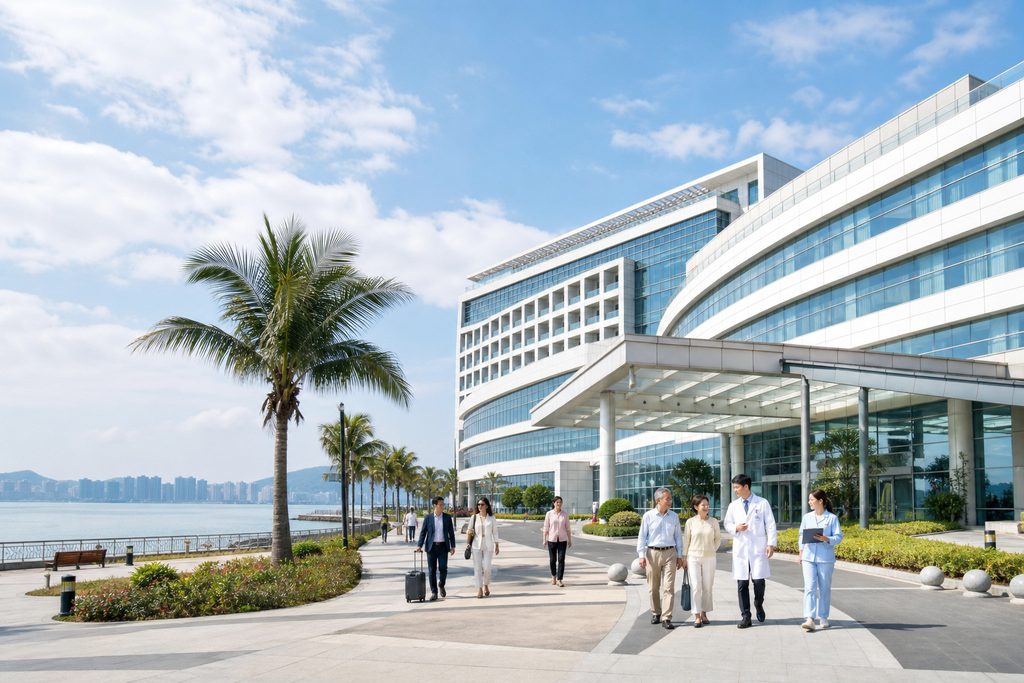
Hospitals in Xiamen: A Guide for Foreigners
What if you could access world-class medical care in a modern coastal city — at a fraction of what you would pay in the United States or Europe? Xiamen, a subtropical port city on China’s southeastern coast, has quietly become a serious destination for international patients. And when people ask us about the best international hospitals in Xiamen, the honest answer is: it depends on what you need. This guide walks you through how the system actually works, what things cost, and where foreigners genuinely fit in.
We are not doctors. Our team connects international patients with China’s top-tier hospitals, and we have coordinated care in 37 cities across the country. What follows is what we tell families every week.
How This Actually Works, Step by Step
Here is the real sequence, from your living room to a hospital bed in Xiamen.
It starts with your existing records. You send us your examination reports, imaging files, lab results, and any prior surgical notes. Those documents get translated into Chinese and routed to the relevant specialty at a shortlisted hospital. A cardiologist reviews cardiac files. An oncologist reviews oncology files. Not a generalist.
Within roughly three to seven working days, a written second opinion comes back. It tells you whether your case is treatable in Xiamen, which department should handle it, and what the likely treatment path looks like. Cost estimates follow, usually as a range.
If you want more interaction, a video consultation lets you speak directly with the Chinese specialty team. You explain your symptoms and goals. They explain their recommendations. Interpreters sit in on the call.
Only after that do you decide whether to travel. This ordering matters. Too many patients book flights before anyone has looked at their scans.
Which Xiamen Hospitals Serve Foreign Patients?
Xiamen is not Beijing or Shanghai. It does not have twenty Fudan-ranked hospitals. What it does have is a compact, high-quality medical ecosystem, and that has real advantages — shorter queues, less crowded international departments, and a city where getting around is genuinely easy.
Two broad categories matter for foreigners.
Public tertiary hospitals with international or VIP departments. These are the large, government-run institutions. They hold the deep specialist expertise, the surgical volume, and the equipment. Their international departments offer English-speaking coordinators and a quieter, faster pathway. You pay more than a local patient walking in off the street — typically about 1.5 to 2 times the standard fee — but you skip much of the chaos.
Private international clinics and hospitals. These are smaller, Western-style facilities with English-speaking staff, JCI accreditation in some cases, and direct insurance billing. They handle primary care, diagnostics, health checkups, and minor procedures beautifully. For complex surgery, they usually refer patients to the public system.
If you want to see how Xiamen fits into the national picture, our directory of Fudan-ranked hospitals by city shows which specialties concentrate where. And our guide to private international hospitals covers the insurance-billing side in detail.
A Realistic Timeline
Patients consistently underestimate two things: how long records take to gather and how long a visa takes to process. Here is a realistic picture.
| Stage | Typical Duration | What Happens |
|---|---|---|
| Record collection and translation | 3–10 days | You gather reports; we translate and format them |
| Written second opinion | 3–7 working days | Chinese specialty reviews and responds |
| Video consultation (optional) | 1–2 weeks to schedule | Direct discussion with the medical team |
| S2 visa application | 1–3 weeks | Embassy or consulate processing, varies by country |
| Appointment coordination | 1–3 weeks | Registration, medical card creation, scheduling |
| Arrival and in-person consultation | Day 1–3 after arrival | Face-to-face exam; surgery can only be scheduled after this |
| Treatment and admission | Varies by case | Subject to hospital rules and bed availability |
Total from first contact to arrival: usually four to eight weeks for a non-emergency case. Emergencies move faster, but the paperwork still has to happen.
What Can Go Wrong — and What Happens Then
Let’s be direct about the failure modes, because trust is built here, not in a sales pitch.
Your case turns out to be untreatable in Xiamen. It happens. Some conditions need a subspecialty that only exists in a handful of Chinese cities. The recourse is straightforward: we redirect you to a hospital in Beijing, Shanghai, or Guangzhou, or we tell you honestly that your best option is elsewhere.
The appointment cannot be secured. Public hospital outpatient registration in China generally cannot be booked from overseas in advance — you queue on the day. Surgery cannot be scheduled until a doctor has examined you in person. This is a national rule, not a Xiamen quirk. Anyone promising you a guaranteed surgical date before an in-person exam is not being straight with you. If we cannot secure the appointment you ordered, our coordination fee is refunded in full.
Your visa is delayed or refused. We provide guidance and supporting documents, but the decision belongs to the consulate. No service can guarantee approval. Build buffer time into your plans.
Costs come in higher than estimated. Estimates are ranges for a reason. Complications, extended stays, and additional diagnostics all move the number. Prepayment is standard at public hospitals; insurance reimbursement usually happens after you return home.
What Does Treatment Cost in Xiamen?
This is the question everyone asks, and the honest answer starts with a comparison.
China’s top public hospitals generally deliver complex procedures at roughly one-fifth to one-tenth of US prices. A coronary artery bypass graft, for example, runs approximately $12,000 to $20,000 at a leading Chinese public hospital, against $120,000 or more in the United States. Xiamen’s public hospitals sit in a similar band, sometimes slightly below the very top-tier Beijing and Shanghai institutions.
| Service | Typical Range (USD) |
|---|---|
| Specialist consultation (international department) | $50–$200 |
| Comprehensive health checkup | $300–$1,500 |
| Coronary bypass surgery | $12,000–$20,000 |
| Knee or hip replacement | $8,000–$15,000 |
| Cataract surgery (per eye) | $1,500–$4,000 |
| MRI scan | $150–$500 |
These figures vary by hospital and case complexity. They are reference points, not quotes. Your actual estimate depends on the specific procedure, the surgeon’s assessment, implant choice, length of stay, and whether any complication arises.
So how much does surgery cost in Xiamen China compared with what you would pay at home? For most major procedures, the savings are substantial enough to fund the trip and still leave a wide margin. For minor procedures, the savings may not justify international travel at all — and we will tell you that.
Is Medical Treatment in China Safe for Foreigners?
This question deserves a serious answer, not a reassuring one.
China’s leading public hospitals perform enormous surgical volumes. Fuwai Hospital in Beijing, for instance, handles more than 14,000 cardiac surgeries a year — the highest volume in the world. High volume correlates with experienced teams and refined protocols. Accreditation matters too: JCI-certified facilities meet internationally recognized safety and hygiene standards.
That said, safety is not uniform across all 35,000-plus hospitals in China. The top 5% — the tier ranked by Fudan University and JCI — is where international patients should focus. Outside that tier, quality varies considerably.
Two practical safety factors for foreigners specifically. First, language. A hospital with tens of thousands of daily outpatient visits is not designed around English speakers, and miscommunication in a clinical setting is a genuine risk. Second, continuity. You need a clear plan for follow-up care once you return home, including your operative notes and imaging in a format your local doctor can read.
Our team addresses both by working only with hospitals that have established international departments and by arranging bilingual accompaniment throughout your visit.
Practical Considerations: Visas, Payment, and Language
Visa category. Foreigners coming to China for medical treatment apply for the S2 visa, which covers short-stay medical treatment and private affairs. Stays exceeding 180 days require the S1 category. Accompanying family members also apply for S2. Requirements shift, so always confirm current rules with the nearest Chinese embassy or consulate. One clarification we repeat often: the M visa is for commercial and trade activities. It is not a medical visa, despite what you may read online.
Payment. Public hospitals require prepayment, with insurance reimbursement handled afterward in your home country. Private international facilities frequently bill insurers directly. Bring a card that works internationally and confirm your hospital’s policy before arrival.
Language. Some Xiamen hospitals have English-speaking doctors in their international departments, but availability varies by specialty and by day. Do not assume your specialist speaks English. Confirm it in advance, or arrange interpretation.
Follow-up at home. Request copies of all imaging, operative reports, and discharge summaries before you leave. Getting them later is slow and sometimes impossible.
For Traditional Chinese Medicine — acupuncture, tuina massage, herbal therapy — Xiamen has reputable options, and our TCM hospital guide explains which conditions it suits and which it does not.
Frequently Asked Questions
For international or VIP departments, yes — coordination is possible with lead time of one to three weeks. For standard public outpatient clinics, generally no. Registration typically happens on the day, in person. Surgery is never scheduled before an in-person examination.
Some do, particularly in international departments and private clinics. Coverage is inconsistent across specialties, so confirm before you commit. If English support is unavailable for your procedure, professional interpretation is the practical solution.
At accredited, high-volume institutions, yes — outcomes at China’s top-tier hospitals are well documented. The variables that affect your safety most are which hospital you choose, whether communication is clear, and whether your follow-up plan is solid.
Major procedures typically run 70 to 90 percent below US prices. A knee replacement might cost $8,000 to $15,000; cardiac surgery $12,000 to $20,000. These are ranges — your actual estimate requires a review of your records and varies by hospital and case complexity.
The S2 visa covers short-stay medical treatment. Stays over 180 days require S1. Family members accompanying you also apply for S2. Always verify current requirements with your nearest Chinese consulate, as documentation rules change.
Your Next Step
Xiamen offers a realistic, affordable pathway to serious medical care — provided you start with records rather than flights, and provided you understand that public hospital access follows rules no service can shortcut. That is the core of it.
Our team at China Medical Services helps international patients navigate Chinese healthcare: written second opinions, video consultations, appointment coordination, bilingual medical accompaniment, and visa guidance. We do not provide medical advice, and we never promise admission or outcomes. What we do is make the process legible.
If you would like an honest read on whether Xiamen is the right fit for your case, start with a free consultation. No pressure, no obligation — just a clear picture of your options.
This article is for general information only and does not constitute medical advice. Always consult a qualified physician regarding your individual condition and treatment.
For more medical information and treatment options in China, visit chinamedservices.com (China Medical Services).
