Hubei Cancer Hospital Oncology for International Patients: A Practical Guide to Treatment Access and Cost
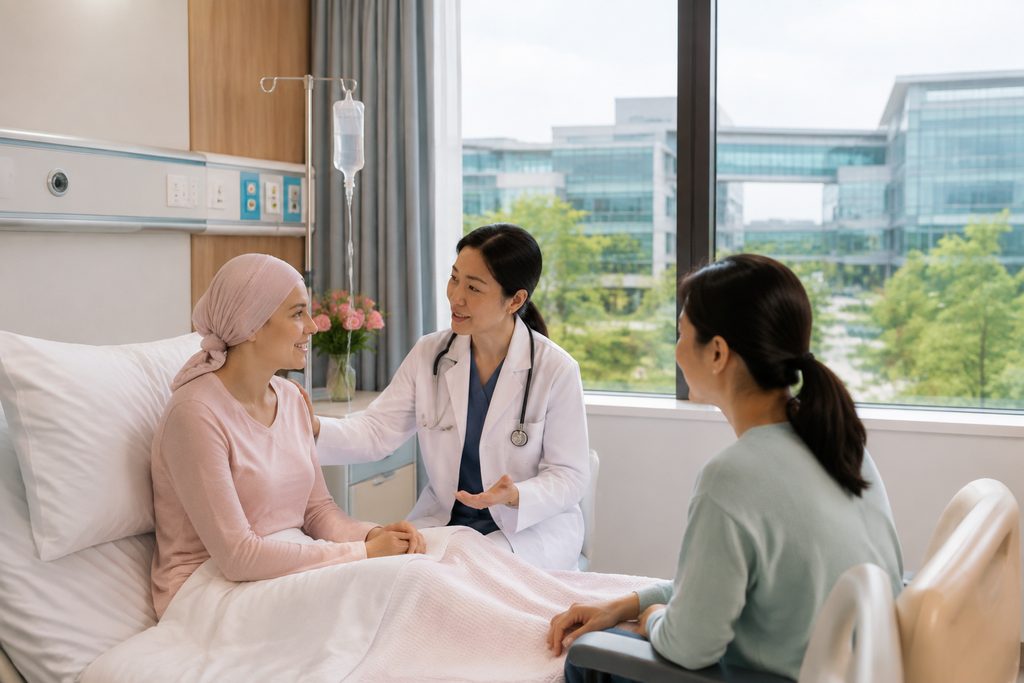
When 54-year-old Daniel from Manchester received his esophageal cancer diagnosis, his first question wasn’t about survival rates. It was about logistics. Could he afford treatment? Would anyone in a Chinese hospital speak English? And how would he even begin to book a bed at a facility 8,000 kilometers from home? Daniel’s concerns are shared by thousands of patients who search for Hubei Cancer Hospital international patient cost each year. The short answer: oncology treatment at this Wuhan-based facility typically runs between 60% and 80% below comparable care in the United States or United Kingdom. But the real story is more nuanced than a price tag.
Hubei Cancer Hospital for International Patients: The Short Answer
Yes, Hubei Cancer Hospital treats international patients. The hospital operates a dedicated international medical services department that coordinates care for non-Chinese citizens. But you cannot simply call the main switchboard and book a surgery. The process requires documentation, medical record translation, and — in most cases — an initial outpatient consultation before any admission is approved. The Hubei Cancer Hospital international patient cost for a full treatment cycle, including surgery, chemotherapy, and a two-week hospital stay, typically ranges from $18,000 to $45,000 depending on cancer type and stage. That compares to $120,000 to $250,000 for equivalent care at major U.S. cancer centers.
The hospital is one of the largest oncology facilities in central China, with over 2,000 beds and a daily outpatient volume exceeding 5,000 visits. It ranks among China’s top 10 cancer hospitals in the Fudan University specialty reputation rankings. That matters. Volume drives expertise. A surgical team performing 800 esophageal resections annually develops a proficiency that a team performing 80 cannot match.
But the hospital is not designed for Western patients by default. Most signage is in Chinese. Most nurses do not speak English. The international department handles translation and coordination, but it is not a five-star concierge service. You are entering a Chinese public hospital — efficient, high-volume, and occasionally chaotic.
Who This Is Right For — and Who It Isn’t
Daniel fell into the ideal patient profile. He had a confirmed diagnosis, a complete set of medical records, and a cancer type — esophageal — where Chinese surgical volume is among the highest in the world. He also had the physical stamina to travel.
A good candidate for treatment at Hubei Cancer Hospital typically fits this profile:
– Has a histologically confirmed cancer diagnosis with complete imaging and pathology reports
– Requires a standard treatment protocol — surgery, chemotherapy, radiation, or combination therapy
– Is medically stable enough for international air travel
– Has a realistic expectation about language barriers and cultural differences in hospital routines
– Has either insurance that covers overseas care or the ability to self-pay
But this path is not for everyone. If you are in the middle of an acute oncological emergency — severe tumor-related bleeding, spinal cord compression, or rapid clinical deterioration — you should not board a long-haul flight to Wuhan. Seek care where you are.
Similarly, if you require an experimental therapy, a Phase I clinical trial, or a highly individualized immunotherapy protocol, a Chinese public hospital may not be your best option. These facilities excel at delivering proven, guideline-based treatment at scale. They are less flexible when it comes to off-label or cutting-edge approaches.
And if the thought of navigating a hospital where almost no frontline staff speak English fills you with dread, consider whether the cost savings justify the stress. A bilingual medical companion can bridge that gap, but the environment remains fundamentally Chinese.
The Options, Compared
When evaluating oncology treatment China price comparison, patients typically weigh three destinations: the United States, Western Europe, and China. The differences are stark.
| Factor | Hubei Cancer Hospital (Wuhan) | Major U.S. Cancer Center | Western European Center |
|---|---|---|---|
| Esophagectomy (surgery) | $12,000 – $22,000 | $80,000 – $150,000 | $45,000 – $90,000 |
| Chemotherapy (6 cycles) | $5,000 – $12,000 | $40,000 – $100,000 | $25,000 – $60,000 |
| Radiation (full course) | $8,000 – $15,000 | $60,000 – $120,000 | $30,000 – $70,000 |
| Hospital stay (per day) | $150 – $400 | $3,000 – $6,000 | $1,500 – $3,500 |
| Wait time for surgery | 2 – 6 weeks after consultation | 4 – 12 weeks | 4 – 10 weeks |
| English-speaking staff | Limited (international dept. only) | Standard | Standard |
The cost column for China is unambiguous. But the language row matters just as much. If you choose Wuhan, you are trading linguistic convenience for financial savings. For a patient facing a $150,000 bill in Boston, that trade often makes sense. For someone with comprehensive insurance that covers U.S. care, it may not.
One more consideration: the best cancer hospital in China for international patients may not be in Wuhan. Beijing and Shanghai host facilities with more established international departments — Peking Union Medical College Hospital and Fudan University Shanghai Cancer Center come to mind. But those cities also carry higher costs for accommodation and logistics. Wuhan offers a middle path: top-tier oncology care at a lower overall price point.
What Makes Hubei Cancer Hospital Different from Other Chinese Oncology Centers
Here is what a reader of this exact title still needs to know: Hubei Cancer Hospital is not the most famous cancer hospital in China. It is not Peking Union. It is not Fudan Shanghai. But it occupies a specific niche that matters for international patients weighing value against reputation.
The hospital’s strength lies in its position as the leading oncology center for central China’s massive patient population. Hubei province has a population of over 58 million people. The hospital serves as the tertiary referral center for a catchment area that stretches across several provinces. That translates into clinical volume that most Western cancer centers cannot approach.
Consider radiotherapy. Hubei Cancer Hospital operates one of the largest radiation oncology departments in central China, with multiple linear accelerators running extended daily schedules. For a patient requiring concurrent chemoradiation for head and neck cancer, that capacity means shorter scheduling delays.
The hospital also maintains strong programs in gastrointestinal oncology, thoracic oncology, and gynecologic oncology — cancer types where Chinese treatment protocols closely align with NCCN guidelines. If your diagnosis falls into one of these categories, the treatment you receive in Wuhan will be broadly similar to what you would get in Houston or Heidelberg. The delivery environment, however, will feel different.
Ward rounds happen in the morning, often with multiple patients sharing a room. Family members are expected to handle meals and some basic care tasks. Nurses focus on medical duties, not hospitality. None of this is substandard care. It is simply a different model.
How to Book Cancer Treatment at Hubei Cancer Hospital
Knowing how to book cancer treatment at Hubei Cancer Hospital will save you weeks of frustration. The process is not intuitive for foreigners.
First, you need to assemble your medical records. Every page. Pathology reports, imaging studies (actual DICOM files, not just written summaries), surgical notes, chemotherapy records — all of it. These documents must be translated into Chinese by a certified medical translator. The hospital will not accept untranslated records for clinical review.
Second, you submit these records to the hospital’s international medical services department. This can be done directly, but the department receives a high volume of inquiries and response times vary. Many international patients work through a coordination service that has established contacts at the hospital.
Third, the hospital’s oncology team reviews your case. This typically takes 5 to 10 business days. If they determine you are a suitable candidate, they will schedule an initial outpatient consultation. You must attend this consultation in person. Chinese public hospitals do not admit patients for surgery without a prior face-to-face assessment.
Fourth, after the consultation, if treatment is recommended, the hospital schedules your admission. Wait times vary by department and bed availability. Expect 2 to 6 weeks between consultation and surgery for non-emergency cases.
The visa piece is straightforward but often misunderstood. You need an S2 visa, which covers short-term private affairs including medical treatment. Your family members accompanying you also apply for S2 visas. The hospital provides an official invitation letter and treatment confirmation document to support your application. Do not apply for an M visa — that category is for commercial and trade activities, not medical care.
What It Costs: A Realistic Breakdown
The Hubei Cancer Hospital international patient cost is not a single number. It is a range shaped by cancer type, stage, treatment protocol, and length of stay. Here is a realistic breakdown for a typical surgical oncology case — say, a gastric cancer patient undergoing gastrectomy plus adjuvant chemotherapy.
Hospital charges for the surgery itself, including operating room fees, anesthesia, and surgical supplies, typically fall between $10,000 and $18,000. The post-operative hospital stay of 10 to 14 days adds another $1,500 to $5,600. Chemotherapy, if administered on an outpatient basis after discharge, runs $800 to $2,000 per cycle depending on the drugs used. Six cycles would total $4,800 to $12,000.
These are hospital charges only. They do not include your flight, accommodation in Wuhan for you and any family members, meals, local transportation, or interpretation services. A two-month stay in Wuhan for treatment and initial recovery — including a modest serviced apartment near the hospital — adds roughly $3,000 to $6,000 in living costs.
If you use a bilingual medical companion service, budget from $300 per day for on-the-ground support. This is not a luxury add-on. In a hospital where English is scarce, a companion who knows the system — where to queue, which window handles payments, how to read a lab slip — can be the difference between a manageable experience and a bewildering one.
Payment is upfront. Chinese public hospitals operate on a prepayment model. You deposit funds at admission, and charges are deducted as services are delivered. If the balance runs low, you top up. Most hospitals accept international credit cards at their international department payment windows, but confirm this before you travel.
Practical Considerations: Documentation, Language, and Follow-Up
The logistics of cancer treatment abroad extend well beyond the hospital walls.
Your medical records are the foundation. Request complete copies of everything from your home oncologist — not summaries, but full reports. Imaging files should be exported in DICOM format onto a CD or USB drive. Chinese radiologists will want to review the actual images, not just the written interpretation.
Language is the most persistent challenge. The hospital’s international department staff speak English, but they are administrators, not bedside clinicians. Your attending physician may have limited English proficiency. Critical discussions about treatment plans, risks, and alternatives should happen through a professional medical interpreter — not a family member who speaks conversational Chinese. Misunderstanding a chemotherapy regimen or a post-operative instruction carries real consequences.
After you return home, follow-up becomes a coordination exercise. The hospital will provide a discharge summary and treatment records in Chinese. You will need these translated back into English for your home oncologist. Imaging follow-ups can be done locally and sent to Wuhan for review, but expect some friction. The hospital’s systems are not designed for seamless international continuity of care.
Insurance is another honest conversation. Most U.S. and European insurers do not have direct billing arrangements with Chinese public hospitals. You pay out of pocket and then seek reimbursement. Before committing to treatment in Wuhan, contact your insurer and confirm — in writing — that overseas cancer treatment at a non-network facility is covered. If it is not, the cost savings you are chasing may evaporate.
Frequently Asked Questions
Is Hubei Cancer Hospital good for foreigners?
The honest answer: it depends on what you mean by “good.” The clinical quality is high — this is a top-10 Chinese cancer hospital with experienced surgeons and modern equipment. But the patient experience is not tailored to foreigners. English is limited outside the international department. Wards are shared. The pace is fast and the environment is utilitarian. If you measure “good” by clinical outcomes and cost, the hospital performs well. If you measure it by comfort and linguistic ease, you may find it challenging without a companion.
How much does a Hubei Cancer Hospital medical tourism package cost?
There is no official “medical tourism package” at Hubei Cancer Hospital. The hospital does not sell bundled treatment-plus-hotel deals. What exists is a fee-for-service model: you pay for each consultation, each procedure, each day of hospitalization. Third-party coordination services — including our team — can assemble a package that includes record translation, appointment coordination, bilingual companionship, and accommodation booking. But the hospital portion of the bill is always paid directly to the hospital at its published rates. Anyone offering a flat “package price” for cancer treatment is not being transparent about how hospital billing actually works.
What if something goes wrong during treatment in China?
This is the question most patients are afraid to ask. The truth: complications happen in every hospital in every country. Chinese public hospitals manage post-operative complications, infections, and adverse reactions with the same clinical competence as Western facilities. What differs is the communication. If a complication arises, you will need an interpreter to understand what is happening and what the treatment team recommends. You also need to understand that Chinese hospitals have specific protocols for managing disputes and adverse outcomes — protocols that may differ from what you expect at home. Having a local advocate who understands the system is not a luxury in these situations. It is essential.
Can I get a second opinion from Hubei Cancer Hospital before traveling?
Yes. The hospital’s international department accepts written second opinion requests. You submit your translated records, and a specialist reviews them and provides a written assessment. This typically costs $300 to $500 and takes 10 to 14 days. A video consultation with the specialist costs $500 to $800. This is the smartest first step for most international patients. It lets you confirm that the hospital can actually treat your condition before you spend thousands on travel.
Your Next Step
Choosing to pursue cancer treatment in Wuhan is not a decision to make quickly or alone. The cost advantage is real. The clinical quality is legitimate. But the logistical complexity is also real, and it falls on you to manage — unless you have help.
Our team at China Medical Services works with international patients navigating oncology care at Hubei Cancer Hospital and other top-ranked Chinese facilities. We are not a hospital. We do not diagnose, treat, or make medical recommendations. What we do is handle the coordination: record translation, appointment scheduling, bilingual companionship, visa documentation support, and accommodation logistics. If you are considering treatment in China, a good first step is a written second opinion from a Chinese oncology specialist. It costs less than a flight to Wuhan and tells you whether this path is worth pursuing.
Request a free consultation to discuss your situation and see if treatment at Hubei Cancer Hospital is a realistic option for you.
The core message is simple: Hubei Cancer Hospital offers high-volume, guideline-based oncology care at a fraction of Western prices. But it is a Chinese public hospital, not a Western-style facility. Go in with clear eyes, complete records, and the right support.
For more medical information and treatment options in China, visit chinamedservices.com (China Medical Services).
