Inflammation Markers in China: What to Test and What It Costs
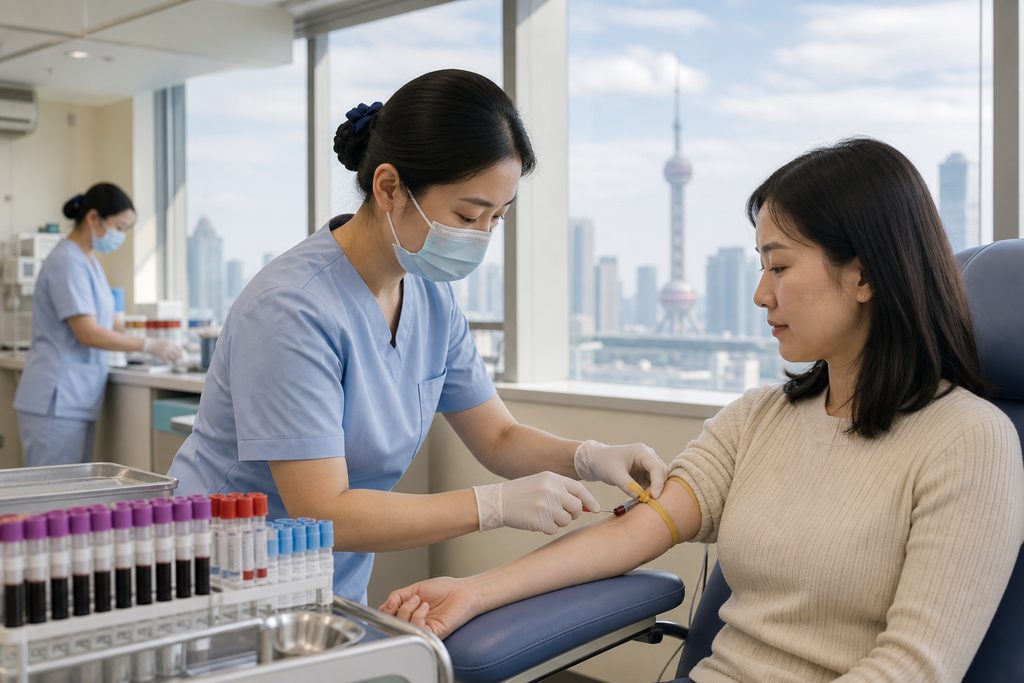
Inflammation Markers in China: What to Test and What It Costs
What if the fatigue, joint pain, or stubborn fever you have been carrying for months could be explained by a single blood draw — and you could get that draw done in China for a fraction of what your home lab charges? For international patients, the inflammation markers test cost in China is often the first practical question, and the answer is genuinely encouraging. But knowing which markers to test matters more than knowing where to get them cheaply.
This guide walks you through the markers worth measuring, the hospitals that measure them well, and the realistic price ranges you should expect in 2026.
How This Actually Works, Step by Step
Here is the real sequence, from your first email to the moment you hold results in your hand.
Step one — you send what you already have. Old lab reports, imaging, discharge summaries, medication lists. Anything in English or a major language gets translated by the coordinating team. This is not a consultation yet; it is a triage of your file.
Step two — a Chinese specialty reviews the file. Depending on your symptoms, that might be rheumatology, hematology, gastroenterology, or internal medicine. A written second opinion typically comes back in three to five business days, listing which markers are worth repeating, which are redundant, and which need a different assay entirely.
Step three — you decide between remote and in-person. A video consultation lets you hear the reasoning directly. If the panel is simple, some patients simply book the lab work through a hospital’s international department and travel for a single morning.
Step four — the draw happens. Most large hospitals run their own immunology and clinical chemistry labs. Results for standard markers return the same day or the next morning.
Step five — interpretation. Numbers without context are noise. A rheumatologist who knows your history reads the trend, not the single value.
Which Inflammation Markers Are Actually Worth Testing
Ask ten doctors “what inflammation markers should I test” and you will get ten overlapping lists. That is because inflammation is not one thing. It is a family of processes, and different markers describe different parts of it.
| Marker | What It Reflects | Typical Use |
|---|---|---|
| CRP (C-reactive protein) | Acute-phase response, rises fast | Infection, flare-ups, post-surgical monitoring |
| hs-CRP | Low-grade vascular inflammation | Cardiovascular risk stratification |
| ESR | Slower-moving systemic inflammation | Rheumatoid arthritis, polymyalgia, lupus |
| Ferritin | Iron storage, also an acute-phase protein | Iron status plus hidden inflammation |
| Procalcitonin | Bacterial infection specifically | Sepsis, antibiotic decisions |
| IL-6, TNF-alpha | Cytokine activity | Autoimmune workup, research contexts |
| Fecal calprotectin | Gut-specific inflammation | IBD assessment and monitoring |
For most patients arriving with unexplained symptoms, the sensible starting panel is CRP, ESR, a complete blood count with differential, ferritin, and — if gut symptoms are involved — fecal calprotectin. Cytokine panels like IL-6 and TNF-alpha are usually ordered after a rheumatology assessment, not before. Ordering them blind wastes money and produces confusing results.
Is CRP Testing Reliable in China Hospitals?
This question comes up constantly, and the honest answer is: at major hospitals, yes — often more reliable than at small clinics abroad.
China’s top-tier public hospitals run accredited clinical laboratories, many of them participating in external quality assessment programs. The instruments are the same Siemens, Roche, and Abbott platforms used in Europe and North America. Assays are standardized against international reference materials, which means a CRP result from a Beijing tertiary hospital is directly comparable to one from a German lab.
Where reliability does wobble is at the margins. Small private clinics in tourist areas may use point-of-care devices with wider variance. And a result is only as good as the interpretation attached to it — a normal CRP does not rule out lupus or inflammatory bowel disease.
If you want the highest confidence, look for hospitals listed on the Fudan-ranked top hospitals directory, where laboratory medicine is a formal specialty with published quality controls. For patients specifically asking about the best hospital Beijing for cytokine testing, the answer generally points toward large comprehensive hospitals with dedicated rheumatology and immunology departments rather than specialty clinics.
A Realistic Timeline
Nothing here happens overnight, and pretending otherwise sets you up for frustration. Here is a realistic schedule.
| Stage | What Happens | Realistic Duration |
|---|---|---|
| Records collection | Gathering reports, translating documents | 3–10 days |
| Written second opinion | Specialty review of your file | 3–7 business days |
| Video consultation | Scheduling and the call itself | 1–2 weeks from first contact |
| Appointment coordination | Registration, hospital card, slot confirmation | 3–14 days depending on department |
| Visa processing (S2) | Application with hospital supporting documents | 1–3 weeks, varies by consulate |
| Travel and testing | Arrival, blood draw, same-day or next-day results | 2–4 days on the ground |
| Follow-up interpretation | Review with the treating physician | Same trip, or remote |
The step people forget is document translation. If your reports are in a language the hospital cannot read, add a week. Also note that public hospital outpatient registration generally cannot be booked from overseas in advance — you queue on the day, or you go through the international department, which costs roughly 1.5 to 2 times the standard fee but offers English service and pre-arranged slots.
What Can Go Wrong — and What Happens Then
Let’s be direct about the failure modes, because a service that only tells you the good parts is not worth your trust.
Your panel comes back normal. This happens more often than patients expect, and it is not a wasted trip. A normal inflammatory panel is itself diagnostic information — it shifts the differential away from systemic inflammation and toward other explanations. The next step is usually functional testing, imaging, or a different specialty.
The appointment cannot be secured. Popular departments at top hospitals fill quickly. If a requested slot is not available, coordination fees are refunded in full. No one should charge you for an appointment that never materialized.
Your visa is delayed. S2 applications require supporting documents from the hospital, and processing times vary by consulate and season. Build a two-week buffer. Never book non-refundable flights before the visa is in hand.
Results are ambiguous. A mildly elevated ESR with normal CRP could mean a dozen things. This is where a follow-up video consultation earns its keep — you get a specialist’s reasoning rather than a search engine’s worst-case scenario.
You need treatment, not just testing. Any admission or procedure requires an in-person consultation first. No hospital in China schedules surgery off a lab report alone, and any provider implying otherwise should be treated with suspicion.
What the Numbers Cost: Inflammation Blood Test Price Abroad vs. China
Price transparency matters, so here are realistic ranges. In the United States, a CRP test billed without insurance commonly runs $30 to $80, an ESR $20 to $50, and a cytokine panel several hundred dollars. In China, at a tertiary public hospital, a basic inflammatory panel — CRP, ESR, CBC with differential — typically lands between $25 and $60 total. Fecal calprotectin runs roughly $30 to $70. Cytokine panels are more variable, generally $80 to $250 depending on the specific cytokines measured.
These are cash prices for self-paying patients, and they vary by hospital tier and city. The inflammation blood test price abroad is rarely the whole story either — what patients actually pay often includes facility fees, phlebotomy charges, and interpretation.
For the broader picture of what coordinated care costs, including companion services at from $300 per day and written second opinions at $300–500, our team publishes full ranges on the China Medical Services homepage. Any consultation fee is credited in full toward on-the-ground coordination if you proceed within 90 days.
How to Choose Where to Test
Three criteria matter more than brand names.
Laboratory accreditation. Ask whether the hospital’s clinical laboratory participates in external quality assessment. Most top-tier public hospitals do; many small clinics do not.
Departmental depth. If your markers point toward autoimmune disease, you want a hospital with a real rheumatology department, not a general internist ordering a panel and handing you a printout. The specialty rankings by department are a reasonable starting filter.
Language and logistics. A hospital with superb labs but no English-speaking staff creates a different kind of risk — miscommunication about fasting, medication timing, or follow-up. Private international hospitals solve this but cost more and may send complex panels to outside reference labs, adding days.
For patients searching to book an inflammation panel test in Shanghai, the practical split is between large public tertiary hospitals in the Xuhui and Huangpu districts and international hospitals with direct insurance billing. Both work. They serve different priorities.
Practical Considerations: Records, Visa, Payment, Follow-Up
Records. Bring digital and printed copies. Chinese hospitals frequently want paper. Include imaging discs, not just reports.
Visa. Medical travel to China uses the S2 visa, which covers short-stay private affairs including medical treatment, subject to current embassy and consulate requirements and hospital supporting documents. Accompanying family members apply under the same category. The M visa is for commercial and trade activity and is not a medical visa. S1 applies for stays exceeding 180 days. Approval is never guaranteed, and requirements change — verify with your nearest Chinese consulate before applying.
Payment. Public hospitals require prepayment; insurance reimbursement happens afterward, in your home country. Private international hospitals often bill insurers directly.
Language. Top Chinese hospitals see tens of thousands of outpatients daily. Navigating registration, payment, and lab collection without Mandarin is genuinely difficult. A bilingual medical companion handles queueing, payment, wayfinding, and translation — from $300 per day, half or full day.
Follow-up at home. Ask for results in a format your home physician can read, with reference ranges and units clearly stated. This avoids the classic problem of comparing mg/L to mg/dL across systems.
Frequently Asked Questions
Partially. You can send existing reports for a written second opinion, and a specialist can tell you which markers to test and why. But the blood draw itself requires you — or a designated proxy — to be physically present at the hospital. Remote review and in-person testing are two separate steps.
Standard markers like CRP, ESR, and CBC typically return the same day or the next morning. Cytokine panels may take two to five days. English-language reports are available at international departments and can usually be arranged at public hospitals with advance notice.
That is a real possibility, and it is not a failure. Normal inflammatory markers narrow the diagnostic path rather than closing it. Your physician will typically move toward imaging, functional testing, or a different specialty evaluation. Some conditions — certain autoimmune diseases, for instance — can present with entirely normal CRP and ESR.
Verify the hospital independently. China’s top-tier public hospitals are large, well-known institutions with public accreditation records. Be cautious of any provider promising guaranteed diagnoses, guaranteed specialist access, or prices far below the ranges above. Legitimate coordination services charge for logistics and interpretation, never for clinical outcomes.
Your Next Step
Inflammation testing in China is affordable, technically solid, and faster than most patients expect — the real challenge is knowing which markers matter for your specific symptoms and getting the logistics right. Our team connects international patients with accredited Chinese hospitals, arranges written second opinions and video consultations, and provides bilingual support on the ground. We are not physicians and we do not diagnose or promise clinical outcomes. If you want to know which panel makes sense for your case, start with a free consultation and send us what you already have.
This article is for general information only and is not medical advice. Always consult a qualified physician about your individual situation before making testing or treatment decisions.
For more medical information and treatment options in China, visit chinamedservices.com (China Medical Services).
