Surgery Patients: Inpatient Companion Care Cost China Explained
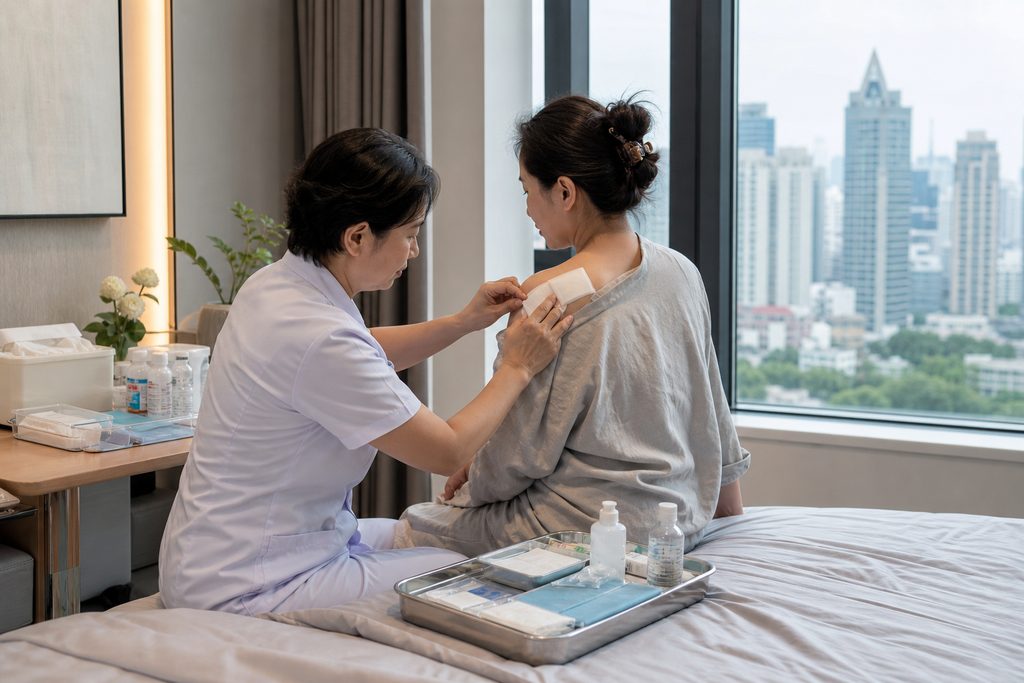
Inpatient Companion Care Cost China: The Short Answer
You have probably heard that having surgery abroad means being completely alone in a foreign hospital room. That is not true in China. Inpatient companion care is available in major Chinese hospitals, and the cost typically ranges from $300 to $800 per day depending on the city, the hospital tier, and whether you need a bilingual medical companion or a clinical private nurse. A 24-hour hospital sitter in Beijing or Shanghai falls within this range.
But here is the complication. There is a difference between a hospital-employed nursing assistant and an independent bilingual companion. One handles clinical care. The other handles language, logistics, and advocacy. Most international surgery patients need both, and that changes the math.
Who This Is Right For — and Who It Isn’t
Companion care is not for every patient. It solves specific problems. Knowing whether you actually need it prevents wasted money.
You are typically a good candidate if:
- You are traveling alone for surgery and will not have family at your bedside
- You do not speak Mandarin and anticipate needing help communicating with nurses and doctors
- Your procedure requires several days of inpatient recovery where you will be immobile or disoriented
- You want a dedicated advocate to track medications, coordinate meal delivery, and update your family back home
- You are coming for a major procedure like cardiac surgery, orthopedic replacement, or complex oncology surgery
You probably do not need this service if:
- Your spouse or adult child is traveling with you and can stay in the room
- You are having a minor outpatient procedure with same-day discharge
- You are staying at a private international hospital like United Family or Jiahui, where English-speaking nursing staff are standard and family lodging is built into the room
- Your hospital has a dedicated international ward with round-the-clock English coordination
Being honest about this saves you $1,500 to $4,000 over a five-day stay. That is not a small amount.
The Options, Compared
Hospitals in China do not all handle companion care the same way. Public teaching hospitals, private international hospitals, and independent service providers each offer different models. Here is how they stack up.
| Option | Daily Cost (USD) | Language Support | Clinical Tasks | Best For |
|---|---|---|---|---|
| Hospital nursing assistant (public hospital) | $30–$80 | Mandarin only | Basic hygiene, repositioning, meal assistance | Budget-conscious patients with a bilingual family member present |
| Private international hospital inpatient nurse | Included in room rate or $150–$300 add-on | English standard | Full nursing care, medication administration | Patients at United Family, Jiahui, Parkway, or Raffles |
| Independent bilingual medical companion | $300–$500 | English and Mandarin | Translation, advocacy, logistics, family updates — no clinical tasks | Surgery patients at top public hospitals who need language support |
| 24-hour hospital sitter (private hire) | $250–$450 | Varies; often Mandarin only | Overnight monitoring, repositioning, alerting nurses | Patients who need overnight supervision but not translation |
| Combined package: bilingual companion + night sitter | $500–$800 | English and Mandarin | Daytime advocacy plus overnight monitoring | Major surgery patients traveling alone |
Most international patients at public hospitals end up in the last row. They need someone who speaks English during the day to communicate with surgeons and nurses, and someone to watch them overnight when complications are most likely to surface. The cost stacks quickly, but so does the peace of mind.
How to Arrange Companion Care After Surgery in China
You cannot simply walk into a Chinese public hospital and ask for an English-speaking sitter at the front desk. That request will not go anywhere. Arranging companion care requires coordination before you arrive.
The process works in stages. First, you confirm your surgery date and hospital admission with the hospital’s international department. Second, you identify who will provide companion care — the hospital itself, a private agency, or a coordination service. Third, you agree on the scope: daytime only, overnight only, or round-the-clock. Fourth, you confirm the daily rate and payment method in writing before admission.
One critical detail: public hospitals in China generally do not allow outside companions to perform clinical tasks like administering medication or changing IV lines. Those duties belong to licensed hospital nurses. Your companion is there for translation, advocacy, mobility assistance, and communication — not clinical care. Anyone who tells you otherwise is misrepresenting the service.
For patients at private international hospitals, the equation is simpler. These facilities employ English-speaking nurses directly, and companion care is often built into the inpatient package. You may not need an outside person at all. Our guide to private international hospitals in China explains which ones offer this as standard.
Private Nurse for Surgery Patient Shanghai: What Changes by City
Shanghai is the most expensive city in China for companion care, followed closely by Beijing. A private nurse for a surgery patient in Shanghai typically costs $350 to $600 per day through an agency, while the same service in Chengdu or Hangzhou might run $250 to $400. The gap comes down to labor costs and demand density.
Shanghai has more international patients than any other Chinese city except Beijing. That means more agencies compete for your business, but it also means higher baseline prices. The city’s top hospitals — Zhongshan, Ruijin, Huashan — all have active international departments, and companion services cluster around them. You can find bilingual companions with genuine medical terminology training in Shanghai more easily than in second-tier cities.
Beijing is similar. A 24 hour hospital sitter price Beijing ranges from $300 to $550 per day depending on whether you need English capability. Mandarin-only sitters cost less. English-speaking sitters cost more. The premium is real, but so is the difference in experience when you are recovering from surgery and cannot explain your pain level to a nurse.
If your surgery is at a top-ranked hospital in China, plan for companion care costs at the higher end of these ranges. These hospitals are busy. International patients without language support get lost in the volume.
What It Costs: A Realistic Breakdown
Let us put numbers on a typical five-day inpatient stay with surgery at a top public hospital in Shanghai or Beijing.
Daytime bilingual companion (8 hours): $300–$500 per day. Five days = $1,500–$2,500.
Overnight sitter (12 hours): $250–$450 per day. Five nights = $1,250–$2,250.
Combined 24-hour coverage: $500–$800 per day. Five days = $2,500–$4,000.
That is on top of your surgery cost, hospital room, and surgeon fees. It is not cheap. But compare it to the alternative: a medical complication that goes unnoticed because you could not communicate, or a family member flying in last-minute on a $2,000 emergency ticket. The companion care cost China patients pay is often less than the cost of a single preventable problem.
What is included in these rates? Translation during doctor rounds, medication schedule tracking, meal ordering, bathroom assistance, repositioning help, family updates via phone or video, and general advocacy. What is not included? Clinical nursing tasks, tips, transportation, and any hospital fees. Always confirm the scope in writing.
Is Inpatient Companion Care Available in China Hospitals? The Honest Answer
Yes, but not in the way many Western patients expect. You will not find a hospital-employed “patient advocate” or “care coordinator” assigned to you automatically at a public Chinese hospital. That role does not exist in the same form as in the US or UK.
What you will find is this: public hospitals employ nursing assistants who handle basic patient hygiene and repositioning for a small daily fee. These assistants are often shared among multiple patients on a ward. They speak Mandarin. They are not there to translate for you or communicate with your family. For international patients, this is rarely sufficient.
The real companion care for foreign patients comes from independent bilingual providers — either agencies that specialize in medical accompaniment or coordination services that include companion care as part of a broader package. These providers work alongside hospital staff, not in place of them. They are allowed in the room during visiting hours and, in many cases, overnight if the hospital permits a family member or sitter to stay.
This is where the value of pre-arranged coordination becomes obvious. A patient who lands in Shanghai without a plan will spend their first post-operative day trying to figure out how to ask for water. A patient who booked companion care in advance has someone at the bedside from the moment they wake up.
Practical Considerations: Documentation, Payment, and Follow-Up
Bringing a companion into a Chinese hospital room is not complicated, but it does require paperwork. The hospital will typically ask the companion to register as a family member or designated caregiver. This means providing identification and signing a visitor agreement. Your coordination service can handle this before you arrive.
Payment for companion care is almost always out-of-pocket. Chinese public hospitals do not bill insurance for independent companion services, and most international insurance plans do not cover non-clinical accompaniment. You will pay the companion provider directly, usually by bank transfer, Alipay, WeChat Pay, or credit card through a coordination service. Cash is accepted but inconvenient for amounts over a few hundred dollars.
Language is the single biggest practical issue. If your companion does not speak fluent medical English and Mandarin, the service is nearly worthless. Ask for proof of language capability and medical terminology training before you commit. A companion who can order food but cannot explain “I am experiencing shortness of breath” to a nurse is not a companion — they are a bystander.
After discharge, your companion can help with one more thing: collecting your discharge summary, medication list, and imaging reports in English. Many hospitals provide English translations of discharge documents, but the process is slow. Having someone on the ground to chase paperwork while you rest is worth the daily rate on its own.
Frequently Asked Questions
Yes, and you should. Waiting until after surgery to arrange companion care means spending your first post-operative hours alone in a foreign hospital. Booking a post surgery companion care package China in advance lets the provider confirm hospital access, complete registration paperwork, and be at your bedside when you wake up. Most reputable providers require at least 3–5 business days of lead time.
It depends on the hospital and the ward. Many Chinese public hospitals permit one family member or designated caregiver to stay overnight, often on a fold-out cot provided by the hospital for a small fee. Private international hospitals almost always accommodate overnight companions, sometimes in a separate family room. Confirm the overnight policy with your specific hospital before booking a 24-hour sitter.
This is a legitimate risk. Some companions overstate their English ability. To mitigate it, request a video call with the companion before you commit. Ask them to explain a medical scenario in English — describe post-operative pain, ask about medication side effects, explain a symptom. If they struggle, request a different companion. Reputable providers will accommodate this.
No. A private nurse is a licensed clinical professional who can administer medications, change dressings, and monitor vital signs. A companion provides non-clinical support: translation, advocacy, mobility assistance, and communication. In China, independent companions are not permitted to perform clinical tasks in public hospitals. If you need clinical nursing care beyond what the hospital provides, ask about hiring a private nurse through the hospital’s international department — this is a separate service with a separate cost.
Usually not. Private international hospitals in China — United Family, Jiahui, Parkway, Raffles — employ English-speaking nursing staff as standard. Their inpatient packages typically include round-the-clock nursing care, and many rooms have space for a family member to stay. You would only need an outside companion at these facilities if you want a dedicated personal advocate separate from the clinical team, which is uncommon.
Your Next Step
Inpatient companion care in China is available, affordable by Western standards, and genuinely valuable for international surgery patients traveling alone. The key is arranging it before you arrive. Trying to figure it out from a hospital bed in Shanghai is a recipe for frustration.
Our team at China Medical Services coordinates companion care as part of our broader patient support work. We are not a hospital, we do not provide medical care, and we do not make diagnoses. What we do is connect you with vetted bilingual companions, confirm hospital access, and make sure someone is at your bedside when you need them. If you are planning surgery in China and want to understand your companion care options, request a free consultation and we will walk you through the process.
Recovering from surgery in a foreign country does not have to mean being alone. Plan ahead, book the right support, and focus on healing.
For more medical information and treatment options in China, visit chinamedservices.com (China Medical Services).
