Do You Need an Inpatient Companion? What It Really Costs in China
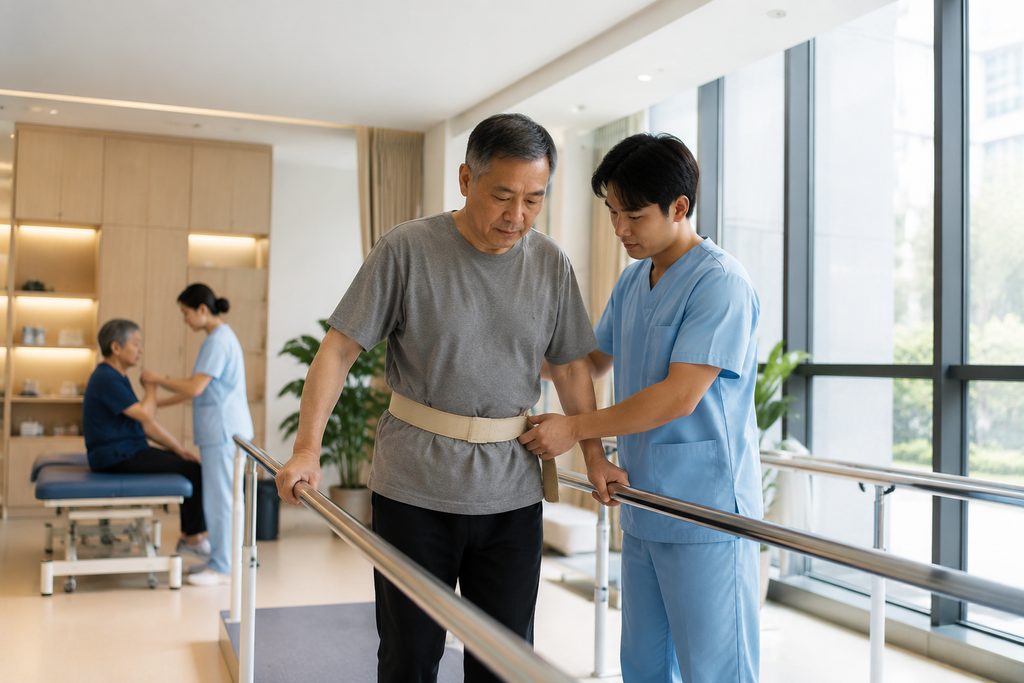
In the United States, the average hospital charges $2,883 per day for an inpatient stay. In China’s top-tier public hospitals, a private bilingual inpatient companion costs from $300 per day. That gap explains why thousands of international patients now fly to Shanghai, Beijing, and Guangzhou for surgeries they cannot afford at home. But the inpatient companion service cost China hospitals quote is only one piece of a larger question: do you actually need one, and what does that person really do for you?
The short answer is that most foreign patients benefit significantly from a companion during any multi-day hospital stay. China’s leading hospitals are extraordinarily capable — Fuwai Hospital in Beijing performs over 14,000 cardiac surgeries annually, more than any heart center on earth. Yet the operational reality inside these institutions remains firmly Chinese-language-first. A companion bridges that gap.
What Does an Inpatient Companion Do in a Chinese Hospital?
An inpatient companion is not a nurse. That distinction matters. Nurses in Chinese public hospitals handle clinical tasks — medication, wound care, vital signs, physician coordination. A companion handles everything else that keeps a hospital stay functional and less frightening when you do not speak Mandarin.
Concretely, the role includes:
- Translating conversations with ward nurses, attending physicians, and specialists during morning rounds
- Navigating the hospital’s physical layout — a single campus can span dozens of buildings
- Managing the payment counter, pharmacy queue, and lab test registration
- Communicating dietary restrictions, pain levels, and post-operative concerns to staff
- Coordinating with family members back home through WeChat, WhatsApp, or phone calls
- Handling discharge paperwork, medication instructions, and follow-up appointment scheduling
In a Chinese public hospital, family members traditionally perform this role. Walk through any ward in Ruijin Hospital or West China Hospital and you will see relatives sleeping on fold-out cots beside patients. The system assumes someone is there. For a foreign patient traveling alone or with a spouse who also speaks no Chinese, that assumption collapses.
Is It Safe to Hire an Inpatient Companion in China?
Safety here has two dimensions: personal safety and clinical safety. On the personal side, China’s major cities report violent crime rates far below most Western metros. Beijing’s homicide rate sits around 0.7 per 100,000 residents, compared to 6.4 in Washington, D.C. The physical risk of hiring a local companion is low.
The clinical safety question is more nuanced. An untrained companion who oversteps — who tries to interpret lab results, adjust medications, or contradict a physician — can cause real harm. Reputable companion services draw from candidates with medical interpreting backgrounds, nursing assistant experience, or formal hospital customer-service training. They know where their role ends.
Vet any companion or agency the same way you would at home. Ask about training. Ask about hospital-specific experience. Ask what they will not do. A professional answer includes clear boundaries.
Red flag: Any companion who claims they can secure you a specific surgeon, guarantee a surgery date, or “speed up” admission through personal connections. That language describes an access broker, not a companion. Chinese hospitals schedule surgeries based on clinical priority and bed availability, not relationships.
Private Caregiver for Hospital Stay Shanghai Price: What You’ll Pay
Shanghai is China’s most expensive city for private medical support services. The private caregiver for hospital stay Shanghai price typically starts at $300 per day for an eight-hour shift. That covers a bilingual companion with hospital navigation experience. A half-day shift of four hours runs from $180.
Beijing prices run slightly lower, usually $250–350 per day for comparable service. Guangzhou, Chengdu, and Hangzhou generally fall in the $200–300 range. These figures reflect the companion’s labor only. They do not include hospital charges, which are billed separately by the institution.
| City | Companion Rate (8-hour day) | Half-Day (4 hours) | Typical Qualifications |
|---|---|---|---|
| Shanghai | From $300 | From $180 | Bilingual, hospital-trained |
| Beijing | From $250–350 | From $150 | Bilingual, often medical interpreting background |
| Guangzhou | From $200–300 | From $120 | Bilingual, Cantonese/Mandarin/English |
| Chengdu / Hangzhou | From $200–280 | From $110 | Bilingual, growing expat support networks |
For a seven-day post-operative stay in Shanghai, budget roughly $2,100 for companion services alone. That is less than one day of inpatient care at many American hospitals. The total inpatient companion service cost China patients pay varies by hospital and case complexity, but the range above holds for most surgical recoveries.
Do You Need an Inpatient Companion? The Honest Criteria
Not everyone does. The decision hinges on three factors: your Chinese language ability, your mobility after the procedure, and whether a family member is traveling with you.
Consider hiring a companion if:
- You are traveling alone or with someone who also speaks no Mandarin
- Your procedure involves general anesthesia and an overnight stay of two or more nights
- You have dietary restrictions, allergies, or a complex medication regimen that requires precise communication
- You are recovering from major surgery — cardiac, orthopedic, oncologic, or transplant-related
- Your hospital uses a predominantly Chinese-language ward rather than an international VIP unit
You can likely manage without one if:
- You speak conversational Mandarin or are admitted to a JCI-accredited private international hospital with English-speaking nursing staff
- Your procedure is outpatient or requires only a single overnight observation
- A bilingual family member or friend will be present for the entire stay
- Your hospital’s international department assigns a dedicated English-speaking case manager
Private international hospitals like United Family, Jiahui, and Raffles operate with English as a working language. Their nursing staff communicate directly with patients. If you are admitted to one of these facilities, a companion may be redundant. The private international hospital network we maintain lists JCI-accredited options with direct insurance billing.
Medical Tourism with Personal Hospital Companion Beijing: How It Works
Beijing is the most common entry point for medical tourism with personal hospital companion Beijing patients seeking cardiac, neurological, or oncological care. The city hosts 21 of China’s Fudan-ranked Top 100 hospitals — more than any other municipality. Fuwai Hospital, Peking Union Medical College Hospital, and Beijing Tiantan Hospital anchor the capital’s clinical reputation.
The practical sequence for a companion-supported stay in Beijing looks like this:
Before arrival: You send existing medical records, imaging, and pathology reports. The companion service arranges translation into Chinese and coordinates with the hospital’s international department to schedule an initial consultation. This is where the case management process begins — we handle document preparation and appointment logistics before you board a plane.
Day 1–2: The companion meets you at the airport or hotel, accompanies you to the hospital for registration, and stays through the specialist consultation. They translate the physician’s assessment in real time and relay your questions back.
Admission through discharge: Once admitted, the companion maintains a daily presence. They arrive for morning rounds, translate the attending physician’s updates, and communicate any concerns you raised overnight. They handle pharmacy runs, meal ordering, and payment counter queues.
After discharge: The companion reviews discharge medications with you, schedules follow-up appointments, and ensures you understand wound care or rehabilitation instructions before you fly home.
This sequence applies in Shanghai, Guangzhou, and other major cities too. The Fudan-ranked hospital database we maintain across 37 cities lets you evaluate which institution fits your diagnosis before committing to travel.
Book Inpatient Care Companion for Surgery Abroad: When to Arrange It
A companion handles non-clinical logistics: translation, navigation, payment queues, meal coordination, family communication, and discharge paperwork. Nurses manage clinical care. The roles do not overlap. A companion who attempts clinical tasks — adjusting IVs, interpreting test results, recommending medications — is operating outside their scope and should be reported immediately.
For a 14-day stay with 12 days of eight-hour companion coverage, budget approximately $3,600. That figure covers companion labor only. Hospital charges, medications, and procedure fees are billed separately by the institution and vary significantly by diagnosis and hospital tier.
Some large international departments offer on-call interpreters, but coverage is inconsistent. Interpreters may be shared across multiple wards and unavailable during evening hours or weekends. A dedicated companion provides continuous, predictable access. The trade-off is cost: hospital interpreters are sometimes free, while a companion is a daily expense.
Surgery delays happen in every healthcare system. Chinese hospitals prioritize clinical urgency, which means elective procedures can shift. Your companion can help you understand the reason for any delay and adjust logistics. Most companion agreements allow schedule changes with 24–48 hours notice, but confirm this before signing.
Your Next Step
An inpatient companion is a practical tool, not a luxury. If you are traveling to China for surgery without Mandarin fluency, the math is straightforward: a $300 daily companion fee is a small fraction of the $100,000+ you may be saving on the procedure itself. The question is not whether you can afford one — it is whether you can afford to navigate a 10,000-patient-per-day hospital without one.
We are China Medical Services, a coordination team that connects international patients with China’s top-ranked hospitals. We are not a hospital. We do not diagnose, treat, or prescribe. What we do is handle the logistics — hospital matching, appointment scheduling, bilingual companionship, and visa documentation — so you can focus on recovery. If you are considering treatment in China, start with a free consultation. We will help you determine whether a companion makes sense for your specific situation, with no obligation.
Frequently Asked Questions
Yes. The hospitals used for international patients are JCI-accredited and follow the same international safety standards as top hospitals in the US and Europe. Surgical teams perform high volumes of procedures — often more than their Western counterparts — which studies show leads to better outcomes.
Costs vary by procedure and hospital, but international patients typically save 40-80% compared to US prices — even when factoring in travel and accommodation. A consultation with our team will give you an exact, all-inclusive quote with no hidden fees.
Send us your existing medical reports to get started. We handle everything from hospital selection and appointment scheduling to visa assistance and post-operative recovery planning. Your medical records are reviewed by the specialist before you even book a flight.
For more medical information and treatment options in China, visit chinamedservices.com (China Medical Services).
