Inpatient Companion: Watching for Problems and Costs in China
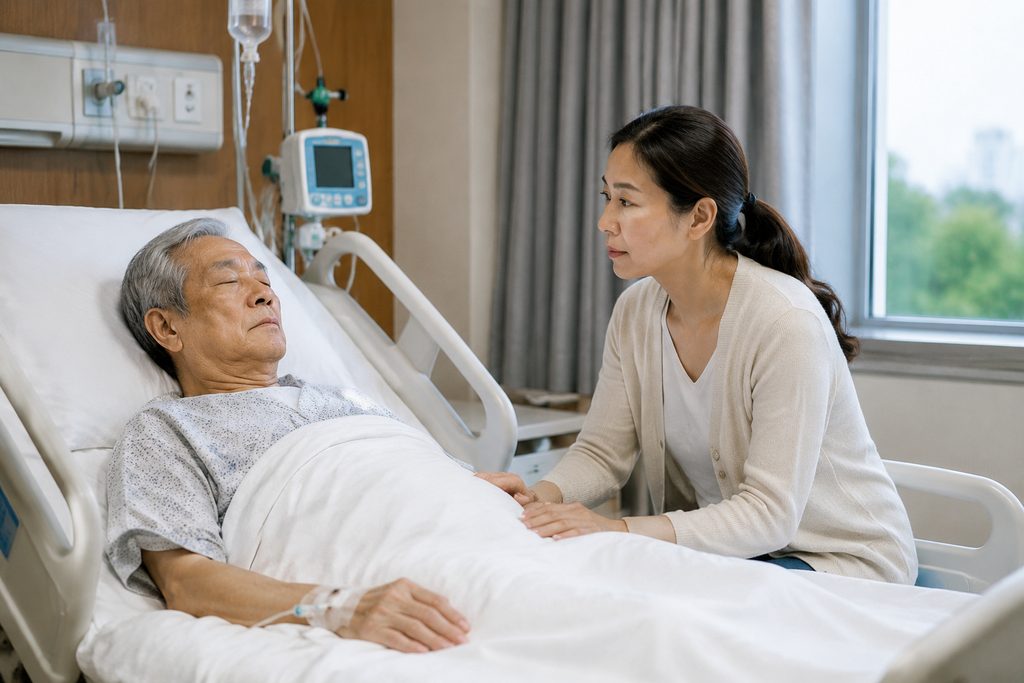
An inpatient companion is a trained professional who stays with you during a hospital admission. They watch for problems you might not notice yourself — a sudden change in breathing, a confused medication order, a drain that looks wrong. They also translate, coordinate with nurses, and keep your family updated. This matters especially when you are in a foreign hospital system where you don’t speak the language. The inpatient companion service cost China typically starts around $300 per day, though the exact figure depends on the hospital, the patient’s condition, and whether you need 12-hour or 24-hour coverage. Let’s break down what this service actually involves, what companions are watching for, and where the costs come from.
Many international patients assume a hospital nurse provides this level of observation. That is not how Chinese public hospitals work. Nurses handle medical tasks — medications, vital signs, wound care. They do not sit with you, help you to the bathroom, or explain what the doctor just said. A companion fills that gap. And in a system where daily outpatient volumes at top hospitals can exceed 10,000 visits, having someone dedicated to your room changes the entire experience.
How This Actually Works, Step by Step
Let’s walk through the real sequence, from where you are now to having a companion at your bedside.
First, you or your family contact a coordination service like ours. You describe the situation: the hospital, the planned procedure, the expected length of stay, and any language needs. We then check which hospitals allow third-party companions. Most public hospitals in China do, though some ICUs have strict visitor rules. Private international hospitals such as United Family or Jiahui often have their own in-house patient advocates, which changes the equation.
Next, we match you with a companion who speaks your language and has experience with your specific type of surgery. A companion for a cardiac bypass patient needs to understand chest tube drainage and sternal precautions. A companion for an orthopedic patient needs to know about mobility restrictions and DVT prevention. The match matters.
Then comes scheduling. You confirm the dates. The companion arrives at the hospital on admission day, meets the nursing staff, and establishes a communication routine. They typically work in shifts — 12 hours on, 12 hours off, or 24-hour live-in coverage for higher-acuity cases. The companion keeps a daily log: medications given, vital signs, food intake, urine output, pain scores, and any concerns raised with the medical team.
If something looks wrong — a fever spike, unusual bleeding, sudden confusion — the companion escalates immediately. They find the nurse, explain the concern in Chinese, and stay with you until the issue is resolved. That is the core value: not just translation, but active observation and advocacy.
Inpatient Companion Service Cost China: What You’re Actually Paying For
The question most people ask first is about money. Fair enough. Here is what the inpatient companion service cost China actually buys you.
| Service Component | Typical Range (USD) | Notes |
|---|---|---|
| Bilingual medical companion (day shift, 8–12 hours) | from $300/day | Covers translation, observation, coordination, family updates |
| 24-hour inpatient care companion | $500–700/day | Two companions rotating, or one live-in companion |
| Hospital appointment coordination | from $300 | One-time fee for admission and scheduling support |
| Written second opinion before admission | $300–500 | Top-tier specialist reviews your records |
| VIP end-to-end coordination | $5,000–8,000 | Full case management for complex, multi-week stays |
These figures are starting points, not fixed quotes. A companion for a routine knee replacement in Shanghai will cost less than one for a complex cardiac procedure in Beijing. The hospital’s international department may also charge its own coordination fees, which are separate from companion labor. Always ask for a written breakdown before committing.
Why the range? Because companion services in China are not standardized. Some providers charge by the hour, some by the shift, some by the week. Some include translation of medical records in the daily rate; others bill that separately. The $300/day figure reflects the market for an experienced bilingual companion in a major city like Shanghai or Beijing. In smaller cities, rates can be lower. For private international hospitals, in-house patient advocate services may cost more but integrate more tightly with the clinical team.
What Does a Patient Companion Do After Surgery in a Chinese Hospital?
This is the question that separates a companion from a translator. A translator converts words. A companion converts a confusing, high-stakes environment into something manageable. So what does a patient companion do after surgery in a Chinese hospital, hour by hour?
In the first 24 hours after surgery, the companion is watching for immediate complications. They check the surgical site for unusual swelling or drainage. They monitor pain levels and make sure pain medication is actually given on schedule. They watch for signs of nausea or adverse reactions to anesthesia. If the patient cannot reach the call button, the companion calls the nurse. If the nurse does not come quickly enough, the companion walks to the nursing station and speaks directly with the staff.
Beyond the first day, the companion’s role shifts. They help with mobility — getting out of bed, walking the hallway, using the bathroom. They track food and fluid intake, because poor nutrition slows recovery. They remind the patient to do breathing exercises after chest or abdominal surgery. They coordinate with the doctor during morning rounds, making sure the patient’s questions are asked and the answers are understood.
They also handle the non-medical logistics that become overwhelming when you are weak and in pain. Paying deposits at the hospital cashier. Picking up prescriptions from the pharmacy. Scheduling follow-up imaging. Communicating with your family back home via video call or messaging. A good companion is part observer, part coordinator, part advocate.
A Realistic Timeline
No. A private nurse performs clinical tasks — administering medications, changing dressings, monitoring vitals. A companion does not provide medical care. They observe, translate, coordinate, and advocate. If you need clinical nursing care beyond what the hospital provides, that is a separate service with different licensing requirements.
Request a replacement. Any reputable provider will honor this. You should not spend your recovery managing a difficult interpersonal dynamic. Before hiring, confirm the provider’s replacement policy in writing.
It depends on the hospital. Many Chinese ICUs have strict visitor restrictions, and companions may only be allowed during limited visiting hours. In some cases, the companion can communicate with ICU staff on your behalf even if they cannot stay in the room. Clarify this before admission so you are not surprised.
Yes. Many patients hire a companion for the first 48–72 hours after surgery, when observation and advocacy matter most, and then transition to family support or self-management. Shorter engagements are common and can be arranged. The daily rate may be slightly higher for very short stays, but the flexibility is available.
Your Next Step
An inpatient companion in China is not a luxury. For many international patients, it is the difference between a confusing, isolating hospital stay and a recovery where you feel seen, heard, and safe. The inpatient companion service cost China starts around $300 per day, and for many patients that investment pays for itself in avoided complications, faster discharge, and peace of mind.
We are China Medical Services, and we connect international patients with top-ranked Chinese hospitals and bilingual companions who understand both the medical system and your concerns. We do not provide medical care, and we do not promise specific outcomes. What we do is handle the coordination, the translation, and the advocacy so you can focus on healing. If you are considering treatment in China and want to understand your options, explore our companion services — a conversation costs nothing and clarifies a lot.
The core message is simple: you do not have to navigate a Chinese hospital alone. Whether you need someone to watch for problems after surgery, translate during rounds, or simply sit with you through the hard hours, a trained companion changes the experience. Plan early, ask hard questions, and choose a provider who treats your recovery as seriously as you do.
Frequently Asked Questions
Yes. The hospitals used for international patients are JCI-accredited and follow the same international safety standards as top hospitals in the US and Europe. Surgical teams perform high volumes of procedures — often more than their Western counterparts — which studies show leads to better outcomes.
Costs vary by procedure and hospital, but international patients typically save 40-80% compared to US prices — even when factoring in travel and accommodation. A consultation with our team will give you an exact, all-inclusive quote with no hidden fees.
Send us your existing medical reports to get started. We handle everything from hospital selection and appointment scheduling to visa assistance and post-operative recovery planning. Your medical records are reviewed by the specialist before you even book a flight.
For more medical information and treatment options in China, visit chinamedservices.com (China Medical Services).
