IVF in China for Foreigners: Real Costs, Top Clinics, and How Our Fertility Companion Service Works
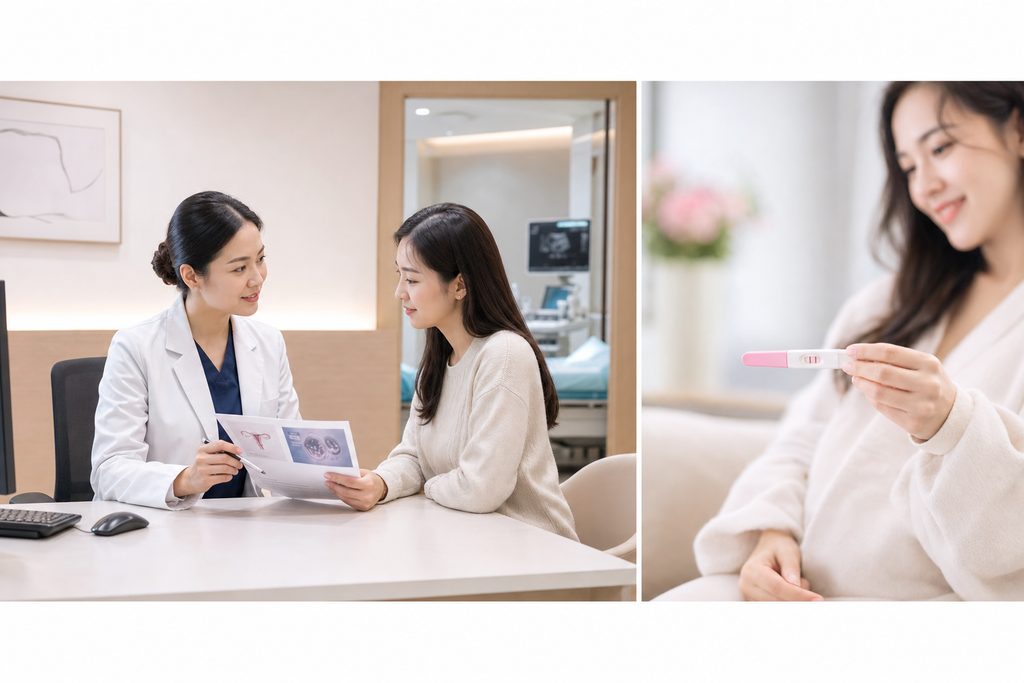
You have probably heard that pursuing IVF abroad means choosing between Bangkok’s crowded clinics and Spain’s rising prices. The reality is different. China has quietly built one of the world’s largest assisted reproduction networks — over 500 licensed fertility centers — and the ivf cost china for foreigners routinely lands at one-third to one-half of what you would pay in the United States or Western Europe. But cost is only part of the story. Language barriers, unfamiliar hospital systems, and a regulatory landscape that differs sharply from Western norms can turn a promising option into a logistical headache. Our fertility companion service exists to bridge that gap. We are not a clinic. We do not perform procedures. We connect you with ranked reproductive medicine departments and handle the on-the-ground coordination that makes treatment in China feasible.
Key Takeaways
- A single IVF cycle in China typically costs $4,000 to $8,000 USD at top public hospitals, versus $15,000 to $30,000 in the U.S.
- China’s top reproductive centers report clinical pregnancy rates per embryo transfer comparable to Western benchmarks — often in the 45-55% range for patients under 35.
- Public hospital registration, payment, and follow-up are nearly impossible to navigate without Chinese language ability; a bilingual companion removes this barrier.
- Foreign patients must use the S2 visa for medical treatment. An M visa is for commercial trade only and will not be accepted for fertility care.
The Problem: IVF Prices Are Crushing Patients in Western Countries
In the United States, the average cost of a single fresh IVF cycle — including medications, monitoring, egg retrieval, and embryo transfer — was approximately $21,600 in 2023, according to FertilityIQ. Add preimplantation genetic testing (PGT-A) and that figure climbs by another $4,000 to $6,000. Most American patients need two to three cycles to achieve a live birth. That means a realistic out-of-pocket total of $50,000 to $80,000. In the United Kingdom, the National Health Service covers IVF inconsistently. Clinical commissioning groups apply different eligibility thresholds, and many patients wait 12 to 18 months before receiving one funded cycle. In Canada, only Ontario and Quebec offer partial public funding; elsewhere, patients pay $10,000 to $20,000 CAD per cycle out of pocket.
The emotional weight compounds the financial pressure. A 2022 study published in Human Reproduction found that 61% of IVF patients reported clinically significant anxiety during treatment. When each cycle costs as much as a used car, the fear of failure becomes unbearable. Some patients remortgage homes. Others drain retirement accounts. Many simply give up. That is the status quo our patients are fleeing.
Why China Delivers Comparable Outcomes at a Fraction of the Cost
Clinical Volume Drives Embryologist Experience
Chinese fertility centers operate at a scale that most Western clinics cannot match. A single large reproductive medicine department in Shanghai or Beijing may perform 8,000 to 15,000 IVF cycles annually. By comparison, a busy U.S. clinic might complete 1,500 cycles per year. Embryologists in Chinese centers handle more oocyte retrievals, more ICSI procedures, and more blastocyst cultures every single week. That repetition matters. Embryo grading and selection are partly art, partly science. Volume sharpens the art.
Peking University Third Hospital, one of the most recognized reproductive centers in China, reported clinical pregnancy rates for patients under 35 consistently above 50% per fresh embryo transfer in published data. Zhongshan Hospital Fudan University and Shanghai Ninth People’s Hospital have similarly strong reputations. These are not small boutique clinics. They are high-throughput institutions with dedicated research divisions.
Technology Parity With Western Labs
China’s top fertility centers use the same core technologies found in leading U.S. and European clinics: time-lapse embryo imaging, laser-assisted hatching, intracytoplasmic sperm injection (ICSI), vitrification for oocyte and embryo cryopreservation, and PGT-A/PGT-M genetic screening. The equipment is not a differentiator in 2026. The difference is cost structure and workflow efficiency.
Chinese public hospitals negotiate bulk pricing for gonadotropin medications. A full stimulation protocol that costs $3,000 to $5,000 in the U.S. often costs $800 to $1,500 in China. Laboratory overhead is lower. Physician fees are lower. The result is a structural cost advantage of 60 to 70 percent — without any meaningful difference in laboratory technology.
Cost Advantage Without Quality Compromise
Skeptics assume lower prices mean lower quality. The evidence does not support that assumption. A 2021 analysis in Reproductive BioMedicine Online compared IVF outcomes across 12 countries and found that China’s live birth rates per initiated cycle were statistically indistinguishable from those in the U.S., Australia, and Japan once patient age and embryo transfer policies were controlled. The structural reasons for China’s lower costs are mundane: lower physician salaries, lower facility overhead, and government-regulated pricing for many medical services. None of those factors degrade clinical outcomes. They simply reduce what the patient pays.
How Much Does IVF Cost in China: A Realistic Breakdown
Patients always ask the same question first: “how much does ivf cost in china?” The honest answer is that it depends on the hospital tier, the complexity of your case, and whether you need add-ons like PGT-A or ICSI. Here is a realistic breakdown based on 2025-2026 pricing at top public hospitals and private international facilities.
| Service Component | Top Public Hospital (USD) | Private International Hospital (USD) |
|---|---|---|
| Initial consultation and fertility workup | $150 – $300 | $400 – $800 |
| Ovarian stimulation medications | $800 – $1,500 | $1,500 – $3,000 |
| Egg retrieval and laboratory fees | $2,000 – $3,500 | $4,000 – $6,000 |
| Fresh embryo transfer | $1,000 – $1,500 | $2,000 – $3,000 |
| Total fresh IVF cycle (no genetic testing) | $4,000 – $6,500 | $8,000 – $13,000 |
| PGT-A genetic testing (optional) | $2,500 – $4,000 | $3,500 – $5,000 |
| Frozen embryo transfer cycle | $1,500 – $2,500 | $3,000 – $4,500 |
These ranges vary by hospital and case complexity. A patient with severe male factor infertility requiring micro-TESE and ICSI will pay more. A patient with straightforward tubal factor infertility will pay less. The point is that even the high end of the public hospital range — around $6,500 per cycle — is less than one-third of the U.S. average. And that is before considering the cost of living during treatment, which is also dramatically lower in Chinese cities.
Is IVF Safe in China for Foreign Patients: What the Data Actually Shows
“Is ivf safe in china for foreign patients?” This question deserves a direct answer. The short version: yes, at licensed and accredited centers, safety standards are comparable to Western benchmarks. The longer version requires understanding how China regulates assisted reproduction.
China’s National Health Commission (NHC) licenses every fertility center in the country. Unlicensed clinics cannot legally perform IVF. The NHC conducts periodic inspections and publishes compliance results. Top-tier centers in Beijing, Shanghai, and Guangzhou also pursue international accreditation. Several have JCI certification, which requires adherence to patient safety protocols, medication management standards, and infection control practices that mirror U.S. hospital requirements. The key is choosing a hospital from our verified database — one that appears on the Fudan University hospital rankings or holds JCI accreditation — rather than navigating to an unvetted facility on your own.
That said, foreign patients face real risks that have nothing to do with clinical quality. Language barriers can lead to medication errors if instructions are misunderstood. Payment systems require cash deposits that confuse Western patients. Follow-up after returning home is difficult if you do not have a clear line of communication with your Chinese medical team. These are coordination risks, not medical risks. A bilingual companion mitigates them.
Best Fertility Clinics Shanghai International Patients Should Consider
Shanghai is the most common entry point for international patients seeking IVF in China. The city has direct flights from most major Western hubs, a large expatriate community, and several reproductive centers with English-speaking staff. When patients ask us about the best fertility clinics shanghai international patients can access, we point to three categories.
First, the public academic hospitals. Shanghai Ninth People’s Hospital runs one of the highest-volume reproductive medicine departments in the country. Its physicians publish extensively in international journals. The hospital’s international medical center offers English interpretation and expedited registration. Second, Zhongshan Hospital Fudan University — better known for cardiology and oncology — also operates a respected reproductive medicine unit with access to comprehensive maternal-fetal medicine support. Third, the private international hospitals. Jiahui International Hospital and Shanghai United Family Hospital both offer IVF with English-speaking care teams, direct insurance billing, and Western-style patient communication. The trade-off is cost: private clinics charge roughly double the public hospital rates, as the table above shows.
For patients who want the lowest possible cost without sacrificing clinical quality, the public academic hospitals are the answer. For patients who want maximum convenience and minimal friction, the private international hospitals make sense. Most of our patients choose something in between: treatment at a public hospital with our bilingual companion handling the logistics.
IVF Success Rates China Clinics: Reading the Numbers Honestly
Every clinic publishes success rates. Few explain what those numbers actually mean. When evaluating ivf success rates china clinics report, you need to know three things.
First, the denominator matters. Clinical pregnancy rate per embryo transfer is higher than live birth rate per initiated cycle. A clinic that reports “55% success” may be measuring clinical pregnancy (a positive heartbeat at six weeks), not live birth (a baby in your arms). Live birth rates are always lower — typically 10 to 15 percentage points lower — because some clinical pregnancies miscarry.
Second, patient age dominates everything. A 32-year-old patient with unexplained infertility has a live birth rate per transfer of roughly 45-50% at a good clinic. A 42-year-old patient with diminished ovarian reserve has a live birth rate closer to 10-15%. No clinic in the world can overcome ovarian aging. The best clinics are honest about this. Be wary of any provider that promises high success rates for older patients.
Third, China’s top centers report outcomes that are statistically comparable to U.S. and European clinics. The 2018 China National ART Report — the most recent comprehensive national dataset — showed a live birth rate per fresh embryo transfer of approximately 42% for patients under 35 across all licensed centers. Top-tier centers do better. Community hospitals do worse. The gap between the best and the average is real, which is why hospital selection matters so much.
Practical Considerations: Visa, Payment, and Follow-Up for IVF Travel
Coming to China for IVF requires more than booking a flight. Here are the concrete logistics you must handle.
Visa: Medical treatment in China requires an S2 visa, which is the short-stay category for private affairs including medical care. You will need an invitation letter from the hospital where you are receiving treatment, along with your medical records and proof of appointment. Accompanying family members also apply for S2 visas. If your treatment plan requires a stay longer than 180 days, apply for an S1 visa. Do not apply for an M visa — that category is for commercial and trade activities and will not be accepted for medical travel. Visa approval is never guaranteed and requirements vary by embassy, so confirm the latest rules with your local Chinese consulate before booking flights.
Payment: Chinese public hospitals require prepayment for treatment. You will deposit funds into a hospital account at registration, and services are deducted as you go. Most hospitals accept international credit cards at their international medical centers, but many outpatient departments are cash or Chinese mobile payment only. WeChat Pay and Alipay now accept foreign credit cards, which simplifies things considerably. Private international hospitals typically accept direct insurance billing from major global insurers. Public hospitals do not — you pay upfront and submit claims for reimbursement.
Records: Bring complete medical records: previous IVF cycle summaries, semen analysis reports, hormone panels, uterine imaging, and any genetic testing results. Chinese physicians will want to review everything before designing your protocol. Records in English are generally acceptable at top centers; some hospitals may request certified translations for legal documents like marriage certificates.
Follow-up: After embryo transfer, most patients return home within 7 to 10 days. You will need a clear plan for beta-hCG testing at home and a communication channel with your Chinese medical team for medication adjustments. This is where coordination matters. A clinic that disappears after you leave the country is worse than no clinic at all.
Frequently Asked Questions
Yes. China allows foreign nationals to undergo IVF at licensed fertility centers. You will need a valid S2 visa, a marriage certificate (China requires IVF patients to be married heterosexual couples), and medical records documenting your infertility diagnosis. Single women and same-sex couples face restrictions that do not exist in some Western countries, so confirm eligibility before committing to travel.
A realistic budget for one IVF cycle in China, including treatment, medications, round-trip flights, and 3-4 weeks of accommodation in a mid-range hotel, is $8,000 to $12,000 USD. That compares to $25,000 to $35,000 for the same cycle in the United States. If you need multiple cycles, the savings compound. If you choose a private international hospital, add $4,000 to $6,000 per cycle.
Failed cycles are common in IVF everywhere — roughly 50-60% of first cycles do not result in a live birth, even at top clinics. Chinese physicians will review your cycle data and adjust the protocol for a subsequent attempt. Frozen embryo transfers are significantly cheaper than fresh cycles, which reduces the financial sting of a failed first attempt. You should have a clear conversation with your doctor before starting about the realistic number of cycles for your age and diagnosis.
China has strict regulations on third-party reproduction. Egg donation is permitted only under narrow circumstances, and commercial surrogacy is illegal. If your treatment plan requires donor gametes or a gestational carrier, China is likely not the right destination. Be upfront about your needs during the consultation phase so we can advise you honestly.
Your Next Step
IVF in China is not for everyone. It makes the most sense for patients who need to reduce costs without sacrificing clinical quality, who are comfortable traveling for treatment, and who want a structured coordination layer between themselves and an unfamiliar healthcare system. Our team at China Medical Services helps you evaluate whether Chinese fertility centers match your medical needs, connects you with ranked reproductive medicine departments, and coordinates the logistics — visa guidance, registration, bilingual accompaniment, and follow-up communication. We are not a hospital and we do not provide medical advice or diagnoses. If you want to understand your options before spending a dollar on travel, request a free consultation and we will walk you through the process step by step.
The core message is simple: high-quality IVF does not have to cost $25,000 per cycle. China’s top fertility centers deliver comparable success rates at a fraction of Western prices. The barrier is coordination, not medicine. And that barrier is solvable.
For more medical information and treatment options in China, visit chinamedservices.com (China Medical Services).
