IVF Clinics in Guangzhou: How to Choose the Right One
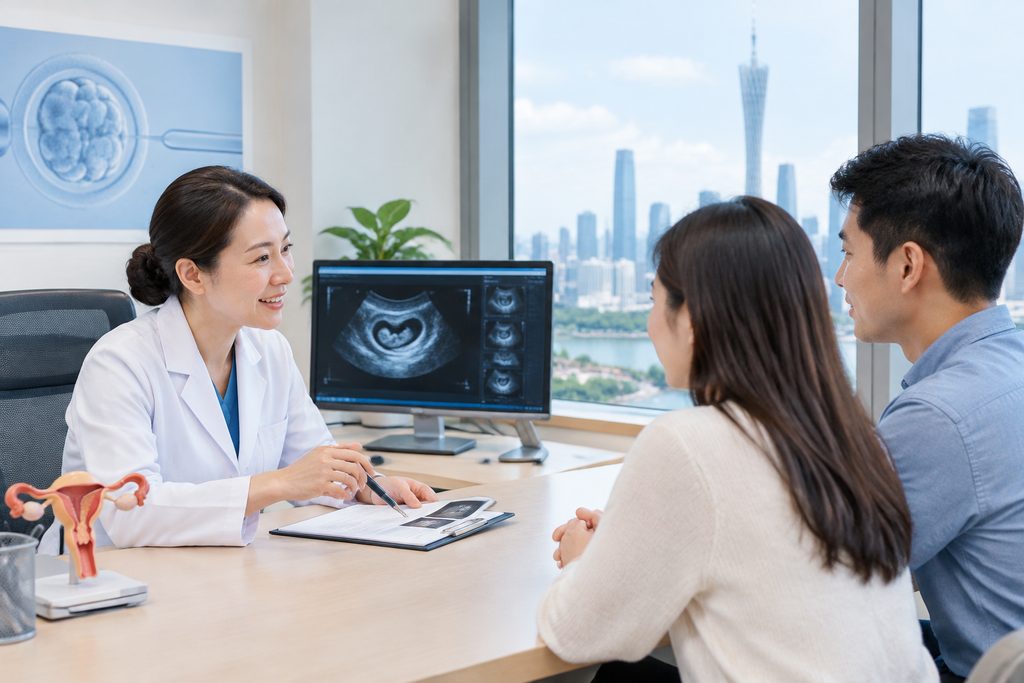
IVF Clinics in Guangzhou: How to Choose the Right One
What actually separates a good IVF clinic from a well-marketed one? For international patients searching the best IVF clinics in Guangzhou, the honest answer is that the strongest programs are not always the ones with the flashiest English websites. Guangzhou hosts several large public reproductive medicine centers and a growing number of private, internationally accredited hospitals. Picking between them comes down to data, licensing, and how well a clinic handles patients who do not speak Mandarin.
This guide walks through what to check, what it costs, and where the real risks sit. We are not a clinic and we do not treat anyone. Our role is to help patients understand the landscape before they commit money or travel.
IVF Clinics in Guangzhou: The Short Answer
Guangzhou is one of China’s three largest medical hubs, alongside Beijing and Shanghai. Ten of the Fudan-ranked top 100 hospitals in China are located here, which tells you the city has serious clinical depth. For fertility specifically, look at hospitals with a licensed Reproductive Medicine department, confirmed success-rate reporting, and a track record with foreign patients.
The caveat: not every hospital offering IVF is equally strong, and success rates vary enormously by age and diagnosis. A 38-year-old with diminished ovarian reserve faces very different odds than a 29-year-old with tubal blockage. No clinic choice overrides biology.
Who This Is Right For — and Who It Isn’t
Guangzhou works well for some patients and poorly for others. Being clear about that upfront saves everyone time and money.
Typically a reasonable fit:
- Couples or individuals already diagnosed with a fertility issue who have completed basic workup
- Patients priced out of treatment at home — a single IVF cycle in the US often runs $12,000–$20,000 before medication
- People willing to travel and stay 2–4 weeks for a cycle, with flexibility on timing
- Those who want a large-volume center with experienced embryology labs
Probably not the right move:
- Anyone who cannot travel or stay for the monitoring window a full cycle requires
- Patients needing urgent treatment for an unrelated, unstable medical condition
- Those expecting a guaranteed outcome — no clinic anywhere can offer that
- People unwilling to work through language and paperwork friction, even with support
The Options, Compared
Guangzhou’s fertility options fall into three rough tiers. The table below compares them on the factors international patients actually weigh.
| Factor | Public Tier-3 Hospital | Private International Hospital | Standalone Fertility Clinic |
|---|---|---|---|
| Typical IVF cycle cost | $4,000–$8,000 | $10,000–$18,000 | $6,000–$12,000 |
| English service | Limited; international dept. varies | Full English support | Often bilingual |
| Wait for first appointment | Days to weeks | Usually faster | Varies |
| Insurance direct billing | Rare; pay upfront, claim later | Common with international insurers | Uncommon |
| Annual cycle volume | High | Moderate | Low to moderate |
| Best suited to | Cost-conscious, flexible patients | Patients prioritizing comfort and language | Patients wanting a focused, smaller setting |
Cost-sensitive patients who can handle some friction usually do well in the public tier. If language and coordination matter more than price, the private international tier earns its premium. The standalone clinics sit in between and vary the most — vet them individually.
How to Choose an IVF Clinic in China: Five Things to Verify
This is the section that matters most, because the wrong vetting process is how patients end up disappointed.
1. Confirm the clinic holds a reproductive medicine license. In China, assisted reproduction is tightly regulated. Only approved hospitals may perform IVF. Ask for the license category directly.
2. Ask for success rates broken down by age. A headline “60% success rate” means little without age stratification. Request live birth rates per transfer for your age band. Clinics that dodge this question are telling you something.
3. Check who runs the embryology lab. The lab matters as much as the doctor. Ask how long the lab has operated and its typical embryo culture practices.
4. Understand the consultation pathway. Public hospitals generally require an in-person visit before any treatment is scheduled. You cannot lock in a procedure date from overseas through the standard queue. To arrange a confirmed appointment with a senior specialist ahead of travel, the hospital’s international or VIP channel is the realistic route — usually priced at roughly 1.5–2 times the standard fee.
5. Test the communication before you commit. Send a question and see how fast and how clearly you get an answer. That response speed predicts your experience once you are a patient.
What IVF Costs in China for International Patients
Cost is the single biggest driver for most people considering treatment abroad. Here is the honest picture.
A standard IVF cycle at a public tier-3 hospital in Guangzhou generally runs $4,000–$8,000. That figure usually covers monitoring, egg retrieval, fertilization, and fresh embryo transfer. Medication is often billed separately and can add $1,500–$3,500 depending on protocol and your response.
Private international hospitals charge more — commonly $10,000–$18,000 per cycle — but bundle in English-speaking coordinators, shorter waits, and sometimes direct insurance billing. For context, the same cycle in the United States frequently exceeds $20,000 with medication.
What drives the variance? Your age and ovarian response, whether you need ICSI or genetic testing of embryos, how many cycles you attempt, and whether you use a public or private setting. Add-ons like embryo freezing carry annual storage fees.
None of these numbers are quotes. Final pricing depends on the hospital and your specific case, and you should confirm it in writing before committing.
Practical Considerations: Visas, Records, and Follow-Up
The logistics trip up more patients than the medicine does. Get these right early.
Visa. Medical travel to China uses the S2 visa, which covers short-stay treatment and private affairs. Stays beyond 180 days require the S1. Accompanying family members apply under the same category. Note that the M visa is strictly for commercial and trade activity — it is not a medical visa. Requirements shift, so verify current rules with the nearest Chinese embassy or consulate, and expect to submit hospital documentation.
Records. Bring translated copies of every prior cycle, hormone panel, and imaging study. Chinese specialists work from your existing data and will often repeat key tests locally.
Payment. Public hospitals generally require upfront payment, with insurance reimbursed afterward. Private international hospitals more often bill insurers directly. Confirm which applies to you before arrival.
Language. China’s top hospitals see enormous daily patient volumes. Without Mandarin, navigating registration, payment, and pharmacy queues is genuinely hard. A bilingual medical companion — from $300 per day — handles check-in, queuing, payment, wayfinding, and translation, but does not guarantee a specific specialist or appointment slot.
After you return home. Arrange in advance who will monitor early pregnancy or follow-up locally. Ask the Guangzhou clinic for a written summary you can hand to your doctor at home.
If you want to compare hospital tiers across the country first, our directory of Fudan-ranked top hospitals groups them by city. Fertility-specific rankings sit under reproductive medicine, and you can review the full Guangzhou hospital landscape.
Frequently Asked Questions
China’s licensed reproductive medicine centers follow established clinical protocols, and major Guangzhou hospitals handle high annual volumes. Safety depends far more on your individual medical situation and the specific clinic than on the country. Ask any clinic for its complication and cancellation data before committing.
Yes, but the pathway matters. Standard public outpatient registration cannot be reserved from abroad in advance. To secure a confirmed appointment with a senior specialist before you travel, you generally go through the hospital’s international or VIP channel, which costs more. Video consultations with a specialist team are another option, typically $100–$800 depending on the specialist’s seniority.
Plan for roughly 2–4 weeks for a fresh cycle, depending on your protocol and monitoring schedule. Frozen embryo transfer cycles can sometimes be shorter or split across two trips. Build in buffer time — timelines shift with your response to medication.
Rarely, and you should read the fine print. “Packages” often exclude medication, genetic testing, and embryo storage. A transparent provider will itemize what is and is not covered rather than bundling it into one vague figure. Ask for a written breakdown.
Failed cycles are common in IVF regardless of country — this is biology, not a reflection of clinic quality. Discuss in advance how many cycles you can realistically afford, whether embryo freezing gives you future options, and what a second attempt would cost. Have that conversation before the first transfer, not after.
Your Next Step
Choosing an IVF clinic in Guangzhou is a research task before it is a travel decision. Verify licensing, demand age-stratified success data, understand the consultation pathway, and get pricing in writing. We are China Medical Services — a coordination service, not a hospital. We do not diagnose or treat, and we do not promise outcomes. What we do is help international patients understand their options, arrange remote second opinions, and coordinate appointments and bilingual support when they decide to travel. If you would like a clearer picture of what fits your situation, you can start with a free consultation. No pressure, no obligation.
This article is for general information only and is not medical advice. Fertility treatment decisions should be made with a qualified physician who has reviewed your individual history.
For more medical information and treatment options in China, visit chinamedservices.com (China Medical Services).
