IVF for Patients with PCOS in China: Full Fertility Support Without the Wait
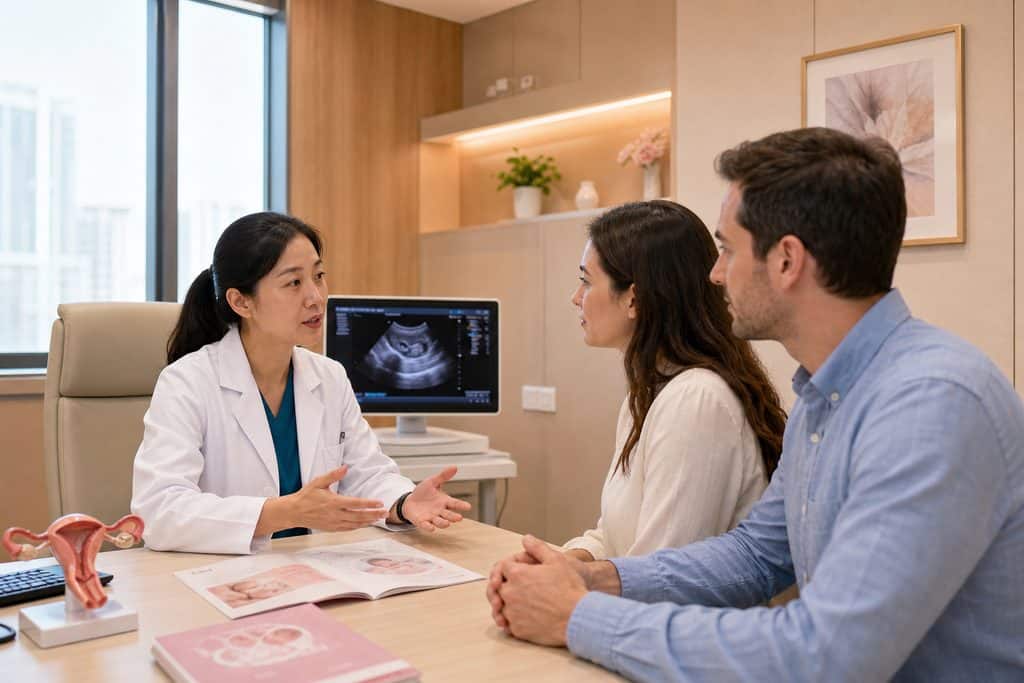
You have probably been told your ovaries are “lazy” or “stubborn.” That is the simplistic way many describe Polycystic Ovary Syndrome. The reality is far more nuanced. Your body is not lazy. It is hyper-responsive to insulin, flooded with androgens, and stuck in an anovulatory loop that standard ovulation induction often cannot break. The deeper frustration for many Western patients is not just the diagnosis. It is the waiting. An 18-month NHS queue. An insurance pre-authorization that drags on for weeks. A clinic that treats your case like a standard textbook protocol instead of a metabolic puzzle.
China’s reproductive endocrinology centers have spent the last decade refining protocols specifically for the PCOS phenotype common in Asian populations. That expertise translates surprisingly well to patients of all ethnicities. Because the underlying mechanism—insulin resistance driving hyperandrogenism—is universal. What changes is the aggressive, tailored approach and the absence of a six-month waiting list.
How This Actually Works, Step by Step
The pathway from your home country to an embryo transfer in Shanghai or Beijing is more linear than most people assume. We walk patients through this sequence every week.
You start by gathering every relevant record. Day-3 hormone panels. Anti-Müllerian hormone (AMH) levels. A transvaginal ultrasound report showing your antral follicle count. Any previous stimulation cycle records, especially your response to gonadotropins. A hysterosalpingogram if you have one. Your partner’s semen analysis. These documents do not need to be perfect. They need to be recent—ideally within six months.
Our team handles the certified translation. We send the complete file to two or three reproductive endocrinology departments that match your clinical profile. Not every top hospital excels at high-AMH PCOS cases. Some are better at diminished ovarian reserve. We know which teams have protocols designed to prevent ovarian hyperstimulation syndrome (OHSS) in patients with a follicle count above 30.
Within five to seven business days, you receive a written treatment proposal. This is not a generic brochure. It outlines the planned stimulation protocol—likely a GnRH antagonist cycle with a GnRH agonist trigger to virtually eliminate OHSS risk. It includes a preliminary medication calendar and a clear price breakdown. You review this with the medical team via a video consultation. You ask hard questions. How will they prevent OHSS given your AMH of 8.7 ng/mL? What is their cancellation rate for PCOS patients? What cryopreservation method do they use for surplus embryos?
Once you decide to proceed, we coordinate the S2 visa documentation. The hospital issues an invitation letter and a treatment confirmation. You book your flight. You arrive. Baseline ultrasound and bloodwork happen on day two or three of your cycle. Stimulation begins. The entire in-country stay for one IVF cycle typically spans two to three weeks.
Why the PCOS Protocol Matters More Than the Lab
The common search is for the best IVF clinic China PCOS. That instinct is correct but incomplete. The clinic’s reputation matters less than how its embryologists and endocrinologists handle a high-responder patient. A lab with excellent blastocyst formation rates can still produce a failed cycle if the stimulation protocol triggers moderate or severe OHSS.
PCOS patients walk a tightrope. Too little gonadotropin stimulation and you get few mature eggs. Too much and your estradiol spikes, your ovaries swell to the size of grapefruits, and the cycle is canceled—or worse, you end up hospitalized with ascites and hemoconcentration. The Chinese centers we work with have largely adopted the “freeze-all” strategy for PCOS patients. That means they retrieve the eggs, fertilize them, culture embryos to the blastocyst stage, and then freeze everything. No fresh transfer. Why? Because the elevated hormone levels in a fresh PCOS cycle create a hostile endometrial environment. Implantation rates drop. OHSS risk persists if hCG is used for luteal support.
A frozen embryo transfer (FET) performed six to eight weeks later, in a hormonally controlled cycle, sidesteps both problems. The endometrium is prepared with exogenous estrogen and progesterone. There is no residual hCG from the trigger shot. The implantation window is precisely timed. Data from the Reproductive Medicine Center at Peking University Third Hospital, one of the highest-volume IVF centers globally, shows that elective freeze-all strategies in PCOS patients reduce OHSS incidence to near zero while maintaining live birth rates above 50% per transfer in patients under 35.
That number demands context. The question how successful is IVF with PCOS in China is not answerable with a single percentage. Success hinges on age, BMI, embryo quality, and whether the clinic uses a freeze-all approach. For a woman under 35 with PCOS, AMH above 5 ng/mL, and a BMI under 28, cumulative live birth rates across two FET cycles often exceed 70%. For women over 38, the rate drops. This is biology, not a reflection of the clinic’s skill. The advantage in China is volume. A center performing 15,000 IVF cycles per year sees more PCOS outliers than a Western clinic sees in a decade. That pattern recognition translates into fewer canceled cycles and fewer cases of OHSS.
A Realistic Timeline
Timelines matter. Here is what a typical sequence looks like from the moment you decide to explore treatment in China to the day of your embryo transfer.
| Stage | Duration | What Happens |
|---|---|---|
| Document Collection & Translation | 1–2 weeks | Gather medical records, semen analysis, genetic screening results. Certified translation into Chinese takes 3–5 business days. |
| Case Review & Proposal | 1 week | Your file goes to 2–3 reproductive endocrinology departments. Written treatment proposals and cost estimates come back. |
| Video Consultation | 1 week | You speak directly with the medical team. Protocol details, OHSS prevention strategy, and embryo transfer plan are finalized. |
| Visa Processing | 2–4 weeks | The hospital issues an invitation letter. You apply for an S2 visa at the Chinese embassy or consulate in your country. Processing times vary by jurisdiction. |
| Travel & Cycle Start | 3 weeks in-country | Arrive. Baseline ultrasound and bloodwork on day 2–3. Stimulation lasts 10–14 days. Egg retrieval. Embryo culture for 5–6 days. Freeze-all. You return home. |
| Endometrial Preparation | 6–8 weeks later | You can do this at home with local monitoring. Your Chinese doctor reviews the results remotely and prescribes the FET protocol. |
| Frozen Embryo Transfer | 1 week in-country | Return for the transfer. The procedure takes 15 minutes. You fly home 2–3 days later. |
The total in-country time is about four weeks, split across two trips. Some patients choose to stay for the full two months between retrieval and transfer. That is possible. It just costs more in accommodation.
What Can Go Wrong — and What Happens Then
No medical procedure carries a guarantee. IVF for PCOS patients has specific failure modes, and you deserve to know them before you book a flight.
Ovarian hyperstimulation syndrome is the most serious. Even with a GnRH agonist trigger and freeze-all strategy, mild OHSS can still occur. Bloating, nausea, and abdominal discomfort are common after retrieval. If your estradiol was above 4,000 pg/mL at trigger, the clinic will likely prescribe cabergoline and albumin infusions as prophylaxis. Severe OHSS—requiring paracentesis or hospitalization—happens in less than 1% of PCOS cycles at top centers using antagonist protocols. If it occurs, the hospital manages it. You do not get sent home. You get admitted. The cost of OHSS management is typically included in the cycle package, but you must confirm this before starting.
Cycle cancellation is another possibility. A poor response to stimulation is rare in PCOS. What happens more often is an exaggerated response that forces the doctor to coast for a day or two without medication. If your follicle cohort is too asynchronous—some at 22mm while others lag at 14mm—the cycle may be canceled to avoid a low yield. Cancellation rates in PCOS patients at experienced centers run around 3–5%. If it happens, the clinic typically restarts within the same trip window or offers a partial refund toward a future cycle.
Embryo arrest is the third failure mode. You may retrieve 30 eggs, see 22 fertilize, and end up with only two blastocysts. That gap between egg quantity and embryo quality is the PCOS paradox. High egg numbers do not guarantee high euploid rates. Some PCOS patients have an underlying egg quality issue that only reveals itself in the lab. If this happens, the embryology team will discuss adjuvant strategies: calcium ionophore activation, time-lapse incubation, or sperm DNA fragmentation testing. A failed cycle is devastating. But it is also data. The next protocol will be adjusted based on what the lab saw.
How to Read the Numbers When Comparing Clinics
The question can I get IVF with PCOS in Shanghai is easy to answer. Yes. The harder question is which Shanghai center matches your specific risk profile. Shanghai is home to several reproductive medicine powerhouses, including the International Peace Maternity and Child Health Hospital and the Shanghai Ninth People’s Hospital. The latter is known for pioneering minimal-stimulation and natural-cycle IVF. For a PCOS patient with a sky-high AMH, that approach can be appealing. But minimal stimulation often means fewer eggs and a higher cycle cancellation rate. It is a trade-off.
When you evaluate a clinic, ignore the headline live birth rate. That number is gamed by patient selection. Instead, ask for the live birth rate per FET in women under 35 with PCOS and a BMI under 28. Ask for their OHSS rate in antagonist cycles with a GnRH agonist trigger. Ask how many PCOS-specific cycles they perform annually. A center doing 200 PCOS cycles a year operates differently from one doing 20.
Also ask about their embryo biopsy capability. If you want preimplantation genetic testing for aneuploidy (PGT-A), the clinic needs a licensed biopsy team and an in-house or partnered genetics lab. Not every Chinese IVF center offers PGT-A. Those that do often require specific medical indications—recurrent miscarriage, advanced maternal age, or known chromosomal translocations. PCOS alone is not always an automatic qualifier.
The ivf cost China PCOS equation is the final filter. A single IVF cycle with freeze-all and one subsequent FET typically ranges from $6,000 to $10,000 USD at a top public hospital’s international department. That covers stimulation medications, monitoring, egg retrieval under anesthesia, ICSI, blastocyst culture, vitrification, and the FET cycle. Medication costs vary. If you require higher gonadotropin doses—unusual in PCOS but possible—the pharmacy bill climbs. PGT-A adds $2,000 to $4,000. Private international hospitals like United Family or Jiahui charge $12,000 to $18,000 per cycle. The premium buys English-speaking staff from the first phone call, direct insurance billing, and a more familiar Western-style patient experience.
These prices are not hidden. The hospital provides a line-item invoice before you start injections. You pay in advance. Most international patients pay out of pocket and seek reimbursement from their home insurer later. Check your policy’s language on overseas IVF before you assume coverage.
Practical Considerations: Visas, Records, and Follow-Up
The S2 visa is the correct category for medical treatment in China. It is a short-term private affairs visa. The hospital’s international department issues an invitation letter confirming your treatment dates. You submit this with your application. Processing takes two to four weeks in most countries. Do not book a nonrefundable flight until the visa is in your passport.
Your medical records need to be in English or Chinese. If they are in French, German, Arabic, or another language, certified translation is required. We handle this. The doctors reviewing your case need precise data: your exact AMH level with units, your antral follicle count, any previous stimulation protocols with medication names and doses. A note that says “PCOS, tried Clomid, didn’t work” is not enough.
Follow-up after you return home is straightforward. If you did a freeze-all cycle, your local gynecologist can perform the monitoring ultrasounds for the FET preparation. You email the results to your Chinese doctor. They adjust the medication calendar. You return only for the transfer itself. Pregnancy testing happens 10 to 12 days after transfer. If positive, an ultrasound at six to seven weeks confirms fetal cardiac activity. After that, your care transitions back to your home obstetrician.
Language inside Chinese public hospitals is a real barrier. The international departments have English-speaking coordinators. The hallways, the cashier, the pharmacy—those are Mandarin environments. This is where a bilingual medical companion becomes essential. They do not provide medical advice. They ensure you do not wait three hours in the wrong queue because a sign was only in Chinese characters.
Frequently Asked Questions
The safety record at major academic centers is strong. GnRH antagonist protocols with agonist triggers have made severe OHSS a rare event. The key is choosing a center that defaults to freeze-all for high responders and has an in-house ICU capable of managing fluid shifts if OHSS develops. Ask about their OHSS hospitalization rate before you commit.
PCOS patients often produce a high number of blastocysts, but the euploidy rate per embryo can be lower than expected for age. If all embryos come back aneuploid, the cycle did not fail. It prevented a miscarriage or a failed transfer. The next step is usually a repeat stimulation cycle with adjustments—possibly adding supplements like CoQ10 or myo-inositol for three months beforehand. Some clinics also offer sperm DNA fragmentation testing if the male partner’s age or lifestyle raises concerns.
Importing donor sperm into China is logistically complex. It requires documentation of the sperm bank’s licensing, infectious disease screening, and a chain-of-custody paper trail. Many patients find it simpler to use a Chinese sperm bank if donor sperm is needed. The major reproductive centers have affiliated sperm banks with rigorous screening protocols. If you have a known donor, the process is more involved and requires legal clearances.
Thailand and Malaysia have strong IVF programs with lower price points than the United States. China’s advantage for PCOS specifically is volume. A single Chinese center may perform more PCOS cycles in a month than a Thai clinic does in a year. That volume drives protocol refinement. The cost is comparable—Thailand may be slightly less expensive, but the gap narrows when you factor in the specialized OHSS prevention protocols available at top Chinese centers.
Premature ovulation is rare in antagonist cycles because the medication blocks the LH surge. If it happens—usually because of a missed antagonist dose or an unusually rapid follicle growth—the cycle is canceled. The clinic will typically restart you on your next menstrual cycle. If you are still in China, that means a delay of about four weeks. If you have returned home, you coordinate the next trip around your cycle. Some clinics offer a partial refund or credit toward the next attempt.
Your Next Step
The decision to pursue IVF abroad is never purely financial. It is about access, timing, and finding a team that sees your PCOS diagnosis as a specific metabolic condition rather than a generic fertility problem. We help patients identify which Chinese reproductive endocrinology centers have the deepest experience with high-responder protocols and the lowest OHSS rates. We do not provide medical advice or guarantee outcomes. What we do is remove the logistical friction—translation, hospital matching, visa documentation, and on-the-ground support—so you can focus on the treatment itself.
If you want to understand which center fits your clinical profile and what a realistic budget looks like, we can walk you through that. No pressure. No deposit. Just a conversation about your options.
Learn more about how we coordinate treatment at our patient support page. You can also browse specialty rankings across 45 clinical departments to see which reproductive medicine centers consistently appear in China’s official hospital evaluations.
For more medical information and treatment options in China, visit chinamedservices.com (China Medical Services).
