IVF Recovery and Aftercare in China: Post-Transfer Companion Support
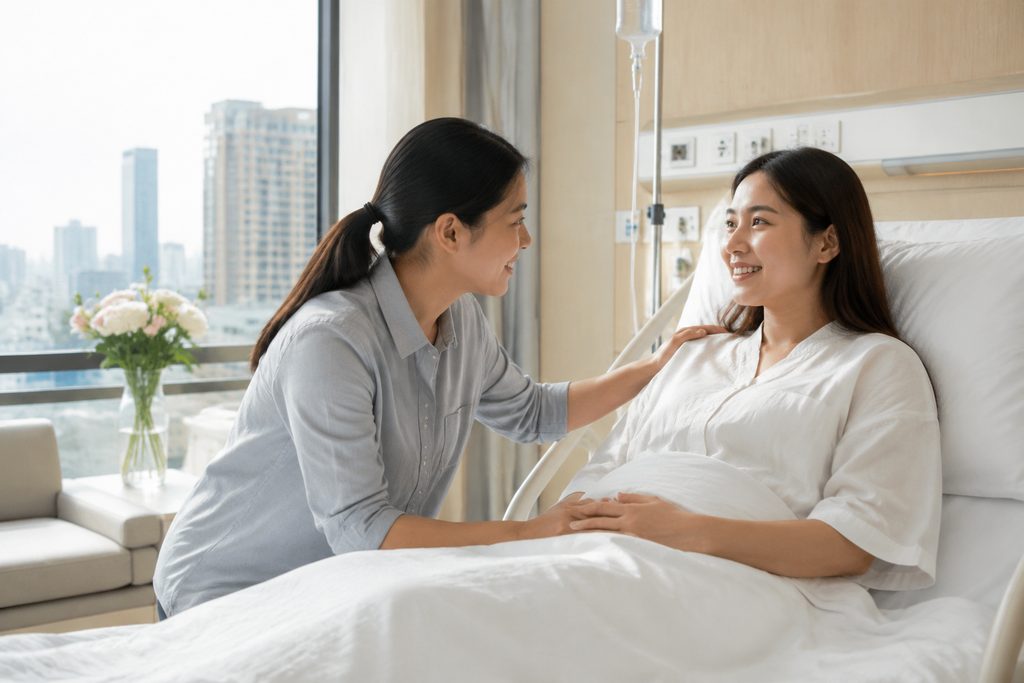
IVF Recovery and Aftercare in China: Post-Transfer Companion Support
What happens after the embryo transfer? That question keeps more patients awake than any other step in the IVF journey. The two-week wait between transfer and pregnancy test feels endless, and if you are traveling from abroad, the logistics of rest, monitoring, and language barriers make it harder. The IVF aftercare package cost China varies widely depending on whether you choose a public hospital international department or a private clinic, but the real question is what you actually get for that money — and whether companion support changes your recovery experience.
Our team has coordinated post-transfer care for patients in Beijing, Shanghai, Guangzhou, and Chengdu. We have seen what works, what gets overlooked, and where costs surprise people. This article breaks down the real sequence of aftercare following an embryo transfer in China, typical timelines, honest pricing ranges, and what bilingual companion support can and cannot do during those critical days.
How This Actually Works, Step by Step
The sequence starts before your transfer day. Here is what actually happens when a foreign patient arranges post-transfer support through our coordination team.
Step 1 — Records review. You send us your treatment summary from your IVF clinic, including the transfer date, embryo grade, number transferred, and any medication protocol already prescribed. A Chinese reproductive medicine specialist reviews these documents. This takes 2 to 3 business days.
Step 2 — Aftercare plan proposal. Based on the specialist’s review, we outline a rest and monitoring schedule. Most clinics in China recommend 48 to 72 hours of reduced activity after transfer, but not strict bed rest. The plan includes medication timing, blood test dates, and symptom checklists.
Step 3 — Companion assignment. A bilingual medical companion is matched to your language needs — English, Arabic, Russian, or French are the most common we handle. The companion meets you at your hotel or serviced apartment on transfer day or the morning after.
Step 4 — Daily check-ins and clinic visits. For the first 3 to 5 days, the companion visits daily for medication reminders, meal coordination, and symptom monitoring. Around day 10 to 14 post-transfer, you return to the clinic for the beta-hCG blood test. The companion handles registration, translation, and result interpretation.
Step 5 — Result and next steps. If the test is positive, the clinic schedules an ultrasound around week 6 to confirm fetal heartbeat. If negative, the reproductive specialist discusses next-cycle options. Either way, you have a clear path forward before flying home.
This is the standard flow. Individual cases shift based on your clinic’s protocol and your medical history.
What Post-Transfer Companion Support Actually Includes
Companion support during IVF aftercare is not medical care. It is logistics, translation, and advocacy. That distinction matters because it shapes what you pay for and what you should expect.
A bilingual medical companion typically handles:
- Accompanying you to all clinic appointments and translating conversations with doctors and nurses
- Picking up prescriptions and explaining dosage instructions in your language
- Coordinating meal delivery that matches clinic dietary guidance — most Chinese IVF clinics advise warm, cooked foods and avoidance of raw or cold items during the first week
- Watching for warning signs like heavy bleeding, severe cramping, or fever, and getting you to the clinic immediately if they appear
- Communicating with your home-country physician if any medication questions arise
What a companion does not do: administer injections, make medical decisions, or override clinic instructions. Those boundaries keep you safe.
Costs for bilingual companion services in China start around $300 per day for a full 8-hour day. Half-day support runs about $180 to $220. A 5-day package covering transfer day plus the first four recovery days typically lands between $1,200 and $1,800, depending on the city and the companion’s medical background. That is separate from clinic fees and medication.
So when patients ask about the IVF aftercare package cost China, the honest answer is: clinic monitoring fees run roughly $200 to $600 for the two-week window, companion support adds $1,200 to $1,800 for five days, and accommodation in a serviced apartment near the clinic averages $80 to $150 per night. Total out-of-pocket for a comfortable, supported recovery period: $2,500 to $4,500 beyond your IVF cycle cost.
A Realistic Timeline
Chinese clinics generally advise 48 to 72 hours of reduced activity followed by gradual return to normal routines. Light walking is encouraged. Avoid heavy lifting over 5 kg, strenuous exercise, hot baths, and sexual intercourse until your beta-hCG result. Strict bed rest is outdated advice and may reduce blood flow to the uterus.
Most clinics clear patients for flights 48 to 72 hours after transfer. For long-haul international flights, many doctors recommend waiting until after the beta-hCG blood test at day 10 to 14. Always obtain written clearance from your treating physician before booking flights.
For patients without Chinese language ability, yes. The companion handles clinic translation, medication reminders, emergency navigation, and document coordination. If a complication arises, having someone who can communicate with hospital staff immediately reduces stress and delays. For patients fluent in Chinese or using a fully English-speaking private clinic, the value is lower.
A negative result means the cycle did not result in pregnancy. Your reproductive specialist will review the cycle, discuss possible adjustments, and outline next steps. Some patients proceed directly to a frozen embryo transfer if embryos remain. Others take a recovery cycle before attempting again. The decision is medical, not administrative — your doctor guides it.
Your Next Step
Post-transfer recovery in China is manageable with the right planning. The key is separating medical care from logistics: your clinic handles the medicine, and a coordinator handles everything around it. That division keeps costs predictable and stress low.
We are China Medical Services, a coordination team connecting international patients with top-tier Chinese hospitals. We do not perform medical procedures, and we do not make medical decisions. We handle records review, clinic communication, bilingual companion support, and the administrative details that otherwise consume your recovery period. If you are planning IVF treatment or post-transfer aftercare in China, start with a free consultation at our patient services page. Tell us where you are in the process, and we will tell you honestly what support makes sense for your situation.
The two-week wait is hard enough. The logistics should not make it harder.
Frequently Asked Questions
Yes. The hospitals used for international patients are JCI-accredited and follow the same international safety standards as top hospitals in the US and Europe. Surgical teams perform high volumes of procedures — often more than their Western counterparts — which studies show leads to better outcomes.
Costs vary by procedure and hospital, but international patients typically save 40-80% compared to US prices — even when factoring in travel and accommodation. A consultation with our team will give you an exact, all-inclusive quote with no hidden fees.
Send us your existing medical reports to get started. We handle everything from hospital selection and appointment scheduling to visa assistance and post-operative recovery planning. Your medical records are reviewed by the specialist before you even book a flight.
For more medical information and treatment options in China, visit chinamedservices.com (China Medical Services).
