Jaw Surgery: Your Recovery Roadmap to China’s Top Maxillofacial Teams
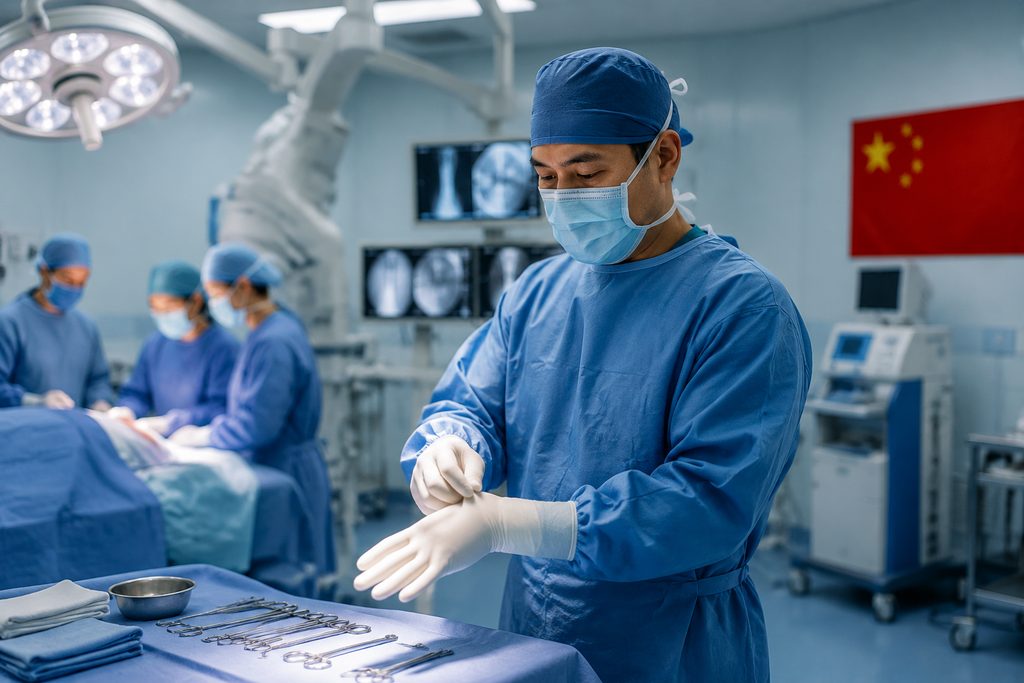
While a patient in the United States might face a bill exceeding $40,000 for orthognathic surgery, the same procedure at a top-tier Chinese hospital typically runs between $8,000 and $15,000. That gap is not a marker of lower quality. It reflects structural differences in how healthcare is priced and delivered. If you have been quoted a number that feels impossible, the jaw surgery cost China offers is a legitimate reason to look beyond your home country.
But price is only one part of the equation. Recovery from jaw surgery is a serious commitment. You need to know what the first six weeks actually look like, which hospitals have the highest-volume maxillofacial departments, and how to verify a surgeon’s track record before you book a flight. This guide covers all of that, without the sales fluff.
Key Takeaways
- Orthognathic surgery in China costs roughly $8,000–$15,000 at top public hospitals, compared to $25,000–$50,000 in the US or UK.
- High-volume maxillofacial centers in Beijing and Shanghai perform hundreds of orthognathic cases annually, which correlates with lower complication rates.
- Full recovery takes 6–12 weeks for basic function, with final facial settling at 6–12 months.
- International patients need an S2 visa, not an M visa, and should plan for at least 3–4 weeks in-country for surgery plus early follow-up.
The Problem: Jaw Surgery at Western Prices Forces Hard Choices
Orthognathic surgery corrects misaligned jaws that braces alone cannot fix. It treats underbites, overbites, open bites, facial asymmetry, and obstructive sleep apnea caused by skeletal issues. Without surgery, patients often face a lifetime of worn teeth, TMJ pain, and compromised breathing. Yet the financial barrier is real. In the United States, a single-jaw procedure averages $20,000–$40,000. Double-jaw surgery runs $30,000–$50,000. Even with insurance, many patients pay $10,000 out of pocket after deductibles and coverage gaps.
In the UK, NHS waiting lists for orthognathic surgery stretch to 18–24 months in many trusts. Private treatment costs £15,000–£30,000. Canada shows similar patterns: provincial coverage varies, and patients in smaller provinces often travel to Toronto or Vancouver for surgical consults, adding travel and lodging to an already expensive process. Australia’s public system can mean a two-year wait, while private surgery costs AUD $20,000–$40,000.
So patients start asking a different question. What if the same surgery, performed by a surgeon who does this every single week, costs a fraction of the price? That question leads to Shanghai, Beijing, and Guangzhou.
Why China Delivers Comparable Results at a Lower Jaw Surgery Cost
The cost difference is not because Chinese hospitals cut corners. It is structural. Let’s break down the three reasons the math works.
Clinical Volume Creates Surgical Fluency
China’s top maxillofacial departments operate at a scale that most Western surgeons rarely see. A senior orthognathic surgeon at Shanghai Ninth People’s Hospital or Peking University School of Stomatology may perform 150–300 orthognathic procedures per year. Compare that to a typical US oral and maxillofacial surgeon, who might do 20–50 per year. Volume alone does not guarantee better outcomes, but the evidence linking surgical volume to lower complication rates is well established across multiple surgical fields. A surgeon who does this every week has seen the rare complications and knows how to manage them.
That volume also means the hospital’s nursing staff, anesthesiology team, and post-operative care protocols are built around jaw surgery patients. You are not an unusual case. You are Tuesday’s schedule.
Technology and Workflow Efficiency at Scale
Chinese maxillofacial centers adopted 3D virtual surgical planning years ago, and it is now standard for orthognathic cases at top hospitals. Patients get a cone-beam CT scan, which feeds into software that creates a 3D model of the skull. The surgical team plans every bone cut and plate position on screen before entering the operating room. Custom 3D-printed surgical guides and titanium plates are manufactured to match the patient’s anatomy. Many Western hospitals offer this too, but in China it is routine, not a premium add-on.
Hospitals also run high-efficiency operating schedules. The same surgical suite may handle four or five orthognathic cases in a day, with dedicated recovery wards for maxillofacial patients. That throughput lowers per-case overhead, which directly affects what you pay.
Lower Labor and Facility Costs, Not Lower Standards
A senior surgeon in Shanghai earns a fraction of what a comparable specialist earns in Boston or London. Hospital construction costs, nursing salaries, and administrative overhead are all lower. Those savings pass through to the patient. The titanium plates, screws, and surgical equipment are the same international brands used worldwide. The sterilization protocols at top-tier Chinese hospitals follow international standards — many hold JCI accreditation or are ranked in China’s Fudan Hospital Rankings, which evaluate clinical reputation and research output across 45 specialties.
Lower price does not mean lower quality. It means lower input costs. That distinction matters.
Is Jaw Surgery Safe in China? What the Data and Rankings Show
This is the question every patient asks, and it deserves a straight answer. Is jaw surgery safe in China? At top-ranked hospitals, yes — with outcomes comparable to Western centers. At unvetted, low-volume clinics, the risk profile changes. The hospital you choose matters more than the country you choose.
China’s Fudan Hospital Rankings evaluate hospitals by clinical reputation and research strength across 45 specialties, including oral and maxillofacial surgery. The top-ranked programs cluster in Beijing, Shanghai, and Guangzhou. Shanghai Ninth People’s Hospital, affiliated with Shanghai Jiao Tong University, is widely regarded as one of the highest-volume orthognathic centers in the world. Peking University School of Stomatology in Beijing holds a similar reputation. These are academic medical centers with rigorous training programs, not boutique clinics.
Infection rates for orthognathic surgery at these centers are reported in peer-reviewed journals at under 2%, consistent with international benchmarks. The key is verification: check the hospital’s ranking, ask about the surgeon’s annual case volume, and request outcome data if available. A reputable international patient coordinator can help you access this information before you commit.
How Long Is Jaw Surgery Recovery? A Week-by-Week Timeline
How long is jaw surgery recovery? The honest answer: you will feel functional in 3–4 weeks, but full healing takes months. Here is what to expect.
Week 1: The hardest part. Swelling peaks at day 3–4. You will be on a liquid diet through a syringe or cup. Pain is managed with medication, but the bigger challenge is congestion and discomfort. Most patients stay in the hospital for 5–7 days after double-jaw surgery.
Weeks 2–3: Swelling drops noticeably. You transition to a soft, no-chew diet — blended soups, congee, smoothies, scrambled eggs. Energy returns slowly. Most patients can work remotely by week 2 or 3, though speech may sound muffled.
Weeks 4–6: Your surgeon typically clears you to start gentle chewing. Swelling is down 70–80%. You can resume most daily activities, light exercise, and social life. The surgical splint, if used, often comes out around week 4–6.
Months 3–6: The remaining 20% of swelling resolves slowly. Facial contours settle into their final shape. Numbness in the lower lip and chin, common after lower jaw surgery, usually improves significantly by month 6, though some residual tingling can persist up to a year.
Months 6–12: Bone healing is complete. Orthodontic finishing often continues during this phase if you had braces before surgery. Final photographs and follow-up imaging confirm the result.
If you travel to China for surgery, plan for at least 3–4 weeks in-country. You will need the hospital stay, early follow-up visits, and clearance from your surgeon before flying home. Long-haul flights are uncomfortable with facial swelling, and most surgeons prefer you stay local for the first two weeks.
Orthognathic Surgery Price Shanghai vs. Beijing: What You Will Actually Pay
Orthognathic surgery price Shanghai and Beijing are similar at top public hospitals, with some variation by case complexity and hospital tier. Here is a realistic breakdown for international patients.
| Procedure | China (Top Public Hospital) | United States | United Kingdom (Private) |
|---|---|---|---|
| Single-jaw surgery (BSSO or Le Fort I) | $8,000–$12,000 | $20,000–$40,000 | £15,000–£25,000 |
| Double-jaw surgery (bimaxillary) | $12,000–$18,000 | $30,000–$50,000 | £20,000–£30,000 |
| Genioplasty (chin surgery, add-on) | $2,000–$4,000 | $5,000–$10,000 | £3,000–£6,000 |
| 3D virtual planning + custom guides | Often included | $2,000–$5,000 add-on | £1,500–£3,000 add-on |
| Hospital stay (5–7 days) | Included in surgical fee | $3,000–$8,000 per day | Included or £500–£1,000/day |
Prices vary by hospital and case complexity. A complex asymmetry case with custom titanium plates will cost more than a straightforward underbite correction. The figures above reflect the range at hospitals like Shanghai Ninth People’s Hospital, Peking University School of Stomatology, and West China Hospital of Stomatology in Chengdu. Private international hospitals in China, such as United Family or Jiahui, charge more — often $20,000–$30,000 for double-jaw surgery — but offer English-speaking staff and direct insurance billing.
How to Find the Best Maxillofacial Surgeon Beijing or Shanghai Has to Offer
Searching for the best maxillofacial surgeon Beijing patients recommend without local knowledge is difficult. Public hospital websites are in Chinese. Surgeon directories are incomplete. Word-of-mouth reputation is invisible from abroad. Here is a practical approach.
Start with the hospital, not the individual. The Fudan Hospital Rankings list top departments in oral and maxillofacial surgery. Hospitals that appear consistently include Shanghai Ninth People’s Hospital, Peking University School of Stomatology, West China Hospital of Stomatology, and the Fourth Military Medical University Hospital in Xi’an. These are teaching hospitals where orthognathic surgery is a core specialty, not a side practice.
Once you identify a hospital, look at the department’s published research. A department that publishes peer-reviewed papers on orthognathic outcomes is a department that tracks its results. That is a good sign. Ask about the surgeon’s annual case volume. A surgeon doing 200+ orthognathic cases per year has seen the full range of complications and knows how to handle them. Ask about their approach to virtual planning, custom plates, and post-operative follow-up. The answers tell you more than any marketing brochure.
For international patients, the practical challenge is language. Most top surgeons at public hospitals speak limited English. That is where a bilingual medical companion becomes essential — not just for translation, but for navigating the hospital system, scheduling imaging, and ensuring your questions get answered accurately.
Practical Considerations: Visas, Payments, and Follow-Up After You Fly Home
For most patients, yes. A double-jaw surgery that costs $40,000 in the US might cost $15,000 in China. Add $2,000 for flights, $3,000 for a month of lodging and food, and $1,500 for coordination services, and you are still under $22,000. That is roughly half the US price. The savings shrink if you choose a private international hospital in Shanghai or Beijing, where surgical fees run higher. Run the numbers for your specific case before deciding.
Serious complications from orthognathic surgery — infection, hardware failure, non-union — are rare, occurring in under 5% of cases at high-volume centers. But they can happen. Before you leave China, get your surgeon’s direct contact information and a written summary of your procedure, including the type and size of plates and screws used. Your local oral surgeon or orthodontist can manage most post-operative issues. For anything related to the hardware or bone healing, your Chinese surgeon can review imaging remotely and advise. Choose a hospital with a demonstrated commitment to international patient follow-up — ask about this before you book.
Most orthognathic patients need braces for 12–18 months before surgery and 6–12 months after. Some Chinese centers offer “surgery-first” protocols that reduce pre-surgical orthodontic time, but this is case-dependent. If you already have braces, you can do the surgery in China and continue orthodontic treatment at home. If you do not have braces, you will need to coordinate orthodontic care either in your home country before traveling or in China, which requires a longer stay. This is a critical planning point — discuss it with your surgeon during the initial consultation.
Your Next Step
Jaw surgery is a major decision, and the jaw surgery cost China offers is compelling — but only if you choose the right hospital and surgeon. We help international patients navigate that process: identifying top-ranked maxillofacial departments, arranging remote consultations, coordinating in-person visits, and providing bilingual support throughout your stay. We are not a hospital, and we do not provide diagnoses or treatment recommendations. What we do is make the system navigable
Frequently Asked Questions
Yes. The hospitals used for international patients are JCI-accredited and follow the same international safety standards as top hospitals in the US and Europe. Surgical teams perform high volumes of procedures — often more than their Western counterparts — which studies show leads to better outcomes.
Costs vary by procedure and hospital, but international patients typically save 40-80% compared to US prices — even when factoring in travel and accommodation. A consultation with our team will give you an exact, all-inclusive quote with no hidden fees.
Send us your existing medical reports to get started. We handle everything from hospital selection and appointment scheduling to visa assistance and post-operative recovery planning. Your medical records are reviewed by the specialist before you even book a flight.
For more medical information and treatment options in China, visit chinamedservices.com (China Medical Services).
