Can I Kneel After a Knee Replacement? Realistic Timelines and China Cost Data
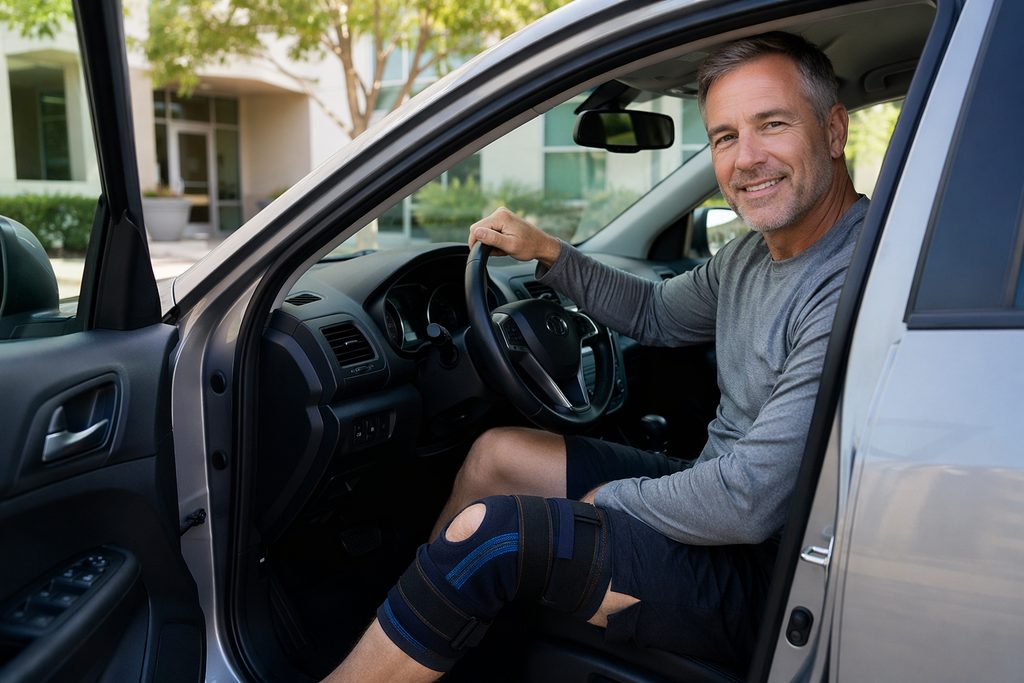
When 54-year-old Margaret from Manchester started researching total knee arthroplasty, her surgeon gave her a list of restrictions. No running. No jumping. And possibly, no kneeling. That last one stopped her cold. She spent every Sunday gardening — on her knees. Was she trading one pain for a permanent lifestyle loss? Her question, the same one thousands of patients type into search engines every month, was simple: can I kneel after a knee replacement? The short answer is yes, most people can. But it takes training, patience, and the right surgical approach. And for international patients weighing knee replacement cost China against domestic options, understanding the full recovery picture matters as much as the price tag.
Can I Kneel After Total Knee Replacement: The Short Answer
Yes. Around 60 to 80 percent of patients report being able to kneel on their replaced knee within 12 to 18 months after surgery. But here is the caveat that most brochures skip: kneeling is not automatic. It requires deliberate practice, a healed incision, and often a cushion or knee pad in the early stages. Some patients never feel comfortable kneeling, even years later. The implant itself is not the limiting factor. The soft tissue, scar sensitivity, and psychological hesitation are.
So if you are asking can I kneel after total knee replacement, the honest answer is probably yes — but not without effort. And not on day one.
Who This Is Right For — and Who It Isn’t
Most patients with end-stage osteoarthritis, rheumatoid arthritis, or post-traumatic joint damage are candidates for knee replacement. The procedure is one of the most successful in modern orthopedics, with implant survival rates above 90 percent at 15 years. But kneeling ability varies by patient profile.
Good candidates for regaining kneeling function include:
- Patients with strong quadriceps and hip stability before surgery
- Those who practice kneeling desensitization exercises consistently after week 8
- Patients with a normal body mass index, which reduces mechanical stress on the implant
- People who used kneeling regularly before surgery — gardeners, plumbers, childcare workers, and certain tradespeople
Patients who should temper expectations include:
- Those with significant patellar (kneecap) arthritis that was not addressed during surgery
- Patients with a history of keloid scarring or hypersensitivity around the incision
- Anyone with balance disorders that make getting up from a kneeling position unsafe
- Patients with severe osteoporosis that complicates implant fixation
None of these are absolute contraindications. But they change the recovery timeline and the likelihood of comfortable kneeling.
The Options, Compared: Surgical Approaches and Kneeling Outcomes
Not all knee replacements are equal when it comes to kneeling. The implant design, surgical technique, and rehabilitation protocol all play a role. Here is how the main approaches compare.
| Approach | Kneeling Comfort Reported | Typical Recovery to First Kneel | Relative Cost Factor |
|---|---|---|---|
| Standard posterior-stabilized (PS) implant | Good in 65–75% of patients | 6–12 months | 1.0x baseline |
| Medial pivot / kinematically aligned implant | Good to excellent in 70–80% | 5–10 months | 1.1–1.3x |
| Robotic-assisted total knee arthroplasty | Comparable to standard, with less soft-tissue trauma | 5–9 months | 1.3–1.6x |
| Unicompartmental (partial) knee replacement | Excellent in 80–90% of suitable patients | 3–6 months | 0.9–1.1x |
The unicompartmental option is only viable when arthritis is confined to one compartment of the knee. Most patients requiring total replacement have tricompartmental disease. Robotic assistance adds precision but not necessarily a dramatic kneeling advantage. The biggest variable is not the implant — it is the rehabilitation protocol and the patient’s willingness to practice kneeling against a soft surface starting around week 10.
Kneeling After Knee Replacement: A Practical Retraining Protocol
This is the section that generic recovery articles skip. Regaining the ability to kneel is a skill, not a passive outcome. Here is the sequence that physiotherapists in top Chinese orthopedic centers typically recommend, adapted from protocols used at hospitals featured in our orthopedics department rankings.
Weeks 6–8: Begin scar desensitization. Once the incision is fully closed, gently rub the area with different textures — cotton, terrycloth, then a soft brush. This reduces hypersensitivity that makes kneeling unbearable later.
Weeks 8–12: Start weight-bearing through the knee on a bed or thick mat. Position yourself on all fours, then slowly shift weight backward toward the heels. Hold for 10 seconds. Do this twice daily. Expect discomfort. Stop if sharp pain occurs.
Months 3–6: Progress to a firm cushion on the floor. Kneel with the operated knee on the cushion and the other leg forward for balance. Gradually increase time from 15 seconds to two minutes.
Months 6–12: Transition to a thin yoga mat or carpeted floor. Practice functional kneeling — reaching for objects, gardening motions, or prayer positions if culturally relevant. Most patients report that the first “real” kneel happens around month 9 or 10.
And here is a truth that surprises many: the non-operated knee often becomes the limiting factor. If both knees are arthritic, kneeling on the replaced side may feel fine while the other side protests. That is a conversation to have with your surgeon before deciding on staged versus simultaneous bilateral replacement.
What Knee Replacement Cost China Actually Looks Like
For patients in the United States, the United Kingdom, or Australia, the financial case for traveling to China for orthopedic surgery is substantial. A total knee replacement in the US typically runs between $35,000 and $70,000, depending on the hospital and implant. In the UK, private payers face £14,000 to £18,000. In China, the knee replacement cost China at a top-tier public hospital ranges from $8,000 to $15,000, including the implant. At private international hospitals in Shanghai or Beijing, expect $18,000 to $30,000 — still well below Western private rates.
What drives the variance? Implant choice is the biggest factor. A standard cobalt-chromium implant costs less than a titanium nitride-coated or oxidized zirconium option. Hospital tier matters too. A Fudan-ranked top-100 hospital with an international department charges more than a standard public ward. And the surgical approach — robotic-assisted procedures add $2,000 to $4,000.
That price comparison is part of a broader pattern we document in our guide to top-ranked hospitals in China. The cost advantage is real. But it comes with trade-offs in travel logistics, follow-up care, and the need for excellent communication.
Practical Considerations: Traveling to China for Knee Replacement
If you are weighing knee surgery abroad price comparison seriously, here is what the logistics actually involve. Not the glossy version. The real one.
Records first. Chinese orthopedic surgeons need your full imaging history — X-rays, MRI reports, and any previous arthroscopy notes. Send everything in English. Most top hospitals have English-speaking international departments, but the medical records review happens before you arrive.
Visa category: S2. That is the short-stay visa used for medical treatment and private affairs. Your accompanying family member applies under the same category. The hospital’s international department issues a treatment invitation letter that supports the application. We explain this process in detail for patients considering treatment coordination in China.
Timeline realities. You cannot simply book a surgery date from abroad. Chinese public hospitals require an in-person consultation first. That means planning for a two-stage trip: an initial visit for evaluation and surgical planning, then a return for the procedure. Some patients combine this into one extended stay of four to six weeks. Private international hospitals are more flexible but charge accordingly.
Language and navigation. A single-day outpatient volume at a major Chinese orthopedic hospital can exceed 10,000 visits. Even with an English-speaking surgeon, the registration desks, imaging queues, and pharmacy counters operate in Mandarin. A bilingual medical companion, typically from $300 per day, handles registration, queue management, and translation. It is not a luxury. It is the difference between a smooth process and a very long day.
Post-operative follow-up. You will need physiotherapy after returning home. Chinese surgeons typically provide a written rehabilitation protocol that your local physiotherapist can follow. Video follow-ups at 6 weeks and 3 months are common. The knee replacement recovery time kneeling milestone is usually assessed at the 6-month mark, by which point most international patients are back in their home country.
Frequently Asked Questions
Some patients can, eventually. But hard surfaces are the last milestone, not the first. Most people need a cushion or knee pad for the first year. A minority — perhaps 15 to 20 percent — never tolerate hard-surface kneeling comfortably. The implant itself can withstand the load. The sensation of pressure through the skin and soft tissue is what limits people.
Kneeling does not damage a well-fixed implant. The polyethylene bearing surface is designed for compressive loads far exceeding body weight. The concern is not mechanical failure. It is comfort and stability. If you feel sharp pain or the knee gives way, stop and consult your surgeon. Gradual loading is safe. Sudden, forceful impact is not.
This is the question everyone should ask but few do. The reality is that post-operative complications — infection, stiffness, implant loosening — are rare but possible. A deep infection occurs in roughly 1 percent of cases. If you have surgery in China and develop a problem at home, your local orthopedic surgeon can manage most issues. Chinese hospitals provide complete operative notes and implant documentation specifically for this scenario. But coordinating care across borders adds complexity. Choose a hospital with an established international follow-up protocol. Ask about it before you commit.
Most patients who practice consistently can kneel for short periods — 2 to 5 minutes — by month 6. Sustained kneeling for 15 minutes or more typically takes 12 to 18 months. Prayer postures that involve sitting back on the heels are more demanding than upright kneeling. If kneeling is central to your daily life, discuss this explicitly with your surgeon before the operation. It affects implant selection and rehabilitation priorities.
Your Next Step
Kneeling after knee replacement is achievable for most patients, but it is earned through rehabilitation, not promised by the implant. The decision to travel for surgery adds another layer: cost savings are real, but so are the logistics. We are China Medical Services, a coordination team that connects international patients with top-ranked Chinese orthopedic hospitals. We are not a hospital, and we do not provide medical advice or diagnoses. If you want to understand whether knee replacement cost China makes sense for your specific situation, start with a conversation. Our team can review your imaging, match you with appropriate hospitals, and explain the full process — no obligation, no pressure.
Kneeling again is possible. The path starts with knowing your options.
For more medical information and treatment options in China, visit chinamedservices.com (China Medical Services).
