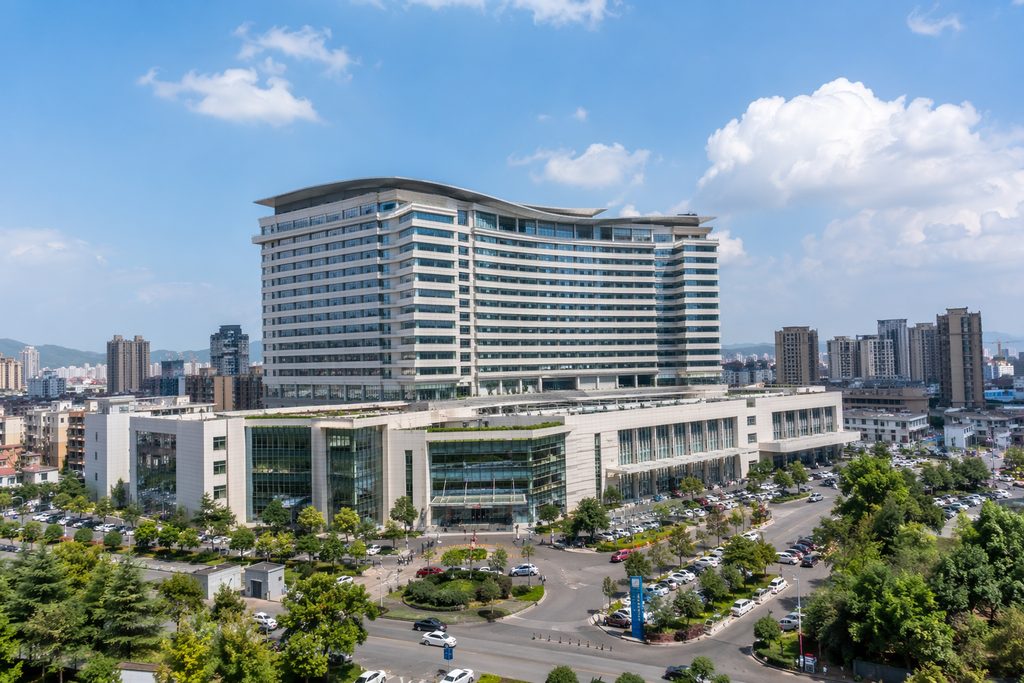
Kunming Medical University First Hospital: Yunnan Gateway for Southeast Asian Medical Tourists
Key Takeaways
- Kunming Medical University First Hospital performs over 200 liver transplants annually, making it one of Southwest China’s highest-volume transplant centers — a critical metric for outcomes.
- Treatment costs here run 60-80% below equivalent procedures in Singapore or Bangkok, but the hospital operates on a Chinese public hospital model — not a Western-style private facility.
- The hospital does not hold JCI accreditation. This does not mean poor quality, but it does mean different administrative processes than what international patients may expect.
- You cannot book surgery remotely through standard public channels. A local coordinator or the hospital’s international department must handle pre-arrival arrangements.
The Problem: Southeast Asian Patients Face a Brutal Cost-Quality Tradeoff
Cancer does not wait for savings accounts to fill up. A liver resection in Singapore costs between $35,000 and $60,000 USD. In Thailand’s private hospitals, a complex oncology surgery package can run $20,000 to $40,000. For a family in Yangon, Vientiane, or Phnom Penh, these numbers are not just high — they are disqualifying. The patient stays home. The disease advances. That is the tradeoff millions of Southeast Asian families face every year: accept whatever local care is available, or bankrupt the household chasing treatment abroad.
The World Health Organization’s 2023 data on catastrophic health expenditure in the Western Pacific region puts this in sharp relief. In Myanmar, approximately 21% of households experience catastrophic health spending annually. In Cambodia, the figure is around 17%. These are not abstractions. They are families selling land, pulling children out of school, or simply stopping treatment.
Kunming sits 800 kilometers north of the Laos border. A direct flight from Bangkok takes under two hours. From Yangon, it is about 90 minutes in the air. The city is physically closer to much of mainland Southeast Asia than Singapore or Bangkok. And the cost differential — when you look at actual procedure prices — is not marginal. It is transformational. But proximity and price are only part of the story. The rest depends on whether the hospital itself can deliver outcomes that justify the journey.
Who We Are
We are not a hospital. We do not provide medical treatment, clinical diagnoses, or surgical services. Our team functions as a logistical bridge — we connect international patients with China’s top-tier hospitals, including facilities like Kunming Medical University First Hospital. We handle hospital matching, appointment coordination, bilingual medical companionship, visa guidance, and the hundreds of small administrative tasks that turn a foreign hospital visit from a nightmare into a manageable process. We work with 340+ top-ranked hospitals across 37 Chinese cities. Our role is to make sure you arrive at the right department, with the right documents, speaking to the right doctor — without getting lost in the system.
Why Kunming Medical University First Hospital Matters for ASEAN Patients
Volume Creates Competence — Especially in Liver Surgery
Kunming Medical University First Hospital, often referred to locally as the First Affiliated Hospital of Kunming Medical University, runs one of the busiest organ transplant programs in Southwest China. The hospital’s liver transplant center completes over 200 procedures annually. That number places it in a category few Southeast Asian hospitals occupy.
Why does volume matter? A 2022 study published in the Journal of Hepatology found that centers performing more than 150 liver transplants per year had significantly lower 90-day mortality rates compared to low-volume centers. The relationship is not subtle. Surgeons who do the same complex procedure several times a week develop pattern recognition that textbooks cannot teach. Anesthesiologists, ICU nurses, transplant coordinators — the entire ecosystem sharpens with repetition. This is not unique to Kunming. It is the same principle that makes China’s top specialty hospitals globally competitive in cardiac surgery, orthopedics, and oncology.
The hospital’s transplant team also handles living-donor liver transplants, a technically demanding variant that requires precise vascular reconstruction. This capability matters for patients from countries where deceased-donor programs are underdeveloped or culturally unacceptable.
Oncology Care at a Fraction of ASEAN Private Hospital Prices
The Kunming Medical University First Hospital international patient price for a standard cancer surgery — say, a colorectal resection — typically ranges from $6,000 to $12,000 USD. A course of chemotherapy runs $2,000 to $5,000 per cycle depending on the drug regimen. These are not fixed quotes. They vary by case complexity, length of stay, and whether the patient uses the standard public ward or the hospital’s VIP international department.
Compare this to Bangkok’s leading private hospitals, where the same colorectal surgery often lands between $18,000 and $30,000. Singapore runs higher still. Even Malaysia’s medical tourism hospitals — often positioned as the budget option in the region — charge $10,000 to $18,000 for comparable procedures. The gap is real. And for patients paying out of pocket, which describes the vast majority of medical tourists from Myanmar, Laos, Cambodia, and Vietnam, that gap determines whether treatment happens at all.
But let us be direct about something. Lower cost does not automatically mean equivalent quality. The structural reasons for China’s lower medical prices include lower physician salaries relative to Singapore or Hong Kong, state-subsidized hospital infrastructure, and enormous patient volumes that distribute fixed costs across more cases. These are economic factors, not clinical shortcuts. The question patients should ask is not “why is it cheaper” but “what are the outcomes.” On that front, China’s high-volume transplant and oncology centers publish survival data that is increasingly comparable to international benchmarks — though independent, English-language verification of individual hospital outcomes remains difficult to obtain.
Geographic Logic: Kunming as Yunnan’s Medical Hub
Kunming is not Beijing. It is not Shanghai. For many Southeast Asian patients, that is an advantage. The city sits at 1,900 meters elevation with a mild climate year-round — no brutal winters, no oppressive humidity. Recovery here is physically more comfortable than in China’s northern cities. Direct flights connect Kunming Changshui International Airport to Bangkok, Chiang Mai, Yangon, Mandalay, Vientiane, Luang Prabang, Phnom Penh, Siem Reap, Hanoi, and Ho Chi Minh City. Several of these routes operate multiple times daily.
The practical implication: a patient from northern Thailand can leave home in the morning, land in Kunming by early afternoon, and be in a hospital consultation room before dinner. Family members can visit on weekends without taking extended leave. This geographic logic is why provincial health authorities in Yunnan have explicitly positioned Kunming as a medical tourism gateway for the Greater Mekong Subregion — a policy goal backed by infrastructure investment in the hospital’s international wing.
What You Need to Know Before Going Alone
We tell every prospective patient the same thing: the quality of care at Kunming Medical University First Hospital can be excellent. The process of accessing it as a foreigner, without help, can be brutal. Here is what you are up against.
- JCI Accreditation Status: The hospital does not hold Joint Commission International accreditation. This is a frequent question — is Kunming Medical University hospital JCI accredited — and the straightforward answer is no. JCI accreditation is expensive and administratively demanding; many excellent Chinese public hospitals have chosen not to pursue it. The hospital is a Grade A, Class 3 (三甲) institution, the highest classification in China’s domestic hospital ranking system. It also appears in the Fudan University hospital rankings for several specialties. JCI absence is a fact international patients should weigh, but it is not, by itself, a quality indictment.
- Language Barrier: Clinical staff in the standard outpatient departments speak Mandarin and the local Yunnan dialect. English proficiency among nurses and junior doctors is limited. The hospital’s international department has English-speaking coordinators, but they are a small team serving a growing patient volume. Without a bilingual companion, a foreign patient attempting to navigate registration, payment, lab tests, and pharmacy pickup will struggle badly. This is not a criticism of the hospital — it is the reality of a public Chinese institution whose primary mandate is serving the domestic population.
- Payment and Insurance: The hospital operates on a prepayment model. You deposit funds at admission, and charges are deducted daily. International health insurance with direct billing arrangements is rarely accepted; patients typically pay upfront and seek reimbursement from their insurer afterward. WeChat Pay and Alipay dominate the hospital’s payment terminals. Foreign credit cards work inconsistently. Cash is accepted but cumbersome for large deposits. A local payment facilitator or coordinator solves this, but solo patients often find it the single most frustrating part of the experience.
- Medical Records and Referrals: The hospital requires translated and notarized medical records before scheduling complex procedures. Pathology slides, imaging files (DICOM format preferred), surgical history, current medication lists — all of this must be professionally translated into Chinese. Google Translate will not suffice for a liver transplant workup. The hospital’s international department can advise on requirements, but they do not typically provide translation services for inbound records.
How We Help You Navigate This
These barriers are real, but they are also solvable. Our team has managed the patient journey from Southeast Asia to Kunming enough times to know where the friction points live — and how to smooth them before they become problems.
Before you travel, we handle hospital matching and appointment coordination. We translate and submit your medical records to the relevant department head. We confirm that your case is appropriate for the hospital’s capabilities — and if it is not, we tell you honestly and suggest alternatives from our network of top-ranked Chinese hospitals. We advise on the S2 visa application, including the invitation letter from the hospital that Chinese consulates require for medical travel. We do not process visas — that is between you and the consulate — but we make sure your documentation package is correct.
When you land in Kunming, a bilingual medical companion meets you. This person handles registration, payment deposits, queue tickets, and real-time translation during consultations. They accompany you through imaging, lab draws, and pharmacy visits. They are not clinicians, but they know the hospital’s physical layout and administrative workflows well enough to cut what would otherwise be a full-day ordeal into a focused half-day visit.
During treatment and recovery, we coordinate between you, your family back home, and the hospital’s care team. If complications arise or plans change, we adjust logistics — extended accommodation, follow-up appointments, discharge documentation. Our bilingual medical companion service is the scaffolding that holds the experience together.
What Does It Actually Cost? A Transparent Look
The Kunming Medical University First Hospital international patient price structure breaks into two categories: hospital treatment charges and coordination service fees. Here is how the numbers typically land.
| Procedure | Estimated Hospital Cost (USD) | Comparable Cost in Bangkok (USD) |
|---|---|---|
| Liver transplant (deceased donor) | $40,000 – $65,000 | $120,000 – $180,000 |
| Liver resection (partial hepatectomy) | $10,000 – $18,000 | $25,000 – $45,000 |
| Colorectal cancer surgery | $6,000 – $12,000 | $18,000 – $30,000 |
| Chemotherapy (per cycle, standard regimen) | $2,000 – $5,000 | $4,000 – $10,000 |
| Cardiac bypass (CABG) | $10,000 – $16,000 | $25,000 – $50,000 |
These are hospital charges only — the amounts that appear on your inpatient bill. They exclude our coordination fees, which start from $300 for appointment coordination and scale based on case complexity. For a full-service package covering pre-arrival preparation, bilingual companionship throughout treatment, and post-discharge follow-up, most patients budget $3,000 to $5,000 in coordination costs. The total still lands well below ASEAN private hospital prices for equivalent procedures.
How to Get from Southeast Asia to Kunming for Surgery
The question of how to get from Southeast Asia to Kunming for surgery is partly logistical and partly bureaucratic. Let us walk through both.
Flights are the easy part. Kunming Changshui International Airport (KMG) handles direct routes from every major Southeast Asian city within a 1,500-kilometer radius. Bangkok Airways, China Eastern, Lucky Air, and AirAsia all operate the corridor. Flight time from Bangkok is approximately 1 hour 50 minutes. From Yangon, about 1 hour 40 minutes. From Vientiane, under 90 minutes. Ticket prices on these short-haul routes rarely exceed $200 round-trip when booked in advance.
The visa is the harder piece. Medical travelers to China apply for an S2 visa, which covers short-term private visits including medical treatment. You will need a passport with at least six months validity, a completed visa application form, a recent passport photo, and — critically — an invitation letter from the Chinese hospital confirming your treatment arrangement. This letter must include the hospital’s official stamp, your diagnosis, the planned treatment, and the expected duration of stay. Chinese consulates in Southeast Asia process S2 visas routinely, but rejections happen when the invitation letter is incomplete or improperly formatted. We guide patients through this documentation step by step. We do not guarantee visa approval — no one can — but we ensure your paperwork meets the consulate’s requirements.
Family members accompanying the patient also apply for S2 visas. One application per person. The hospital’s invitation letter can list accompanying family members, which strengthens the application. Plan for at least two weeks between submitting your visa application and your intended travel date, though some consulates in the region process faster.
Frequently Asked Questions
You cannot book a transplant directly through the hospital’s public registration system as a foreigner. The process requires an in-person consultation first — this is standard across all Chinese public hospitals. However, the hospital’s international department can arrange a preliminary assessment based on your submitted medical records, followed by a scheduled consultation visit. We coordinate this sequence: records translation, department liaison, appointment confirmation, and then your travel. The phrase book liver transplant at Kunming hospital for foreigners describes the desired outcome, but the reality is a multi-step process that begins with a face-to-face evaluation.
No. The hospital holds China’s highest domestic classification — Grade A, Class 3 — and is ranked in the Fudan University hospital listings for multiple specialties including hepatobiliary surgery and organ transplantation. JCI accreditation is a voluntary international certification that many excellent Chinese public hospitals have not pursued, often due to the administrative burden and cost. The absence of JCI does not indicate substandard care, but it does mean the hospital’s international patient protocols are less standardized than what you would find at a JCI-accredited facility in Bangkok or Singapore. Working with a coordinator who knows the hospital’s internal workflows becomes more important, not less.
The word “cheap” is misleading. The correct framing is lower-cost — and the cost difference comes from structural economic factors, not from cutting clinical corners. A chemotherapy regimen at Kunming Medical University First Hospital uses the same drug classes and protocols you would receive in Singapore. The difference is that physician salaries, hospital overhead, and pharmaceutical pricing in China’s public system operate on a different economic model. That said, the patient experience differs. Nursing ratios may be leaner. Private rooms are not the default. Family members are expected to handle basic patient care tasks like feeding and bathing — this is the norm in Chinese hospitals and can surprise foreign patients. The medicine is sound. The service model is different. Knowing this in advance prevents the shock that sours some patients’ experiences.
For complex surgical procedures — organ transplantation, major oncology resections, cardiac surgery — Kunming Medical University First Hospital is the strongest public hospital in Yunnan province. Its transplant volume and hepatobiliary surgery department are genuinely competitive at a national level. For less complex care, or for patients who prioritize English-language service and Western-style amenities, Kunming also has private international clinics, though these are smaller and do not handle major inpatient surgery. The best hospital in Yunnan for medical tourists depends entirely on what you need: if you need a liver transplant, the choice is clear. If you need a routine health screening with English-speaking staff, a different facility may serve you better.
Chinese public hospitals have established protocols for managing surgical complications, adverse drug reactions, and medical emergencies. The clinical infrastructure — ICU capabilities, blood bank supply, interventional radiology backup — is robust at a hospital of this tier. The challenge for foreign patients is not clinical response but communication during a crisis. If a complication arises at 2 a.m., the night-shift nurse likely does not speak English. Your bilingual companion is not on-site around the clock unless you have arranged 24-hour support. We recommend patients undergoing major surgery at Kunming Medical University First Hospital budget for extended companion coverage during the critical post-operative window. The hospital will manage the medicine. You need someone to manage the information flow.
Your Next Step
Kunming Medical University First Hospital represents a genuine option for Southeast Asian patients who need high-acuity care at a price they can actually afford. The hospital’s liver transplant program, oncology surgery capabilities, and geographic accessibility make it worth serious consideration — especially for patients from Myanmar, Laos, northern Thailand, and Vietnam who can reach Kunming in under two hours.
The process of accessing that care is not simple. It requires preparation, documentation, and on-the-ground support. But the alternative — forgoing treatment or bankrupting a family — is worse. If you want to understand whether your specific case is a fit for this hospital, start with a conversation. No commitment. Just clarity.
For more medical information and treatment options in China, visit chinamedservices.com (China Medical Services).
