Lab Tests in China: Booking From Overseas Made Simple
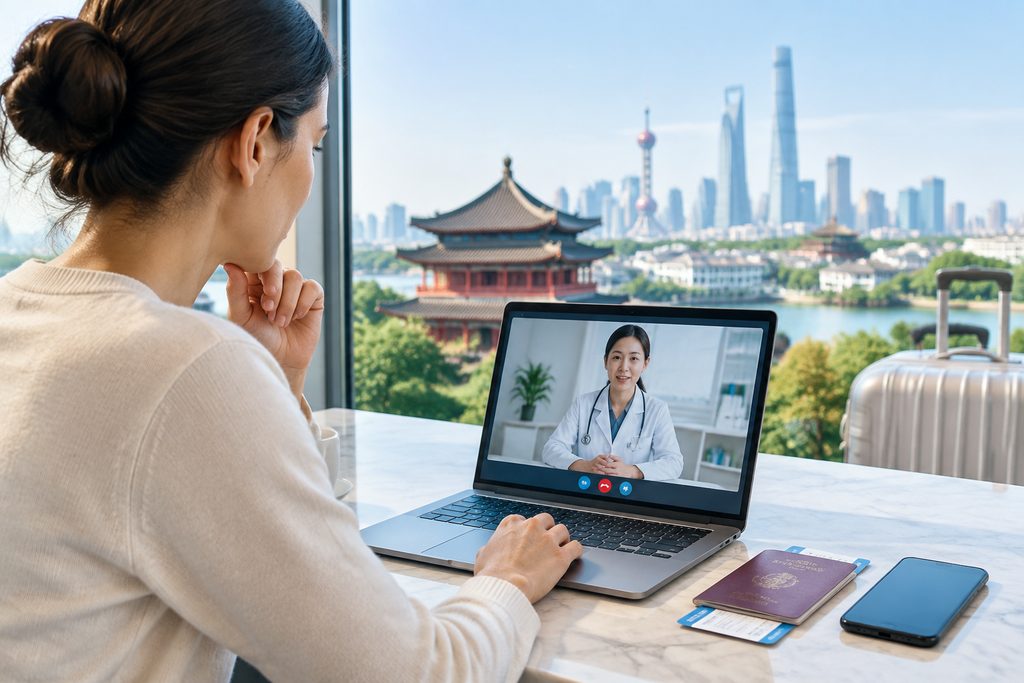
Lab Tests in China: Booking From Overseas
When 54-year-old David from Portland needed a full cardiac workup before his elective valve procedure, his cardiologist in Oregon handed him a two-page list of tests. His insurance quoted $6,400 for the panel alone. A colleague mentioned that lab tests cost China far less — often 70% to 90% less — and that top Shanghai hospitals run the same assays on the same Roche and Abbott platforms used in the United States. David’s real question wasn’t price. It was whether he could arrange any of it from 6,000 miles away.
The short answer: yes, partially. You can book a China medical lab test package for international patients through a hospital’s international department, but you cannot simply walk into a public outpatient clinic as a foreigner and expect same-day English service. The gap between “possible” and “smooth” is where most overseas patients get stuck.
Can You Actually Book Lab Tests in China From Overseas? The Short Answer
Direct online booking of individual lab tests is rare. Chinese public hospitals operate on a walk-in registration model for outpatient labs — you queue, you register, you pay, you draw. There is no OpenTable for blood work.
What does work: the international department or VIP channel of a major hospital. These units accept advance coordination, provide English-speaking staff, and can bundle a physician consultation with the lab order. That matters because in China, a lab test generally requires a doctor’s order first. You cannot self-refer for a CBC the way you might at a Quest Diagnostics location in the US.
So the honest version is this. You can arrange lab testing in advance through the right channel. You cannot do it through the general public queue. And for anything beyond routine panels — specialized genetic testing, rare autoimmune markers, advanced imaging — pre-coordination becomes almost mandatory.
Who This Is Right For — and Who It Isn’t
Not every traveler should build lab work into a China trip. Here is the practical split.
Typically a good fit:
- Patients already planning treatment or consultation in China who want baseline labs done on arrival
- People seeking a comprehensive health screening package at a fraction of Western prices
- Expats and long-stay visitors who need routine monitoring — diabetes panels, thyroid function, lipid profiles
- Patients whose home doctor has ordered specific tests that are cheaper or faster to obtain in China
- Anyone combining lab work with a second opinion from a Chinese specialist
Probably not worth it:
- Anyone needing results within 24 hours for an acute condition — fly home instead
- Patients requiring tests that only exist in specific Western reference labs
- Travelers without a clear clinical reason, treating labs as a bargain-hunting exercise
- People who cannot tolerate a 3-to-7-day turnaround for specialized results
If your situation is urgent or your test is highly specialized, staying home is genuinely the better call. We say that plainly because a wasted trip costs more than any lab discount.
The Options, Compared
Three realistic paths exist for a foreigner seeking blood work or diagnostics in China. They differ sharply in cost, convenience, and language support.
| Option | Typical Cost (USD) | English Support | Advance Booking | Best For |
|---|---|---|---|---|
| Public hospital, standard queue | $15–$80 for common panels | Limited or none | No | Locals, fluent speakers |
| Public hospital international / VIP department | $150–$600 depending on panel | Yes, staffed | Yes, coordinated | Overseas patients, complex panels |
| Private international hospital | $300–$1,200 | Full English service | Yes, direct | Insurance billing, comfort, speed |
The middle column is where most international patients land. You get the same laboratory, the same equipment, and the same pathologists as the public side — just with a coordinator who speaks your language and a waiting room that doesn’t require a translator app. The private tier costs more but handles direct insurance billing, which the public tier generally does not.
What a China Medical Lab Test Package for International Patients Usually Includes
Packages vary, but a typical comprehensive screening at a top hospital covers a complete blood count, liver and kidney function, lipid profile, fasting glucose, thyroid panel, urinalysis, and often tumor markers or vitamin levels depending on age and risk factors. Imaging add-ons — chest CT, ultrasound, cardiac echo — are quoted separately.
Here is the detail most articles skip. The order of tests matters. Chinese hospitals often require a physician consult before issuing lab orders, so a “lab-only” visit still involves a doctor’s appointment. Budget for that. It is usually inexpensive — often under $50 at a public hospital’s international desk — but it is a step, not an afterthought.
Fasting requirements follow international norms: 8 to 12 hours for glucose and lipids. Bring your home doctor’s request list in English. Hospital staff can map it to their internal test codes, though not every Western test name translates one-to-one.
What It Costs — and What Drives the Variance
For a standard comprehensive metabolic and blood panel, expect $80 to $250 at a public hospital’s international department. A full executive screening package with imaging runs $400 to $1,500. Private international hospitals charge roughly 1.5 to 2 times the public international rate.
What moves the number:
- Test complexity. A basic CBC is trivial. Next-generation sequencing or rare antibody panels can run into the thousands.
- Hospital tier. A top-ranked facility in Beijing or Shanghai costs more than a regional hospital, but the lab quality is comparable for routine work.
- Speed. Same-day or expedited results carry a premium.
- Language and coordination. English-speaking staff and advance scheduling are built into international department pricing.
For context, the same comprehensive panel in the US frequently runs $800 to $3,000 without insurance. That is the gap that makes lab tests cost China a genuine consideration for uninsured or underinsured patients.
Practical Considerations: Sending Results Abroad, Safety, and Logistics
Is it safe to get blood tests in China as a foreigner? For accredited hospitals, yes. Top-tier Chinese hospitals are JCI-accredited or operate to equivalent national standards, and major labs participate in international quality programs. The risk isn’t the needle — it’s miscommunication about what was ordered.
On getting results to your doctor abroad: most international departments issue bilingual reports, and many provide digital copies within 24 to 72 hours. For specialized tests, allow longer. Ask upfront whether the report includes reference ranges in English, because your home physician will need those to interpret results correctly. Some hospitals will email PDFs directly; others require you to collect them in person.
Visa logistics matter too. If lab work is part of a broader medical trip, the S2 visa category covers short-stay medical treatment and private affairs, subject to current embassy requirements and supporting hospital documents. Accompanying family members apply under the same category. Note that the M visa is for commercial and trade activity — it has nothing to do with medical travel, despite what some outdated forum posts claim.
Payment is another wrinkle. Public hospitals typically require prepayment and issue receipts you submit to your insurer for later reimbursement. Private international hospitals often bill insurance directly. Check your policy before you book.
Frequently Asked Questions
Partially. International departments can pre-register you and prepare orders, but the blood draw itself requires your physical presence. Some written second-opinion services review existing lab reports remotely, which is a different service from having new tests run.
At accredited hospitals, yes. Standards for phlebotomy and lab quality are high at major institutions. The bigger variable is communication — make sure the order is understood correctly before the draw, and confirm the report will be in a format your home doctor can read.
Ask the hospital for a bilingual digital report, ideally as a PDF with English reference ranges. Most international departments can email it within a few days. For specialized testing, request a courier option or arrange pickup before you leave the country.
Several Shanghai institutions rank among China’s top facilities for laboratory medicine, including major university-affiliated hospitals with dedicated international departments. The right choice depends on your test list and whether you need insurance billing — our ranked hospital directory by city lets you filter by specialty and service tier.
Your Next Step
The core message is simple: lab testing in China is affordable, high quality, and genuinely accessible to international patients — provided you go through the right channel and plan ahead. The savings are real, but so is the coordination burden.
China Medical Services is not a hospital and we do not diagnose or treat. We connect international patients with 340+ top-ranked hospitals across 37 cities, and we handle the logistics that trip people up — appointment coordination, bilingual accompaniment, and clear communication with your home physicians. If you’d like to understand what a lab package would cost for your specific test list, you can start with a free consultation. No pressure, no obligation — just a clear picture before you decide anything.
This article is for general information only and does not constitute medical advice. Lab test selection, interpretation, and treatment decisions should always be made with a qualified physician who knows your history.
For more medical information and treatment options in China, visit chinamedservices.com (China Medical Services).
