Leukemia Second Opinion in China: How It Works for Patients
Key Takeaways
- A leukemia second opinion in China can be obtained remotely through a written report or video consultation, often without traveling first.
- China’s leading hematology centers review thousands of leukemia cases annually, and their specialists are listed in the Fudan University hospital rankings.
- Language, records translation, and appointment access are the real barriers — not the medical expertise itself.
- No service can guarantee admission, a specific doctor, or a clinical outcome. Any provider who promises otherwise should be treated with caution.
The Problem: When a Leukemia Diagnosis Leaves You With More Questions Than Answers
Several Chinese hospitals appear consistently in the Fudan University Hospital Rankings, which evaluates hospitals by specialty reputation across 45 disciplines. Institutions such as Peking Union Medical College Hospital, Ruijin Hospital in Shanghai, and West China Hospital in Chengdu are recognized leaders in hematology and oncology. These are not small clinics. They are academic medical centers handling complex, refractory, and relapsed leukemia cases as routine work.
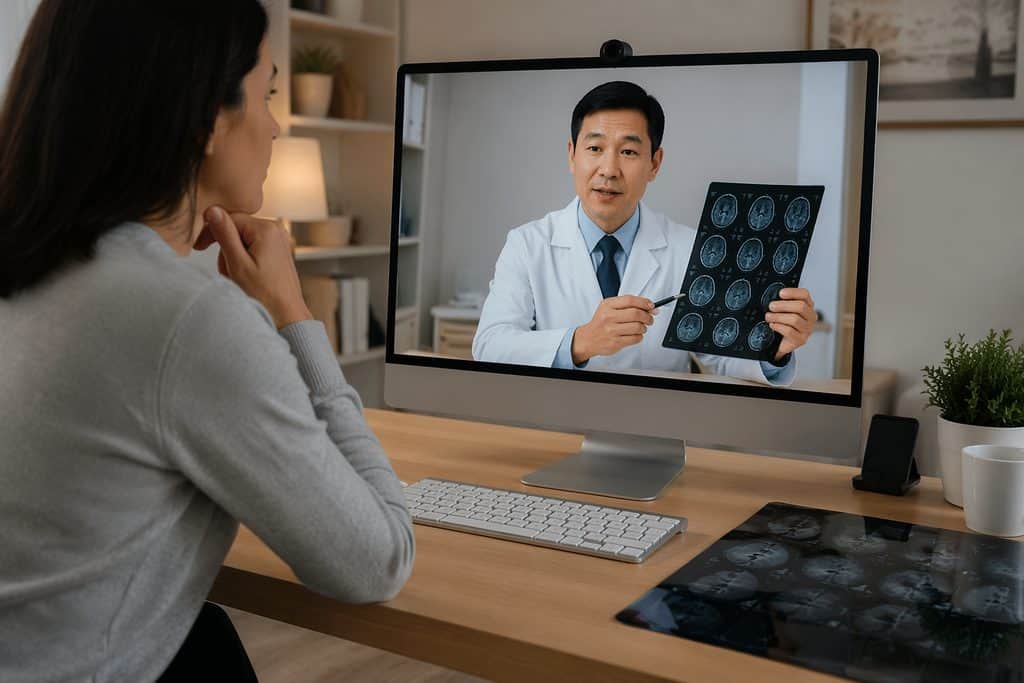
The most practical entry point is a written second opinion. A patient sends existing examination reports — blood counts, bone marrow biopsy pathology, flow cytometry, cytogenetic and molecular panels, imaging — and the relevant Chinese specialty reviews them and returns a written analysis with treatment suggestions and direction. No visa. No travel. The output is a document you can discuss with your local oncologist.
A written second opinion from a top-tier Chinese hospital specialist typically runs from $300 to $500. A top-specialist video consultation runs $500 to $800, and a multidisciplinary team (MDT) video session — where hematology, pathology, and transplant specialists review the case together — runs $1,500 to $2,000. Compare that with U.S. academic second-opinion fees of $2,000 to $5,000, and the difference is structural: physician salaries, administrative overhead, and hospital operating costs are all lower in China. The clinical training at top centers is not.
How the Process Actually Works: A Step-by-Step Timeline
Here is what the path looks like in practice, from first inquiry to receiving a written opinion.
- Days 1–3: You gather records. The essential set includes the bone marrow pathology report, flow cytometry results, cytogenetic karyotype, molecular mutation panel (FLT3, NPM1, IDH1/2, TP53 and similar), complete blood counts with differential, and any imaging. If slides or blocks can be released, note that — some Chinese pathologists will re-read them.
- Days 3–7: Records are translated into Chinese and organized into a case summary. Poor translation is the single most common reason a review stalls. Mutation names, cytogenetic notation, and treatment drug names must be exact.
- Days 7–14: The case is routed to the appropriate hematology department at a shortlisted hospital. The specialist reviews the file and prepares written analysis and treatment direction.
- Days 14–21: You receive the written opinion, typically in English alongside the Chinese original. If you chose a video consultation instead, this is when the call is scheduled — usually with a bilingual coordinator present.
Total turnaround for a written opinion is commonly two to three weeks, though complex or relapsed cases needing pathology re-review can take longer. Anyone promising a 48-hour turnaround from a top specialist is probably not routing your case to a top specialist.
Written Opinion, Video Consultation, or Proxy Visit: Choosing the Right Format
These are not competing products. They are stages, and most patients only need the first one.
| Format | Best For | Typical Cost | What You Receive |
|---|---|---|---|
| Written second opinion | Confirming diagnosis and treatment direction before committing to a plan | $300–$500 | Written analysis, treatment suggestions, direction — for reference only, not a prescription |
| Video consultation | Cases where you want to ask questions directly and hear recommendations live | $100–$300 (general) / $500–$800 (top specialist) | Live discussion of symptoms, goals, and options with interpretation |
| MDT video session | Complex, relapsed, or transplant-eligible cases needing multi-specialty input | $1,500–$2,000 | Combined hematology, pathology, and transplant perspectives |
| Proxy in-person visit | You designate a city, hospital, department, or specialist and want materials presented in person | Coordination from $300 plus companion time | Registration, hospital card creation, and a proxy visit using your materials; later admission remains subject to hospital rules |
Notice what is missing from that table: a guarantee. We do not promise that a specific professor will take your case, that a bed will be available on a given date, or that any treatment will succeed. Those outcomes depend on the hospital and the disease. What can be coordinated is the logistics — and if an appointment cannot be secured as described, the coordination fee is refunded in full.
A word on vocabulary, because it matters. Our role is case management: medical record translation, appointment coordination through a hospital’s official international department or VIP channel, and bilingual accompaniment. It is not an access fee, and it does not buy queue priority or personal connections. International patients who have been pitched “expedited access” elsewhere tend to recognize the difference immediately.
Practical Considerations for International Patients
If the second opinion leads to travel, the logistics are manageable but specific.
Visa. Foreign nationals coming to China for medical treatment apply for the S2 visa, which covers short-stay private affairs including medical treatment, and requires supporting hospital documentation. Stays exceeding 180 days fall under the S1 category. Accompanying family members apply under the same S2 category. Requirements change, so confirm current rules with the nearest Chinese embassy or consulate before booking anything. Note that the M visa is for commercial and trade activity and has nothing to do with medical treatment.
Appointments. Public hospital outpatient registration in China generally cannot be locked in from overseas in advance. Same-day queueing is the norm, and surgery is scheduled only after an in-person consultation. If you want a pre-arranged specialist appointment and English-language service, that runs through the hospital’s international or VIP department, typically at 1.5 to 2 times the standard channel price.
Payment. Public hospitals require prepayment, with insurance reimbursement handled afterward. Many private international hospitals offer direct billing with certain insurers. Bring documentation of your coverage and expect to settle major charges upfront.
Language. China’s top hospitals see tens of thousands of outpatients daily. Navigating registration, payment, lab collection, and pharmacy counters without Mandarin is genuinely difficult. Bilingual medical companion service runs from $300 per day, covering queueing, registration, payment, wayfinding, and interpretation — but not a promise to secure a named specialist.
For a broader picture of how hospital selection works across specialties, our department-by-department rankings of China’s top hospitals break down the Fudan specialty reputation lists, and the Fudan Top 100 hospitals by city shows which cities concentrate the strongest programs. If you want to compare public academic centers against private options with English-speaking staff and direct insurance billing, the private international hospital directory is the place to start.
Frequently Asked Questions
Can I get a leukemia second opinion in China without traveling there?
Yes. A written second opinion requires only your existing examination reports, which are translated and submitted for specialist review. Video consultation is also available if you want direct discussion. Travel is only necessary if you decide to pursue treatment in China afterward.
How much does a leukemia second opinion in China cost?
A written opinion from a top hospital specialist runs $300 to $500. Video consultations range from $100 to $300 at general international departments and $500 to $800 with a top specialist. MDT sessions run $1,500 to $2,000. Final pricing varies by hospital and case complexity, and any consultation fee is credited toward later on-the-ground coordination within 90 days.
What if the second opinion contradicts my current treatment plan?
That happens, and it is not a failure — it is information. A written opinion is for reference only and is not a prescription. The right move is to bring it to your treating oncologist and discuss the reasoning together. Some disagreements reflect genuine differences in interpretation; others reflect access to different therapies or clinical trials. Either way, you are better positioned to decide than you were before.
Your Next Step
A leukemia diagnosis compresses time and narrows thinking, but the decision about where to get a second read does not have to be made in a panic. Gather your records, get an accurate translation, and let a specialist look at the actual data. We are a medical concierge service, not a hospital — we do not diagnose or treat anyone. What we do is translate records, coordinate reviews through official hospital channels, and support patients logistically if they choose to travel. If you would like to discuss whether a second opinion makes sense for your case, start with a free consultation and we will tell you honestly what is and is not possible.
This article is for general information only and does not constitute medical advice. Treatment decisions should always be made with a qualified physician who has reviewed your individual case.
For more medical information and treatment options in China, visit chinamedservices.com (China Medical Services).
