Cardiac Surgery: An Expert Re-Review of Costs, Hospitals, and Recovery
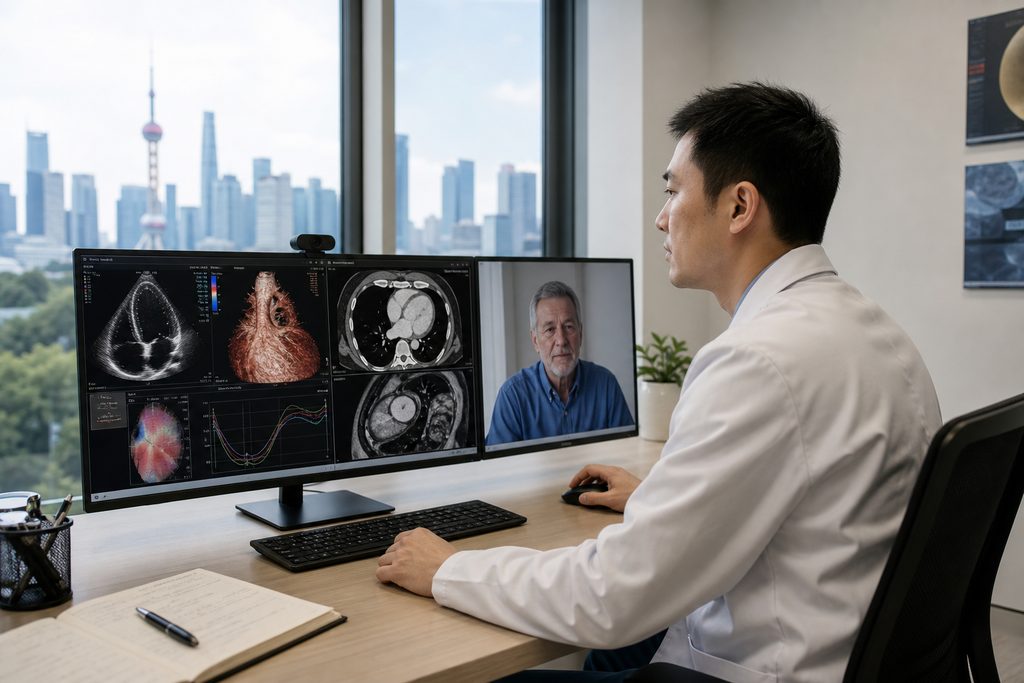
When 52-year-old Daniel from Manchester received his diagnosis of severe mitral valve regurgitation, his cardiologist handed him a single sheet of paper with three surgical options and a six-month waiting list. The quote for private treatment in the UK made him sit down. His insurance capped coverage at £40,000. The gap was £22,000 out of pocket. Daniel started searching “heart bypass price abroad” and “cardiac surgery cost China” at 2 a.m., not knowing what he would find.
He is not alone. Approximately 1 in 4 patients diagnosed with structural heart disease in Western Europe and North America now researches treatment outside their home country at least once. The cardiac surgery cost China offers — typically 70% to 90% below US private rates — is the initial draw. But price alone is not a decision. Hospital volume, surgeon experience, valve selection, and post-operative logistics matter more than any single line item.
Cardiac Surgery: The Short Answer
For a foreign patient, cardiac surgery cost China ranges from $12,000 to $45,000 depending on the procedure: a coronary artery bypass graft (CABG) at a top-tier public hospital typically runs $12,000 to $20,000, while complex valve replacements or aortic repairs at international departments reach $30,000 to $45,000. The same CABG in the United States averages $120,000 to $180,000 before insurance negotiation. In Germany, expect €35,000 to €60,000. In Singapore, $45,000 to $80,000.
But the real question is not whether the number is lower. It is whether the quality holds at that number. China’s top cardiac centers — Fuwai Hospital in Beijing, Zhongshan Hospital in Shanghai — perform cardiac surgery volumes that dwarf most Western centers. Fuwai alone completes over 14,000 cardiac surgeries annually, the highest single-center volume globally. Volume matters in cardiac surgery. Studies consistently link higher annual case volumes to lower operative mortality for CABG and valve procedures.
That does not mean every hospital in China delivers that standard. The gap between a top-5 cardiac center and a provincial general hospital is enormous. The challenge for a foreign patient is knowing which is which.
Who This Is Right For — and Who It Isn’t
International cardiac surgery works well for a specific patient profile. It is not a universal solution, and saying so up front saves patients from expensive mistakes.
Typically a good candidate:
- You have a confirmed diagnosis with complete imaging — echocardiogram, coronary angiography, CT or MRI — and your case is stable enough for planned travel.
- You face a long wait in your home system. In Canada, median wait for elective CABG exceeds 60 days. In the UK NHS, 18-week referral-to-treatment targets are routinely missed for cardiac surgery.
- Your insurance excludes the procedure, caps coverage, or you are paying privately.
- You need a second opinion on whether surgery is even necessary, and you want that opinion from a high-volume center.
- Your condition is well-documented and you are mobile enough for a 10–14 hour flight.
Who should not pursue this:
- Emergency or urgent cases. If your cardiologist says surgery is needed within weeks, do not fly across the world. Get treated locally.
- Unstable angina, recent myocardial infarction within 30 days, or severe heart failure (NYHA Class IV) that is not optimized.
- Active infection, including endocarditis that is not fully treated.
- Patients who need complex congenital heart repairs requiring multiple staged surgeries and long-term pediatric follow-up — unless the center has a dedicated adult congenital program.
- Anyone who cannot provide complete medical records in a format that can be translated and reviewed remotely before travel.
Being honest about exclusions is what protects patients. A good international coordinator will tell you when staying home is the right call.
The Options, Compared
Where should you have cardiac surgery if you are considering going abroad? The table below compares four realistic pathways for an international patient needing CABG or valve surgery.
| Pathway | Indicative Cost (USD) | Wait Time (Elective) | Key Trade-off |
|---|---|---|---|
| US private hospital | $120,000–$180,000 | 2–4 weeks | Highest cost; familiar system |
| Germany / Switzerland | $40,000–$75,000 | 3–8 weeks | High quality; moderate cost |
| Thailand / India (private international) | $15,000–$30,000 | 1–3 weeks | Lower cost; variable cardiac volumes |
| China top-tier public (international dept) | $12,000–$45,000 | 2–6 weeks after remote evaluation | Lowest cost at high volume; language and logistics |
China’s position in this table is specific: the lowest cost combined with the highest surgical volumes. What China does not offer is the familiar, English-first, insurance-direct experience of a Western private hospital. That trade-off is real. For a patient who values volume and cost above all else, China is compelling. For a patient who wants minimal logistical friction and direct insurance billing, Thailand or a European private clinic may fit better.
Within China, the choice is not simply “China” — it is which hospital tier. Public top-tier hospitals like Zhongshan Hospital in Shanghai or Fuwai in Beijing deliver the volume and the price. Private international hospitals like United Family or Jiahui deliver English-speaking care and direct billing, but at roughly 1.5 to 2 times the public hospital price. For cardiac surgery specifically, the public top-tier centers are where the world-class volume lives.
Best Heart Hospital Shanghai: Why Zhongshan and Fuwai Lead
Search for “best heart hospital Shanghai” and you will find Zhongshan Hospital, affiliated with Fudan University, at or near the top of every credible list. Its Department of Cardiac Surgery performs over 5,000 open-heart procedures annually. The hospital is ranked among China’s top 10 for cardiac surgery in the Fudan specialist reputation rankings, which evaluate 45 specialties across the country’s 35,000+ hospitals. Only the top 5% make the list at all.
In Beijing, Fuwai Hospital is the reference center. Over 14,000 cardiac surgeries per year. It is not an exaggeration to say Fuwai’s surgeons see more complex valve and bypass cases in a month than many Western centers see in a year. That repetition shows up in outcomes. Fuwai reports operative mortality for isolated CABG below 1% — a figure consistent with the best centers in North America and Europe.
But here is what most foreign patients do not know: you cannot simply email Fuwai or Zhongshan and book a surgery date. China Medical Services exists precisely because public hospital systems in China do not operate like Western private clinics. You cannot hold an OR slot from overseas. You need a pathway: remote evaluation first, then in-person consultation, then scheduling. The international departments at these hospitals handle foreign patients, but the process still requires Chinese-language navigation at multiple steps.
This is where the “expert re-review” in the title matters. Before you fly to Shanghai or Beijing, a remote written second opinion from the actual cardiac surgery team can tell you whether they agree with your home diagnosis, what procedure they recommend, and whether they would accept your case at all. That step costs $300–$500 for a written review from a top-tier specialist, or $500–$800 for a live video consultation. It is the cheapest insurance you will ever buy against flying 9,000 kilometers for a surgery that was never going to happen.
How Long to Recover from Open Heart Surgery
The honest answer: longer than most patients expect, and shorter than the horror stories suggest.
For a standard CABG or single valve replacement via median sternotomy (the full chest incision):
- Days 1–2: ICU. Breathing tube removed within hours. You are sitting up, possibly walking a few steps with assistance.
- Days 3–7: Step-down ward. Chest tubes out by day 3 or 4. Walking the hallway. Discharge from a Chinese top-tier hospital typically happens between day 5 and day 10, depending on complications.
- Weeks 2–4: At home or in a recovery apartment. You can shower, walk 15–30 minutes, climb stairs slowly. No driving. No lifting over 5 kg.
- Weeks 5–8: Cardiac rehabilitation begins. Most patients return to desk work at 6–8 weeks.
- Months 3–6: Sternum fully healed at approximately 12 weeks. Return to full physical activity, including exercise, at 3–6 months depending on your surgeon’s clearance.
For minimally invasive valve surgery (small incision between the ribs), recovery is faster: hospital discharge at 4–6 days, return to work at 3–4 weeks. Not every patient qualifies for minimally invasive approaches. Valve type, coronary anatomy, and prior surgeries all factor in.
If you travel to China for surgery, plan to stay in-country for at least 2–4 weeks after discharge. Your surgeon will want to see you for a follow-up before clearing you to fly. Long-haul flights after cardiac surgery increase deep vein thrombosis risk, so most centers recommend waiting 10–14 days post-discharge before flying, with compression stockings and possibly anticoagulation.
Is Heart Valve Replacement Safe in China?
This is the question behind the question. Cost means nothing if safety is uncertain.
The short answer: at top-tier centers, yes — with outcomes comparable to Western benchmarks. The long answer requires nuance.
Fuwai Hospital and Zhongshan Hospital publish operative mortality for isolated valve replacement below 1.5%. That aligns with STS (Society of Thoracic Surgeons) database averages in the United States. The same cannot be said for every hospital in China. A provincial hospital performing 200 cardiac surgeries per year is not the same as Fuwai at 14,000. The variance between centers is the single biggest safety variable.
For a foreign patient, safety depends on three things:
- Which hospital you choose. Stick to the Fudan-ranked top 10 for cardiac surgery. Not top 50. Top 10.
- Which valve you receive. Chinese centers offer the same mechanical and bioprosthetic valves used worldwide — Edwards, Medtronic, Abbott, and domestic brands like Balance Medical. The choice between mechanical and tissue valve should be made with your surgeon based on age, lifestyle, and anticoagulation tolerance. No center should push you toward one option without that discussion.
- Who manages your anticoagulation after a mechanical valve. This is the most overlooked risk. Mechanical valves require lifelong warfarin with INR monitoring. If you return to your home country, your local cardiologist must take over that management seamlessly. Chinese centers provide discharge summaries in English through their international departments, but you must ensure your home physician receives them.
What Cardiac Surgery Actually Costs in China
Let’s break down the numbers. These are ranges, not fixed prices, and they vary by hospital and case complexity.
| Procedure | Public Top-Tier (International Dept) | Private International Hospital |
|---|---|---|
| CABG (coronary bypass) | $12,000–$20,000 | $30,000–$45,000 |
| Single valve replacement (mechanical) | $14,000–$22,000 | $35,000–$50,000 |
| Single valve replacement (bioprosthetic) | $16,000–$25,000 | $38,000–$55,000 |
| Double valve replacement | $22,000–$35,000 | $50,000–$70,000 |
| Minimally invasive valve repair | $18,000–$28,000 | $40,000–$60,000 |
| Aortic root replacement (Bentall) | $25,000–$40,000 | $55,000–$80,000 |
What is included in these figures? At public hospitals, the surgical package typically covers the operation, anesthesia, ICU stay, standard ward stay, routine medications, and basic nursing. It does not include: the surgeon’s coordination fee if you go through a VIP channel (typically $800–$1,200 for a top specialist in-person consultation), pre-operative imaging if not already done, upgraded private room, non-standard valve choices, or any complication-related extended stay.
What is not included and often surprises patients: international department pricing. The public hospital’s international department charges 1.5 to 2 times the standard public rate. The prices in the table above reflect international department rates, not the subsidized local rates that Chinese citizens pay. You are not paying local prices, and you should be suspicious of anyone who quotes them to you.
For a written second opinion before you commit, expect $300–$500. For a video consultation with a top specialist, $500–$800. For a multidisciplinary team review of a complex case, $1,500–$2,000. These fees are credited in full toward on-the-ground coordination if you proceed to treatment in China within 90 days — a one-time credit against coordination fees only, never against hospital treatment charges.
Practical Considerations: Records, Visa, and Payment
You cannot book a cardiac surgery package in China the way you book a hotel. The process is sequential, and skipping steps costs time and money.
Medical records. You need complete documentation: echocardiogram report and images, coronary angiography report and CD, cardiac CT or MRI, recent ECG, blood work, and your cardiologist’s referral letter. All of it must be in English or translated. Chinese cardiac teams will review these remotely first. If the review says you are not a surgical candidate, you have lost $300–$500, not $15,000.
Visa. Medical treatment in China uses the S2 visa, annotated for medical purposes. Your accompanying family member also applies for an S2. The hospital’s international department provides the invitation letter and treatment confirmation documents required by the Chinese embassy or consulate. Processing time varies by country. Do not book flights before the visa is in hand. The M visa is for commercial and trade activities only — it is not applicable to medical treatment.
Payment. Public hospitals in China require pre-payment before surgery. International departments accept wire transfer and major credit cards. Private international hospitals often bill insurance directly. Public hospital international departments may not. You pay first, then claim reimbursement from your insurer. Confirm this with your insurer before you travel. Some insurers require pre-authorization for overseas surgery; failing to obtain it can void your claim.
Language. Top-tier public hospitals have English-speaking staff in their international departments. But the moment you step outside that department — to the lab, the imaging center, the pharmacy — English disappears. A bilingual medical companion who handles registration, queueing, payment, and translation is not a luxury. It is the difference between a 4-hour day and a 10-hour day of confusion. This service runs from $300 per day.
Follow-up after returning home. Your Chinese surgeon will provide a discharge summary, operative report, and medication list in English. You must hand these to your home cardiologist. For mechanical valve patients, INR management transfers to your local anticoagulation clinic. For bioprosthetic valves, annual echocardiograms are standard. The Chinese team may offer remote follow-up video consultations at $100–$300 per session.
Frequently Asked Questions
No. Public hospitals in China do not allow overseas patients to lock a surgery date remotely. You can, however, complete a remote written second opinion or video consultation first. If the surgical team accepts your case, they will schedule an in-person consultation. Surgery is scheduled after that face-to-face evaluation. Anyone promising a confirmed surgery date before you land is not representing the hospital accurately.
How much cheaper is heart bypass surgery in China really?
A CABG at a top-tier Chinese public hospital through
For more medical information and treatment options in China, visit chinamedservices.com (China Medical Services).
