What Are the Limits of Health Screening? A Realistic Guide for Foreigners
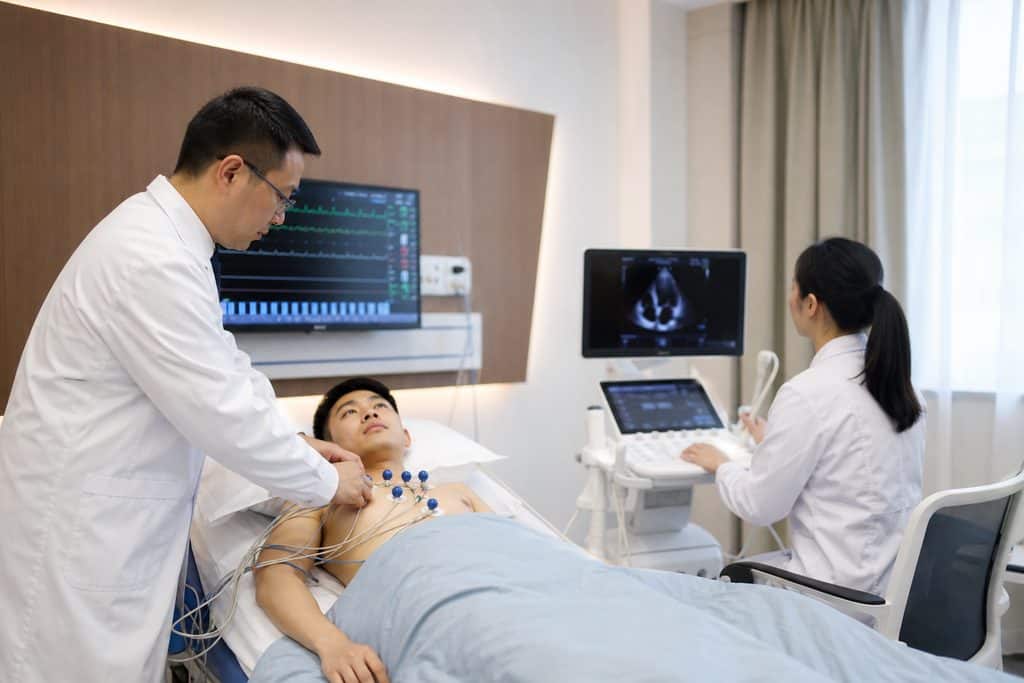
Have you ever walked out of a medical checkup with a clean report, only to wonder weeks later whether something was missed? That nagging feeling is not paranoia. It is the central question behind every health screening: what can a scan actually promise you? If you are researching a full body health screening cost China package, you are already asking the right question. The honest answer is that screening is a powerful filter, not a crystal ball. It reduces uncertainty. It does not eliminate it.
Health Screening Limits: The Short Answer
A comprehensive screening can detect structural problems, silent organ damage, and early-stage cancers that have not yet caused symptoms. But it cannot guarantee future health. A normal CT scan of your lungs today says nothing about a tumor that might appear in eighteen months. Blood markers fluctuate. Micro-clots dissolve. Some aggressive cancers grow between annual checkups. The limit is temporal: you are capturing a snapshot, not a forecast.
That caveat is what makes the conversation complicated. A premium executive package in Shanghai might include cardiac calcium scoring, low-dose lung CT, abdominal ultrasound, and tumor marker panels. Those tools catch a great deal. What they miss is equally important: functional decline, early neurological changes, and the slow metabolic drift that precedes diabetes by years. No single scan sees everything.
Who This Is Right For — and Who It Isn’t
Screening delivers the most value for a specific profile. You are a good candidate if you are over 40, have a family history of cancer or heart disease, or carry lifestyle risks like long-term smoking or heavy alcohol use. You are also a strong candidate if you live in a country with long wait times for elective imaging and want a baseline now, while you are asymptomatic. Business travelers who spend months in China often use these packages precisely because the logistics are easier on the ground.
Who should not pursue an aggressive full-body scan?
- People under 30 with no symptoms and no family history. The radiation exposure from repeated CT scans outweighs the benefit.
- Anyone with acute symptoms — chest pain, unexplained weight loss, blood in stool. Screening is not diagnosis. You need a targeted workup, not a package.
- Patients with severe kidney impairment who cannot tolerate contrast agents.
- Pregnant women, for whom any ionizing radiation is generally avoided unless clinically urgent.
Being explicit about who should stay home is what makes the rest of this guide credible. Screening is a tool with a narrow optimal window.
The Options, Compared
Not all screening programs are built alike. A basic physical at a public hospital outpatient clinic differs enormously from an executive package at an international medical center. The table below compares what you actually get at each tier, using typical offerings in major Chinese cities.
| Feature | Public Hospital Basic Checkup | Standard Executive Package | Premium International Screening |
|---|---|---|---|
| Typical cost (USD) | $80–200 | $500–1,200 | $1,800–4,500 |
| Duration | Half day | 1 full day | 1–2 days, often with overnight stay |
| Imaging included | Chest X-ray, abdominal ultrasound | Adds low-dose lung CT, carotid ultrasound | Adds cardiac calcium score, brain MRI, sometimes whole-body MRI |
| Cardiac assessment | Resting ECG only | ECG + lipid panel + optional stress test | Adds coronary CT angiography in some packages |
| Tumor markers | None or 2–3 basic markers | 6–10 markers, sex-specific | 12+ markers plus liquid biopsy in select programs |
| Doctor consultation | Brief, often group-based | 20–30 minute review | 60+ minute specialist review with written report |
| Language support | Chinese only | Limited English | Full English-speaking staff |
| Report turnaround | 3–7 days | 2–5 days | Same day to 48 hours |
Which column fits you? If you are healthy, under 35, and just want baseline labs, the public hospital basic checkup is adequate. If you are over 45 with cardiac risk factors, the standard executive package in Shanghai or Beijing offers the best cost-to-value ratio. The premium international tier makes sense when you need English-language reporting, same-day results, and a physician who will spend an hour explaining findings. That is not a luxury for a foreigner who cannot read a Chinese lab sheet. It is the only way the data becomes actionable.
What a Full Body Health Screening Cost China Package Cannot Detect
Here is the section every brochure skips. A full-body screening — however premium — has hard technical limits. First, CT and MRI cannot see functional problems. A heart that beats normally on an ECG can still have electrical instability that only a 24-hour Holter monitor would catch. Second, tumor markers are notoriously imprecise. CA-125 rises with endometriosis and pelvic inflammation, not just ovarian cancer. CEA can be elevated in smokers with no malignancy. A single elevated marker often leads to more scans, more anxiety, and sometimes unnecessary biopsies.
Third, early pancreatic, ovarian, and brain cancers frequently escape routine imaging. The pancreas sits deep in the abdomen, hidden behind the stomach. Small lesions are easy to miss on standard CT protocols. Ovarian cancer has no reliable screening test at all — ultrasound catches some masses, but many early-stage tumors are invisible. And a standard brain MRI without contrast may miss small vascular malformations or early demyelinating disease.
Fourth, screening does not change behavior. The most expensive cardiac scan in Shanghai will not reduce your risk if you leave the clinic and resume a pack-a-day habit. The scan is only as valuable as what you do with the results. This is the limit no technology solves.
What It Costs — and What Drives the Price
The full body health screening cost China ranges from roughly $80 for a basic public hospital package to over $4,000 for a comprehensive international program in Shanghai or Beijing. What drives that fifty-fold difference? Three things: imaging modality, hospital tier, and language support.
A chest X-ray costs a few dollars. A low-dose lung CT costs $100–200. A cardiac calcium score adds another $150–300. Whole-body MRI — increasingly popular among affluent patients — runs $1,500–2,500 on its own. Each modality adds cost and, in the case of CT, radiation exposure. More imaging is not automatically better. A thoughtful physician selects tests based on your age, sex, family history, and risk profile.
Hospital tier matters too. A public tertiary hospital in Guangzhou might offer the same CT machine as a private international hospital in Shanghai. But the private hospital charges more for the same scan because you are paying for scheduling convenience, English reports, and a doctor who will actually sit down with you. The private international hospital network across China has made this tier increasingly accessible to foreigners, with JCI accreditation and direct insurance billing.
What is typically not included in the advertised price: follow-up consultations for abnormal findings, additional imaging recommended after the initial scan, biopsy or pathology if a lesion is found, and any treatment. The package covers the screening itself. Everything downstream is billed separately. Budget for that reality.
Practical Considerations: Booking a Screening in China as a Foreigner
If you decide to pursue an executive health checkup package Shanghai or a similar program in Beijing, the logistics are manageable but specific. You will need a valid passport. You do not need a specific medical visa for a short screening trip — an S2 visa is the applicable category for short-term private affairs, including medical treatment and health checkups, subject to the latest requirements from the Chinese embassy or consulate in your country. Some patients enter on existing business or tourist visas if the screening is incidental to another trip, but for a dedicated medical journey, S2 is the correct category.
Payment is typically required upfront at public hospitals. Private international hospitals may accept major credit cards and some international insurance plans with direct billing. If your insurer reimburses, you will need itemized receipts and, ideally, an English-language report — another reason the international tier holds appeal.
Language is the single biggest practical barrier. A public hospital checkup involves navigating registration counters, lab queues, and imaging departments with almost no English signage. This is where a bilingual medical companion service changes the experience: someone who handles registration, translates instructions, waits in line for you, and ensures your report is explained properly. You can manage alone if you speak Mandarin or have a Chinese-speaking friend. Most foreigners do not.
After you return home, follow-up matters. Bring your report to your primary care physician. Chinese labs use the same reference ranges as international standards in most cases, but units may differ. A good report will list both the measured value and the reference range. If anything is flagged, your home doctor can order confirmatory testing.
Is Full Body Checkup in China Accurate?
This is the question behind the question. Is full body checkup in China accurate? The short answer: yes, at top-tier hospitals, the imaging and laboratory accuracy meets international standards. The machines are the same Siemens, GE, and Philips models used in American and European hospitals. The radiologists at major centers read thousands of scans monthly — volume that breeds competence. The Fudan-ranked hospitals in our top hospital database include departments that perform among the highest imaging volumes in the world.
The accuracy limit is not the machine. It is the protocol and the reader. A hastily performed CT with thick slices can miss small nodules. A radiologist reading 100 scans in a shift may overlook a subtle finding. This is why hospital tier matters. A top-ranked hospital in Beijing or Shanghai uses thin-slice protocols and double-reading for high-risk cases. The difference is real, and it shows up in the price.
Frequently Asked Questions
In terms of available technology, how comprehensive is a health screening in Beijing is comparable to what you would receive at a major American academic medical center. The difference is access speed and cost. A full executive screening with cardiac CT and brain MRI that might take 3–6 months to schedule in London or Toronto can often be completed in 1–2 days in Beijing. The cost is typically 40–60% lower for an equivalent package. What you lose is continuity: your home doctor will not have direct access to the Chinese hospital’s electronic records, so you must carry reports and imaging back yourself.
Yes, but not through the standard public outpatient channel. Public hospital walk-in registration is same-day only and cannot be reserved from overseas. To book premium health screening China packages in advance, you go through the hospital’s international medical center or VIP department, or through a coordination service that has relationships with those departments. These channels allow pre-booked appointments, English-speaking staff, and sometimes same-day report turnaround. The premium is roughly 1.5–2 times the standard package price.
This is the moment the system is tested. If a concerning lesion is found, the screening hospital will recommend follow-up imaging, biopsy, or specialist consultation. You are not obligated to continue treatment at that hospital. You can take the report and imaging home for a second opinion. Some patients choose to stay in China for treatment because the specialist departments are excellent and costs remain far below Western prices. But the decision is yours. A screening finding is an invitation to further investigation, not a treatment plan.
The underlying tests are identical. What differs is the wrapper. Medical screening packages for foreigners China typically include English-language reporting, a dedicated coordinator, private waiting areas, and longer physician consultations. The clinical content — the CT, the labs, the ultrasound — is the same. You are paying for communication and logistics, not for better machines. For a foreigner who cannot read a Chinese report, that wrapper is not optional; it is the difference between a useful screening and a stack of paper you cannot interpret.
It depends entirely on your plan. Most international health insurance plans with outpatient coverage will reimburse preventive screening, but many require pre-authorization and itemized receipts. Some plans exclude elective screening altogether. Check with your insurer before you book. Private international hospitals in China are more likely to provide the documentation format your insurer expects, and some offer direct billing with major international carriers. Public hospitals generally do not.
Your Next Step
The limit of health screening is not the technology. It is the expectation you bring to it. A well-chosen package at a top-tier Chinese hospital gives you a high-resolution snapshot of your current health — no more, no less. What you do with that snapshot determines its value.
Our team at China Medical Services helps international patients understand which screening tier fits their risk profile, coordinate bookings with hospital international departments, and arrange bilingual support on the day. We are not a hospital, and we do not diagnose or interpret results. We handle the logistics so you can focus on the findings. If you are considering a screening in China and want a realistic recommendation on which package makes sense for your age and history, request a free consultation and we will walk you through the options without pressure.
A health screening cannot promise you a clean future. But done thoughtfully, at the right hospital, with the right follow-up, it can give you something almost as valuable: a clear picture of where you stand today.
For more medical information and treatment options in China, visit chinamedservices.com (China Medical Services).
