Lip Fillers in China: Costs, Safety, and Booking Guide for Foreigners
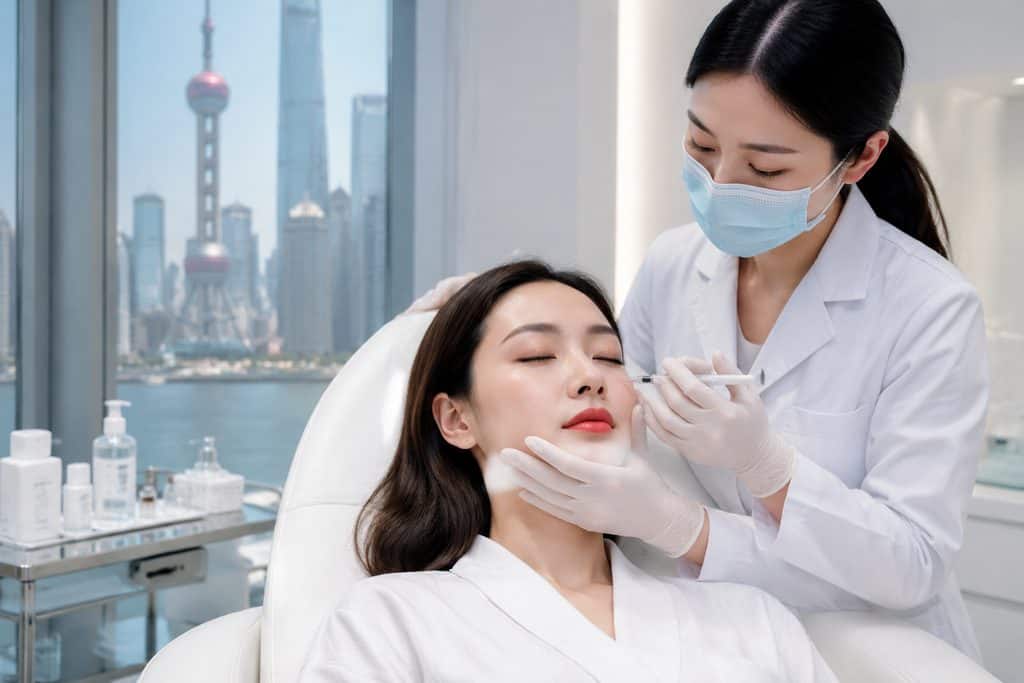
Lip Fillers in China: What International Patients Need to Know About Cost, Safety, and Booking
While a single syringe of hyaluronic acid lip filler costs $600–$1,000 in the United States, the lip filler cost China typically ranges from $150–$400 at accredited hospitals and clinics. That is a 60–75% price difference for the same FDA-approved products — Juvederm, Restylane, and their Chinese-licensed equivalents. But price alone tells you nothing about quality. You need to know which facilities are safe, which products are legitimate, and how to book without speaking Mandarin.
Key Takeaways
- Lip filler cost China averages $150–$400 per syringe at top-tier facilities, compared to $600–$1,000 in the US
- Safety depends entirely on facility selection — China has both world-class JCI-accredited hospitals and unregulated beauty salons
- Foreign patients can book appointments at international hospital departments that employ English-speaking staff
- You should never agree to treatment without verifying the product’s authenticity and the injector’s medical credentials
The Problem: Cosmetic Procedures Cost Too Much in Western Countries
Americans spent over $16.7 billion on cosmetic procedures in 2023, according to the American Society of Plastic Surgeons. Lip augmentation alone accounted for 1.4 million procedures. The average cost for a single lip filler session in New York or Los Angeles now exceeds $800 — and that does not include consultation fees, touch-up appointments, or the second syringe many patients need for their desired volume.
In the UK, the situation is similar. The British Association of Aesthetic Plastic Surgeons reports that non-surgical procedures like fillers have grown 70% since 2019, with prices in London clinics starting at £300–£500 per syringe. For patients who need maintenance every 6–12 months, this becomes a recurring expense of $1,000–$2,000 annually.
But the real problem is not just cost. It is the lack of transparency. Western clinics rarely publish their per-syringe pricing online. You often discover the true cost only after an in-person consultation, when you are already sitting in the treatment chair. That makes comparison shopping nearly impossible.
Why China Offers a Credible Alternative for Lip Fillers
China’s aesthetic medicine market has matured rapidly over the past decade. The country now hosts over 340 top-ranked hospitals across 37 cities, many with dedicated cosmetic dermatology departments staffed by board-certified physicians. The key differences come down to three factors: product access, physician training, and structural cost advantages.
Product Access: The Same Injectable Brands You Know
Hyaluronic acid fillers are classified as Class III medical devices in China, the highest regulatory category. That means they face the same scrutiny as implantable devices. The National Medical Products Administration (NMPA) has approved international brands including Juvederm (Allergan), Restylane (Galderma), and Ellansé (Sinclair Pharma), alongside domestic manufacturers like Hyaderm and Bloomage BioTechnology.
But here is what most foreign patients do not realize: counterfeit fillers are a genuine problem in China, just as they are in Turkey, Brazil, and parts of Eastern Europe. A 2023 investigation by China’s State Administration for Market Regulation seized over 120,000 counterfeit injectable units, many sold through unlicensed beauty salons and social media channels. The solution is not to avoid China — it is to choose a hospital-based practice that sources products directly from authorized distributors.
Physician Training: Board Certification Matters
In China, only licensed physicians may legally perform filler injections. This is stricter than the UK, where nurses and even non-medical practitioners can administer fillers with minimal training, and comparable to most US states. The top aesthetic departments in China — such as those at Shanghai Ninth People’s Hospital and Peking Union Medical College Hospital — require injectors to complete dermatology or plastic surgery residencies before touching a patient.
Shanghai Ninth People’s Hospital, for instance, performs over 100,000 cosmetic procedures annually across its departments. Its physicians publish in peer-reviewed journals and train international fellows. This is not a strip-mall med spa. It is a tertiary academic medical center.
Cost Advantage: Structural, Not Compromised
The lower lip fillers price Beijing and Shanghai clinics charge is not because they use inferior products. It is because China’s healthcare labor costs are lower, hospital overhead is more efficient, and the market is highly competitive. A physician at a Shanghai international hospital earns roughly one-third of what a comparable US dermatologist earns. Facility fees are lower. Malpractice insurance is cheaper. These savings pass through to the patient without touching product quality or clinical standards.
Lip Filler Cost China: A Detailed Price Breakdown
You searched for how much are lip fillers in China, so let us give you real numbers. Prices vary by city, facility type, and product brand. The table below reflects current market rates at accredited hospitals and licensed clinics as of early 2026.
| Facility Type | Product | Price per Syringe (USD) | Notes |
|---|---|---|---|
| Public hospital, standard department | Domestic HA filler | $80–$150 | Chinese-language service only |
| Public hospital, international department | Juvederm / Restylane | $200–$350 | English-speaking staff, foreigner-friendly |
| Private international hospital | Juvederm / Restylane | $300–$500 | JCI-accredited, direct insurance billing |
| Private aesthetic clinic (large chain) | Domestic or imported HA filler | $120–$280 | Verify physician credentials carefully |
| Beauty salon / unlicensed venue | Unknown / counterfeit | $30–$80 | Illegal. Avoid at all costs. |
These figures reflect the lip filler cost China for a single 1ml syringe. Most patients need 1–2 syringes for noticeable volume. Touch-up appointments, if required, typically cost 30–50% less than the initial treatment. Prices vary by hospital and case complexity, and you should always confirm the exact quote before booking travel.
Is Lip Filler Safe in China? The Honest Answer
The question is lip filler safe in China deserves a direct answer: yes, if you choose the right facility, and no, if you do not. China’s regulatory framework for medical devices is robust. The NMPA approves every legally sold filler brand. Hospitals must follow strict sterilization and documentation protocols. Adverse event reporting is mandatory.
The risk comes from the unregulated sector. China has hundreds of thousands of beauty salons, many offering “injectable” services without a medical license. A 2024 study published in the Chinese Journal of Medical Aesthetics Research found that 68% of filler-related complications treated at emergency departments originated from non-medical venues. Complications included vascular occlusion, tissue necrosis, and in rare cases, blindness.
So how do you stay safe? Three rules. First, only accept treatment at a hospital or a clinic with a valid medical institution license. Second, verify the product’s authenticity using the anti-counterfeiting code on the packaging — every legal filler in China has one. Third, confirm the injector is a licensed physician, not a “beauty consultant” or “aesthetic technician.”
Best Lip Filler Clinic Shanghai: What to Look For
If you are searching for the best lip filler clinic Shanghai, you will find no shortage of options. The city hosts some of China’s most advanced aesthetic medicine facilities. But “best” depends on your priorities.
For clinical rigor and academic reputation, Shanghai Ninth People’s Hospital is the gold standard. Its Department of Plastic and Reconstructive Surgery is ranked among China’s top 10 for plastic surgery in the Fudan University hospital rankings. The international department serves foreign patients with English-speaking coordinators.
For a Western-style experience with direct insurance billing, consider private international hospitals like Jiahui International Hospital or United Family Healthcare. These facilities are JCI-accredited, employ bilingual staff, and source products exclusively from authorized distributors. Expect to pay 30–50% more than public hospital rates — still far below US prices.
What you should avoid: small storefront clinics in tourist areas, any venue that advertises fillers on social media without a hospital affiliation, and any practitioner who cannot show you their medical license. Price should never be the deciding factor for an injectable procedure.
How to Book a Lip Filler Appointment in Shanghai or Beijing
The process to book lip filler appointment Shanghai or Beijing is straightforward once you understand the system. Unlike Western clinics where you can call and schedule directly, Chinese public hospitals operate on a registration system. Here is what you need to know.
Public hospital international departments accept advance bookings by phone or email. You will need your passport number, your desired appointment date, and sometimes a deposit. Same-day walk-ins are rarely possible for international patients. Private international hospitals are more flexible — many accept online bookings through their English-language websites.
If you are coordinating from abroad and do not speak Mandarin, a bilingual medical companion can handle the registration, payment, and translation. This service typically costs from $300 per day, depending on the hospital and complexity of your visit. It is not required — you can navigate the system yourself with patience and translation apps — but it removes a significant barrier for first-time visitors.
For visa purposes, medical treatment falls under the S2 visa category. You will need an invitation letter or appointment confirmation from the hospital to support your application. The S2 visa covers short-term private affairs, including medical treatment, and is typically valid for 30–90 days. Always check the latest requirements with your nearest Chinese embassy or consulate before booking flights.
What to Expect During the Procedure
A lip filler appointment in China follows the same clinical protocol you would expect in any developed country. The physician reviews your medical history, examines your lip anatomy, and discusses your aesthetic goals. They should explain which product they recommend and why, including the expected longevity and any risks specific to your anatomy.
The injection itself takes 15–30 minutes. Most physicians apply a topical numbing cream first. The product is injected using a fine needle or cannula, depending on the technique. You will see immediate results, though swelling peaks at 24–48 hours and full settling takes about two weeks.
And here is something many patients do not know: Chinese physicians tend to favor a more conservative approach than their Western counterparts. The aesthetic ideal in China emphasizes natural enhancement over dramatic volume. If you want a specific look — very full, defined lips — communicate this clearly and bring reference photos. Do not assume the physician shares your aesthetic preferences.
Potential Risks and How to Mitigate Them
Lip fillers carry risks regardless of where you get them. The most serious is vascular occlusion — when filler enters a blood vessel and blocks blood flow. This can cause tissue death and, in extremely rare cases, blindness. The risk is approximately 1 in 10,000 injections when performed by trained physicians, according to a 2022 review in the Journal of Cosmetic Dermatology. In unlicensed settings, the risk is far higher.
Other risks include bruising, swelling, asymmetry, lumps, and infection. Most resolve within days or weeks. Hyaluronic acid fillers are reversible — an enzyme called hyaluronidase can dissolve the product if needed. Every accredited facility in China stocks hyaluronidase for emergency use.
Before your appointment, stop taking blood thinners (aspirin, ibuprofen, fish oil, vitamin E) for one week. Avoid alcohol for 24 hours. If you have a history of cold sores, tell your physician — they may prescribe antiviral medication to prevent an outbreak triggered by the injections.
Practical Considerations: Documentation, Payment, and Follow-Up
Bring your passport — it is required for hospital registration. Bring any relevant medical records, especially if you have autoimmune conditions, bleeding disorders, or previous filler complications. If you have had lip fillers before, note the product brand and date of your last treatment.
Payment at public hospitals is typically required upfront, in cash or via Chinese payment platforms like WeChat Pay or Alipay. International credit cards are accepted at private international hospitals but rarely at public hospital cashiers. Budget accordingly.
Insurance rarely covers cosmetic procedures. Do not expect reimbursement from your international health insurance. Some medical tourism policies cover complications arising from treatment abroad — check your policy before you travel.
Follow-up care is straightforward. Your physician will schedule a review appointment 2–4 weeks after the procedure. If you return home before then, you can send photos for remote assessment. Most complications that require intervention appear within the first 72 hours, so plan to stay in the city for at least three days after your appointment.
Frequently Asked Questions
Yes. There are no restrictions on foreigners receiving cosmetic treatments in China. You will need a valid passport and, for most cases, an S2 visa for medical treatment. Private international hospitals and public hospital international departments routinely serve foreign patients.
Hyaluronic acid fillers are reversible with hyaluronidase, which is available in every developed country. If you experience prolonged swelling, pain, or skin discoloration after returning home, see a local dermatologist or plastic surgeon immediately. Bring documentation of the product used and the injection date. Most complications are treatable if addressed within the first week.
Imported brands like Juvederm and Restylane sold through authorized Chinese distributors are identical to those sold in Europe and North America. Domestic brands approved by the NMPA meet the same Class III medical device standards. The quality risk comes from counterfeit products sold through unlicensed channels — which is why facility selection matters more than brand selection.
Not necessarily. International hospital departments and private international clinics employ English-speaking staff. At standard public hospital departments, you will need either Mandarin skills or a bilingual companion. Translation apps can handle basic communication, but medical consent discussions deserve better than machine translation.
Your Next Step
Getting lip fillers in China can save you $400–$600 per syringe while giving you access to board-certified physicians and regulated products. The key is choosing the right facility and preparing your documentation before you travel. We help international patients navigate this process — from hospital selection to appointment booking to on-the-ground support. We are not a hospital and do not provide medical advice or diagnoses. If you are considering treatment, start by reviewing our free consultation service to understand your options without any commitment.
Your safety and satisfaction depend on the choices you make before you ever sit in the treatment chair. Choose carefully, verify everything, and enjoy the results.
For more medical information and treatment options in China, visit chinamedservices.com (China Medical Services).
